Emil Barr warned the state’s political climate could drive away young business founders and cost residents job opportunities.
uncertain
climate → warn → opportunities
Barr, who immigrated to the US from Russia when he was just three, is the founder of Flashpass, a Columbus, Ohio-based company that helps laid-off workers develop new skills and find jobs faster.
asserted
workers → immigrate → jobs
He had already signed a personal lease in San Francisco and planned to relocate first, settle into the city and potentially bring his business to California afterward.
asserted
He → sign → California
But Barr changed his mind after learning about Proposition 40, a proposed wealth tax targeting the state’s richest residents on this year’s Nov. 3 ballot, which he fears could eventually expand to millionaires like himself.
uncertain
he → change → himself
“I just didn’t feel welcomed as an entrepreneur,” Barr told The California Post.
asserted
Barr → feel → Post
“Obviously, I’m a little bit more sensitive to this because I work with government, but I said, why would I move to a state where the government is basically, first of all, villainizing entrepreneurs and saying that, for some reason, if you built a successful chip manufacturing company, the fact that the healthcare system isn’t working is your fault?”
asserted
system → ’m → company
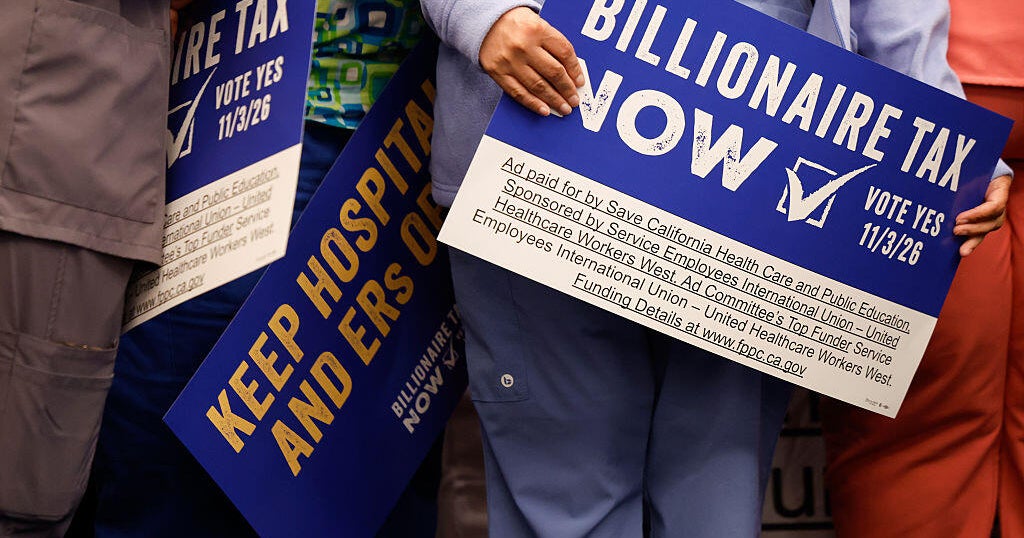
Proposition 40 would levy a one-time 5% tax on billionaires who were living in California as of Jan. 1, 2026.
asserted
who → levy → Jan.
Unlike income taxes, the measure would target their total accumulated wealth, with the bulk of the money raised going toward the state’s healthcare.
asserted
bulk → target → healthcare
California Gov. Gavin Newsom has also come out against the measure, while Google cofounder Sergey Brin has contributed money to efforts to defeat it.
asserted
Brin → come → it
But supporters, including Debru Carthan, vice president of SEIU-United Healthcare Workers West, the union spearheading the initiative, have pushed back against warnings that the tax would send wealthy Californians and investors fleeing the state.
asserted
tax → include → state
Carthan told Fortune that those concerns are unfounded.
asserted
concerns → tell → Fortune
Supporters argue the measure is necessary to help offset an estimated $100 billion in federal healthcare funding that California could lose over the next five years.
uncertain
California → argue → years
As for Barr, he said the proposed tax was also particularly concerning because of its potential retroactive implications, which he believes could force wealthy individuals to pay taxes based on assets they held before the measure was approved.
uncertain
measure → say → assets
Although the proposal would not currently apply to him, he fears it could set a precedent for taxing entrepreneurs with smaller fortunes.
uncertain
it → apply → fortunes
“Today it’s the billionaires,” Barr said, expressing concern that future proposals could target people worth $10 million or more.
uncertain
proposals → ’ → people
For Barr, the decision wasn’t simply about avoiding higher taxes.
asserted
decision → avoid → taxes
He said he understood that doing business in California would be expensive and was initially willing to accept that cost.
asserted
doing → say → cost
What ultimately drove him away, he said, was what he perceived as an increasingly hostile political attitude toward successful entrepreneurs.
“Why would I move to a state where the government is basically, first of all, villainizing entrepreneurs,” Barr said.
asserted
Barr → drive → entrepreneurs
His decision could also have consequences beyond his own business.
uncertain
decision → have → business
Barr founded Flashpass about two years ago after selling his first company, Step Up Social, a marketing and media business he started at 18 while in college.
asserted
he → found → college
Flashpass now works with government agencies to help unemployed people retrain and return to the workforce more efficiently.
asserted
people → work → workforce
California initially seemed like an ideal place to expand because of its concentration of artificial intelligence companies and research labs.
asserted
California → seem → companies
Barr believed the state would be among the first to experience major job displacement as AI technology advances, creating an opportunity for Flashpass to help workers transition into new careers.
asserted
workers → believe → careers
“We saw like a very logical reason to be near the newest AI developments and also closest to the people that are losing their jobs first due to AI,” Barr said.
asserted
Barr → see → AI
He argued that without his company establishing a presence in California, residents could have fewer opportunities to access its services and find employment quickly.
uncertain
residents → argue → employment
“I don’t think California is going to have the same level of access to our platform,” Barr said, adding that residents “aren’t going to be able to find new work as quickly just by virtue of our business not being there.”
Those potential effects remain uncertain, however, because Barr had not yet committed to relocating the company or established how many California workers Flashpass might have served.
uncertain
Flashpass → think → workers
His original plan was to move himself to San Francisco before deciding whether to relocate the business.
asserted
plan → move → business
“I had a personal lease in place and I was planning to move,” Barr said.
asserted
Barr → have → place
But without the founder living in California, he said, moving the company’s headquarters there was no longer a realistic possibility.
asserted
moving → live → headquarters
Barr acknowledged that California would lose relatively little in taxes from his decision alone.
asserted
California → acknowledge → decision
Instead, he believes the larger concern is what could happen if other young entrepreneurs follow his lead.
uncertain
entrepreneurs → believe → lead
He said he knows other business founders who have privately decided to leave California or avoid relocating there, although many are reluctant to speak publicly about their decisions because of Silicon Valley’s reputation as a global center of innovation.
asserted
many → say → innovation
“There’s this like idea that if you’re not in Silicon Valley, you can’t build an innovative company,” Barr said.
asserted
Barr → ’ → company
He believes entrepreneurs who disagree with California’s policies should make their opposition known through their business decisions, rather than continuing to invest in a state whose political leaders they believe are targeting them.
asserted
they → believe → them
Barr’s company remains based in Columbus, where it was established after receiving its first government contract from the state of Ohio.
asserted
it → base → Ohio
He said he has not ruled out relocating the business elsewhere, but California is no longer under consideration.
asserted
California → say → consideration
“I’m not even 100% sure we’ll keep the business in Ohio,” Barr said.
asserted
Barr → ’m → Ohio
“But I definitely know it’s not going to be California just based off of the political and business rhetoric that’s coming out of that state right now.”
asserted
that → know → state
 The Aporia