Chief Justice Roberts Goes Postal on Trump's USPS Rule

Reason · collected 2026-09-15 · by Josh Blackman
Read the original at Reason ↗

Summary

Chief Justice John Roberts wrote a brief majority opinion denying President Trump's request for an emergency stay in United States Postal Service v. California, stating that the government was unlikely to succeed on the merits and that equitable factors did not favor granting the stay. Justices Alito and Thomas dissented, arguing that the government should have been granted the stay, while Justice Kavanaugh agreed with them on the merits but joined Roberts's opinion denying relief based on equitable grounds. The article highlights Chief Justice Roberts’s approach in this case as different from his previous stance, suggesting a shift in handling cases involving Trump administration policies.
Written by the local model on 2026-09-15, using this article's own text rather than the other coverage of the same event.

Signals How these are calculated →

Claims extracted
57
claim-shaped sentences
Uncertain
12%
7 of 57 hedged
Leaning
Leans left
of the writing, not the subject
Correction & hedging signals
92.4
corrections and hedging in what we collected; not a measure of accuracy
Outlets on this story
unclustered
not grouped into a story yet
Narrative spread
1
articles carrying this framing
Analyzed 2026-09-15 · how these are computed

AI analysis (generated at analysis time, not now)

Why this leaning score
The article's own words the score was based on. Each is quoted verbatim and was checked against the article text before being stored, so you can find it in the original.
Score -0.45 Confidence medium 1 quote(s) discarded as not found in the article
Leaning score -0.45 for article 9837 (medium confidence, 2 verified quotes) · logged 2026-09-15

How this is being covered How these are calculated →

Article leaning vs. publisher reliability
Source leaning vs. consistency

Compared with similar articles

This article reads leans left and hedges 12% of its claims. Each row says how that neighbour differs.
Reason
⚖️ Leans strongly left further left than this 🔴 13% hedged 3 of 23 📰 publisher trust 92
“The articles discuss different legal actions related to Trump's policies on voting and USPS, occurring at distinct times with separate judicial decisions.”
The Guardian
⚖️ leaning not scored 🔴 5% hedged 1 of 19 📰 publisher trust 60
“The articles refer to different aspects and decisions related to Trump’s bid to restrict mail-in voting, with Article A focusing on a US appeals court decision while Article B mentions Chief Justice Roberts' involvement in a Supreme Court case.”
South China Morning Post
⚖️ Leans left 🔴 40% hedged 2 of 5 📰 publisher trust 94
“Article A reports a second federal judge blocking Trump’s voting restrictions, while Article B discusses Chief Justice Roberts' decision in United States Postal Service v. California.”
Los Angeles Times
⚖️ leaning not scored 🔴 22% hedged 7 of 32 📰 publisher trust 95
“Article A discusses states warning the Supreme Court about chaos if USPS rules stand, while Article B mentions the Court's decision in a case related to Trump's USPS rule. They describe different stages of the same issue.”

Publisher

Reason · 164 article(s) · 1 correction(s) detected
Running correction rate · 1 correction(s)
2026-09-05
Lawyers' Responsibility for Hallucinations in Briefs That They Sign

Who wrote this

Josh Blackman
23 article(s) here · 1 carrying a prediction
🔮 The majority couldn't be bothered to say anything more than a sentence.
2026-09-15 · assertive framing · Chief Justice Roberts Goes Postal on Trump's USPS Rule
🔮 Indeed, conflicting rulings from the Missouri Supreme Court and the Eighth Circuit would present the same issue.
2026-09-11 · assertive framing · The Contempt Judgment From Missouri
🔮 There was no evidence this standard was necessary or would actually improve race relations.
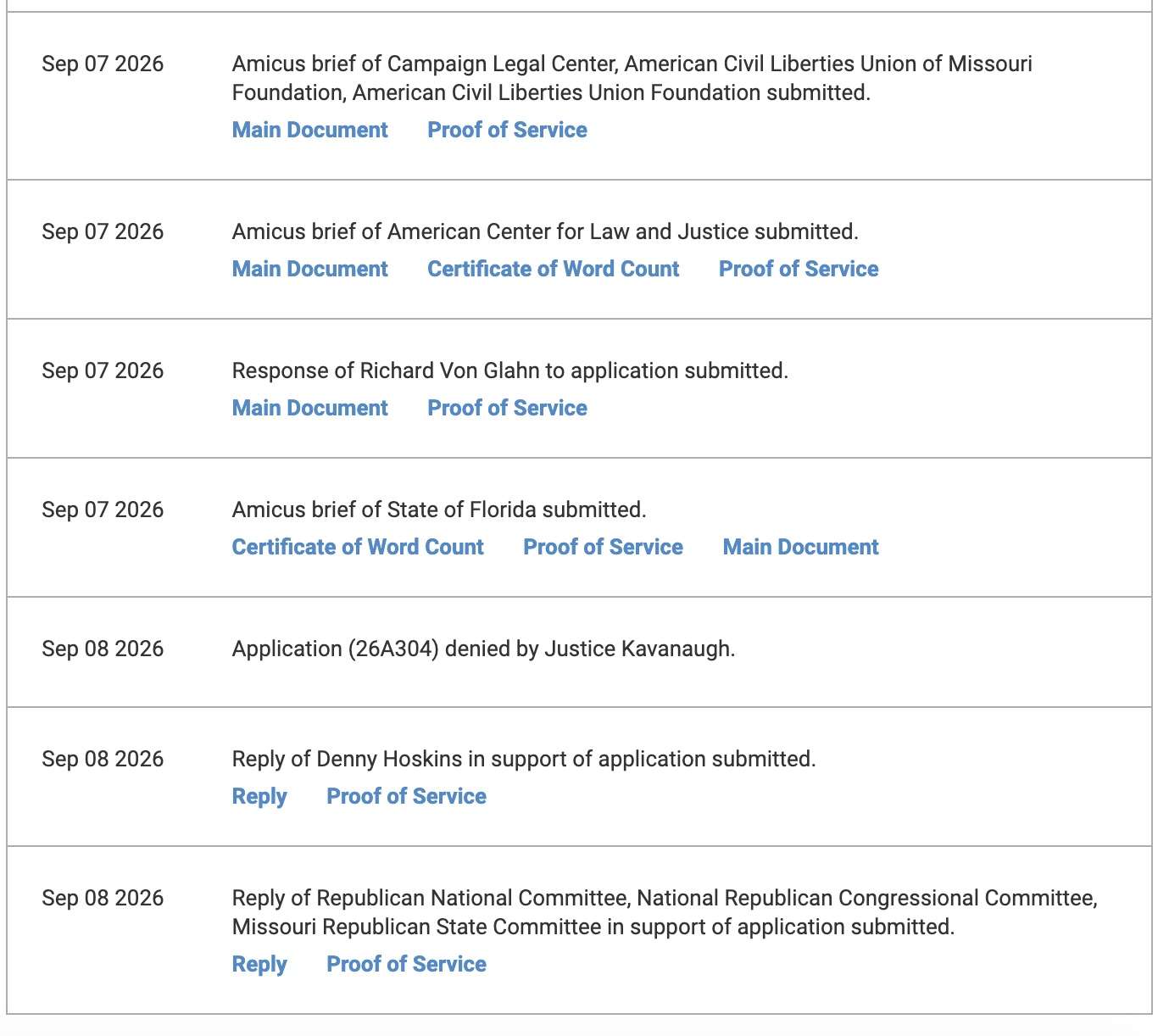
🔮 Often, an order from a Justice will be entered before the notation for reply briefs, even though the reply briefs were filed before the order.
2026-09-09 · assertive framing · A Strange Sorting Feature On The Supreme Court's Docket
🔮 In 1989, William Barr, the Assistant Attorney General for the Office of Legal Counsel, put forward that position in a memorandum opinion for the Attorney General.
🔮 The Log Cabin Republicans will no longer advocate on transgender issues.
2026-08-26 · assertive framing · A Wall Of Separation Between LGB and T
🔮 One would think that a former federal courts professor in the majority would get these cases, but apparently not.
🔮 Thus, any text generated by the AI will be in the same sort of style that the professor has--or perhaps had.
2026-08-24 · assertive framing · AI Freezes The Scholarly Voice
More on this subject from Josh Blackman
Today in Supreme Court History: September 3, 2005
2026-09-03 · Reason · 62% similar
Today in Supreme Court History: September 6, 1983
2026-09-06 · Reason · 60% similar
All 23 articles by Josh Blackman →

Topics

California Court Missouri United States Postal Service the District Court's

Subjects

Alito PERSON · 9× Court ORG · 9× Kavanaugh PERSON · 8× Trump PERSON · 6× Missouri GPE · 3× Roberts PERSON · 3× Barrett PERSON · 2× Thomas PERSON · 2× California GPE · 1× United States Postal Service ORG · 1×

Narrative

Indeed, this Court spent from late July to the end of August drafting nearly 40 pages of opinions, including two dissents, despite the Government's public notice that it would not publish a final rule while subject tothe injunctions, see 91 Fed. Reg. 44880, and its representation that it had a strong interest in issuing its rule in early- to mid-August to allow time to implement it.
framing: assertive · carried by 1 article(s) · first seen 2026-09-15
🔮 The majority couldn't be bothered to say anything more than a sentence.
2026-09-15 · Reason
Chief Justice Roberts Goes Postal on Trump's USPS Rule · assertive framing

Claims (57 extracted, 7 hedged)

Mostly law professors | Sometimes contrarian | Often libertarian | Always independent This evening, the Court finally decided United States Postal Service v. California. asserted
Court → decide → California
Very often, the procedural posture of a case is described as tortured. asserted
posture → describe → case
This posture is torturous for everyone involved. asserted
posture → involve → everyone
Here, I'll offer a few high-level thoughts. asserted
I → offer → thoughts
First, the majority opinion, perhaps to its credit, offers two sentences of analysis. asserted
opinion → offer → analysis
The Government is unlikely to succeed on the merits of its challenge to the District Court's preliminary injunction. asserted
Government → succeed → injunction
And the equitable factors applicable for obtaining emergency relief from this Court do not favor a stay. asserted
factors → obtain → stay
I say perhaps, because the Court reaches out to decide the merits on the emergency docket without any analysis. asserted
Court → say → analysis
Justice Alito, joined by Justice Thomas, offers a thorough analysis of why he thinks the government wins on the merits. asserted
government → join → merits
Justice Kavanaugh agrees with Justice Alito on the merits. asserted
Kavanaugh → agree → merits
The majority couldn't be bothered to say anything more than a sentence. asserted
majority → bother → sentence
This stay application has been pending on the docket for about eight days, but this issue has been percolating for months. asserted
issue → pende → months
Surely, Chief Justice Roberts could have whipped up a few sentences to explain why Trump loses. uncertain
Trump → whip → sentences
He made up a few such sentences in the ballroom case. asserted
He → make → case
All the Court had to write to deny the stay was that the equities did not favor emergency relief. asserted
equities → have → relief
Those are the grounds on which Justice Kavanaugh ruled. asserted
Kavanaugh → rule → which
But the Chief Justice didn't want this case to come back, so he reached the merits. asserted
he → want → merits
If there is no need to decide more, the Court should not decide more. asserted
Court → be → more
Except when Trump is involved. asserted
Trump → involve → ?
Regrettably, Justices Gorsuch and Barrett joined the Chief's drive-by shooting of Trump's policy. asserted
Gorsuch → join → policy
Second, let's turn to Justice Kavanaugh. asserted
's → let → Kavanaugh
It seems clear he will deny any application that urges sudden changes to election rules before the election. asserted
that → seem → election
I think there were serious questions about whether the litigants from Missouri had appellate standing. asserted
litigants → think → standing
Likewise, in the postal case, Justice Alito points out there are serious questions about standing. asserted
Alito → point → standing
But on the emergency docket, when the equities are strong enough, the Court can just ignore standing. asserted
Court → ignore → standing
Why did Justice Kavanaugh bother signaling his vote? asserted
Kavanaugh → bother → vote
In case after case, Kavanaugh finds a way to rule against Trump while saying he would rule for him if the facts were different. asserted
facts → find → him
Kavanaugh, having ruled that the equities cut against Trump, has no reason to say which way the merits go. asserted
merits → rule → reason
If Roberts and Kavanaugh were on the same wavelength eight years ago, now they are quite at odds when push comes to shove. asserted
push → come → shove
Fourth, it is curious why Alito and Thomas said nothing in the Missouri cases. asserted
Alito → say → cases
I thought of a passage from Mollie Hemingway's excellent new book on Justice Alito: asserted
I → think → Alito
Around the Court, Alito's chambers are seen as the "Green Berets," an elite unit that improves any position it enters. asserted
it → see → position
The justice often uses military lingo, explaining to his clerks, for example, that "I don't think we need to take point on that one" means "it's not worth sticking our neck out on that issue." asserted
it → use → issue
I guess it was not worth Alito sticking his neck out in Missouri, especially since Kavanaugh was locked in and the issue would not return to the Court. asserted
issue → guess → Court
But Alito thought it was worth taking point in the postal service case, especially since the litigation would continue in the lower courts. asserted
litigation → think → courts
Fifth, Justice Alito (as noted above) raises some important issues concerning standing. asserted
Alito → note → standing
To begin, the District Court issued a nationwide injunction based on claims asserted by several plaintiff organizations that likely lack standing. uncertain
that → begin → standing
These organizations first claim a direct organizational injury because the rule supposedly thwarts their ability to educate members about voting. uncertain
rule → claim → voting
Yet this theory of injury is based on "'a setback to the organization's abstract social interests'" and an effortto "spend its way into standing simply by expending money to gather information and advocate against the defendant's action[s]." asserted
theory → base → ]
Justice Gorsuch has made it his life's mission to root out offended observer standing and related doctrines, such a diversion of resource standing. asserted
it → make → standing
…and 17 more, not listed.

💬 Give feedback
🕘 History 🎫 Support