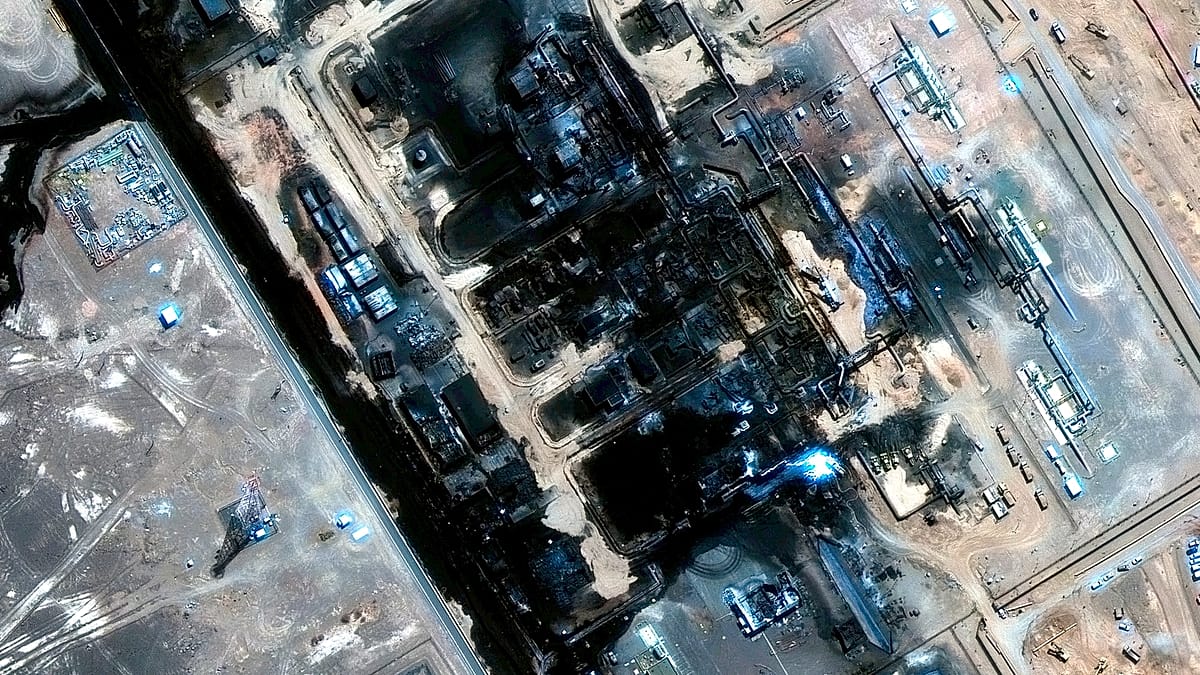
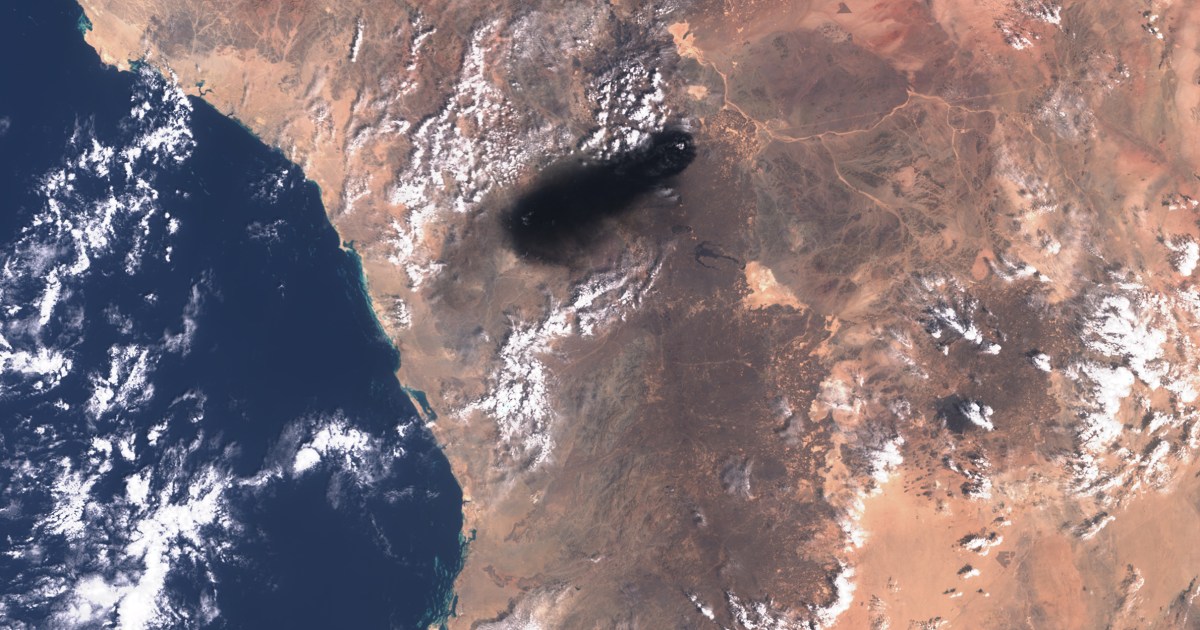
Drones struck Saudi Arabia’s East-West oil pipeline last Thursday, leading the kingdom to suspend operations temporarily. This 1,200km (746-mile) pipeline typically carries about 4 to 5 million barrels of oil per day from eastern production fields to the Red Sea port of Yanbu, avoiding the Strait of Hormuz. The shutdown comes amid ongoing conflicts that have disrupted traditional shipping routes and underscores Saudi Arabia’s reliance on this alternative route for oil exports. Repair estimates vary, with some sources suggesting a five-to-six-week repair period, though actual downtime will depend on damage assessment.
Written by the local model on 2026-09-14,
using this article's own text rather than the other coverage of the
same event (that is the story summary below).
Story summary
On September 14, Ukrainian President Volodymyr Zelenskyy stated that Ukraine is ready to halt strikes on Russia if its partners ensure Moscow will refrain from hitting Ukrainian energy facilities and infrastructure. However, Zelenskyy expressed doubt about Russia's willingness to adhere to any agreement, emphasizing the need for a reliable long-term deal with real impact on people’s lives.
The day before, US President Donald Trump claimed that Ukraine and Russia had agreed not to hit each other's energy targets in an effort to mitigate rising global fuel prices. Zelenskyy later clarified that Ukraine was willing to reciprocate but needed assurances from "partners," likely referring to the U.S., that Russia would genuinely refrain from striking Ukrainian critical infrastructure.
Meanwhile, the Kremlin welcomed Trump’s call on Ukraine to halt strikes on Russian diesel facilities, with Kremlin spokesman Dmitry Peskov stating that any such call could be welcomed. However, he also noted that the upheaval in global energy markets was mainly due to conflicts in the Gulf region rather than the Russia-Ukraine war.
As tensions escalated and fuel prices soared past $6 per gallon, Trump's claims were met with skepticism from both Ukrainian and Russian sides, with no official confirmation of an agreement as of September 14.
Written for “Ukraine Russia Energy Strikes Trump” on 2026-09-14,
grounded in this article and the 31 other(s) covering the same event.
In another blow to global oil markets, drones struck Saudi Arabia’s East-West oil pipeline last Thursday, prompting the kingdom to suspend operations.
asserted
drones → strike → operations
The 1,200km (746-mile) pipeline, which carries roughly 4 to 5 million barrels of oil per day (bpd), links the country’s major oil-producing fields in the east with the Red Sea port of Yanbu, allowing Saudi Arabia to bypass the Strait of Hormuz, which has largely been closed since the outbreak of the US-Israel war on Iran in February.
asserted
which → carry → February
Saudi Arabia’s Ministry of Energy said the shutdown was a “precautionary” measure after the attack caused damage and injuries in the Riyadh and Medina regions.
asserted
attack → say → regions
The closure comes as the US-Israel war on Iran has sharply reduced oil flows through the Strait of Hormuz and Houthi forces in Yemen have intensified attacks around the Red Sea and Bab al-Mandeb.
asserted
forces → come → Sea
With oil flows through the Strait of Hormuz severely disrupted, Saudi Arabia has relied more heavily on the East-West pipeline.
asserted
Arabia → disrupt → pipeline
What does its closure mean for an already tight global oil market?
asserted
closure → mean → market
The extent of the damage is not yet clear, and estimates of how quickly the pipeline can return to normal operations vary.
asserted
pipeline → return → operations
Sources familiar with the incident told the Reuters news agency that repairs could take five to six weeks, while another source said operations could restart sooner.
uncertain
operations → tell → weeks
Saudi officials said drones hit the pipeline in two areas around Riyadh and Medina.
asserted
drones → say → Riyadh
The Ministry of Foreign Affairs said the attack caused injuries and damage to infrastructure.
asserted
attack → say → infrastructure
According to Saudi authorities, the launch of the drones was traced to Maysan province in southeastern Iraq, close to the Iranian border and an area where Iran-aligned armed groups have established a longstanding presence.
uncertain
groups → accord → presence
The attack follows a strike in March near the Saudi-Aramco-ExxonMobil refinery in Yanbu that temporarily disrupted crude loadings from the Red Sea port.
asserted
that → follow → port
That incident had little lasting impact on operations, with shipments recovering within days, but it demonstrated that the kingdom’s western oil infrastructure was not immune to attacks.
asserted
infrastructure → have → attacks
The East-West pipeline, also known as the Petroline, is a 1,200km (745-mile) long oil pipeline built in 1981 that carries crude oil from the kingdom’s eastern oil fields near Abqaiq across the Arabian Peninsula to the Red Sea port of Yanbu, bypassing the Strait of Hormuz.
asserted
that → know → Hormuz
It has a maximum capacity of seven million bpd, although actual flows have been lower in recent months – about two million bpd in August according to Kpler – the lowest monthly level since January as Houthi attacks made the Red Sea route difficult to use.
uncertain
route → have → January
Saudi Arabia increased the amount of crude sent west during the first five months of the conflict, taking flows to roughly 4-5 million bpd.
asserted
Arabia → increase → bpd
That represents about 4 to 5 percent of global supply and allowed the world’s second largest oil exporter to bypass the Strait of Hormuz when shipping conditions deteriorated.
asserted
conditions → represent → Hormuz
The pipeline’s closure comes at a critical point for the global oil market.
asserted
closure → come → market
Before the war, the Strait of Hormuz supplied more than a fifth of oil globally – about 20 million bpd.
asserted
Strait → supply → oil
According to Reuters, industry estimates now put the flow at about 6-9 million bpd through the strait, a dramatic reduction in the volume.
uncertain
estimates → accord → volume
Saudi Arabia has responded by moving more crude towards the Red Sea.
asserted
Arabia → respond → Sea
However, the flow and export of that oil depends on the pipeline, storage facilities and tankers transiting safely – all of which have been made vulnerable since the Iran war began in February.
asserted
war → depend → February
According to sources close to Reuters, if the pipeline remains shut, Yanbu has enough available stocks to sustain exports for about five to seven days, while Egyptian facilities in Ain Sukhna and Sidi Kerir, which store Saudi oil, could provide additional supplies for several days.
uncertain
which → accord → days
While this gives Saudi Arabia some buffer, it comes as global inventories have already been falling.
asserted
inventories → give → buffer
The International Energy Agency said Saudi oil supply reached a more than three-decade low in August, with disruptions in Hormuz and the Red Sea.
asserted
supply → say → Hormuz
It says world oil supplies will decline by some 5.7 million bpd this year, equivalent to 6 percent of global supply.
asserted
supplies → say → supply
Oil prices have so far been cushioned by stockpiles and releases from strategic reserves, with Brent crude trading about $70-$90 in recent months.
asserted
crude → cushion → months
But the longer regional disruptions continue, the more those reserves will be depleted and the higher prices will rise.
asserted
prices → continue → ?
In June, the IEA said continued drawdowns could hit critical levels with experts saying that if inventories approach exceptionally low levels, Brent could potentially rise to $150 a barrel.
uncertain
Brent → say → 150
If damage to the pipeline proves extensive, and attacks continue to threaten Yanbu and shipping routes beyond it, Saudi Arabia could find that its ability to compensate for lost Gulf exports is itself becoming constrained.
uncertain
ability → prove → exports
Gavekal Research noted that if Yanbu, which processes more than one million bpd, goes offline because of threats from Houthi drones, “this would be a disaster for the world at a time when global refining capacity is already critically tight.”
asserted
capacity → note → time