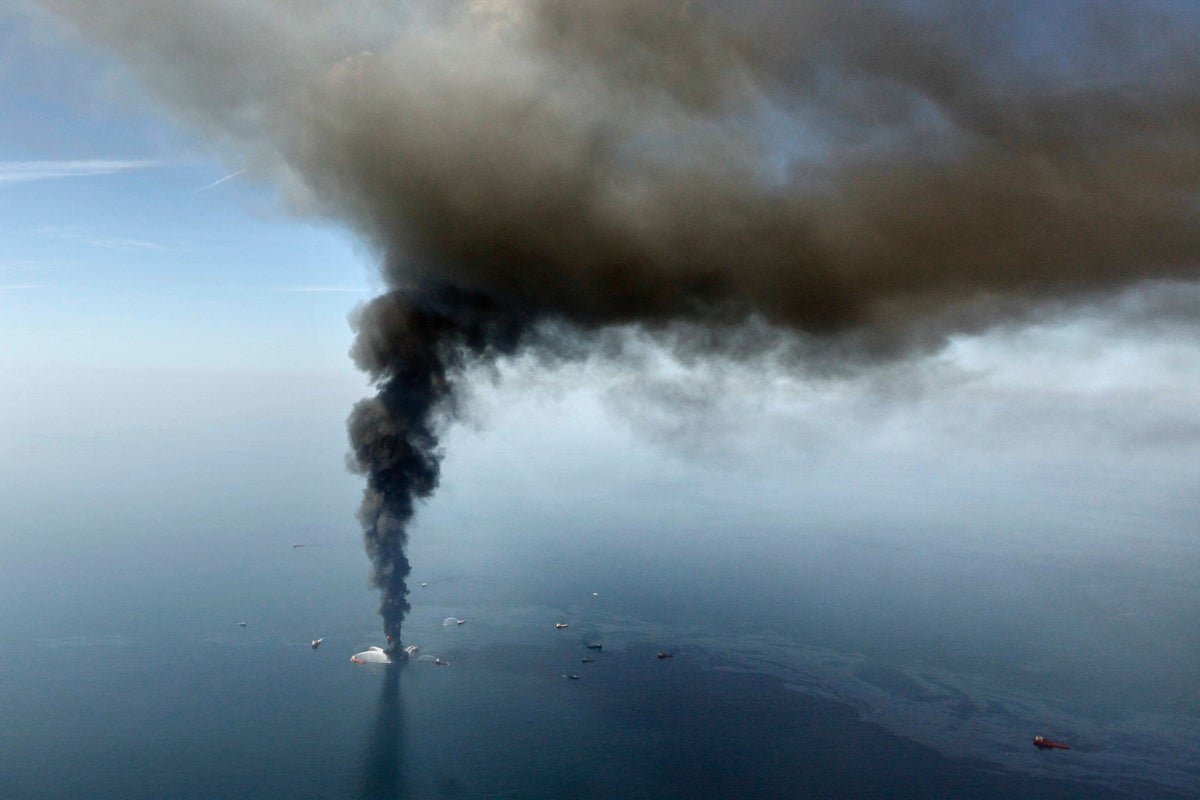
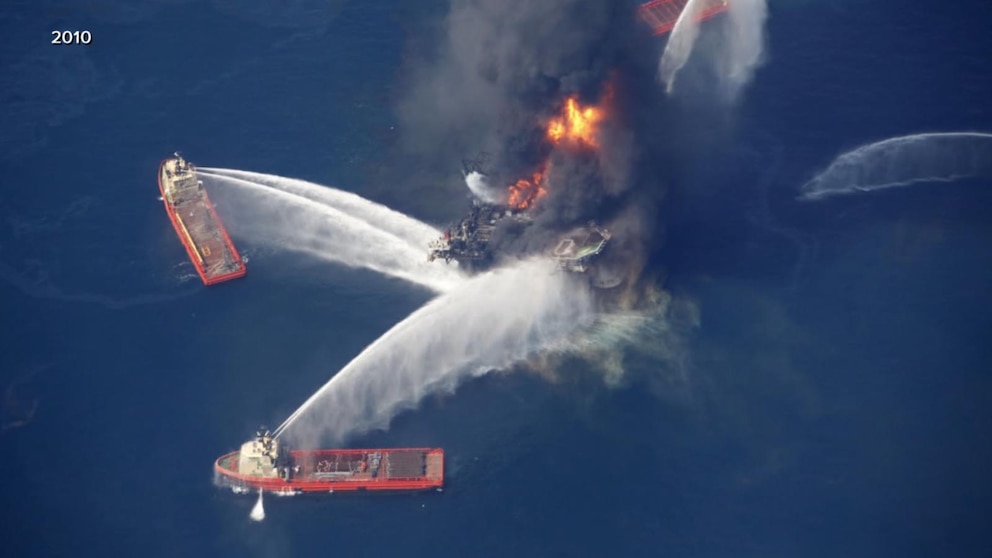
More than 16 years after BP's Deepwater Horizon disaster, marine life has not recovered

Read the original at CBC News ↗
Cite

Ram, A. (2026, October 21). More than 16 years after BP's Deepwater Horizon disaster, marine life has not recovered. CBC News. https://www.cbc.ca/news/climate/deepwater-horizon-marine-life-decline-gulf-of-mexico-9.7388794?cmp=rss

Dated from the outlet's own feed. Check the original for its byline.

CBC News · collected 2026-10-21 · by Anand Ram

Quick Summary

A new study published in the Proceedings of the National Academy of Sciences reveals that marine life in the Gulf of Mexico has not recovered more than 16 years after BP’s Deepwater Horizon oil spill. The disaster, which occurred on April 20, 2010, resulted in up to 4.9 million barrels of oil being released into the ocean over three months. Researchers found that some species declined by 60 to 85 percent immediately following the spill and have remained at low levels since then. The study also identified lingering polycyclic aromatic hydrocarbons (PAHs) in marine life, indicating ongoing environmental damage.
Written locally by qwen2.5:14b on 2026-10-21, using this article's own text rather than the other coverage of the same event (that is the story summary below).

AI analysis runs on qwen2.5:14b, locally

Story summary

More than 16 years after BP's Deepwater Horizon disaster off the coast of Louisiana, marine life in the Gulf of Mexico has not recovered. A new study published in the journal PNAS reveals that fish populations dropped by 63.5%, crustaceans like shrimp and krill declined by 62%, and squid and octopuses fell by 59.7% between 2011 and 2015, with no signs of recovery since then. The research focused on the ocean’s “twilight zone,” a vast area above the seafloor crucial for marine life feeding patterns, which had not been previously studied before the spill. Scientists warn that this damage demonstrates how a single failure in a drilling rig can have widespread and long-lasting impacts over thousands of square kilometers.

Written for “BP Oil Spill Aftermath” on 2026-10-21, grounded in this article and the 3 other(s) covering the same event.
Why this leaning score
This article does not take a side on a contested political question, so it has no leaning score. That is an answer rather than a gap: a match report or a rescue can be warmly or critically written without being left or right, and scoring it anyway is how approval of a subject gets recorded as a political position.
No political leaning scored for article 95638 · logged 2026-10-21

Story

📰 BP Oil Spill Aftermath
Environment · 4 article(s) covering the same event. Compare every outlet's account →

Compared with similar articles

This article reads unscored and hedges 10% of its claims. Each row says how that neighbour differs.
The Independent · 0.91 cosine similarity
⚖️ leaning not scored 🔴 9% hedged 3 of 34 📰 publisher trust 59
“Both articles discuss the long-term impact on marine life in the Gulf of Mexico more than 16 years after the BP Deepwater Horizon disaster, specifically referencing the significant decline in fish populations and lack of recovery.”
ABC News (US)
⚖️ leaning not scored 🔴 0% hedged 0 of 2 📰 publisher trust 59
“The articles discuss the long-term effects of a past event (the BP Deepwater Horizon disaster in 2010) rather than describing the same specific incident at a particular time and place.”
Toronto Star · 0.88 cosine similarity
⚖️ leaning not scored 🔴 8% hedged 3 of 38 📰 publisher trust 63
“The articles refer to long-term impacts of the BP Deepwater Horizon disaster but describe different time frames and findings, suggesting they are discussing separate studies or updates about ongoing effects rather than a single specific event.”
How this article was measured signals, leaning charts, publisher record, byline, topics and claims

Signals How these are calculated →

Claims extracted
40
sentences that state something as happening or true
Uncertain
10%
4 of 40 hedged ("reportedly", "may", "according to")
Leaning
not political
takes no side on a contested political question
Publisher signals
60/100
CBC News's corrections and hedging, across everything collected from it. Not a measure of accuracy.
Outlets on this story
4
Environment
Same framing elsewhere
1
articles that frame the event the way this one does
Analyzed 2026-10-21 · how these are computed

How this is being covered How these are calculated →

Article leaning vs. publisher reliability
Source leaning vs. consistency

Publisher

CBC News · 669 article(s) · 1 correction(s) detected
Running correction rate · 1 correction(s)

Who wrote this

Anand Ram
5 article(s) here · 1 carrying a prediction
🔮 Deepsea experts who weren't involved with the research say the study accounted for the natural factors that might affect fish abundance, such as temperature, availability of food and oxygen.
🔮 Giant underwater Kelvin wave could 'pack a punch' for B.C. in mid-October El Niño phenomenon could worsen the effects of storm surges and high tides A giant underwater wave of water connected to this year's El Niño weather pattern is moving up the west coast of the Americas, raising alarm bells among scientists about how climate change is magnifying the impacts of the naturally occurring phenomenon.
🔮 But even as climate change, driven by humanity's burning of fossil fuels, is expected to make extreme rainfall events worse, the authors say there are ways to mitigate the impact on this crop that billions of people enjoy.
🔮 A million dollar math problem may just be the beginning for OpenAI Drama in the world of pure mathematics Two mathematicians, 10,000 AI agents and a million-dollar prize are all part of yet more AI drama this week, with heated back-and-forth over allegations of stolen work and academic malpractice.
🔮 Corals in decline globally, nearly half a century of data shows A record El Niño may make things a whole lot worse The proportion of the world's reefs with living, stony stalks of hard corals is down significantly, according to a new global report on these vital ecosystems.
Also by Anand Ram
Nothing else under this byline is closely related to this article, so these are simply their most recent.

Topics

Louisiana NOVA Southeastern University U.S. the Guy Harvey Oceanographic Research Center the Proceedings of the National Academy of Sciences

Subjects

Sutton PERSON · 4× The Associated Press ORG · 2× CBC News ORG · 1× Charlie Riedel PERSON · 1× Louisiana GPE · 1× NOVA Southeastern University ORG · 1× Tracey Sutton PERSON · 1× U.S. GPE · 1× the Guy Harvey Oceanographic Research Center ORG · 1× the Proceedings of the National Academy of Sciences ORG · 1×

Narrative

More than 16 years after BP's Deepwater Horizon disaster, marine life has not recovered Fishes, crustaceans, squid show persistent declines and even chemical compounds in their tissues More than 16 years after one of the deadliest oil spills in history, a highly comprehensive study has found that life in the waters of the Gulf of Mexico remains severely in decline.
framing: assertive · carried by 1 article(s) · first seen 2026-10-21
🔮 Deepsea experts who weren't involved with the research say the study accounted for the natural factors that might affect fish abundance, such as temperature, availability of food and oxygen.

Claims (40 extracted, 4 hedged)

More than 16 years after BP's Deepwater Horizon disaster, marine life has not recovered Fishes, crustaceans, squid show persistent declines and even chemical compounds in their tissues More than 16 years after one of the deadliest oil spills in history, a highly comprehensive study has found that life in the waters of the Gulf of Mexico remains severely in decline. asserted
life → recover → decline
The Deepwater Horizon oil rig, operated by BP off the coast of Louisiana, exploded on April 20, 2010 — killing 11 people and injuring 17 others. asserted
rig → operate → others
During the three months that followed, as much as 4.9 million barrels of oil gushed into the Gulf, according to a U.S. government task force. uncertain
barrels → follow → force
The environmental catastrophe had a devastating impact on marine life, which continues today. asserted
which → have → life
"A lot of things died right off the bat," said Tracey Sutton, a biological oceanographer at the Guy Harvey Oceanographic Research Center of NOVA Southeastern University whose team has been studying the impacts of the spill for years. asserted
team → die → years
Their research found that some species declined by 60 to 85 per cent in the immediate three and a half years after the spill. asserted
species → find → spill
Sutton's latest report, combining another eight years of detailed scanning and sampling, was just published in the Proceedings of the National Academy of Sciences. asserted
report → combine → Sciences
Time hasn't helped the situation, according to the authors. uncertain
Time → help → authors
"That low state has just maintained low," Sutton said, explaining that the dense patches of prey that predators need are missing, resulting in a "decline in things like deep-diving whales and dolphins" as well as fishes, shrimps and squids. asserted
predators → maintain → whales
The immediate aftermath of the Deepwater Horizon spill killed lots of marine life, and the authors of a new study say that decline has persisted. asserted
decline → kill → study
The most likely cause of this decline, the study suggests, is the Deepwater Horizon disaster, not least of which because their sampling is still finding remnants of all that spilled oil. uncertain
that → suggest → oil
"What we've seen is the persistence of some of the worst components in the oil … polycyclic aromatic hydrocarbons, or PAHs. asserted
seen → see → oil
That's the really bad stuff," Sutton told CBC News. asserted
Sutton → tell → News
The study found these oil-derived compounds inside the muscle tissue and eggs of deep-sea fishes and squid, potentially affecting health and reproduction. asserted
study → find → health
The authors also suggest these lingering PAHs can affect some male fishes' sense of smell, which they use to find mates. asserted
they → suggest → mates
Deepsea experts who weren't involved with the research say the study accounted for the natural factors that might affect fish abundance, such as temperature, availability of food and oxygen. uncertain
that → involve → food
"They eliminate any other factors," said Fabio De Leo, senior scientist at Ocean Networks Canada and a professor at the University of Victoria. asserted
Leo → eliminate → Victoria
"And so the probable cause here is the 87 days of gushing oil through the Gulf for Mexico. asserted
cause → gush → Mexico
" Parsing out environmental factors is a sign of the report's strength, says Kelly Robinson, an associate professor at the School of Biological Sciences at the University of Louisiana at Lafayette. asserted
Robinson → parse → Lafayette
"Sometimes when you work on data, it can show you a different side," said Robinson. asserted
Robinson → work → side
"But if it keeps showing you the same message, that's probably what's happening.” asserted
what → keep → message
More than a decade later, researchers say chemical compounds from the oil spill have made their way into fish tissue. asserted
compounds → say → tissue
Diverse and essential Experts say that the negative effect on species has a larger effect for the whole Gulf ecosystem and its role in helping capture carbon in its depths. asserted
effect → say → depths
The deep pelagic zone, where Sutton and his team surveyed sampled fishes, crustaceans and cephalopods (such as squid) for years, is an umbrella term for a range of depths — anywhere from around 200 metres to 1,500 metres below the surface. asserted
Sutton → survey → surface
While sunlight stops relatively high up in that zone, the biodiversity doesn't. asserted
biodiversity → stop → zone
Lanternfish, stingrays, sperm whales, krill and many more aquatic species are all normally found throughout these depths and regularly migrate between them. asserted
Lanternfish → find → them
"You have to remember that these animals feed at the surface," De Leo said. asserted
Leo → have → surface
“They migrate downwards and then they respire at that [level]. asserted
they → migrate → level
So the carbon dioxide gets dissolved into the water and there are nutrients that they regenerate back into the water." asserted
they → dissolve → water
"They are a train that's moving energy from the surface to the deep very efficiently," Robinson adds. asserted
Robinson → move → deep
"And so if we see a decline in that, it's like taking cars away from a train, right? asserted
it → see → train
All of a sudden you're not moving as much material." asserted
you → move → material
These species effectively act as a "biological pump" for carbon, and it's one of the ways that oceans help absorb carbon dioxide from the surface, including the excess greenhouse gases humans are pumping into the atmosphere. asserted
humans → act → atmosphere
The waters still dissolve CO2 on their own, but this study shows how pollution can weaken this service that the oceans provide. asserted
oceans → dissolve → that
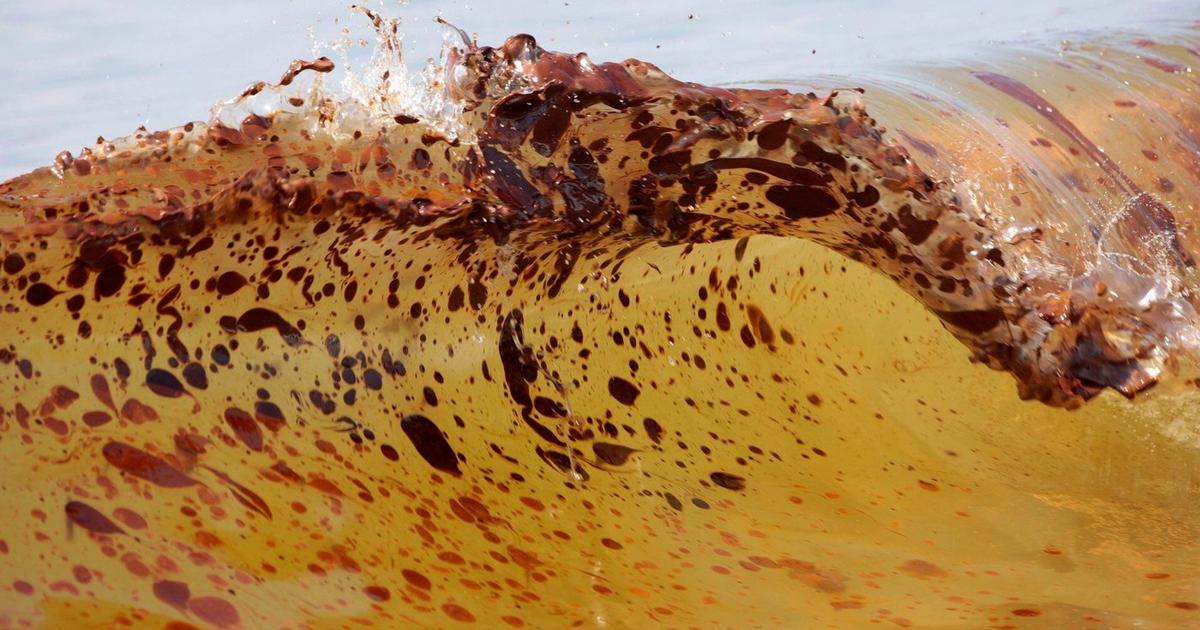
Oil booms like this were deployed to try and contain the oil spill, but the volume proved too much and many failed. asserted
many → deploy → spill
The Trump administration's promise to "drill, baby, drill" has led to a push for the U.S. to extract more oil and natural gas, including new areas of offshore oil exploration. asserted
U.S. → drill → exploration
In Canada, economic uncertainty has led to the Carney government's support for Pacific Link, a proposed oil pipeline from Alberta to B.C's coast, destined for overseas markets. asserted
uncertainty → lead → markets
Despite promised ocean protections, experts fear a long-lasting impact if an oil tanker were to be damaged and leak. asserted
tanker → promise → impact
"There's more discussion about increasing oil transport in these areas of the Pacific," De Leo told CBC News from Victoria. asserted
Leo → be → Victoria
"We're unlikely to have something of [Deepwater Horizon’s] magnitude but there's potentially more risk if there's more traffic," De Leo said. asserted
Leo → have → magnitude

💬Give feedback
🕘History 🎫Support