Japan launches spacecraft to mysterious moons of Mars in a bold mission to bring home soil samples

Read the original at Toronto Star ↗
Cite

Dunn, M. (2026, October 19). Japan launches spacecraft to mysterious moons of Mars in a bold mission to bring home soil samples. Toronto Star. https://www.thestar.com/news/world/japan-launches-spacecraft-to-mysterious-moons-of-mars-in-a-bold-mission-to-bring-home-soil-samples/article_8604aa71-f5bc-5142-b093-78d210d4b0ac.html

Dated from the outlet's own feed. Check the original for its byline.

Toronto Star · collected 2026-10-19 · by Marcia Dunn

Quick Summary

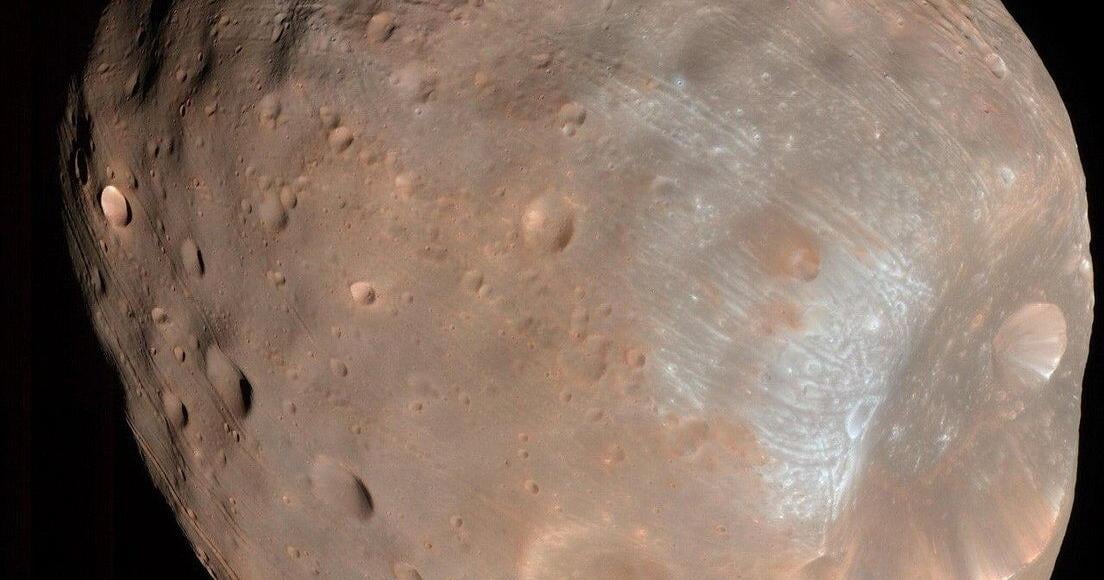
Japan launched a spacecraft from Tanegashima Island on Tuesday, beginning a five-year mission aimed at exploring Mars' moons Phobos and Deimos. The \$578 million project, led by the Japan Aerospace Exploration Agency and involving five international space agencies, will attempt to land a rover named Idefix and collect samples from Phobos for return to Earth in 2031. This mission is the first of its kind, as no previous missions have successfully retrieved samples from Mars or its moons.
Written locally by qwen2.5:14b on 2026-10-19, using this article's own text rather than the other coverage of the same event (that is the story summary below).

AI analysis runs on qwen2.5:14b, locally

Story summary

On October 18, 2026, Japan launched its MMX spacecraft from Tanegashima Space Center to Phobos, one of Mars' two small moons. The five-year mission aims to collect at least 10 grams of samples from Phobos and return them to Earth in 2031 for analysis. The Japanese-led project involves NASA, ESA, French, German, and other international partners. Carrying a rover named IDEFIX and various scientific instruments, the spacecraft will orbit Phobos for up to three years before landing to collect samples. After separating from its rocket, the MMX successfully entered space with plans to reach Mars in 2027. Upon completion of the mission, the re-entry capsule containing moon dust and rocks is expected to land in Woomera, South Australia, marking the first time a sample has been retrieved from any Martian moon.

Written for “Japan Mars Moon Sample Mission” on 2026-10-19, grounded in this article and the 6 other(s) covering the same event.

Story

📰 Japan Mars Moon Sample Mission
Science · 7 article(s) covering the same event. Compare every outlet's account →

Compared with similar articles

This article reads unscored and hedges 13% of its claims. Each row says how that neighbour differs.
Dawn
⚖️ leaning not scored 🔴 35% hedged 7 of 20 📰 publisher trust 72
“Both articles describe the launch of Japan's MMX mission to Mars' moons on October 18, 2026, from Tanegashima Space Centre.”
ABC News (AU)
⚖️ leaning not scored 🔴 19% hedged 6 of 31 📰 publisher trust 68
“Both articles describe the identical launch of a Japanese spacecraft to Mars' moon Phobos on October 19, 2026.”
Toronto Star · 0.87 cosine similarity
⚖️ leaning not scored 🔴 10% hedged 4 of 40 📰 publisher trust 63
“Both articles describe the launch of a Japanese spacecraft aimed at Phobos, one of Mars' moons, on the same day and involving similar details about the mission.”
BBC News
⚖️ leaning not scored 🔴 8% hedged 3 of 40 📰 publisher trust 69
“The articles mention a launch to Mars, but Article A specifies it will happen on Monday while Article B reports it has already occurred on Tuesday.”
New York Post
⚖️ leaning not scored 🔴 10% hedged 4 of 42 📰 publisher trust 67
“While both articles discuss a mission to bring samples from Phobos, Article A describes the preparation and planning stages of the mission with a launch date set for an unspecified time in the future. In contrast, Article B covers the actual launch event that occurred on October 19, 2026.”
South China Morning Post
⚖️ leaning not scored 🔴 50% hedged 2 of 4 📰 publisher trust 64
“Article A describes Japan preparing for a Martian moon mission, while Article B reports on the actual launch of the spacecraft. The events are related but occur at different times.”
How this article was measured signals, leaning charts, publisher record, byline, topics and claims

Signals How these are calculated →

Claims extracted
38
sentences that state something as happening or true
Uncertain
13%
5 of 38 hedged ("reportedly", "may", "according to")
Leaning
not political
takes no side on a contested political question
Publisher signals
63/100
Toronto Star's corrections and hedging, across everything collected from it. Not a measure of accuracy.
Outlets on this story
7
Science
Same framing elsewhere
1
articles that frame the event the way this one does
Analyzed 2026-10-19 · how these are computed

How this is being covered How these are calculated →

Article leaning vs. publisher reliability
Source leaning vs. consistency

Publisher

Toronto Star · 8350 article(s) · 23 correction(s) detected
Running correction rate · 23 correction(s)
2026-10-07
Correction
2026-09-24
Correction

Who wrote this

Marcia Dunn
5 article(s) here · 1 carrying a prediction
🔮 Five of the world’s space agencies joined forces for the five-year mission that will attempt to land a robotic prospector plus a rover on Phobos, the larger and closer of Mars’ two pint-sized moons.
🔮 Four astronauts blasted off Thursday on a space station mission that will stretch until spring, among them a Canadian whose wife will give birth while he’s away.
🔮 SpaceX said the spacecraft would reenter over the Pacific and splash down north of Hawaii three hours after blasting off from Texas.
🔮 If the spacecraft breaks apart over land and rains debris onto people, “our popularity would diminish very rapidly,” Musk said at a business summit earlier this month.
2026-09-28 · assertive framing · SpaceX’s Starship launches into orbit for first time
Also by Marcia Dunn
SpaceX’s Starship launches into orbit for first time
2026-09-28 · The Sydney Morning Herald
Nothing else under this byline is closely related to this article, so these are simply their most recent.

Topics

China Idefix Japanese NASA The Japan Aerospace Exploration Agency

Subjects

NASA ORG · 3× Japanese NORP · 2× Baroukh PERSON · 1× China GPE · 1× French NORP · 1× Julien Baroukh PERSON · 1× Martian NORP · 1× The Japan Aerospace Exploration Agency ORG · 1× Tom Statler PERSON · 1× the French Space Agency’s ORG · 1×

Narrative

No one has managed to get samples from Mars or its moons yet While NASA has successfully landed nine spacecraft on Mars over the past 50 years and China scored a 2021 touchdown, no one has ever ventured onto Phobos or its sidekick Deimos.
framing: assertive · carried by 1 article(s) · first seen 2026-10-19
🔮 Five of the world’s space agencies joined forces for the five-year mission that will attempt to land a robotic prospector plus a rover on Phobos, the larger and closer of Mars’ two pint-sized moons.

Claims (38 extracted, 5 hedged)

A Japanese spacecraft rocketed toward Mars on Tuesday on an unprecedented quest to explore its mysterious moons and bring back samples. asserted
spacecraft → rocket → samples
Five of the world’s space agencies joined forces for the five-year mission that will attempt to land a robotic prospector plus a rover on Phobos, the larger and closer of Mars’ two pint-sized moons. asserted
that → join → moons
The Japan Aerospace Exploration Agency, which is leading the bold sampling effort, launched the spacecraft before dawn from the country's main spaceport on Tanegashima Island. asserted
which → lead → Island
Officials declared success an hour later when the spacecraft separated as planned from the rocket's upper stage. asserted
spacecraft → declare → stage
Flight controllers burst into applause and jumped to their feet, shaking hands and embracing. asserted
controllers → burst → hands
No one has managed to get samples from Mars or its moons yet While NASA has successfully landed nine spacecraft on Mars over the past 50 years and China scored a 2021 touchdown, no one has ever ventured onto Phobos or its sidekick Deimos. asserted
one → manage → Phobos
And no one has managed to fetch samples from Mars, let alone its moons. asserted
one → manage → Mars
If successful, bits of dust, soil and rocks from Phobos will arrive on Earth in 2031. asserted
bits → arrive → 2031
“There’s a lot of adrenaline and a lot of excitement and a lot of wow,” said NASA astrophysicist Tom Statler, who’s involved with the project. asserted
who → ’ → project
Examining pieces of it can explain how Mars’ moons — and possibly moons elsewhere — came to be. uncertain
moons → examine → it
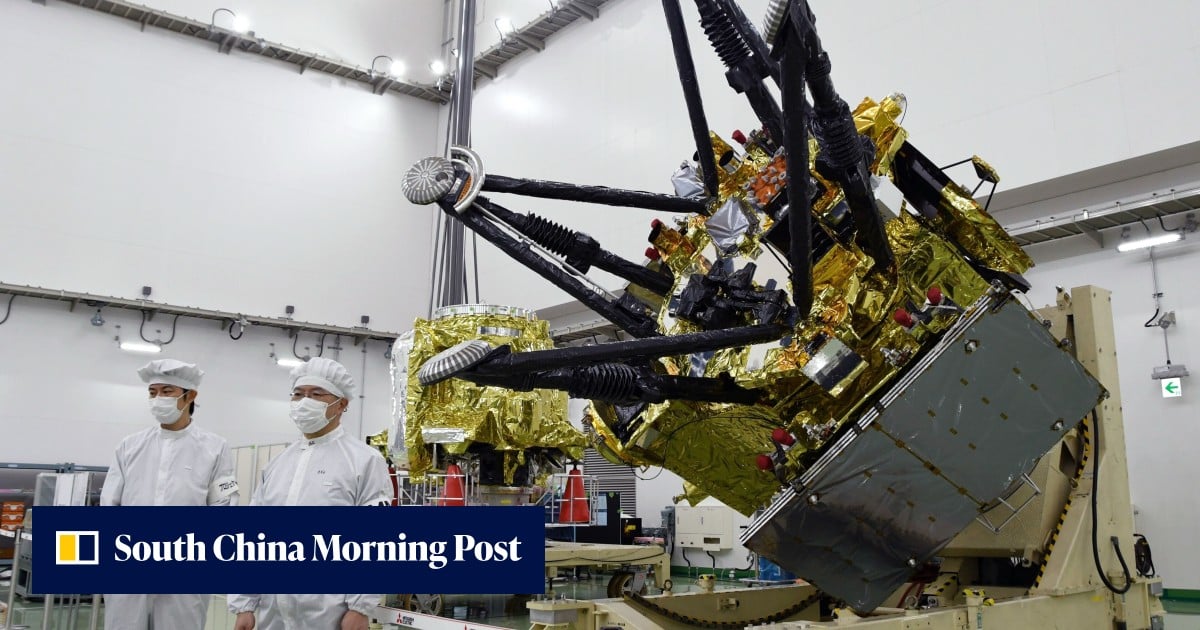
Dubbed MMX for Martian Moons Exploration, the $578 million mission features a hefty 5-ton spacecraft that should reach Mars by late next summer. asserted
that → dub → summer
It will sync up with Phobos’ tight orbit around the red planet, before ejecting the French-German rover that’s named Idefix after the white terrier in the Asterix comics. asserted
that → sync → comics
No bigger than a microwave oven, Idefix will plop onto Phobos by itself, bouncing for several minutes before coming to a halt in the moon’s extraordinarily low gravity. asserted
Idefix → plop → gravity
What happens after Idefix the rover lands The four-wheeled rover is designed to right itself if it lands upside down. asserted
it → happen → itself
All bets are off, though, if it sinks into soft soil or gets wedged between rocks, said the French Space Agency’s Julien Baroukh. asserted
Baroukh → sink → rocks
Once the rover’s solar panels are deployed, the vehicle can no longer right itself, he added, which is why it will move at a glacial 1 millimeter per second (0.04 inches per second). asserted
it → deploy → second
Idefix will serve as a “scout for safety,” according to Baroukh, as it prowls around Phobos for 100 days. uncertain
it → serve → days
Japanese flight controllers want to avoid powdery soil and rough terrain when the mothership — a four-legged stationary lander — descends to the surface to gather samples in late 2028 or 2029. asserted
mothership → want → 2028
The lander will spend just two hours on Phobos, drilling and vacuuming up at least one-third of an ounce (10 grams) of material, before launching back into space. asserted
lander → spend → space
It will study Deimos during a series of flybys before leaving the Martian neighborhood in 2030 and hustling back to Earth for a 2031 sample delivery in the Australian desert. asserted
It → study → desert
It’s a treacherous undertaking, with wreckage littering the path. asserted
wreckage → ’ → path
The moons’ names aren’t exactly comforting: Phobos is Greek for fear and Deimos means dread. asserted
Deimos → mean → dread
They’re the twin sons of the god of war Ares — Mars in Roman mythology. asserted
They → ’re → mythology
Scientists hope to learn how Mars’ 2 moons formed Russia stumbled in all three of its Phobos attempts as well as many other Mars endeavors. asserted
Russia → hope → attempts
In its only other Mars mission, Japan failed to get a spacecraft into orbit around the red planet. asserted
Japan → fail → planet
Even NASA has had its share of flops in a bid to answer the burning question: Did life ever exist on Mars? asserted
life → have → Mars
By studying Mars’ moons, scientists hope to learn whether Phobos and Deimos formed in the aftermath of an ancient collision between Mars and a battering space rock. asserted
Phobos → study → Mars
It’s also possible that the moons might be stray asteroids that became ensnared in Mars’ gravity. uncertain
that → ’ → gravity
Either way, scientists anticipate finding traces of Mars on Phobos, making the samples an irresistible two-for-one that should help demystify planetary and moon formation, and perhaps even the recipe for life. asserted
that → anticipate → life
The findings will help shape future Mars missions, including those by astronauts, said NASA’s acting planetary science director Lindsay Hays. asserted
director → help → astronauts
We are part of the first sample return mission from the Martian system,” said the Germany Space Agency’s rover chief Markus Grebenstein. asserted
chief → say → system
Japan isn’t the only one looking to claim the scientific riches packed into the Martian system’s rocks and dirt. uncertain
Japan → look → rocks
China plans to launch a sample return mission to Mars in 2028, while NASA is still debating how to retrieve the more than 30 sample tubes collected by the Perseverance Mars rover, the new champion for off-Earth driving. asserted
NASA → plan → driving
Japan and China could be neck-and-neck in getting samples back from the Martian system. uncertain
Japan → get → system
Both are targeting 2031. asserted
Both → target → 2031
Japan is investing $350 million in this mission. asserted
Japan → invest → mission
NASA is contributing $87 million, the French Space Agency about $68 million, the German Space Agency about $56 million and the European Space Agency some $17 million. asserted
Agency → contribute → million
The Associated Press’ health and science coverage receives financial support from the AP Fund for Journalism and private foundations. asserted
coverage → receive → Journalism

💬Give feedback
🕘History 🎫Support