Time to take forward ties ‘without backsliding’, says China’s Foreign Minister

The Hindu · collected 2026-09-14 · by Ananth Krishnan
Read the original at The Hindu ↗

Summary

China’s Foreign Minister Wang Yi stated that China and India have reached an important consensus to be partners and move forward in their relationship without regression. Speaking after a meeting between Chinese President Xi Jinping and Indian leaders during the BRICS Summit in New Delhi on September 12, 2026, Wang emphasized the need for both nations to translate this shared vision into concrete actions, highlighting that normalization has been gradual over the past three years since relations thawed following a four-year freeze.
Written by the local model on 2026-09-14, using this article's own text rather than the other coverage of the same event (that is the story summary below).

Signals How these are calculated →

Claims extracted
10
claim-shaped sentences
Uncertain
0%
0 of 10 hedged
Leaning
not political
takes no side on a contested political question
Correction & hedging signals
95.5
corrections and hedging in what we collected; not a measure of accuracy
Outlets on this story
24
Politics
Narrative spread
1
articles carrying this framing
Analyzed 2026-09-14 · how these are computed

AI analysis (generated at analysis time, not now)

Story summary

The 18th BRICS Summit was held in New Delhi on September 9-10, 2026, with leaders from Brazil, Russia, India, China, South Africa, and eight other observer nations in attendance. The summit aimed to strengthen the bloc's political and economic influence as an alternative to Western-led global governance structures. However, internal divisions within BRICS—particularly between India and China—hampered efforts for cohesive action.

Chinese President Xi Jinping received a warm welcome during his first visit to India since 2019, symbolizing thawing relations despite ongoing border disputes. Indian Prime Minister Narendra Modi emphasized the need for cooperation within the expanded BRICS framework while maintaining ties with Western powers like the United States.

Key discussions revolved around trade, payment systems, and reducing reliance on foreign currencies. Union Commerce Minister Piyush Goyal urged BRICS nations to link their payment systems and conduct more trade in local currencies, highlighting the bloc's significant economic weight representing nearly 40% of global GDP.

Despite these efforts, challenges remain due to differing national interests and priorities among member states. India, for instance, continues to value its relationship with the U.S., while China seeks greater influence globally through initiatives like the Shanghai Cooperation Organization (SCO). These internal dynamics limit BRICS' ability to present a united front against Western dominance.

Overall, while the summit marked progress in bilateral relations and economic collaboration, it also highlighted the group's struggle for unified action on global issues.


Written for “BRICS Summit India 2023” on 2026-09-14, grounded in this article and the 23 other(s) covering the same event.
Why this leaning score
This article does not take a side on a contested political question, so it has no leaning score. That is an answer rather than a gap: a match report or a rescue can be warmly or critically written without being left or right, and scoring it anyway is how approval of a subject gets recorded as a political position.
No political leaning scored for article 8955 · logged 2026-09-14

Story

📰 BRICS Summit India 2023
Politics · 24 article(s) covering the same event.

How this is being covered How these are calculated →

Article leaning vs. publisher reliability
Source leaning vs. consistency

Compared with similar articles

This article reads unscored and hedges 0% of its claims. Each row says how that neighbour differs.
The Hindu
⚖️ leaning not scored 🔴 12% hedged 4 of 34 📰 publisher trust 96
“Both articles report on President Xi Jinping's visit to India for the BRICS Summit on September 12, 2026.”
South China Morning Post
⚖️ leaning not scored 🔴 0% hedged 0 of 7 📰 publisher trust 93
“Both articles describe the meeting between Chinese President Xi Jinping and Indian Prime Minister Narendra Modi on September 12, 2026, during the Brics summit in New Delhi.”
The Hindu · 0.86 cosine similarity
⚖️ leaning not scored 🔴 0% hedged 0 of 14 📰 publisher trust 96
“Both articles discuss the meeting between Chinese President Xi Jinping and Indian Prime Minister Narendra Modi on September 12, 2026, during the BRICS Summit in New Delhi.”
Deutsche Welle
⚖️ leaning not scored 🔴 10% hedged 4 of 39 📰 publisher trust 95
“Both articles describe the meeting between Chinese President Xi Jinping and Indian Prime Minister Narendra Modi during the BRICS summit in New Delhi on September 12, 2026.”
The Guardian
⚖️ Leans left 🔴 4% hedged 1 of 24 📰 publisher trust 94
“Both articles describe the same specific visit of Chinese President Xi Jinping to New Delhi for the BRICS Summit on September 12, 2026.”
Euronews
⚖️ Leans left 🔴 7% hedged 1 of 14 📰 publisher trust 95
“Article A describes the arrival and initial welcome of BRICS leaders in India ahead of the summit, while Article B discusses a subsequent meeting between Chinese Foreign Minister Wang Yi and Indian officials regarding bilateral ties during the summit.”
Al Jazeera
⚖️ Leans left 🔴 11% hedged 7 of 62 📰 publisher trust 96
“The articles discuss different aspects of BRICS-related events; Article A mentions an upcoming summit while Article B reports on a meeting that already took place.”
South China Morning Post
⚖️ Leans left 🔴 14% hedged 1 of 7 📰 publisher trust 93
“The articles describe different parts of the broader Brics summit in New Delhi, with Article A focusing on President Xi's proposal for AI cooperation while Article B discusses a bilateral meeting between China and India.”
Al Jazeera
⚖️ Leans left 🔴 8% hedged 4 of 50 📰 publisher trust 96
“The articles describe different parts of the BRICS summit happening on consecutive days with distinct focuses.”
The Hindu
⚖️ Leans left 🔴 6% hedged 1 of 17 📰 publisher trust 96
“The articles discuss different aspects of China's engagement during the BRICS Summit; Article A focuses on President Xi's address to the summit, while Article B covers a meeting between Chinese and Indian leaders in New Delhi.”

Publisher

The Hindu · 190 article(s) · 0 correction(s) detected
No corrections detected for this publisher. That may mean careful reporting, or simply that nothing has been checked.

Who wrote this

Ananth Krishnan
6 article(s) here · 1 carrying a prediction
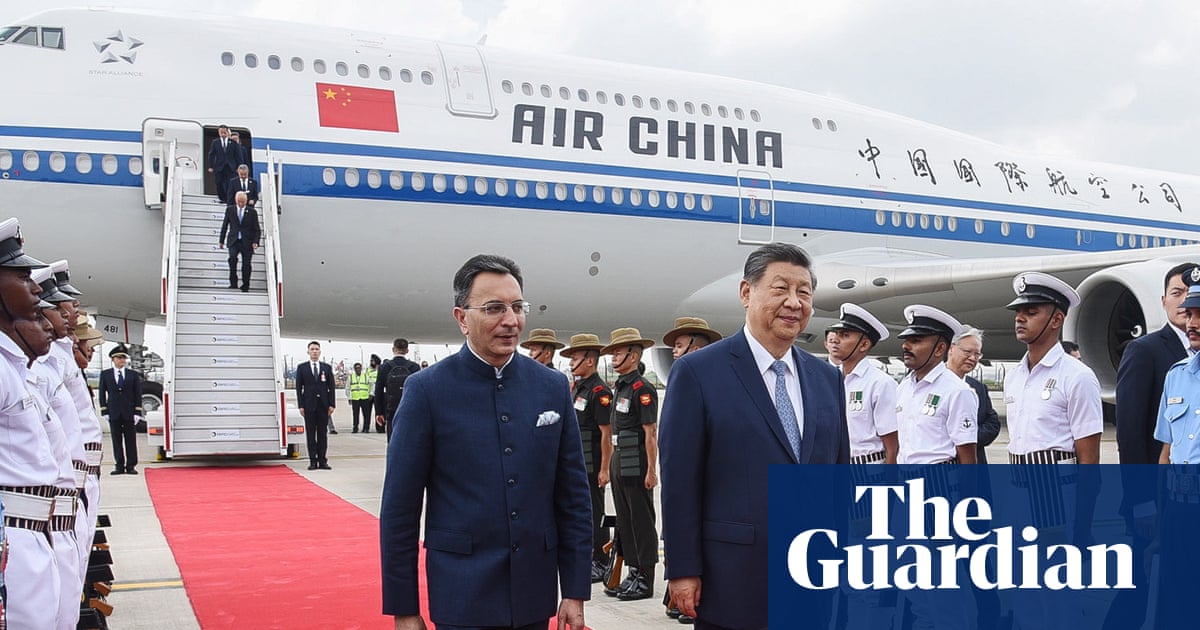
🔮 China’s Foreign Minister Wang Yi has said that the leaders of India and China reached “an important consensus” that the two countries should be partners, and Beijing hoped Saturday’s (September 12, 2026) meeting in New Delhi would see both countries take forward ties “without stagnation or backsliding”.
🔮 China on Friday (September 11, 2026) said it was willing to work with India to handle relations “from a strategic height and long-term perspective”, a day ahead of Chinese President Xi Jinping’s first trip to India in seven years.
🔮 China announced on Thursday (September 10, 2026) that President Xi Jinping will attend the BRICS Summit in New Delhi on September 12, on what will be his first visit to India in almost seven years.
🔮 "We must shoulder the principal responsibility for project‑building and build this landmark mega project of the new era,” he was quoted as saying, adding that the government would “put quality first, safety as the foundation, strictly enforce construction standards and ecological‑environmental‑protection requirements, and keep construction progress subordinate to quality and safety.”
🔮 “According to their analysis, the disaster may have been triggered by the collapse of a high altitude glacier in Nepal.”
🔮 Ahead of talks in Beijing on Tuesday (August 25, 2026) between National Security Advisor Ajit Doval and China’s Foreign Minister Wang Yi, Hu Shisheng, a leading Chinese strategic affairs scholar on South Asia, said the focus of both countries would be on “institutionalising stability” even as “structural differences” in the relationship remained.
More on this subject from Ananth Krishnan
All 6 articles by Ananth Krishnan →

Topics

Beijing China Chinese India New Delhi

Subjects

China GPE · 7× India GPE · 5× Wang PERSON · 4× Chinese NORP · 2× New Delhi GPE · 2× Beijing GPE · 1× Kazan GPE · 1× State ORG · 1× Wang Yi PERSON · 1× Xi Jinping PERSON · 1×

Narrative

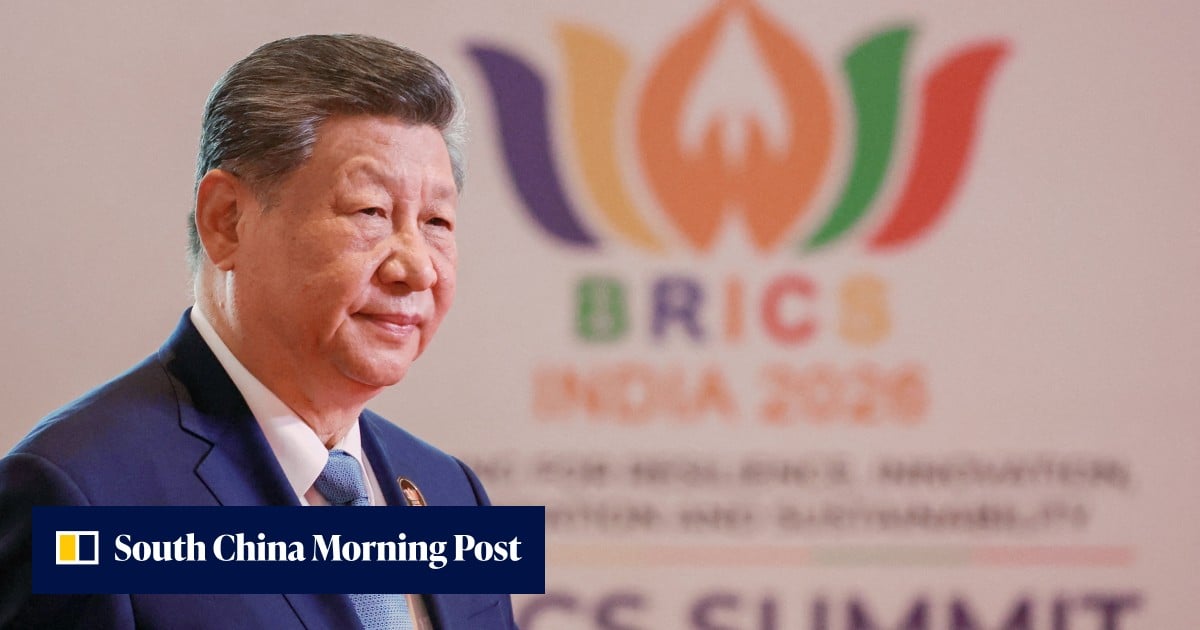
Mr. Wang, who accompanied Chinese President Xi Jinping on his visit to New Delhi for the BRICS Summit, told State media, briefing them on the talks, that the two leaders held “a candid, in-depth exchange of views on issues affecting the countries of a strategic, long-term, and direction-setting nature, and reached a most important consensus that China and India should be partners.”
framing: assertive · carried by 1 article(s) · first seen 2026-09-14
🔮 China’s Foreign Minister Wang Yi has said that the leaders of India and China reached “an important consensus” that the two countries should be partners, and Beijing hoped Saturday’s (September 12, 2026) meeting in New Delhi would see both countries take forward ties “without stagnation or backsliding”.

Claims (10 extracted, 0 hedged)

China’s Foreign Minister Wang Yi has said that the leaders of India and China reached “an important consensus” that the two countries should be partners, and Beijing hoped Saturday’s (September 12, 2026) meeting in New Delhi would see both countries take forward ties “without stagnation or backsliding”. asserted
countries → say → stagnation
Mr. Wang, who accompanied Chinese President Xi Jinping on his visit to New Delhi for the BRICS Summit, told State media, briefing them on the talks, that the two leaders held “a candid, in-depth exchange of views on issues affecting the countries of a strategic, long-term, and direction-setting nature, and reached a most important consensus that China and India should be partners.” asserted
China → accompany → consensus
He quoted Mr. Xi as saying that “under the strategic guidance of the two countries’ leaders, China-India relations have gradually emerged from a low point, progressing from a ‘restart’ to a ‘renewed height.’ asserted
relations → quote → height
Mr. Wang said the “normalisation and improvement of China-India relations has been hard-earned, and that this progress deserves to be cherished.” Following the third meeting between the two leaders in three years, he hoped India “will join China in translating the leaders’ shared consensus into action”. asserted
India → say → action
“Both nations should remain partners rather than rivals, and advance bilateral relations steadily forward without stagnation or backsliding,” Mr. Wang added. asserted
Wang → remain → stagnation
His comments on “backsliding” speak to the view among some Chinese officials that the normalisation process over the past three years had unfolded in fits and starts, with slow progress on resuming exchanges. asserted
process → speak → exchanges
India has said that maintaining peace and tranquility on the borders provided the basis for resuming exchanges, as both sides emerged from a four-year freeze in relations. asserted
sides → say → relations
Ties have gradually normalised after the two leaders met in Kazan in October 2024. asserted
leaders → normalise → October
Mr. Wang repeated China’s view that “the border issue should be placed in the appropriate position within the broader context of the bilateral relationship”. asserted
issue → repeat → relationship
“Dialogue and cooperation should remain the prevailing trend,” he said, “and both nations should accelerate their respective development and national renewal.” asserted
nations → remain → development
💬 Give feedback
🕘 History 🎫 Support