Arthur Brooks: Why Americans No Longer Grieve Together

The Free Press · collected 2026-09-14 · by Arthur Brooks analysis
Read the original at The Free Press ↗

Summary

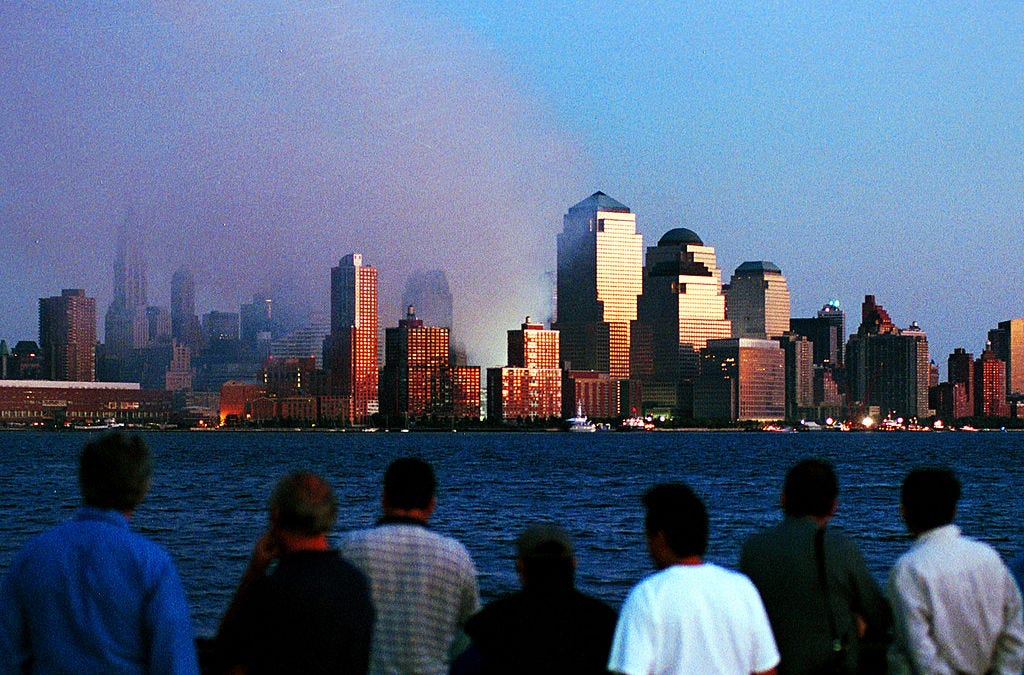
Arthur Brooks reflects on the events of September 11, 2001, recalling his personal experience in New York City that day and noting how Americans united in response to the attacks. He cites Pew Research data showing a significant increase in trust towards the federal government from 31% before the attacks to 60% immediately after, alongside heightened volunteerism across various causes unrelated to 9/11.
Written by the local model on 2026-09-14, using this article's own text rather than the other coverage of the same event (that is the story summary below).

Signals How these are calculated →

Claims extracted
16
claim-shaped sentences
Uncertain
12%
2 of 16 hedged
Leaning
Leans right
of the writing, not the subject
Correction & hedging signals
96.4
corrections and hedging in what we collected; not a measure of accuracy
Outlets on this story
169
Politics
Narrative spread
1
articles carrying this framing
Analyzed 2026-09-14 · how these are computed

AI analysis (generated at analysis time, not now)

Story summary

Twenty-five years after the September 11, 2001 attacks, the event continues to have profound personal and societal impacts. Colin McShane, whose firefighter father died that day when he was just 4½ years old, reflects on his loss and the missed opportunity to truly know his dad. Meanwhile, Sue Riccardelli and Maureen Murray of New Jersey honor their hosts in Gander, Newfoundland, who took care of stranded passengers after 9/11 by flying a flag outside their home and bringing it to performances of "Come From Away," a musical about the event. In New York City, 2,977 people died at ground zero, including 79 workers from Windows on the World restaurant; many more responders have since fallen ill or died due to exposure to toxins while working at the site in its aftermath. The long-term health program for those affected by 9/11 has struggled with funding shortages and is now treating individuals who are still getting sick decades later, leading to a higher death toll from post-attack illnesses than initial casualties.

Written for “9/11 Aftermath Memories Reflections” on 2026-09-14, grounded in this article and the 168 other(s) covering the same event.
Why this leaning score
The article's own words the score was based on. Each is quoted verbatim and was checked against the article text before being stored, so you can find it in the original.
Score +0.35 Confidence high
Leaning score +0.35 for article 8856 (high confidence, 2 verified quotes) · logged 2026-09-14

Story

📰 9/11 Aftermath Memories Reflections
Politics · 169 article(s) covering the same event. This is the one the site leads with.

How this is being covered How these are calculated →

Article leaning vs. publisher reliability
Source leaning vs. consistency

Compared with similar articles

This article reads leans right and hedges 12% of its claims. Each row says how that neighbour differs.
NPR
⚖️ leaning not scored 🔴 4% hedged 2 of 47 📰 publisher trust 59
“Article A describes commemorations on the 25th anniversary of 9/11, while Article B recounts personal experiences and reflections from the day of the attacks themselves.”
Daily Mail
⚖️ leaning not scored 🔴 2% hedged 1 of 46 📰 publisher trust 58
“Article A describes a memorial event in London for the 25th anniversary of the 9/11 attacks, while Article B is an account by Arthur Brooks describing his personal experience on the day of the original 9/11 terrorist attacks.”
The Dispatch
⚖️ leaning not scored 🔴 0% hedged 0 of 4 📰 publisher trust 97
“Article A discusses a call made by the author's mother on September 11th to check if he was safe, while Article B recounts the author’s personal experience of seeing the attack from his taxi on its way to Manhattan. Although both refer to the same historical day, they describe different specific occurrences.”
On Being a 9/11 Kid different event · 90%
The Dispatch
⚖️ leaning not scored 🔴 0% hedged 0 of 3 📰 publisher trust 97
“Article A discusses personal impact and loss from September 11, while Article B recounts the author's firsthand experience witnessing the events as they unfolded on that day.”
National Post
⚖️ leaning not scored 🔴 5% hedged 4 of 86 📰 publisher trust 96
“The articles describe different events: one is a personal account of being in school near the World Trade Center on 9/11, while the other describes witnessing the attacks from a taxi en route to Manhattan.”
The Independent
⚖️ leaning not scored 🔴 6% hedged 7 of 121 📰 publisher trust 59
“The articles describe different moments related to September 11th but do not cover the same specific incident.”
TIME
⚖️ Leans strongly left further left than this 🔴 7% hedged 3 of 42 📰 publisher trust 95
“While both articles refer to personal experiences and reflections on 9/11, they describe different aspects of the day's events from distinct perspectives.”
9/11 Changed Our Politics different event · 90%
Persuasion
⚖️ Leans strongly right further right than this 🔴 7% hedged 7 of 98
“Article A discusses the broader impact of 9/11 on American politics and national identity, while Article B describes a personal account of witnessing the events of 9/11.”
The Guardian
⚖️ Leans left further left than this 🔴 6% hedged 2 of 36 📰 publisher trust 60
“Article A describes the commemoration of the September 11 anniversary on its 25th year, while Article B recounts a personal experience during the actual attacks in 2001.”
Reason
⚖️ Leans strongly left further left than this 🔴 9% hedged 8 of 87 📰 publisher trust 92
“While both articles describe personal experiences related to 9/11, they refer to different time points and details — Article A focuses on witnessing the aftermath as a child, while Article B recounts arriving in NYC shortly before the attacks occurred.”

Publisher

The Free Press · 98 article(s) · 0 correction(s) detected
No corrections detected for this publisher. That may mean careful reporting, or simply that nothing has been checked.

Who wrote this

Arthur Brooks
2 article(s) here · 1 carrying a prediction
🔮 For all the horror of that day, however, most of us will also remember something very positive that happened in the immediate aftermath: America came together.
2026-09-14 · assertive framing · Arthur Brooks: Why Americans No Longer Grieve Together
🔮 According to a survey of college grads by the National Association of Colleges and Employers in 2023, when asked if they would go to college again, 91 percent say they would.
2026-09-08 · assertive framing · Arthur Brooks: How to Be Happy at College
Also by Arthur Brooks
Arthur Brooks: How to Be Happy at College
2026-09-08 · The Free Press
Nothing else under this byline is closely related to this article, so these are simply their most recent.

Topics

America Manhattan New York City Queens Sunnyside

Subjects

America GPE · 2× New York City GPE · 2× Americans NORP · 1× George W. Bush PERSON · 1× Manhattan GPE · 1× Queens GPE · 1× Rudy Giuliani PERSON · 1× Sunnyside GPE · 1× the Pew Research Center ORG · 1×

Narrative

In that tunnel about 15 minutes later, I learned via the taxi’s radio that an airplane had smashed into the North Tower, and that the South Tower had now been hit as well.
framing: assertive · carried by 1 article(s) · first seen 2026-09-14
🔮 For all the horror of that day, however, most of us will also remember something very positive that happened in the immediate aftermath: America came together.
2026-09-14 · The Free Press
Arthur Brooks: Why Americans No Longer Grieve Together · assertive framing

Claims (16 extracted, 2 hedged)

One gorgeous Tuesday morning 25 years ago, I grabbed a cab from LaGuardia Airport into New York City. asserted
I → grab → City
I was there for only a day to do a few meetings. asserted
I → do → meetings
From the Long Island Expressway, somewhere around Sunnyside, Queens, I looked out the window at the remarkable Lower Manhattan skyline. asserted
I → look → skyline
At which point, the side of the World Trade Center’s North Tower exploded. asserted
side → explode → Tower
Traffic snarled almost immediately, and within minutes, fire trucks began to race past us into the Queens–Midtown Tunnel toward Manhattan. asserted
trucks → snarl → Manhattan
In that tunnel about 15 minutes later, I learned via the taxi’s radio that an airplane had smashed into the North Tower, and that the South Tower had now been hit as well. asserted
Tower → learn → Tower
I got out at the corner of Fifth Avenue and 37th Street, where I had a direct view of the towers, which were both engulfed in smoke. asserted
which → get → smoke
Over the next 90 minutes, it became clear that this was no accident. asserted
this → become → minutes
I watched as the towers crumbled to the ground. asserted
towers → watch → ground
Every Free Press reader over a certain age has a story about where they were when this terrorist atrocity occurred. asserted
atrocity → have → story
Many, like me, witnessed it with their own eyes—or, far worse, lost friends and loved ones in the attack. asserted
Many → witness → attack
For all the horror of that day, however, most of us will also remember something very positive that happened in the immediate aftermath: America came together. asserted
America → remember → aftermath
According to the Pew Research Center, right before the attacks, 31 percent of Americans said that they trusted the federal government to do what was right “just about always” or “most of the time”; shortly after, that number had nearly doubled, to 60 percent, a 30-year high. uncertain
number → accord → percent
New York City mayor Rudy Giuliani was widely celebrated as “America’s Mayor,” and President George W. Bush’s favorability rating sat at 90 percent by late September 2001. asserted
rating → celebrate → September
Trust in government and leadership may not seem like an automatic proxy for national unity but, in fact, it does track closely with how positive and engaged citizens feel about their larger community. uncertain
citizens → seem → community
Volunteering rates skyrocketed, not just for 9/11-related charities, but for those unconnected with the tragedy as well. asserted
rates → skyrocket → tragedy
💬 Give feedback
🕘 History 🎫 Support