The powerful millionaires hiding in plain sight
This article first appeared in the Planet Money newsletter.
asserted
article → hide → newsletter
You can sign up here.
asserted
You → sign → ?
Who is rich in America, and how did they get there?
asserted
they → get → America
That's the central question of an eye-opening new book, The Everywhere Millionaire, by two economists who have spent more than a decade researching the wealthiest Americans.
asserted
who → open → Americans
Their answer challenges the popular narrative that America is in a new Gilded Age dominated by a small number of spectacularly rich billionaires.
asserted
America → challenge → billionaires
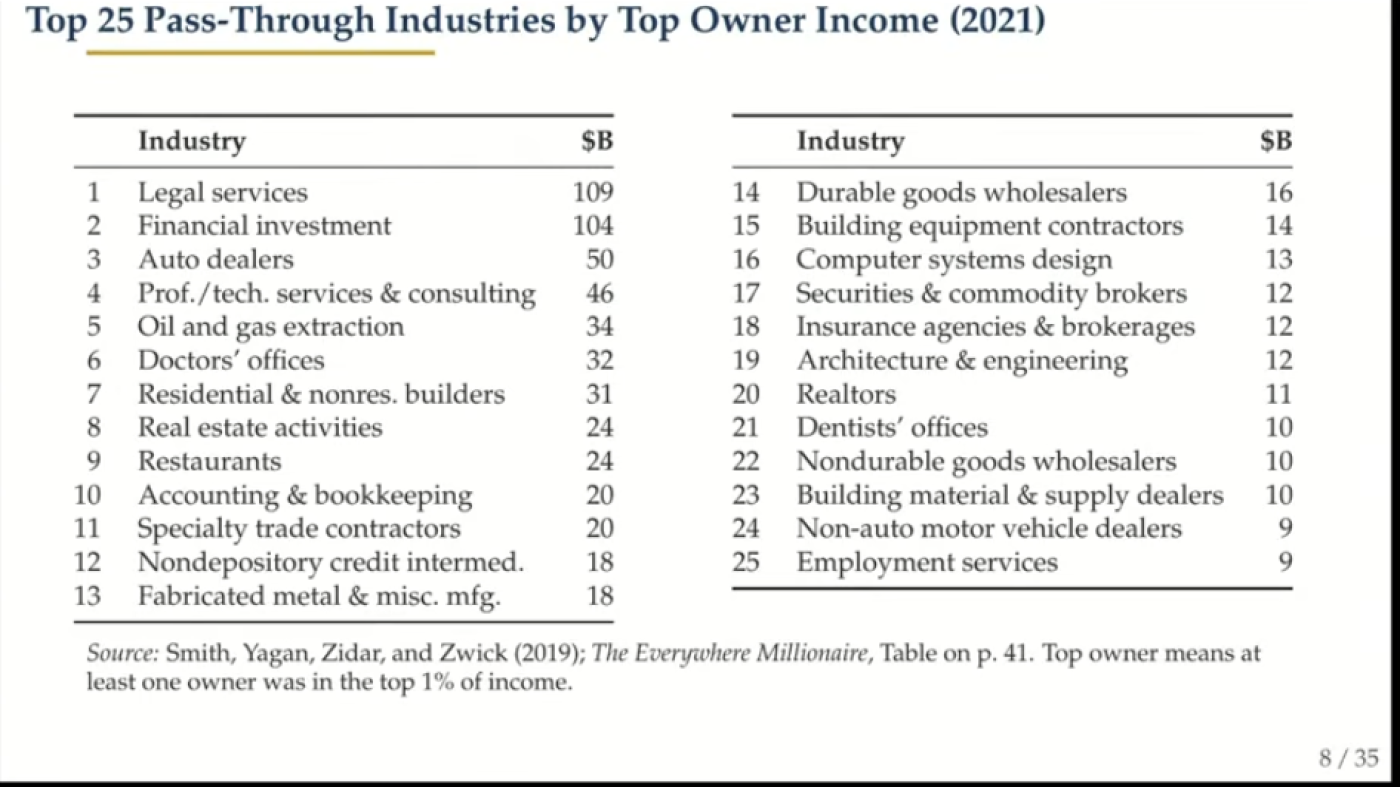
And, often, they got rich in mundane ways.
asserted
they → get → ways
They own car dealerships.
asserted
They → own → dealerships
They sell hot dogs and frozen mini-quiches.
asserted
They → sell → dogs
They run waxing salons.
asserted
They → run → salons
They supply fabricated metal and urinal cakes.
asserted
They → supply → metal
Collectively, these "Main Street millionaires" control much more wealth than the billionaire lightning rods who launch rockets into space, appear on manosphere podcasts, and have Hollywood movies made about them.
asserted
who → control → them
Many of these millionaires have also grown rich enough to afford superyachts, 10,000-square-foot homes, and pet tigers.
asserted
Many → grow → superyachts
And the book suggests that, as a group, their political power can rival that of the billionaire "oligarchs."
uncertain
power → suggest → oligarchs
A few decades ago, these businesses collectively made far less money than Corporate America.
asserted
businesses → make → America
But by 2011, they were generating more income than all traditional U.S. corporations combined — and accounting for most of the rise in the share of income flowing to the top "one percent."
asserted
they → generate → percent
The book estimates that there are about three million of these private business owners in the United States.
asserted
book → estimate → States
The Everywhere Millionaire paints a complicated picture of these millions of Main Street millionaires.
asserted
Millionaire → paint → millionaires
Some embody the American Dream: self-made entrepreneurs who rose from rags to riches by offering consumers better products and services.
asserted
who → embody → products
The book shows how many Main Street millionaires have used their clout to shape public policy in their favor.
asserted
millionaires → show → favor
They've triumphed in major battles to lower their tax bills.
asserted
They → triumph → bills
And, in many industries, they've fought for — and often won — rules and regulations that can protect their profits and raise costs for consumers.
asserted
that → fight → consumers
Yet they've been largely missing from the national conversation.
asserted
they → miss → conversation
Which is why the book's authors, Eric Zwick and Owen Zidar, sometimes call them the "stealthy wealthy."
asserted
authors → call → them
It helps that it rhymes.
asserted
it → help → ?
The book spends a lot of time making this wealthy group less stealthy with statistics and stories.
asserted
group → spend → statistics
But Zidar and Zwick are more interested in understanding them than in portraying them as heroes or villains.
"
asserted
Zidar → understand → heroes
They are the protagonists, but some of them are protagonists in the same way Tony Soprano is a protagonist," Zwick says.
asserted
Zwick → say → way
The story of The Everywhere Millionaire begins back in 2014, when three young economists were toiling away in the basement of the U.S. Treasury Department.
asserted
economists → begin → Department
Their older colleagues called them "the Three Amigos," probably a reference to the 1986 movie starring Steve Martin, Chevy Chase, and Martin Short.
asserted
colleagues → call → Martin
But, being Millennials who grew up on Teenage Mutant Ninja Turtles and — this is a deep cut — the movie 3 Ninjas, they privately adopted a much sillier name for themselves: "the Tax Ninjas."
asserted
they → grow → themselves
They have since karate-chopped their way into the upper echelons of academic economics: Yagan is now a professor at UC Berkeley, Zidar is at Princeton, and Zwick is at the University of Chicago.
asserted
Zwick → chop → Chicago
Back in 2014, they were fresh out of grad school and, in between playing pickup games of basketball, they were serving as basically glorified interns — or "unpaid experts" — at the U.S. Treasury Department.
asserted
they → play → Department
Leaders at the Treasury wanted to know how much private businesses were paying in taxes, and they recruited these young brainiacs to help.
asserted
they → want → brainiacs
The Tax Ninjas had a formidable enemy in their quest: the state of data and technology at the Internal Revenue Service (IRS).
asserted
Ninjas → have → Service
Economists, tax analysts, and policymakers couldn't get a complete picture of how the rich were making their money.
asserted
rich → get → money
If they could comprehensively link the tax records of private businesses to their individual owners, the Ninjas could get compelling answers to fundamental economic questions.
uncertain
Ninjas → link → questions
Like, what kinds of businesses were propelling people into the top of the income distribution?
asserted
kinds → propel → distribution
In which industries were they making fortunes?
asserted
they → make → fortunes
And how much were their businesses really paying in taxes?
asserted
businesses → pay → taxes
The Ninjas embarked on a treacherous journey, flipping and slashing through data and linking millions of private businesses to the millions of individual taxpayers who owned them.
asserted
who → embark → them
…and 135 more, not listed.