This article first appeared in the Planet Money newsletter.
asserted
article → appear → newsletter
You can sign up here.
asserted
You → sign → ?
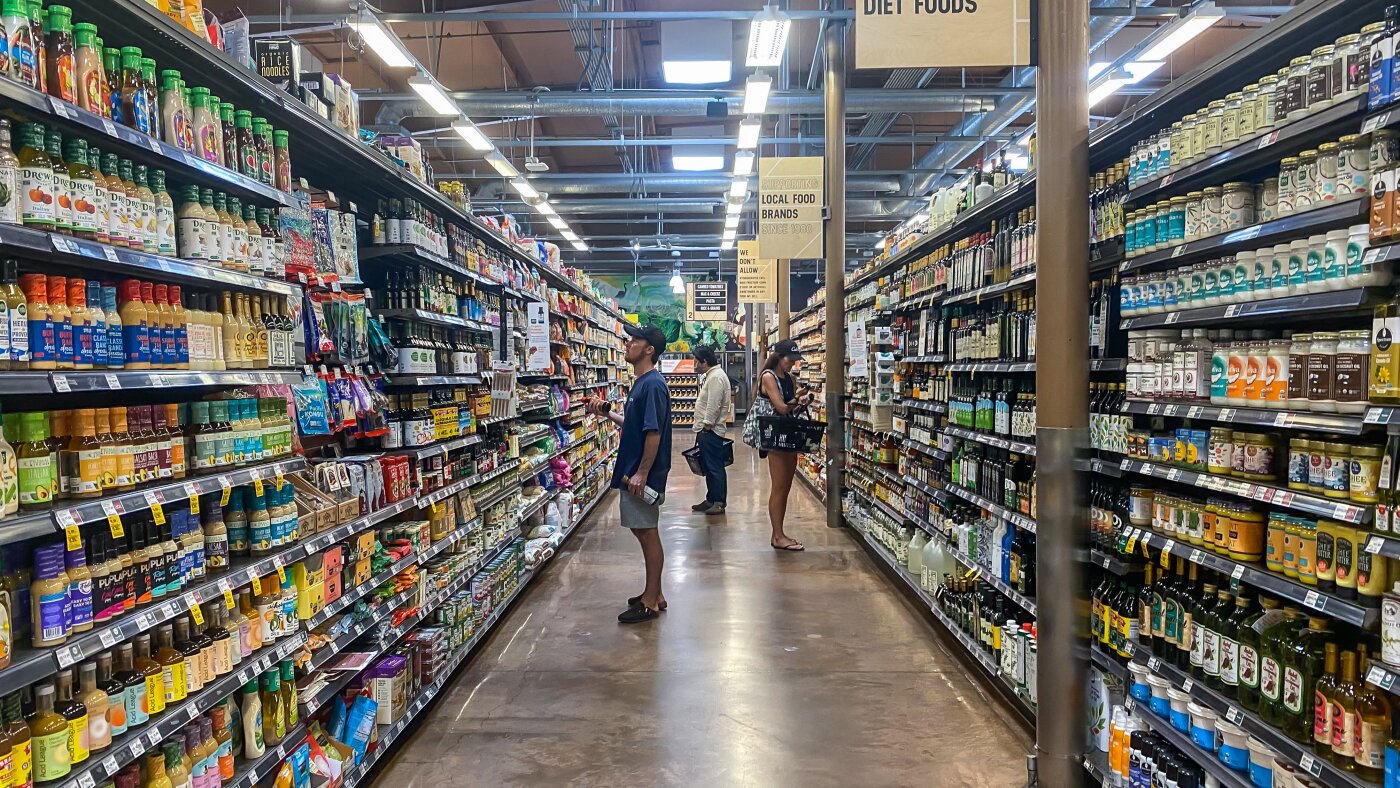
If you go to a store like Whole Foods, you'll find a lot more than … whole foods.
asserted
you → go → foods
You'll also find bougie packaged snacks, cereals, and all sorts of other processed foods and drinks.
asserted
You → find → foods
Often they'll have buzzwords on their packaging.
asserted
they → have → packaging
These products tend to cost more, and they come with a sort of promise: they're better for you than the cheaper stuff.
asserted
they → tend → stuff
Sometimes it's because they're still packed with sugar, salt, saturated fat, preservatives, and other additives.
asserted
they → pack → sugar
Other times their healthy-sounding ingredients aren't actually healthier (labels like "organic" and "non-GMO" don't necessarily make a product more nutritious).
asserted
product → make → organic
In other, more extreme cases, these products may not even include the healthier ingredients they're charging you a premium for.
uncertain
they → include → premium
Our NPR colleague Maria Godoy recently reported on a new study by researchers at UC Davis that suggests a bunch of avocado-oil products have false claims on their packaging.
uncertain
bunch → report → packaging
The researchers did a chemical analysis of 54 products that listed avocado oil as their only oil ingredient.
asserted
that → do → ingredient
We're talking swanky products like avocado-oil potato chips, salad dressing, and mayonnaise.
asserted
We → talk → chips
The researchers found that, despite being labeled as containing only that pure, uncut avocado oil — a whopping 89% of the products they tested appeared to be adulterated with other oils.
asserted
they → find → oils
One avocado-oil product appeared to have no avocado oil at all, according to one of the researchers.
uncertain
product → appear → researchers
For Millennials like me who sustain ourselves almost exclusively on avocado products, it's enough to make you fall into an avocado pit of despair.
asserted
you → sustain → despair
The good news is that this appears to be one of the more egregious recent examples of food mislabeling.
asserted
this → appear → mislabeling
If a product lists avocado oil as its only oil ingredient but actually contains other oils, that could violate federal food-labeling rules.
uncertain
that → list → rules
The study did not determine who introduced the other oils or whether the brands themselves knew about them.
asserted
brands → determine → them
But it could help lead to more accurate labels.
uncertain
it → help → labels
The bad news, however, is that companies don't have to literally lie on their ingredient lists to mislead consumers.
asserted
companies → have → consumers
They can nudge consumers into believing their products are healthier — and worth paying a premium price — by using buzzwords, clever packaging, and other marketing gimmicks.
asserted
products → nudge → buzzwords
Some consumer advocates call this "healthwashing."
asserted
advocates → call → this
So in this edition of the Planet Money newsletter, we're digging into the economics of healthwashing.
asserted
we → dig → healthwashing
And what, if anything, should regulators do about it?
asserted
regulators → do → it
Along the way, we called up one of the legends of food policy to help us figure out how to shop without getting hoodwinked.
asserted
us → call → policy
The economics of healthwashing
The economics of healthwashing starts with a simple reality: we often don't really know what's in the food products we're buying.
asserted
we → start → products
Economists have one of those off-putting, jargony terms for this: asymmetric information.
asserted
Economists → have → this
It's when one side of a transaction has less information than the other.
asserted
side → have → other
And it can have serious consequences for the health of a marketplace.
asserted
it → have → marketplace
One consequence is that it gives businesses more opportunities to mislead and overcharge consumers.
asserted
it → give → consumers
Think getting ripped off by a mechanic, being convinced to get an unnecessary test by a doctor, buying a crappy used car from a dishonest dealer — or paying $10 for a bag of supposedly pure avocado-oil chips when those chips are actually made with cheaper, less Millennial-coded oils.
asserted
chips → think → oils
In the absence of complete information about what we're buying, we consumers have to rely on clues to figure out whether the stuff we're buying is legit.
asserted
we → buy → clues
Where did this doctor go to med school?
asserted
doctor → go → school
Do I trust that this brand of avocado-oil chips is actually using avocado oil?
asserted
brand → trust → oil
It's like we're lost in the supermarket (h/t The Clash) and searching for anything that helps us make the best decision for ourselves and our families.
asserted
us → lose → ourselves
Economists see this sort of information problem as a justification for government intervention.
asserted
Economists → see → intervention
When buyers can't easily tell what they're buying, markets don't work as well as they should.
asserted
they → tell → what
That's why the federal government requires most packaged foods to disclose their ingredients and nutrition information.
asserted
government → require → ingredients
(Though, as Sarah Gonzalez recently reported for Planet Money, the FDA's oversight of our food system still has some surprising blind spots.)
asserted
oversight → report → spots
We don't have hours to spend at the grocery store decoding nutritional information.
asserted
We → have → information
…and 56 more, not listed.
 The Aporia