Scientists create 3D models of USS Monitor, a Civil War ship 240 feet underwater

Read the original at Times of India ↗
Cite

TOI Science Desk. (2026, October 15). Scientists create 3D models of USS Monitor, a Civil War ship 240 feet underwater. Times of India. https://timesofindia.indiatimes.com/science/discovery/scientists-create-detailed-3d-models-of-the-uss-monitor-a-civil-war-ship-lying-240-feet-underwater/articleshow/134941156.cms

Dated from the outlet's own feed. Check the original for its byline.

Times of India · collected 2026-10-16 · by TOI Science Desk

Quick Summary

Scientists from Monitor National Marine Sanctuary and engineers from Northrop Grumman conducted a 2025 sonar survey off Cape Hatteras, North Carolina, producing detailed three-dimensional models of the USS Monitor, an iconic Civil War ironclad ship resting 240 feet underwater. The compact uncrewed underwater vehicle used in this survey provided the highest-resolution scan ever of the wreck, revealing fine-scale details of the hull and internal structure despite challenging conditions. Maritime archaeologist Tane Casserley noted that these images confirm the Monitor remains in excellent condition, providing a crucial baseline for monitoring changes at the site over time.
Written locally by qwen2.5:14b on 2026-10-16, using this article's own text rather than the other coverage of the same event (that is the story summary below).

AI analysis runs on qwen2.5:14b, locally

Story summary

Scientists have created 3D models of the USS Monitor, a Civil War ironclad ship resting approximately 240 feet underwater off Cape Hatteras in North Carolina. This breakthrough was achieved using advanced sonar technology developed by Northrop Grumman, which deployed an uncrewed underwater vehicle equipped with high-resolution scanning capabilities at the Monitor National Marine Sanctuary in September 2025. The project, spearheaded by NOAA and supported by industry experts like Mike Witt, chief environment, quality and safety officer at Northrop Grumman, aims to help researchers document and monitor changes to the fragile historical site without causing damage. This technology not only aids in preserving the USS Monitor but also demonstrates how defense-related innovations can be applied to cultural heritage conservation efforts.

Written for “USS Monitor 3D Models” on 2026-10-16, grounded in this article and the 0 other(s) covering the same event.

Story

📰 USS Monitor 3D Models
Technology · 1 article(s) covering the same event.

Compared with similar articles

Nothing to compare against. No article is close enough to this one for the pipeline to have linked or judged the pair.
How this article was measured signals, leaning charts, publisher record, byline, topics and claims

Signals How these are calculated →

Claims extracted
29
sentences that state something as happening or true
Uncertain
10%
3 of 29 hedged ("reportedly", "may", "according to")
Leaning
not political
takes no side on a contested political question
Publisher signals
59/100
Times of India's corrections and hedging, across everything collected from it. Not a measure of accuracy.
Outlets on this story
1
Technology
Same framing elsewhere
1
articles that frame the event the way this one does
Analyzed 2026-10-16 · how these are computed

How this is being covered How these are calculated →

Article leaning vs. publisher reliability
Source leaning vs. consistency

Publisher

Times of India · 2646 article(s) · 2 correction(s) detected
Running correction rate · 2 correction(s)

Who wrote this

TOI Science Desk
263 article(s) here · 1 carrying a prediction
🔮 The result has a statistical significance of 2.6 sigma, indicating a roughly 0.5% chance that known background processes alone could explain the event.
🔮 The report says it is so small that many resonators could be packed onto a chip to perform complex functions.
🔮 The dataset also includes environmental observations and three-dimensional digital reconstructions, which the field note says will help researchers track change over time while documenting the fragile site without disturbing it.
🔮 Future studies tracing the particles to their sources and testing for biological effects could reveal whether microplastic ingestion actually threatens sea snake health, and whether limiting laundry wastewater pollution might reduce exposure along the Gulf coasts.
🔮 The researchers could connect enzyme motion, iron chemistry, and water-mediated proton transfer by capturing structural snapshots over milliseconds to seconds of reaction time.
🔮 The findings, published in the journal Aging Cell in 2026, could help researchers understand how age-related changes occur and whether some of them can be reversed.
🔮 She also developed a Michaelis-Menten computational model to identify an optimal aragonite dose, an important step towards exploring how such a system could eventually be adapted for practical use, the report adds.
🔮 A sandwich Gabriella Rothberg was making for her father when she was 15 led to an unusual question- Could a tomato be made to taste like meat?
🔮 According to Archaeology magazine, researchers believe the token may have been deliberately buried at the site by protesters.
🔮 Among all the animals and birds that have gone extinct, the dodo remains unforgettable, not due to some special characteristic, but because, before its human-driven extinction, many thought that nature was inexhaustible and none of god's creations would ever disappear.
Wire or desk byline, not an individual reporter.
Also by TOI Science Desk
Nothing else under this byline is closely related to this article, so these are simply their most recent.
All 263 articles by TOI Science Desk →

Topics

Civil War Monitor Northrop Grumman WAVY the Mariners' Museum

Subjects

Northrop Grumman ORG · 5× WAVY ORG · 4× Monitor GPE · 2× the Mariners' Museum ORG · 2× the National Oceanic and Atmospheric Administration ORG · 2× America GPE · 1× Casserley PERSON · 1× Monitor National Marine Sanctuary ORG · 1× North Carolina GPE · 1× Tane Casserley PERSON · 1×

Narrative

Northrop Grumman deployed the uncrewed underwater vehicle from their research vessel at Monitor National Marine Sanctuary (Image: Reese Bland/NOAA) How Northrop Grumman's conservation technology effort brought defence sonar to cultural preservation Mike Witt, chief environment, quality and safety officer at Northrop Grumman, told WAVY that the company develops technology to meet national security needs and then applies it to other purposes, including work with the National Oceanic and Atmospheric Administration and organisations such as the Chesapeake Bay Foundation.
framing: assertive · carried by 1 article(s) · first seen 2026-10-16
🔮 The dataset also includes environmental observations and three-dimensional digital reconstructions, which the field note says will help researchers track change over time while documenting the fragile site without disturbing it.

Claims (29 extracted, 3 hedged)

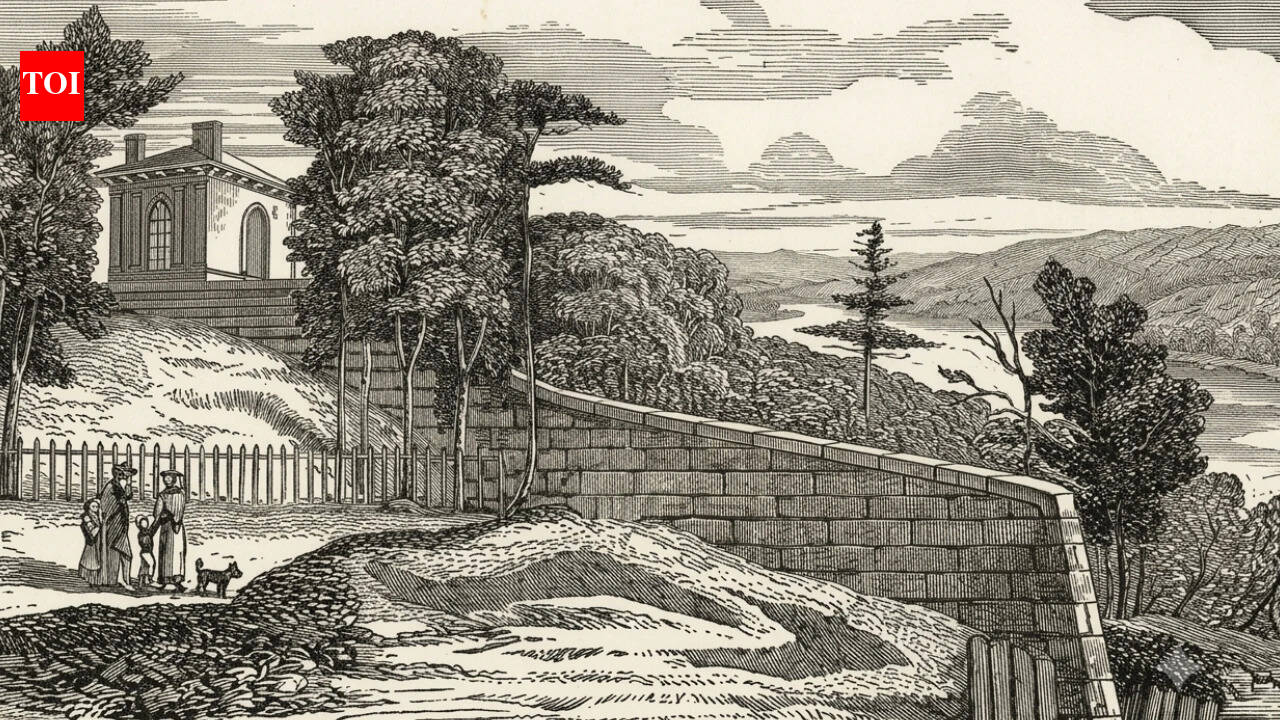
Few ships changed naval warfare as dramatically as the Civil War ironclad Monitor, famous for its rotating gun turret, and few wrecks are as hard to visit. asserted
wrecks → change → turret
Resting about 240 feet down off Cape Hatteras, North Carolina, the vessel has long challenged divers and archaeologists. asserted
vessel → rest → divers
A 2025 sonar survey produced the sharpest images and three-dimensional models ever made of the wreck, and the public finally saw them. asserted
public → produce → them
This article explains how the survey worked, what it shows, why the recovered turret still matters, how industry expertise made it possible, and what the results mean for underwater heritage. asserted
results → explain → heritage
The findings also offer researchers a clearer way to document the surviving structure and track changes to one of America’s most significant naval archaeological sites. asserted
findings → offer → sites
How Northrop Grumman and sanctuary researchers scanned the Monitor wreck in full 360 degrees in 2025 asserted
Grumman → scan → 2025
According to the National Oceanic and Atmospheric Administration, researchers at Monitor National Marine Sanctuary partnered with engineers from Northrop Grumman in September 2025 to complete the highest-resolution scan of the historic shipwreck ever conducted. uncertain
researchers → accord → shipwreck
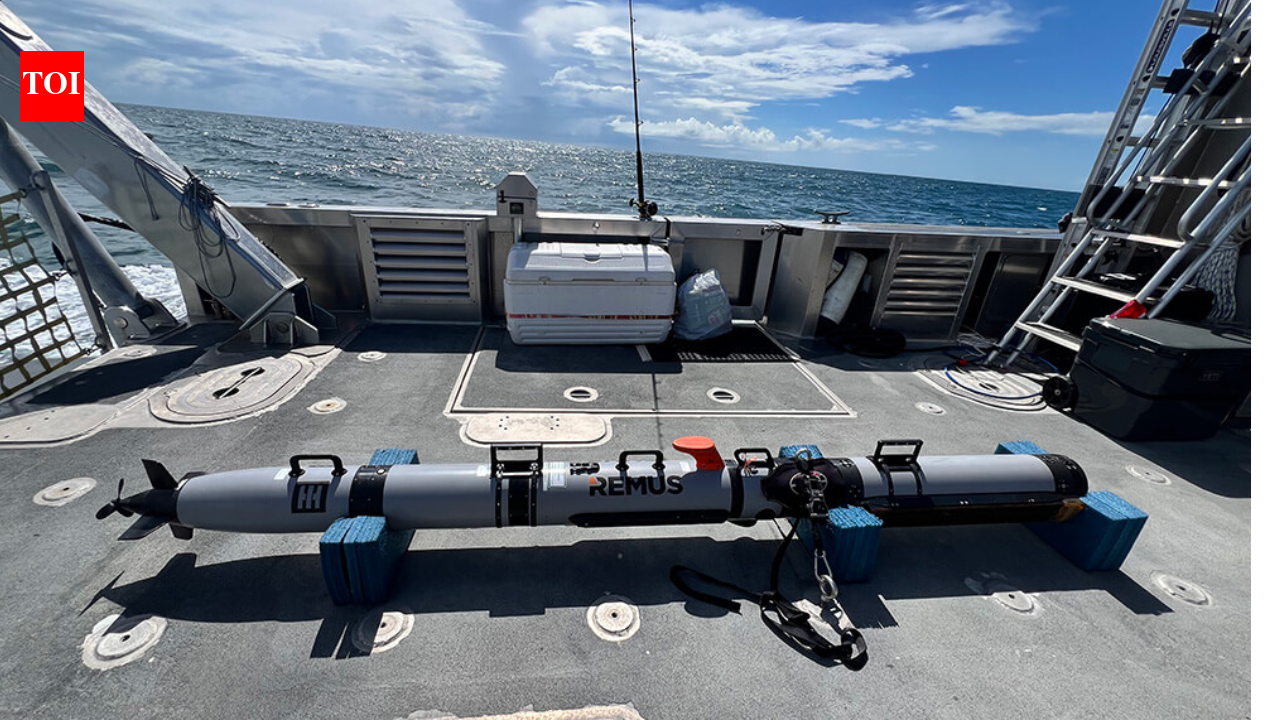
The team deployed a compact uncrewed underwater vehicle equipped with micro synthetic aperture sonar, a system able to produce detailed images even in low-visibility conditions. asserted
team → deploy → conditions
According to WAVY, the team used the underwater vehicle to complete 360-degree scans of the wreck site, and the work was made possible through a partnership between the agency and Northrop Grumman. uncertain
work → accord → agency
The sanctuary's field note adds that the survey captured fine-scale views of the wreck and its surrounding debris field, along with high-resolution detail of components such as the vessel's keel. asserted
survey → add → keel
Why the Monitor remains in fantastic shape and what the sharpest scans reveal about its wrecked hull asserted
scans → remain → hull
The results delighted the scientists who know the site best. asserted
who → delight → site
Tane Casserley, a maritime archaeologist with Monitor National Marine Sanctuary, told WAVY that the scans confirm the ship remains in "fantastic shape" despite its depth and the passage of time. asserted
ship → tell → time
He described the data as a great baseline for seeing what is happening at a wreck that is deep, difficult to visit and limited for scuba divers. asserted
that → describe → divers
In the sanctuary's own field note, Casserley told readers that this was the first modern sonar survey to deliver such resolution of the Monitor's hull remains and internal structure. asserted
this → tell → remains
The dataset also includes environmental observations and three-dimensional digital reconstructions, which the field note says will help researchers track change over time while documenting the fragile site without disturbing it. asserted
researchers → include → it
How the salvaged turret and conserved artifacts at the Mariners' Museum complete the Monitor's story WAVY reports that major pieces of the ship, including its iconic turret, have been recovered and are conserved in Newport News, Virginia, while much of the vessel remains on the ocean floor, where it is notoriously difficult to study. asserted
it → salvage → floor
The Mariners' Museum continues to house the recovered artefacts, so visitors can see history in person even as the new scans show what remains below. asserted
what → continue → person
The sanctuary's field note explains that the wreck, discovered in 1973 and designated in 1975 as the nation's first national marine sanctuary, now serves as both a cultural resource and a thriving artificial reef. asserted
wreck → explain → resource
No current plans exist to raise more large-scale pieces of the ironclad, so remote, non-invasive mapping is the main way to study what remains. asserted
what → exist → ironclad
Northrop Grumman deployed the uncrewed underwater vehicle from their research vessel at Monitor National Marine Sanctuary (Image: Reese Bland/NOAA) How Northrop Grumman's conservation technology effort brought defence sonar to cultural preservation Mike Witt, chief environment, quality and safety officer at Northrop Grumman, told WAVY that the company develops technology to meet national security needs and then applies it to other purposes, including work with the National Oceanic and Atmospheric Administration and organisations such as the Chesapeake Bay Foundation. asserted
company → deploy → Foundation
He said the company has launched more than seventy conservation and preservation projects, ranging from understanding wildfires to environmental conservation and cultural preservation such as this one. asserted
company → say → one
The sanctuary's field note links the Monitor survey to the company's Technology for Conservation initiative, which applies engineering expertise to conservation efforts. asserted
which → link → efforts
Kevin Gallagher, a key engineer on the sonar team, told readers of the field note that the technology had never before been used in a way that made the data publicly available. asserted
data → tell → way
What the public unveiling in Newport News means for children, archaeologists and thousands of wrecks asserted
means → mean → wrecks
The Mariners' Museum and Park in Newport News unveiled the new digital products to the public on March 7, 2026, where the sanctuary planned interactive displays and visualisations. asserted
sanctuary → unveil → displays
WAVY reports that experts consider the sonar technology a game-changer for maritime archaeology, offering a blueprint for exploring thousands of other shipwrecks without disturbing the sites. asserted
technology → report → sites
Casserley told WAVY that history no longer has to be a static drawing, an old photograph or a painting when talking to children, because the three-dimensional model comes alive. asserted
model → tell → children
According to the field note, Gallagher added that the imagery assists the agency in collecting biological data to identify species around the wreck, and that all data products are being transferred to the agency for public use. uncertain
products → accord → use

💬Give feedback
🕘History 🎫Support