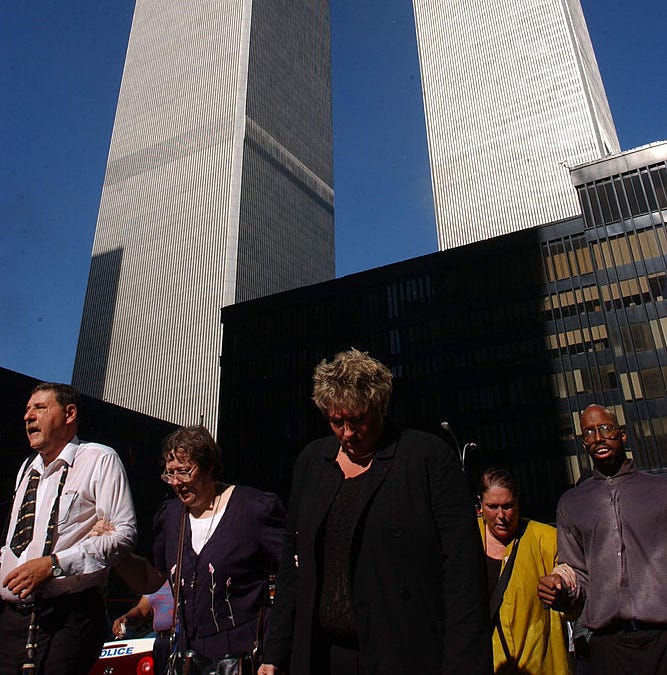
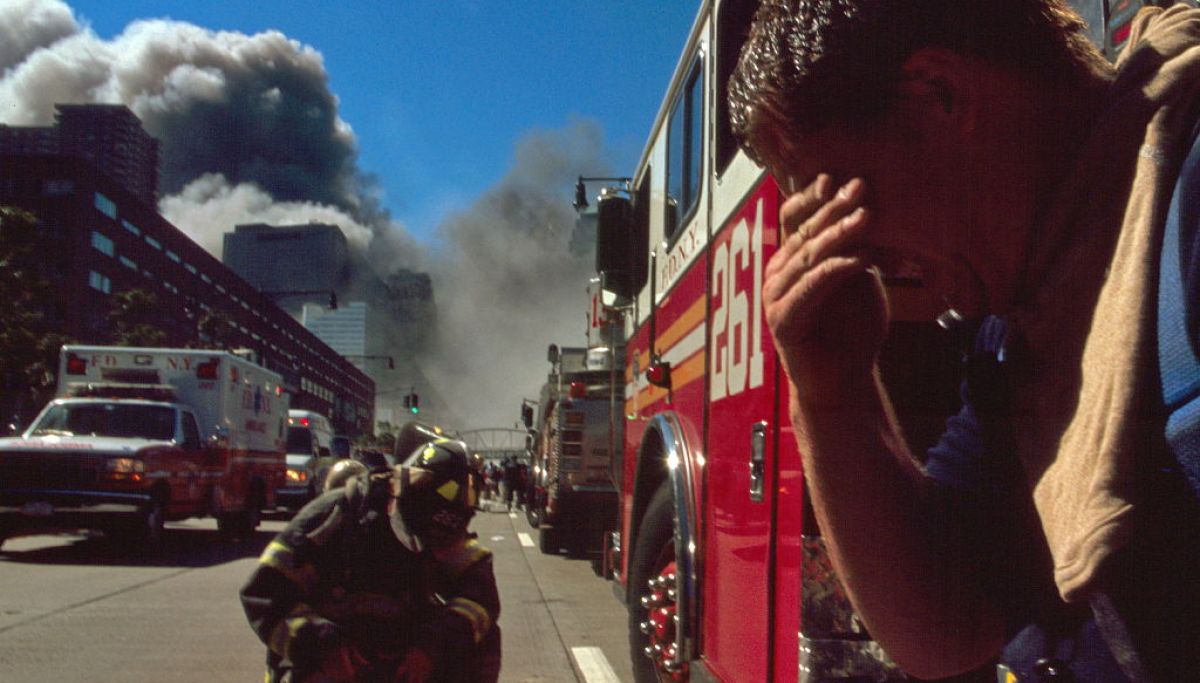
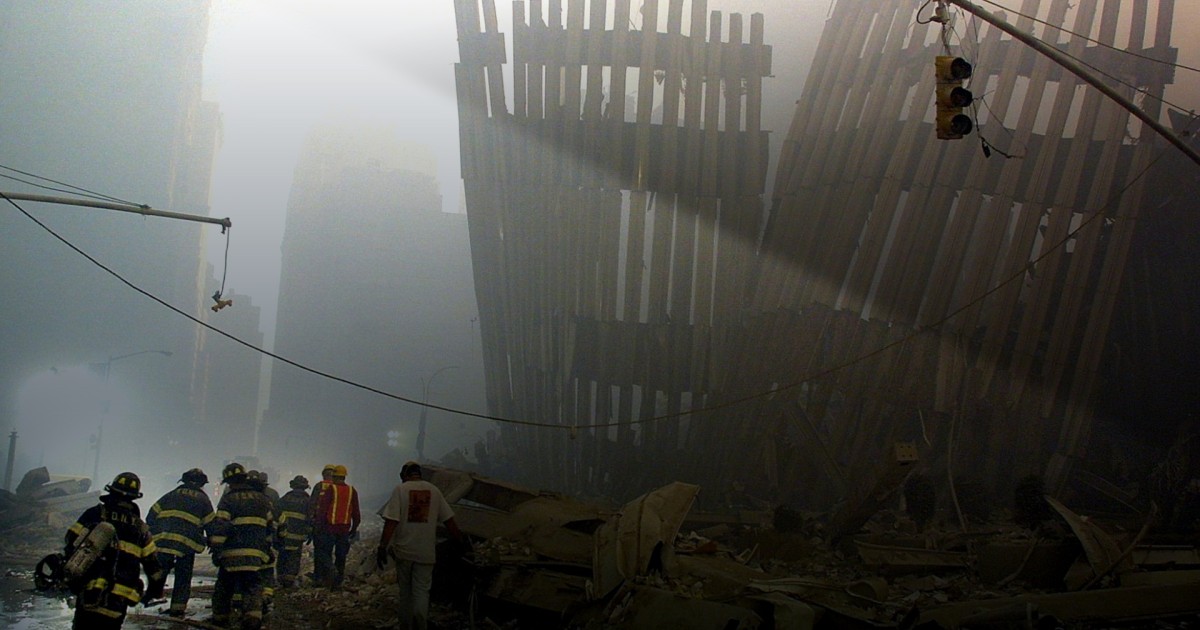
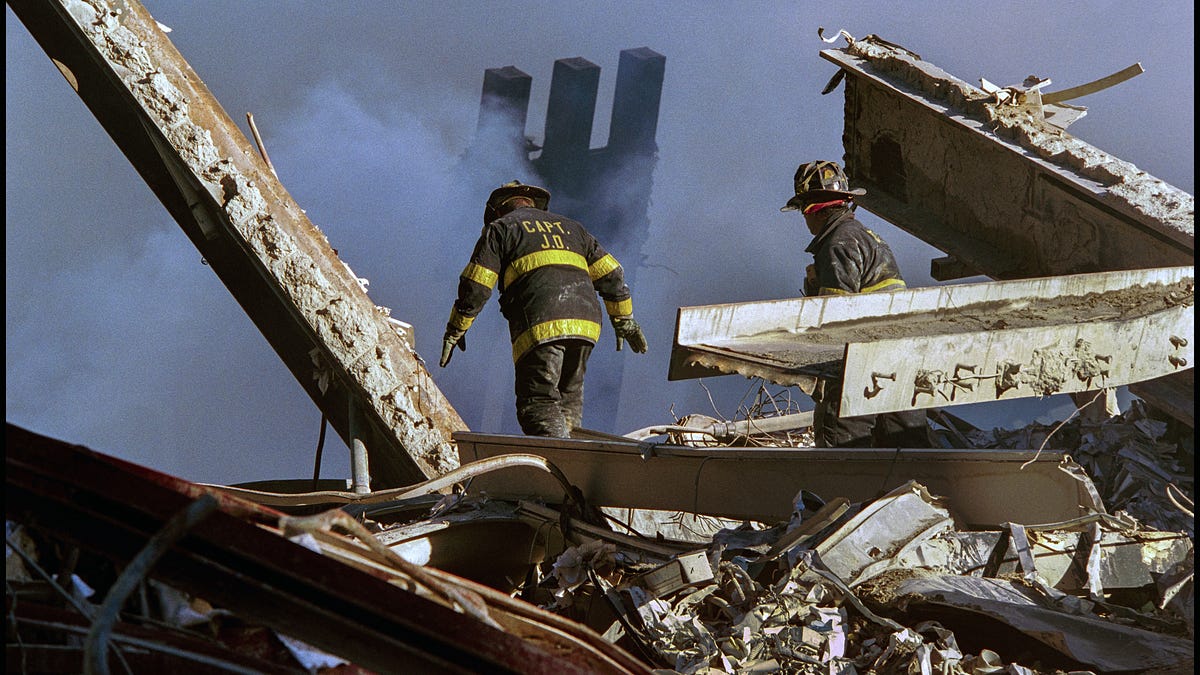
The Day the World Changed

The Free Press · collected 2026-09-12 · by The Free Press
Read the original at The Free Press ↗

Summary

This article commemorates the 25th anniversary of September 11, 2001, by focusing on its long-term impacts and personal recollections from that day. It features insights from various experts and firsthand accounts, including Dr. Kristina Jones, a psychiatrist who worked at St. Vincent’s Hospital near Ground Zero, and other individuals affected directly or indirectly by the attacks. The piece explores how 9/11 altered global dynamics and discusses efforts to prevent future terrorist incidents in the United States.
Written by the local model on 2026-09-12, using this article's own text rather than the other coverage of the same event (that is the story summary below).

Signals How these are calculated →

Claims extracted
35
claim-shaped sentences
Uncertain
0%
0 of 35 hedged
Leaning
not political
takes no side on a contested political question
Publisher trust
96.4
red-flag proxy, not a credibility rating
Outlets on this story
1
Politics
Narrative spread
1
articles carrying this framing
Analyzed 2026-09-12 · how these are computed

AI analysis (generated at analysis time, not now)

Story summary

On September 11, 2001, the United States experienced a devastating terrorist attack that forever altered American history and global politics. The day began with two planes crashing into the World Trade Center in New York City, followed by another hitting the Pentagon near Washington D.C. A psychiatrist named Kristina Jones, who was working at St. Vincent’s Hospital, which is located close to the World Trade Center, worked for 13 hours on that fateful day, treating victims of the attacks. The attack prompted a range of responses, from immediate rescue efforts by first responders and civilians like firefighter volunteers traveling from other states, to long-term changes in U.S. foreign policy as America entered what became known as the "War on Terror." Interviews with survivors and witnesses provide insights into both the immediate impact of that day and its enduring significance for Americans two decades later.

Written for “911 Attacks” on 2026-09-12, grounded in this article and the 0 other(s) covering the same event.
Why this leaning score
This article does not take a side on a contested political question, so it has no leaning score. That is an answer rather than a gap: a match report or a rescue can be warmly or critically written without being left or right, and scoring it anyway is how approval of a subject gets recorded as a political position.
No political leaning scored for article 8362 · logged 2026-09-12

Story

📰 911 Attacks
Politics · 1 article(s) covering the same event. This is the one the site leads with.

How this is being covered How these are calculated →

Article leaning vs. publisher reliability
Source leaning vs. consistency

Compared with similar articles

This article reads unscored and hedges 0% of its claims. Each row says how that neighbour differs.
How to Prevent the Next 9/11 different event · 95%
The Free Press
⚖️ Leans strongly right 🔴 0% hedged 0 of 15 📰 publisher trust 96
“The articles discuss the September 11 attacks and their aftermath but are not describing the actual attacks themselves as a single incident.”
Times of India
⚖️ Leans left 🔴 10% hedged 15 of 143 📰 publisher trust 94
“While both articles discuss the aftermath and impact of the September 11 attacks, they do not describe a single specific incident but rather analyze its long-term effects over 25 years.”
Washington Examiner
⚖️ Leans left 🔴 0% hedged 0 of 5 📰 publisher trust 96
“The articles refer to the September 11 attacks and their anniversary but describe different aspects of the event and its aftermath.”
Toronto Star
⚖️ Leans left 🔴 0% hedged 0 of 84 📰 publisher trust 62
“Article A describes the events immediately following the hijacking and crash of Flight 11 on September 11, 2001, while Article B discusses the broader impact and legacy of September 11 over a period of time.”
NBC News
⚖️ leaning not scored 🔴 no claims extracted 📰 publisher trust 95
“Article A appears to be a special report about 9/11 on its anniversary, while Article B focuses on analysis and reflection of how 9/11 changed the world over the years.”
Zeteo
⚖️ Leans strongly left 🔴 0% hedged 0 of 36
“While both articles discuss the September 11, 2001 attacks and their impact over time, they describe different perspectives and reflections on the event rather than reporting the same specific incident.”
September 11, 25 Years Later different event · 90%
The Dispatch
⚖️ leaning not scored 🔴 0% hedged 0 of 3 📰 publisher trust 96
“While both articles discuss the September 11 attacks, they are not reporting on a single incident but rather reflecting on its significance and impact over time.”
The Straits Times
⚖️ leaning not scored 🔴 0% hedged 0 of 30 📰 publisher trust 94
“While both articles discuss the 25th anniversary of the September 11 attacks, they describe different aspects and are published on consecutive days.”
How We Remember 9/11 different event · 85%
The Free Press
⚖️ leaning not scored 🔴 0% hedged 0 of 14 📰 publisher trust 96
“Both articles discuss reflections on the events of September 11, 2001, but they are not reporting on a single identical incident occurring at the same time and place. They cover different perspectives and analyses about how the event changed America over the past 25 years.”
Reason
⚖️ Leans strongly left 🔴 9% hedged 8 of 87 📰 publisher trust 91
“While both articles discuss the significance and impact of September 11, 2001, they do not describe a single specific occurrence but rather reflect on its broader implications over time.”

Publisher

The Free Press · 92 article(s) · 0 correction(s) detected
No corrections detected for this publisher. That may mean careful reporting, or simply that nothing has been checked.

Who wrote this

The Free Press
14 article(s) here · 1 carrying a prediction
🔮 We gathered 10 first-person testimonies from the day the Twin Towers fell and the Pentagon was hit, including a photojournalist who ran toward the World Trade Center when almost everyone else was running away, and got the shot that changed her life; a woman who was a toddler in the Pentagon day care when the plane hit and is now a U.S. Air Force captain; a firefighter who came from Maryland to help with the search and rescue; and memories from The Free Press’s Joe Nocera and Will Rahn, who were in New York City that day.
2026-09-12 · assertive framing · The Day the World Changed
🔮 She’s also working on making a more robust kind of cow, which will be good for ranchers’ bottom lines.
🔮 Maya Sulkin talks 9/11, Mamdani, and more with former New York governor George Pataki.
2026-09-10 · assertive framing · Yes, AI Might Really Kill Us All. Plus. . .
🔮 It’s part of an experiment being conducted in a number of places to see if a guaranteed income, for six months or a year, will help keep those newly released from prison from winding up back inside.
🔮 In an interview with our Peter Savodnik days after the shooting, Cox spoke about “which direction he thought Americans, and America, would choose” in the aftermath of the murder.
2026-09-08 · assertive framing · Spencer Cox: The Day Charlie Kirk Died. Plus. . .
🔮 This week, former congressman George Santos was given a lifetime ban from the prediction market Kalshi, after allegedly making $17,000 betting on whether he would go to Donald Trump’s State of the Union address.
2026-09-05 · assertive framing · My Friend Gloria Steinem. Plus. . .
🔮 When the story of the past decade in American public life is written, it will, for better or worse, center on one man.
🔮 On Wednesday, New York City public schools—the largest district in the country—announced that it will ban the use of AI for elementary and middle school students.
2026-09-03 · assertive framing · Should Kids Use AI? A Debate. Plus. . .
🔮 Earlier this week, I couldn’t help but notice a cover story in New York magazine.
2026-08-31 · assertive framing · In Defense of Sports Dads. Plus. . .
🔮 “This might be the last warning we get.” “We are so far past the sci-fi point.” “Full-blown AI takeover within months.”
2026-08-31 · assertive framing · ‘Full-Blown AI Takeover Within Months.’ Plus. . .
Wire or desk byline, not an individual reporter.
Also by The Free Press
Yes, AI Might Really Kill Us All. Plus. . .
2026-09-10 · The Free Press
Nothing else under this byline is closely related to this article, so these are simply their most recent.
All 14 articles by The Free Press →

Topics

America Americans New York City St. Vincent’s the War on Terror

Subjects

Americans NORP · 3× Bush PERSON · 2× David Petraeus PERSON · 2× H.R. McMaster PERSON · 2× Iraq GPE · 2× Jones PERSON · 2× New York City GPE · 2× Nick PERSON · 2× Pentagon ORG · 2× U.S. GPE · 2×

Narrative

We gathered 10 first-person testimonies from the day the Twin Towers fell and the Pentagon was hit, including a photojournalist who ran toward the World Trade Center when almost everyone else was running away, and got the shot that changed her life; a woman who was a toddler in the Pentagon day care when the plane hit and is now a U.S. Air Force captain; a firefighter who came from Maryland to help with the search and rescue; and memories from The Free Press’s Joe Nocera and Will Rahn, who were in New York City that day.
framing: assertive · carried by 1 article(s) · first seen 2026-09-12
🔮 We gathered 10 first-person testimonies from the day the Twin Towers fell and the Pentagon was hit, including a photojournalist who ran toward the World Trade Center when almost everyone else was running away, and got the shot that changed her life; a woman who was a toddler in the Pentagon day care when the plane hit and is now a U.S. Air Force captain; a firefighter who came from Maryland to help with the search and rescue; and memories from The Free Press’s Joe Nocera and Will Rahn, who were in New York City that day.
2026-09-12 · The Free Press
The Day the World Changed · assertive framing

Claims (35 extracted, 0 hedged)

It’s Friday, September 11. asserted
It → ’ → ?
Today, we’re bringing you a different Front Page. asserted
we → bring → Page
It’s dedicated to one thing: the attack on America 25 years ago, what it meant then, and what it means now. asserted
it → dedicate → what
September 11 was an epochal break, the violent punctuation mark with which one era ended and another began. asserted
another → end → which
We have stories on how it changed the world, the war on terror that followed, its contested legacy today, and more. asserted
that → have → terror
We have the insights of our columnists, like Niall Ferguson and Douglas Murray, as well as the perspectives of those who served on the front lines in the War on Terror, like David Petraeus and H.R. McMaster. asserted
who → have → Petraeus
But 9/11 was, first and foremost, an atrocity in which wicked men murdered thousands of Americans. asserted
men → murder → Americans
And so we begin with the day itself. asserted
we → begin → day
On September 11, 2001, Kristina Jones was three months into her job as an attending psychiatrist at St. Vincent’s, the closest hospital to the World Trade Center. asserted
Jones → attend → Center
She worked 13 hours that harrowing day. asserted
She → work → ?
The next day she wrote for seven hours, trying to record what she had seen before it evaporated from her mind. asserted
it → write → mind
Then she put away her recollections, confiding in only a few close friends about them, because her experiences felt small compared with people who had lost lives, family members, or friends. asserted
who → put → lives
Twenty-five years later, Dr. Jones decided that she wanted to share what she wrote about St. Vincent’s. asserted
she → decide → Vincent
Her words are a time capsule of September 11, and a remembrance of those whose lives were lost. asserted
lives → lose → those
Dr. Jones was one of millions of Americans caught up in the attacks. asserted
Jones → catch → attacks
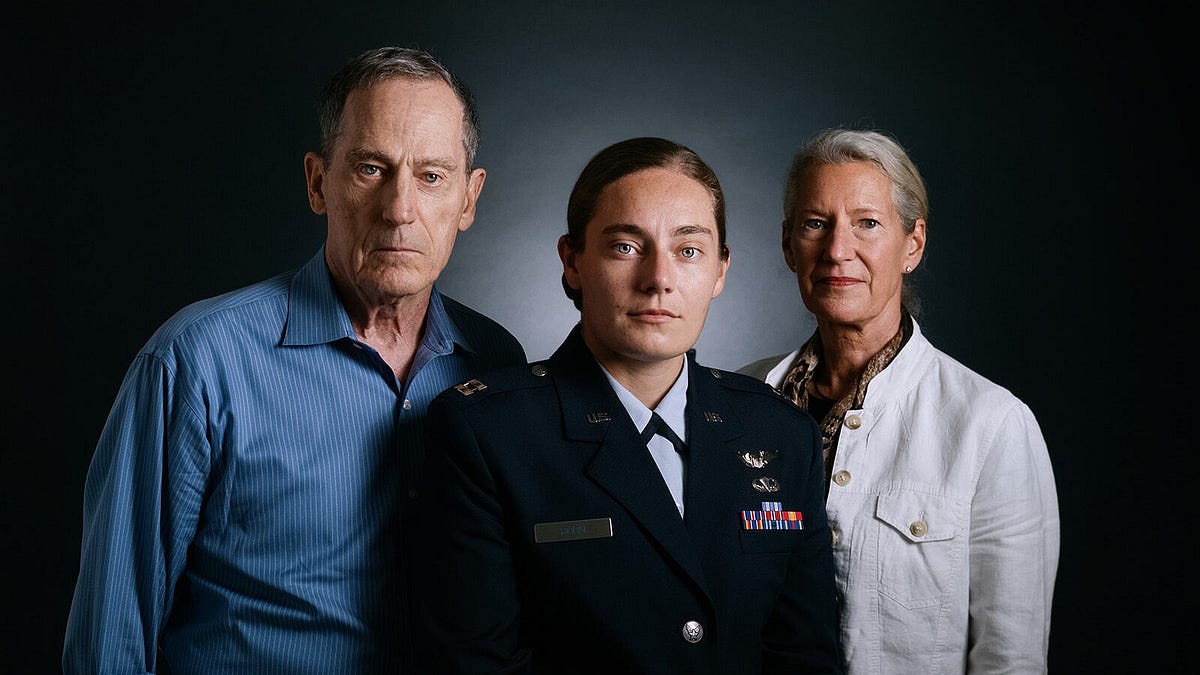
We gathered 10 first-person testimonies from the day the Twin Towers fell and the Pentagon was hit, including a photojournalist who ran toward the World Trade Center when almost everyone else was running away, and got the shot that changed her life; a woman who was a toddler in the Pentagon day care when the plane hit and is now a U.S. Air Force captain; a firefighter who came from Maryland to help with the search and rescue; and memories from The Free Press’s Joe Nocera and Will Rahn, who were in New York City that day. asserted
who → gather → City
The morning after the towers fell, Nicholas Clairmont recalls, his mother bought an issue of all four major New York City newspapers—and saved them. asserted
mother → fall → them
Two decades later, Nick read them for the first time, and now he reads them again every September 11. asserted
he → read → them
What do they tell us about the day the world changed? asserted
world → tell → day
Frank Siller was waiting for his firefighter brother, Stephen, to show up for golf on September 11, 2001. asserted
brother → wait → September
He never did. asserted
He → do → ?
Frank sits down with Coleman Hughes to discuss how he channeled his unimaginable grief into a cause that has changed thousands of lives. asserted
that → sit → lives
Twenty-five years ago, Americans watching monuments to the country’s security and prosperity wondered: Where will the next attacks occur? asserted
attacks → watch → security
Answering that question has been the job of the U.S.’s law enforcement and intelligence agencies ever since. asserted
Answering → answer → agencies
And the country has succeeded in preventing another major jihadist attack after September 11, write William Barr and Michael Mukasey, two former U.S. attorneys general. asserted
Barr → succeed → September
But, they warn, 25 years later, we’re starting to forget the vital importance of a post-9/11 surveillance law to “detecting and disrupting a new generation of terror plots.” asserted
we → warn → plots
In response to the 9/11 attacks, President George W. Bush launched the War on Terror and the era-defining invasions of Afghanistan and Iraq. asserted
Bush → launch → Afghanistan
In our pages today, General David Petraeus recalls a pivotal moment in that war: the surge. asserted
Petraeus → recall → war
Read his inside story of how Bush navigated one of the most consequential moments of the post-9/11 era—and why he views Bush choosing to double down in Iraq as “one of the most courageous presidential decisions of the 21st century.” asserted
Bush → read → century
Lieutenant General H.R. McMaster was on the phone with the Pentagon when the building was struck on September 11. asserted
building → strike → September
He joins Aaron MacLean to discuss the wars that followed, including the rise of ISIS, and why McMaster thinks the latest Iran ceasefire was “a big mistake.” asserted
ceasefire → join → ISIS
Twenty-five years ago, Niall Ferguson was one of the people predicting the decline of American power. asserted
Ferguson → predict → power
He looks back on those forecasts and admits: I was wrong. asserted
I → look → forecasts
Today, not just the legacy of 9/11 but the basic facts of what happened on that day are contested in a way that would have been unimaginable to an America that unified immediately after the attack. asserted
that → happen → attack
Revisit Douglas Murray’s recent essay on why the lies about that day must be resisted. asserted
lies → revisit → day

💬 Give feedback
🕘 History 🎫 Support