Hypersonic missiles highlight arms race on Korean Peninsula

Read the original at Deutsche Welle ↗
Cite

Ryall, J. (2026, October 15). Hypersonic missiles highlight arms race on Korean Peninsula. Deutsche Welle. https://www.dw.com/en/hypersonic-missiles-highlight-arms-race-on-korean-peninsula/a-79667084?maca=en-rss-en-world-4025-rdf

Dated from the outlet's own feed. Check the original for its byline.

Deutsche Welle · collected 2026-10-15 · by Julian Ryall

Quick Summary

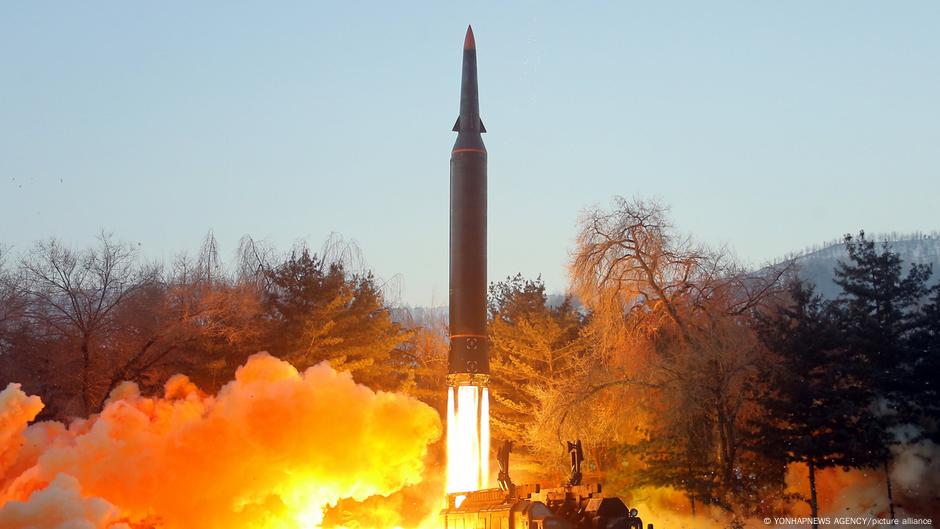
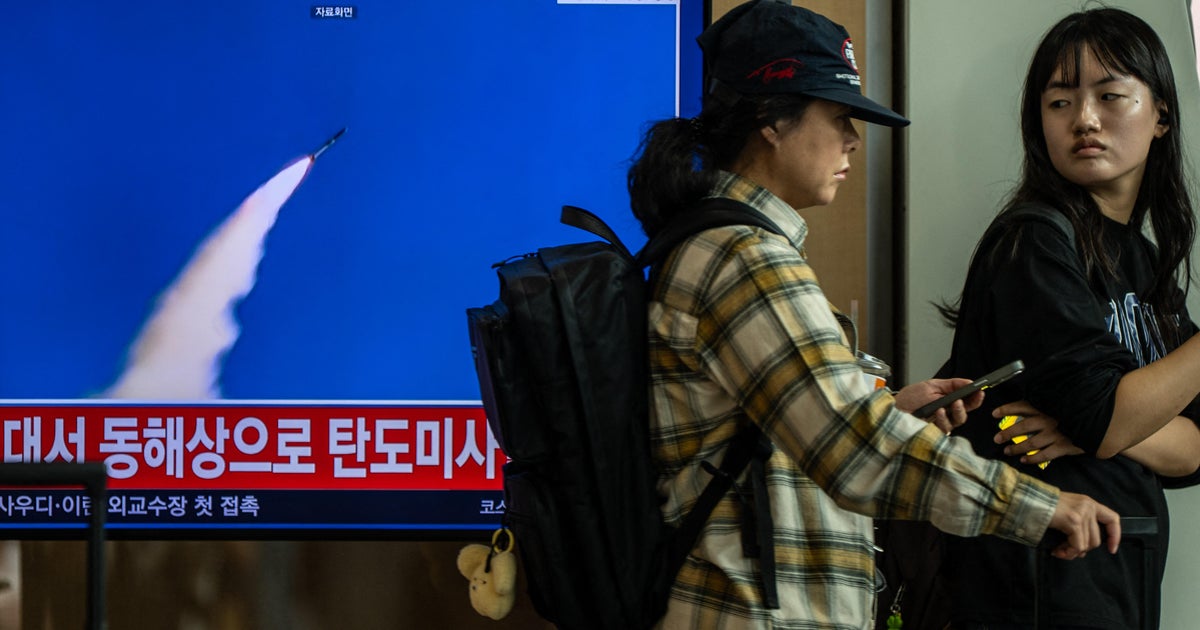
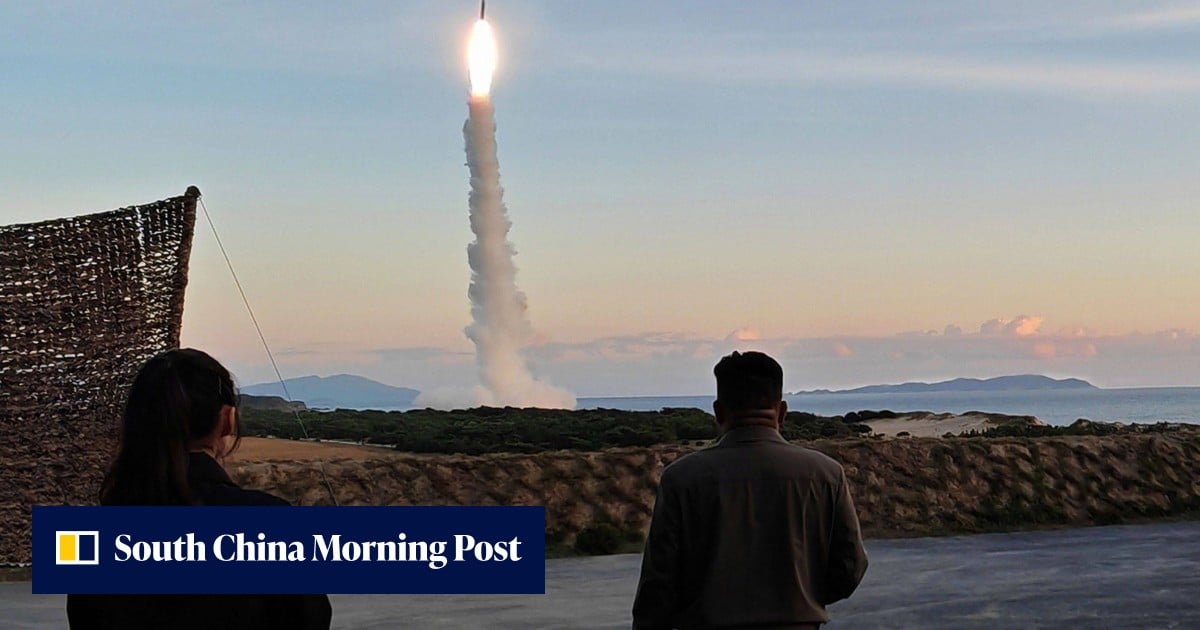
North Korea recently tested submarine-launched cruise missiles off its east coast, following leader Kim Jong Un's visit to a defense industry museum showcasing advanced weaponry. This comes shortly after South Korea successfully tested its first domestically developed hypersonic missile, highlighting an escalating arms race on the Korean Peninsula centered around hypersonic technology. Both nations are focusing on developing these weapons due to their strategic advantages in evasion and unpredictability, making interception extremely challenging.
Written locally by qwen2.5:14b on 2026-10-15, using this article's own text rather than the other coverage of the same event (that is the story summary below).

AI analysis runs on qwen2.5:14b, locally

Story summary

As of October 15, 2026, North Korea announced the testing of two types of submarine-launched cruise missiles off its east coast, following a visit by leader Kim Jong Un to a new defense industry museum where he inspected an intercontinental ballistic missile capable of hitting targets in the continental United States. This move comes days after South Korean President Lee Jae-myung observed the test launch of South Korea's first domestically developed hypersonic missile on October 10, and North Korea’s own test of a hypersonic intermediate-range missile that traveled 350 kilometers (220 miles) on October 3. The ongoing development of advanced conventional weapons by both nations highlights an escalating arms race on the Korean Peninsula, driven by increasing tensions between them.

Written for “Arms Race On Korean Peninsula” on 2026-10-15, grounded in this article and the 0 other(s) covering the same event.
Why this leaning score
This article does not take a side on a contested political question, so it has no leaning score. That is an answer rather than a gap: a match report or a rescue can be warmly or critically written without being left or right, and scoring it anyway is how approval of a subject gets recorded as a political position.
No political leaning scored for article 82084 · logged 2026-10-15

Story

📰 Arms Race On Korean Peninsula
Politics · 1 article(s) covering the same event.

Compared with similar articles

This article reads unscored and hedges 14% of its claims. Each row says how that neighbour differs.
CBS News
⚖️ leaning not scored 🔴 0% hedged 0 of 13 📰 publisher trust 66
“The articles describe different launches on different days, with Article A referring to Monday and Article B detailing Wednesday's events.”
Al Jazeera
⚖️ leaning not scored 🔴 5% hedged 1 of 19 📰 publisher trust 60
“The articles describe different missile tests occurring on distinct dates and involving different types of missiles.”
New York Post
⚖️ leaning not scored 🔴 0% hedged 0 of 16 📰 publisher trust 67
“The articles describe different missile tests occurring on different days involving North and South Korea.”
Washington Examiner
⚖️ leaning not scored 🔴 11% hedged 2 of 18 📰 publisher trust 68
“The articles describe different missile tests occurring on separate days, involving distinct types of missiles and locations.”
New York Post
⚖️ leaning not scored 🔴 17% hedged 4 of 24 📰 publisher trust 67
“Article A focuses on North Korea's underwater-launched missile tests, while Article B discusses both North and South Korea's advancements in hypersonic missiles but does not solely focus on the same specific missile tests mentioned in Article A.”
South China Morning Post
⚖️ Leans right 🔴 0% hedged 0 of 3 📰 publisher trust 67
“The articles discuss different aspects of the arms race on the Korean Peninsula, with Article A focusing on historical context and diplomatic efforts regarding North Korea's nuclear program, while Article B covers recent missile tests by both North and South Korea.”
The Hindu
⚖️ leaning not scored 🔴 0% hedged 0 of 6 📰 publisher trust 95
“Article A describes North Korea firing at least one projectile towards sea on October 12, while Article B discusses multiple missile tests and visits to defense industry facilities over a period of days ending on October 14.”
Al Jazeera
⚖️ leaning not scored 🔴 6% hedged 1 of 18 📰 publisher trust 60
“While both articles mention North Korea testing submarine-launched missiles on the same day, Article B focuses more on the context of an arms race with South Korea's recent hypersonic missile test and Kim Jong Un's museum visit.”
The Hindu
⚖️ leaning not scored 🔴 0% hedged 0 of 10 📰 publisher trust 95
“The articles describe related events but not the exact same incident, with Article A focusing on North Korea testing submarine-launched cruise missiles and Article B mentioning this test alongside other missile developments in the region.”
South China Morning Post
⚖️ leaning not scored 🔴 0% hedged 0 of 4 📰 publisher trust 67
“The articles discuss related military tests but refer to different specific missile launches, one by North Korea and another by South Korea.”
How this article was measured signals, leaning charts, publisher record, byline, topics and claims

Signals How these are calculated →

Claims extracted
28
sentences that state something as happening or true
Uncertain
14%
4 of 28 hedged ("reportedly", "may", "according to")
Leaning
not political
takes no side on a contested political question
Publisher signals
95/100
Deutsche Welle's corrections and hedging, across everything collected from it. Not a measure of accuracy.
Outlets on this story
1
Politics
Same framing elsewhere
1
articles that frame the event the way this one does
Analyzed 2026-10-15 · how these are computed

How this is being covered How these are calculated →

Article leaning vs. publisher reliability
Source leaning vs. consistency

Publisher

Deutsche Welle · 424 article(s) · 0 correction(s) detected
No corrections detected for this publisher. That may mean careful reporting, or simply that nothing has been checked.

Who wrote this

Julian Ryall
22 article(s) here · 1 carrying a prediction
🔮 "Comrade Kim Jong Un expressed the expectation and belief that all the nation's missile forces would remain faithful to their missions of defending the sovereignty and security of the republic in a responsible combat posture," the KCNA reported.
🔮 "This is a serious situation because this incident is believed to have taken advantage of artificial intelligence, and if AI is used in phishing attacks, it could lead to secondary damage," Yonhap News quoted Han as saying at a Cabinet meeting.
🔮 Japan explores ‘ownership’ of nuclear submarines as regional rivalries worsen Proposed changes could allow research into developing a domestically built nuclear-powered submarine without a firm decision on acquiring a fleet Analysts acknowledge there will inevitably be pushback from some sectors of Japan – the only nation to have suffered a nuclear attack – but say there is a growing recognition that regional rivalries are worsening and Japan needs to do more to guarantee its own security. Quoting government sources, the Yomiuri newspaper reported on Wednesday that the expert panel set up to consider changes to the National Security Strategy and other key security documents would state that Japan was “considering ownership” of nuclear submarines.
🔮 Marine’s arrest for murder in Japan fuels anger over US military presence Residents say the killing of an Okinawan woman shows they are paying the price of shouldering Japan’s heaviest security burden The alleged murder of an Okinawan woman by a US marine has put newly elected Governor Genta Koja under intense pressure, raising questions about whether the incident could deepen opposition against the American military presence just as Okinawa assumes greater importance in Japan’s regional security strategy.
🔮 Campaigners and advocates have welcomed the change, but say it lacks teeth and came years too late, even as societal attitudes may have already moved ahead of it.
🔮 Viral lies about foreign crime are fuelling political division in a country desperate for workers, analysts say The trend is reportedly deepening divisions within Japanese society and creating a feedback loop that experts say will be difficult to break.
🔮 The 25-year-old photographer knew Inamuragasaki, on the Shonan coast south of Tokyo, only as a scenic seaside spot until a friend mentioned that the remains of a military base could still be seen near the cape, in tunnels cut into the cliff face.
🔮 Will Takaichi visit Kyiv?
🔮 That would be best served by pulling back from the "first island chain," which runs from Okinawa in southern Japan, through Taiwan and on to the Philippines.
🔮 Iceland’s whaling ban plan threatens to leave Japan alone in defending industry Reykjavik’s move to end hunts increases international pressure on Tokyo as low consumption of whale meat and high subsidies fuel debate The Icelandic government has announced plans to submit a bill early next year to end whaling – a step that would leave Japan and Norway as the world’s only two nations still carrying out commercial hunts.
Also by Julian Ryall
Why younger Japanese now fear Trump’s US more than China
2026-10-14 · South China Morning Post
Nothing else under this byline is closely related to this article, so these are simply their most recent.
All 22 articles by Julian Ryall →

Topics

Korean Central News Agency North North Korea Pyongyang South Korean

Subjects

North GPE · 6× Chun PERSON · 2× Kim Jong Un PERSON · 2× North Korea GPE · 2× Pyongyang GPE · 2× South Korean NORP · 2× Korean Central News Agency ORG · 1× Lee Jae-myung PERSON · 1× South Korea's GPE · 1× United States GPE · 1×

Narrative

"It is clear, however, that if the North continues to develop its offensive systems and is able to deploy them in huge numbers, then there will have to be a conversation about greater missile defense not only in the South but also in Japan, and that will then raise some very difficult questions."
framing: assertive · carried by 1 article(s) · first seen 2026-10-15
🔮 "Comrade Kim Jong Un expressed the expectation and belief that all the nation's missile forces would remain faithful to their missions of defending the sovereignty and security of the republic in a responsible combat posture," the KCNA reported.
2026-10-15 · Deutsche Welle
Hypersonic missiles highlight arms race on Korean Peninsula · assertive framing

Claims (28 extracted, 4 hedged)

North Korea announced that it had tested two types of submarine-launched cruise missiles off its east coast on Wednesday — a day after the state-run Korean Central News Agency reported that leader Kim Jong Un had visited a new defense industry museum, where he admired an intercontinental ballistic missile reportedly capable of hitting targets in the continental United States. uncertain
he → announce → States
The visit came five days after South Korean President Lee Jae-myung observed the test launch of his country's first domestically developed hypersonic missile. asserted
myung → come → missile
South Korea's breakthrough came after Pyongyang announced a test on October 3 of what it described as a hypersonic intermediate-range missile that traveled 350 kilometers (220 miles) before striking its target. asserted
that → come → target
"Comrade Kim Jong Un expressed the expectation and belief that all the nation's missile forces would remain faithful to their missions of defending the sovereignty and security of the republic in a responsible combat posture," the KCNA reported. asserted
KCNA → express → posture
Both North and South Korea are primarily racing to develop hypersonic technology because it offers a step-up in offensive capabilities at a time of worsening tensions in the Indo-Pacific region. asserted
it → race → region
Hypersonic missiles are weapons that can travel at velocities of at least five times the speed of sound (Mach 5) or over 6,100 kilometers per hour. asserted
that → travel → hour
Their speed makes it far harder for defenders to identify, track and destroy inbound missiles, which can carry conventional or nuclear warheads. asserted
which → make → warheads
Their additional advantage over previous generations of missiles is their ability to suddenly change course, dip or weave in flight, making interception significantly more difficult. asserted
interception → change → flight
"There has been an arms race on the Korean Peninsula for many years and hypersonic weapons are just the latest manifestation of that," said Chris Green, Korea Peninsula analyst for Crisis Group International. asserted
Green → say → International
Hypersonic weapons have become a "priority for the South" as the North has ramped up its capabilities and forged military and economic ties with Russia, he said. asserted
he → become → Russia
"And North Korea has nuclear weapons, but it would not be viable to use them as the threat has always been that doing so would mean that the US would turn the country to glass," he told DW. asserted
he → have → DW
"For the North, it is unsurprising that the geopolitics of the region have encouraged them to pursue advanced conventional weapons as they try to have dominance on the peninsula. asserted
they → encourage → peninsula
" Pyongyang 'should not be underestimated' asserted
Pyongyang → underestimate → ?
And while it is impossible to confirm with any certainty that the weapons the North says it has developed have the capabilities they claim, Green said it would be a mistake to underestimate Pyongyang. " uncertain
it → confirm → Pyongyang
We do not know their capabilities and it is possible this is all propaganda, but there is a long list of times the North's capabilities have been underestimated only to be shown that they can, in fact, do what they say." asserted
they → know → what
Chun In-bum, a retired general in the South Korean army and now a senior fellow with the National Institute for Deterrence Studies, shares that assessment of the threat. asserted
bum → share → threat
"It's anybody's guess whether they're telling the truth on this, but any prudent military planner should always assume the worst," he said. asserted
he → tell → worst
The North's mastery of the advanced technology required to operate hypersonic missiles appears to have been sudden, although it remains unclear how it acquired the capability. uncertain
it → require → capability
"They probably obtained the technology through illegal means," Chun said. asserted
Chun → obtain → means
"They snoop around firms in the US, South Korea and Japan for this sort of information, but they also do it to their 'friends.' asserted
they → snoop → friends
" Wherever the data came from, the fact that North Korea's hypersonic missiles appear to have performed as required should be cause for deep concern. asserted
missiles → come → concern
"A greater offensive capability increases the overall danger posed by the North, and if they have weapons that are harder to shoot down, then it is possible there are greater temptations to use them," Chun said. asserted
Chun → increase → them
"I'm speculating, of course, but I'm sure that we are looking at ways to neutralize this particular threat, but as I understand it there is no good answer right now," Chun added. asserted
Chun → speculate → it
Green, however, believes that both sides developing viable systems means that they may cancel each other out as a potent battlefield advantage. uncertain
they → believe → advantage
"I do not think this changes the balance of power," he said. asserted
he → think → power
"The North still has its nuclear deterrent and this 'porcupine strategy' of being sharp and prickly in order to keep everyone else at arm's length. asserted
North → have → length
And it's not a game changer south of the Demilitarized Zone either," the expert added. asserted
expert → add → Zone
"It is clear, however, that if the North continues to develop its offensive systems and is able to deploy them in huge numbers, then there will have to be a conversation about greater missile defense not only in the South but also in Japan, and that will then raise some very difficult questions." asserted
that → continue → questions

💬Give feedback
🕘History 🎫Support