That is 0 articles you have read today.
The Aporia is free and carries no advertising, so readers are the only
thing paying for it. If you are getting this much out of it, a small
donation is what keeps it independent.
Daily limit reached
You have read 0 articles today.
That is more than the 15 a day The Aporia gives away,
and well past what it can carry on nothing. Your allowance resets at
midnight.
There is no advertising here and nothing about you is sold, so readers
are the only thing paying for it. If the site is worth this much of
your day, it is worth a few dollars.
Everything else stays open: the
maps, the
directory and
search do
not count against this, and neither does re-opening something you have
already read today.
North Korea recently fired multiple ballistic missiles from around Pyongyang, including one that traveled over 559 miles before landing in the sea. Japan’s Defense Ministry confirmed detecting at least two of these launches, which occurred shortly after South Korea tested its own hypersonic weapon. Analysts suggest North Korea's actions are aimed at advancing missile technology and responding to perceived threats, while also rejecting diplomatic engagement with both South Korea and the US.
Written locally by qwen2.5:14b on 2026-10-12,
using this article's own text rather than the other coverage of the
same event (that is the story summary below).
Story summary
North Korea fired multiple ballistic missiles into the East Sea on October 12, 2026, days after testing an AI-enabled hypersonic missile. South Korea’s Joint Chiefs of Staff confirmed the launch but did not specify the number or range of the projectiles. Japan detected at least two missiles that landed outside its exclusive economic zone without causing any damage. This recent activity follows South Korea's own test of a domestically developed hypersonic weapon on October 9, highlighting escalating tensions between the two nations. Both countries have been conducting weapons tests and rejecting diplomatic overtures aimed at easing regional tension.
Written for “North Korea Missile Tests” on 2026-10-12,
grounded in this article and the 4 other(s) covering the same event.
Why this leaning score
This article does not take a side on a contested political
question, so it has no leaning score. That is an
answer rather than a gap: a match report or a rescue can be warmly
or critically written without being left or right, and scoring it
anyway is how approval of a subject gets recorded as a political
position.
No political leaning scored for article 73221 · logged 2026-10-12
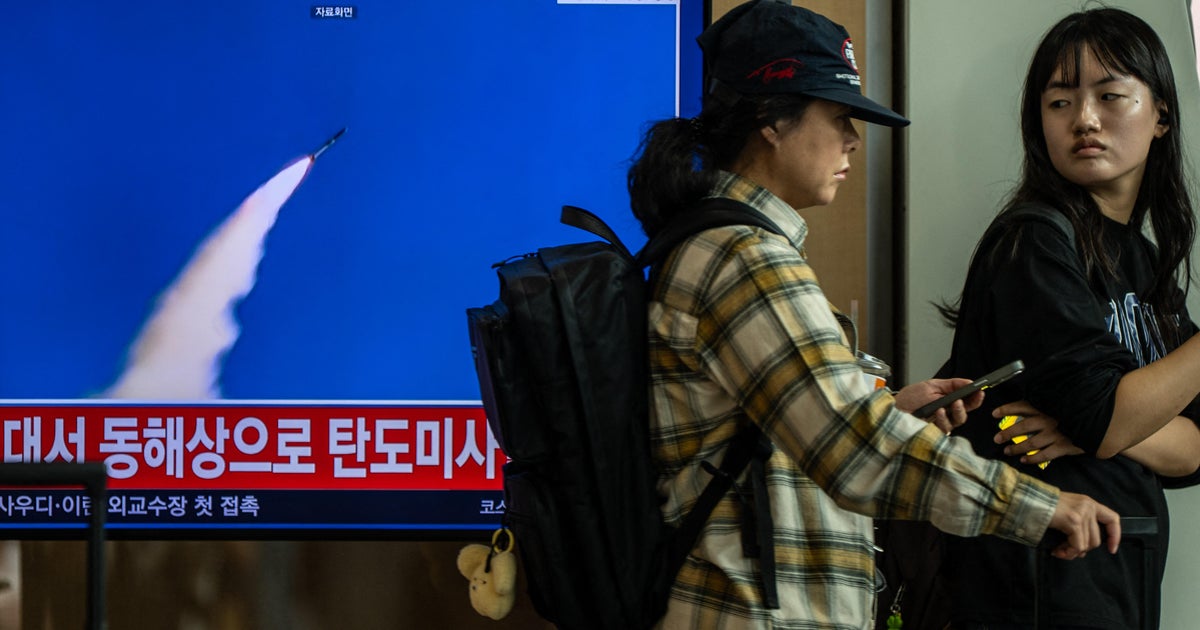
Jang Do-young, spokesperson of South Korea’s Joint Chiefs of Staff, said missiles of various types were fired from an area around the North Korean capital of Pyongyang, where the country’s main airport has been a major launch site in recent years.
asserted
airport → say → years
Jang said one of the missiles flew more than 559 miles before falling into the sea but didn’t comment on the flight details of the other weapons.
asserted
one → say → weapons
The joint chiefs didn’t specify how many missiles it detected.
asserted
it → specify → missiles
Japan’s Defense Ministry said it detected at least two missiles and that the weapons landed in waters outside the country’s exclusive economic zone.
asserted
weapons → say → zone
Japan’s prime minister’s office said no damage has been reported.
asserted
damage → say → ?
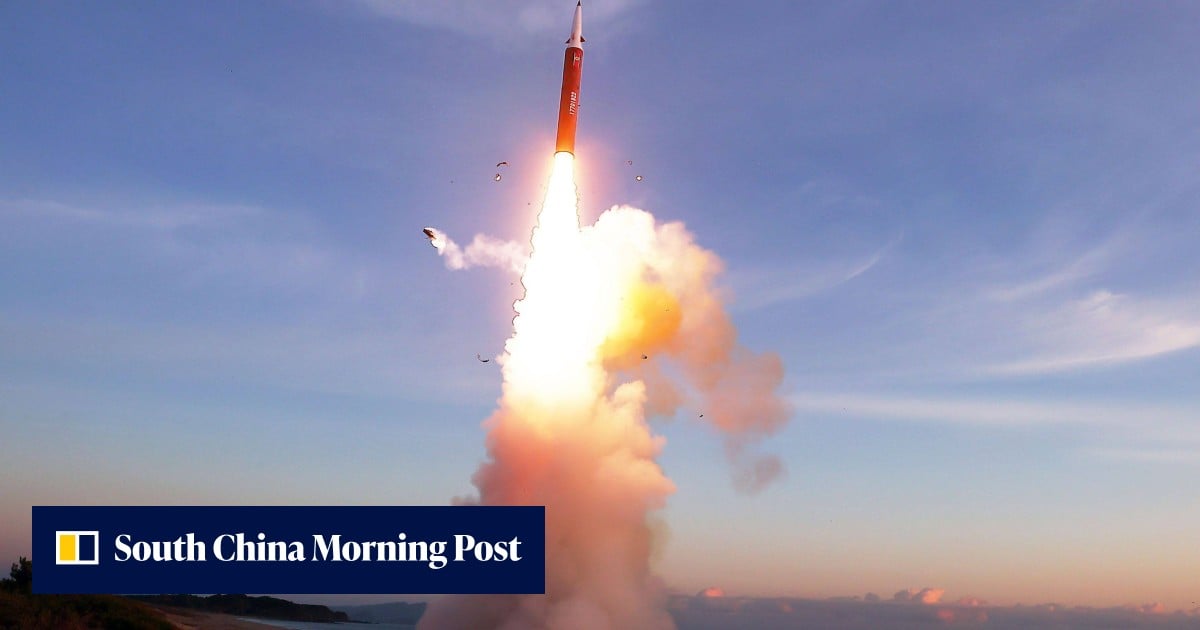
While maintaining a hard line toward Seoul, North Korea has been ramping up weapons testing as it seeks to expand its arsenal of nuclear-capable systems, including an Oct. 3 test of what the North described as a hypersonic intermediate-range missile designed to evade missile defenses in South Korea and Japan.
asserted
North → maintain → Korea
North Korea has also conducted other missile tests and live-fire drills and commissioned a new warship as leader Kim Jong Un continues to flaunt his nuclear weapons program while rejecting US and South Korean offers to resume long-stalled diplomacy.
asserted
Un → conduct → diplomacy
The latest launch came days after South Korea on Friday flight-tested its own domestically developed hypersonic weapon, designed to fly at least five times the speed of sound and evade missile defense systems, which President Lee Jae Myung described as critical in strengthening the South’s conventional defense capabilities.
asserted
Myung → come → capabilities
Without directly addressing the growing threat from North Korea, Lee’s office said the hypersonic weapon, once fully developed, would enhance South Korea’s ability to strike key targets by surprise in the “Korean Peninsula theater of operations.”
asserted
weapon → address → operations
Jang, the South Korean military official, said the latest North Korean launches likely were intended to advance the country’s missile technologies while also serving as a possible response to South Korea’s hypersonic test.
asserted
launches → say → test
He declined to say whether the military assessed that the North had further tested its hypersonic technologies in the latest launch, saying the event was still being analyzed.
asserted
event → decline → launch
The South’s presidential national security office called for North Korea to “immediately cease” its repeated ballistic launches, which violate UN Security Council resolutions against the North and “do not help manage the current situation on the Korean Peninsula.”
asserted
which → call → Peninsula
Tensions were further worsened after three South Korean soldiers were injured in land mine explosions last month near the heavily armed inter-Korean border.
asserted
soldiers → worsen → border
The South’s military and the U.S.-led United Nations Command concluded the blasts were caused by devices planted by North Korea, which has denied responsibility and ridiculed the South’s demands for an apology.
asserted
which → conclude → apology
Kim in recent years has halted all diplomacy and cooperation with South Korea and described the neighbor as a permanent enemy during a prolonged stalemate in larger nuclear negotiations with Washington.
asserted
Kim → halt → Washington
He has so far rebuffed US President Donald Trump’s calls to revive their diplomacy, which broke down in 2019, with his government demanding that Washington abandon its “hostile” policy toward Pyongyang and drop demands for North Korea’s denuclearization as a precondition for talks.
asserted
Washington → rebuff → talks
 The Aporia