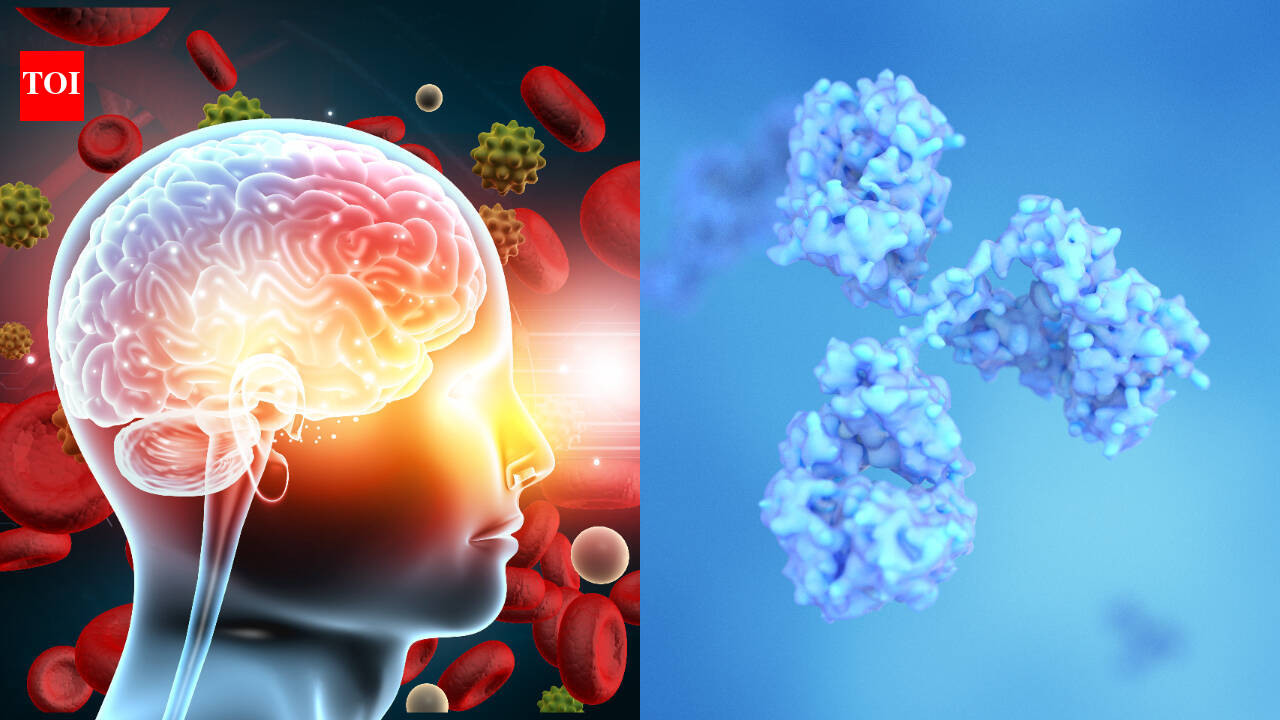
Northwestern scientists find tau protein hotspot; chemical tag stops clumps growing

Read the original at Times of India ↗
Cite

TOI Science Desk. (2026, October 14). Northwestern scientists find tau protein hotspot; chemical tag stops clumps growing. Times of India. https://timesofindia.indiatimes.com/science/discovery/northwestern-scientists-studying-proteins-linked-to-alzheimers-found-a-single-spot-that-helps-harmful-tau-clumps-spread-blocking-that-hotspot-with-a-chemical-tag-stopped-the-clumps-from-growing-in-lab-tests/articleshow/134941992.cms

Dated from the outlet's own feed. Check the original for its byline.

Times of India · collected 2026-10-14 · by TOI Science Desk

Quick Summary

Northwestern University scientists in collaboration with colleagues at UC Santa Barbara have discovered a specific molecular hotspot on misfolded tau proteins that could be targeted to prevent the formation of neurofibrillary tangles linked to Alzheimer’s disease and other dementias. Published in the Proceedings of the National Academy of Sciences, the study reveals that this hydrophobic region, when tagged with a chemical compound, stops fibril growth by preventing new tau proteins from joining existing clumps.
Written locally by qwen2.5:14b on 2026-10-14, using this article's own text rather than the other coverage of the same event (that is the story summary below).

AI analysis runs on qwen2.5:14b, locally

Story summary

Northwestern University scientists, in collaboration with colleagues at the University of California, Santa Barbara, have discovered a key hotspot in tau protein misfolding that could lead to new treatments for Alzheimer’s disease and other dementias. Published in Proceedings of the National Academy of Sciences, the study identifies a specific region of tau proteins responsible for initiating the formation of fibrils, which are long threadlike structures linked to neurodegenerative diseases. This breakthrough may provide a new target for preventing or halting the spread of these damaging protein clumps in the brain.

Written for “Tau Protein Breakthrough” on 2026-10-14, grounded in this article and the 0 other(s) covering the same event.

Story

📰 Tau Protein Breakthrough
Science · 1 article(s) covering the same event.

Compared with similar articles

Nothing to compare against. No article is close enough to this one for the pipeline to have linked or judged the pair.
How this article was measured signals, leaning charts, publisher record, byline, topics and claims

Signals How these are calculated →

Claims extracted
29
sentences that state something as happening or true
Uncertain
17%
5 of 29 hedged ("reportedly", "may", "according to")
Leaning
not political
takes no side on a contested political question
Publisher signals
59/100
Times of India's corrections and hedging, across everything collected from it. Not a measure of accuracy.
Outlets on this story
1
Science
Same framing elsewhere
1
articles that frame the event the way this one does
Analyzed 2026-10-14 · how these are computed

How this is being covered How these are calculated →

Article leaning vs. publisher reliability
Source leaning vs. consistency

Publisher

Times of India · 2497 article(s) · 2 correction(s) detected
Running correction rate · 2 correction(s)

Who wrote this

TOI Science Desk
251 article(s) here · 1 carrying a prediction
🔮 Now, researchers at Northwestern University may have discovered a key vulnerability in that process, a single molecular hotspot that could offer a new target for future treatments.
🔮 His stated ambition is to establish a sustainable lunar base, creating infrastructure that could support continued scientific work and further exploration.
🔮 Lightning signals may be weak or absent for phreatic or low-intensity eruptions, and the authors say real-time lightning data should be combined with observations such as satellite imagery and meteorological radar.
🔮 Polyethylene, one of the most widely produced plastics in the world, may have implications for liver health, according to new research from Texas A&M University.
🔮 Perseverance is now operating beyond the original mission plan, with NASA approving an extended mission that will carry its crater-rim exploration through roughly the end of 2028, as per the report.
🔮 A rare wildflower once found in the scrublands of Las Vegas has not been reliably recorded in the area for nearly a century, highlighting growing concerns about species that may be disappearing before scientists can determine whether they are extinct.
🔮 Samples collected during the process are expected to undergo laboratory analysis to determine whether they contain evidence of human activity or organic material that could point to the presence of decayed wood.
🔮 The delicate teeth would probably have been poorly suited to gripping struggling, larger prey, which could have damaged them.
🔮 For park rangers working to protect endangered animals, a missed movement could have serious consequences.
🔮 She hopes the process will help developing communities that lack the infrastructure to manage large amounts of plastic waste, with fertiliser supporting farms, cleared waterways restoring irrigation, and the absence of plastic preventing accidental burning and improving air quality.
Wire or desk byline, not an individual reporter.
Also by TOI Science Desk
Nothing else under this byline is closely related to this article, so these are simply their most recent.
All 251 articles by TOI Science Desk →

Topics

Northwestern University the Proceedings of the National Academy of Sciences the University of California, Santa Barbara

Subjects

Northwestern University ORG · 3× Northwestern ORG · 1× the Proceedings of the National Academy of Sciences ORG · 1× the University of California, Santa Barbara ORG · 1×

Narrative

Finding the trigger for tau clumping The study was conducted by scientists at Northwestern University in collaboration with colleagues at the University of California, Santa Barbara, who investigated the misfolding of tau proteins and their assembly into long, threadlike structures called fibrils.
framing: assertive · carried by 1 article(s) · first seen 2026-10-14
🔮 Now, researchers at Northwestern University may have discovered a key vulnerability in that process, a single molecular hotspot that could offer a new target for future treatments.

Claims (29 extracted, 5 hedged)

Buried deep in the brain, a protein that normally helps sustain nerve cells can be a source of trouble. asserted
that → bury → trouble
When tau proteins change from their normal shape, they can start to cling together, creating tangled structures linked to Alzheimer’s disease and other forms of dementia, an online report from Northwestern University says. asserted
report → change → University
Scientists have long grappled with the question of how these misshapen proteins can persuade healthy ones to do the same. asserted
proteins → grapple → same
Now, researchers at Northwestern University may have discovered a key vulnerability in that process, a single molecular hotspot that could offer a new target for future treatments. uncertain
that → discover → treatments
Finding the trigger for tau clumping The study was conducted by scientists at Northwestern University in collaboration with colleagues at the University of California, Santa Barbara, who investigated the misfolding of tau proteins and their assembly into long, threadlike structures called fibrils. asserted
who → find → structures
The research, published in the Proceedings of the National Academy of Sciences, identified that there is a particular region of tau that seems to dominate in triggering the process. asserted
that → publish → process
Normally, tau proteins are flexible and have no fixed structure. asserted
proteins → have → structure
But if they misfold they can latch onto existing fibrils and adopt the same abnormal shape. asserted
they → misfold → shape
As more proteins attach to the growing structure, the fibrils become longer and may help create neurofibrillary tangles within neurons. Such deposits are characteristic of several neurodegenerative diseases such as Alzheimer’s disease and frontotemporal dementia. uncertain
deposits → attach → disease
They can interfere with communication between nerve cells and contribute to the damage that occurs with cognitive decline. asserted
that → interfere → decline
The surprising role of water The researchers found that the hotspot is in a hydrophobic part of tau — one that doesn't readily interact with water. asserted
that → find → water
But proteins are in a watery cellular environment, so these regions still need to be protected from their surroundings. asserted
regions → need → surroundings
The water molecules form a protective layer or cap around the hotspot, but it is a dynamic layer. asserted
it → form → hotspot
Researchers found that these water structures help determine where two tau proteins come together. asserted
proteins → find → ?
When hotspots come together, the water around them is released. asserted
water → come → them
The energy released by this process stabilizes the interaction, allowing the incoming tau protein to align with an existing fibril and assume its misfolded shape. asserted
protein → release → shape
The report found that tau proteins stack in a uniform order to allow for continued growth of the fibrils. asserted
proteins → find → fibrils
The newly identified hotspot appears to help coordinate that process, offering a molecular explanation for how an initially disordered protein can build an orderly, expanding structure. asserted
protein → identify → structure
When the hotspot is blocked, growth stops To determine whether the hotspot was important, the team attached a chemical tag to the region they had found. asserted
they → block → region
In laboratory experiments, this intervention blocked the growth of tau fibrils. asserted
intervention → block → fibrils
The researchers also identified two other areas, away from the hotspot. asserted
researchers → identify → hotspot
These interventions did not stop fibril growth, adding weight to the idea that the site identified plays a particularly important role in the process. asserted
site → stop → process
Thus, disrupting this interaction could eventually be a way to stop misfolded tau from dragging other proteins along. uncertain
disrupting → disrupt → proteins
But the experiments were conducted in the lab, and more research will be needed to determine if the approach can be safely and effectively used in living organisms. asserted
approach → conduct → organisms
A shortcut for future therapies perhaps If a specific molecular target can be identified, researchers can hone in on potential treatments, rather than trying to block tau aggregation across the entire protein. asserted
researchers → identify → protein
The discovery could also lead to the development of diagnostic tools and synthetic tau fibrils that more accurately mimic disease-related structures for laboratory research. uncertain
that → lead → research
Scientists have struggled to create dependable models of these rogue proteins, making it difficult for them to study how various tau-related diseases progress and to test possible treatments. asserted
diseases → struggle → treatments
The Northwestern-led study shows how a specific region helps misfolded tau propagate, identifying a more precise starting point for future studies. asserted
tau → lead → studies
The discovery is not a treatment for Alzheimer’s, yet, but it finds a potential weakness in one of the molecular processes associated with neurodegeneration, a small target that could have widespread implications for research into diseases that remain difficult to treat. uncertain
that → find → diseases

💬Give feedback
🕘History 🎫Support