For six months to a year after the destruction of the twin towers in 2001, I found I couldn’t write about anything else.
asserted
I → find → anything
I even wrote a column on how I couldn’t stop, as if some compelling mystery needed unravelling.
asserted
mystery → write → column
You could’ve predicted it and you could’ve explained it.
uncertain
you → predict → it
Still, U.S. President George W. Bush managed to muddle it.
asserted
Bush → manage → it
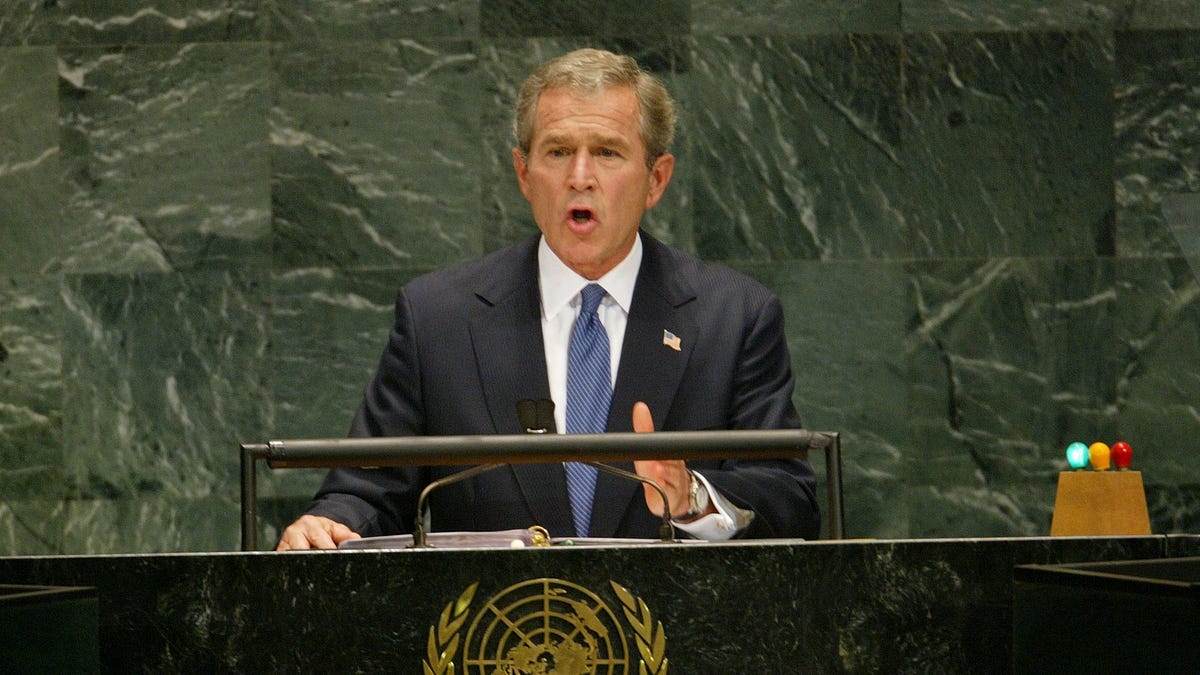
Asked shortly after the event, while flitting erratically around the U.S. seeking safety, why it occurred, Bush said, “they” hate our freedoms and democracy.
asserted
they → ask → freedoms
Osama bin Laden, head of al-Qaeda, asked, if that was so, why hadn’t they attacked Sweden?
asserted
they → ask → Sweden
In 2004, he elaborated on motives in a video that ran on Al Jazeera as well as the New York Times and CBS News.
asserted
that → elaborate → Jazeera
He said he “watched” as Israel invaded Lebanon in the early 1980s, backed by the U.S. navy, which bombarded hills and villages behind Beirut.
asserted
which → say → Beirut
He recalled it so vividly that many of us thought he’d been there, though he meant on TV.
asserted
he → recall → TV
“I couldn’t forget those moving scenes, blood and severed limbs, women and children sprawled …
asserted
I → forget → scenes
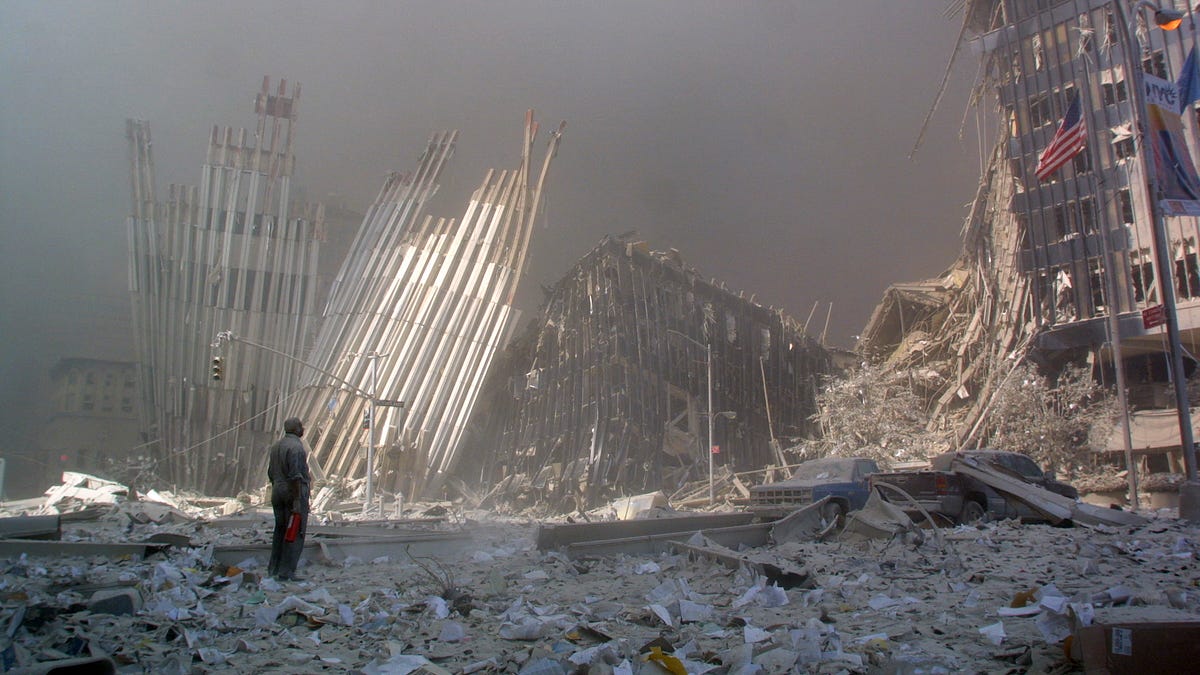
And as I looked at those demolished towers … it entered my mind we should punish the oppressor in kind and that we should destroy towers in America in order that they taste some of what we tasted and … be deterred from killing our women and children.”
asserted
we → look → women
It sounds human enough, even — in that peculiar way humans have of needing to feel vindicated — well-intentioned.
asserted
humans → sound → way
It punished the innocent.
asserted
It → punish → innocent
And it didn’t work.
asserted
it → work → ?
It so didn’t work.
asserted
It → work → ?
I mean that the U.S., institutionally and individually, didn’t learn the lessons bin Laden said he wanted to teach them.
asserted
he → mean → them
(“Those to whom evil is done,” Auden corrected, “Do evil in return.”)
asserted
Auden → do → return
So in response to 9/11, the U.S. attacked Iraq, lying about an Iraqi role in 9/11 quite deliberately, leading to carnage, vast migrations across the Arab world and Africa, precipitating racism and xenophobia in Europe and a rise of right-wing anti-immigration demagogues there and as far as Argentina and the U.S.
asserted
U.S. → attack → Argentina
Not quite what bin Laden says he envisioned for the aftermath.
asserted
he → say → aftermath
Why don’t we learn from history?
asserted
we → learn → history
Because we’re enmeshed in it too, in our own versions that we pick up as we enter the world and can’t easily transcend.
asserted
we → ’re → world
There’s a deep hubris in thinking you can map out and produce historical effects, as bin Laden believed, whereas the results were the opposite, including the unleashing of populist demagogues (FWIW, not all populists are demagogues) who ginned up racism to seize power and break down centuries worth of (albeit vastly flawed) democratic institutions.
asserted
who → ’ → institutions
“History is a nightmare,” said Abraham Joshua Heschel, a teacher in my past.
asserted
Heschel → say → past
He was writing in the context of the Biblical prophets who, in his view, rejected an approach based on historical factors and figures that were rooted mainly in power differentials.
asserted
that → write → differentials
Heschel’s prophets preferred the pursuit of unadorned justice which, to be sure, entails its own dilemmas.
asserted
which → prefer → dilemmas
In our own time, wise minds have tended to invest hope in democratic processes that include not just elections but education and discussion, in that pursuit.
asserted
that → tend → pursuit
And what if bin Laden’s proclaimed objective had been achieved?
asserted
objective → proclaim → ?
Americans would’ve suddenly realized it’s a bad thing to murder non-white people in distant lands!
asserted
it → realize → lands
You’re then faced with the problem of ends and means.
asserted
You → face → ends
Would that justify pulverizing the World Trade Center and all those in it — a truly academic conundrum that only seems to make sense in philosophy seminars and exists mainly to avoid moral issues, not confront and resolve them.
asserted
that → justify → them
Yet if bin Laden lost, he also won, in the sense that the U.S. showed that his characterization of it was on target: racist, greedy, crazy religious, violent and corrupt.
asserted
characterization → lose → target
As usual, Told Ya So, spoken in triumphant tones, is highly unsatisfying.
asserted
Told → tell → tones
 The Aporia