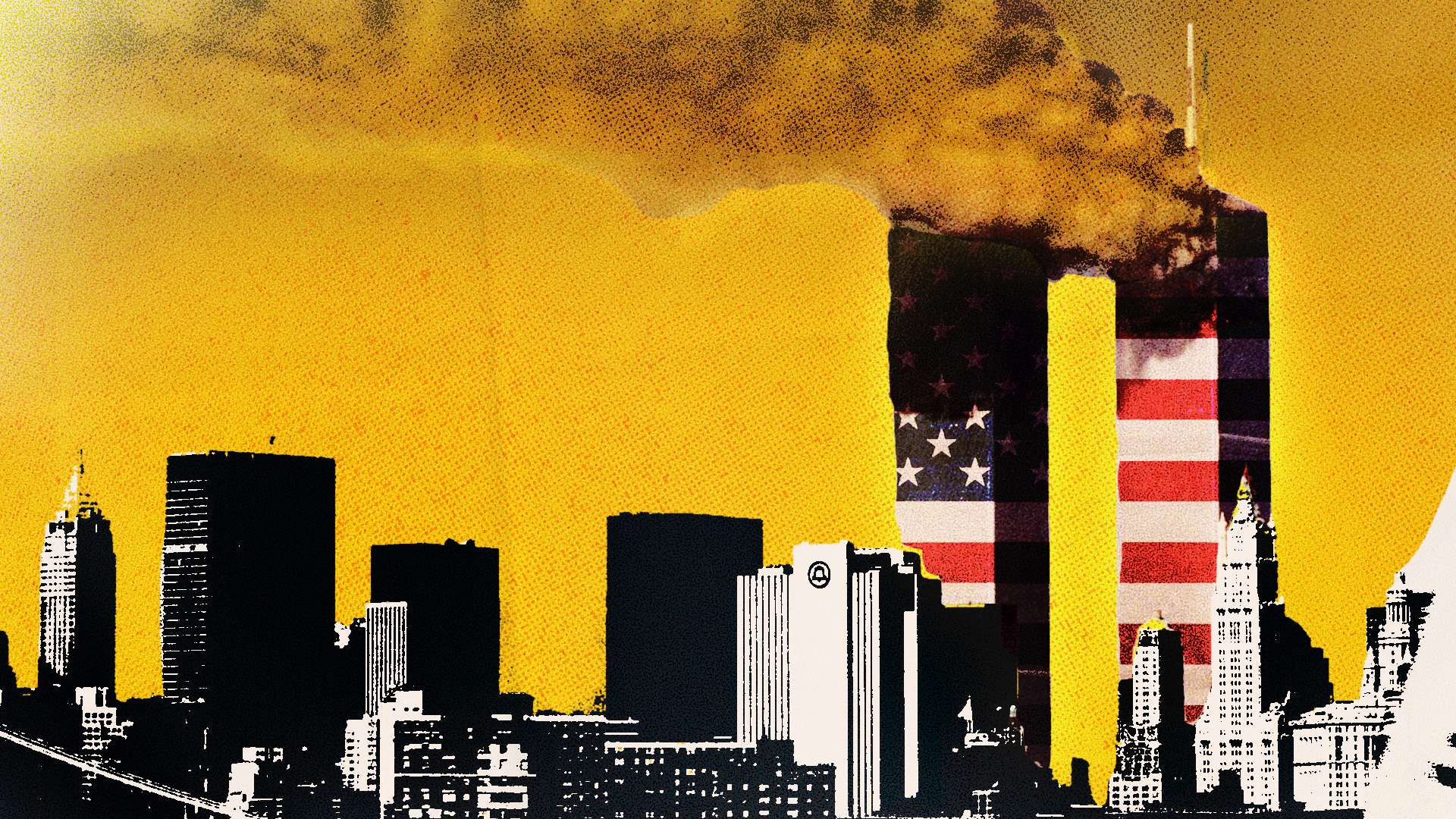
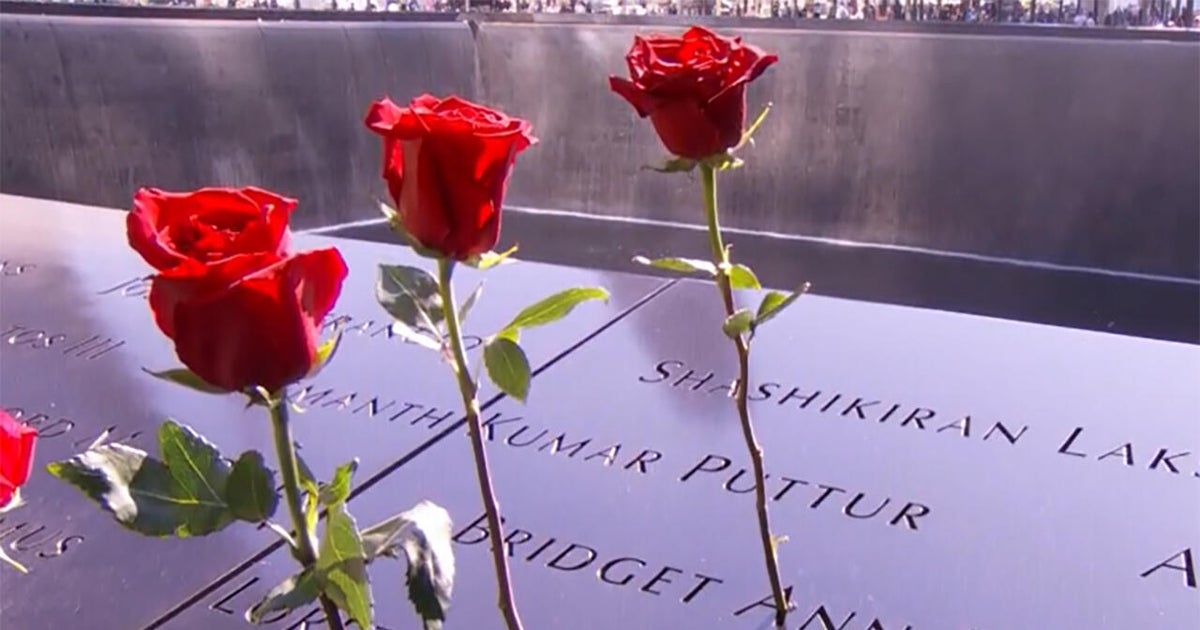
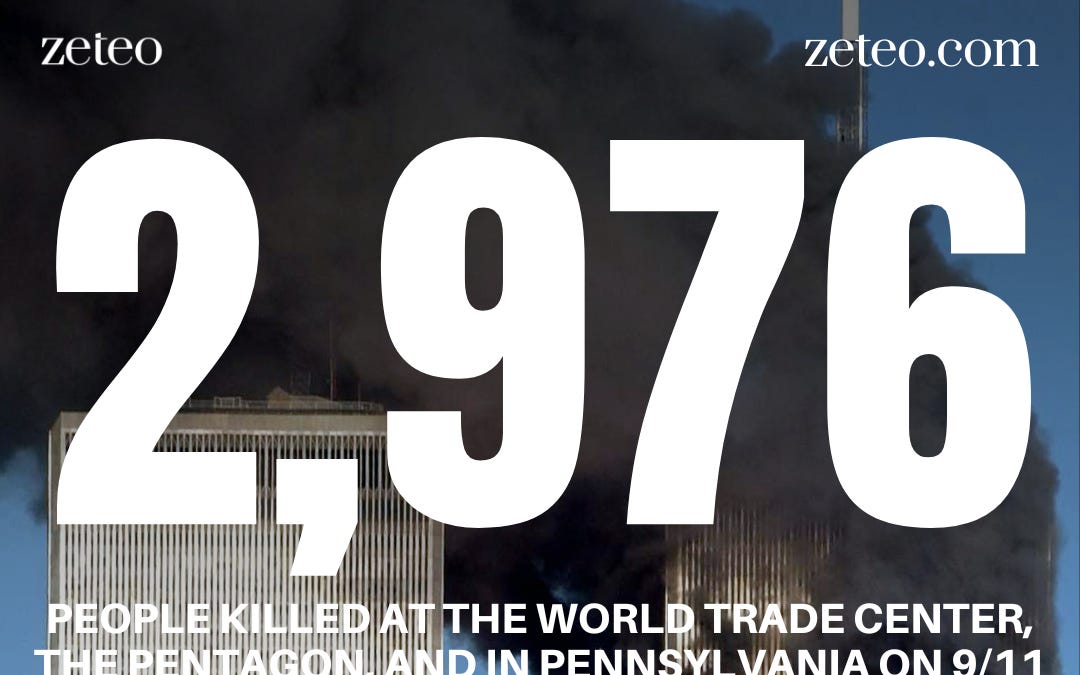
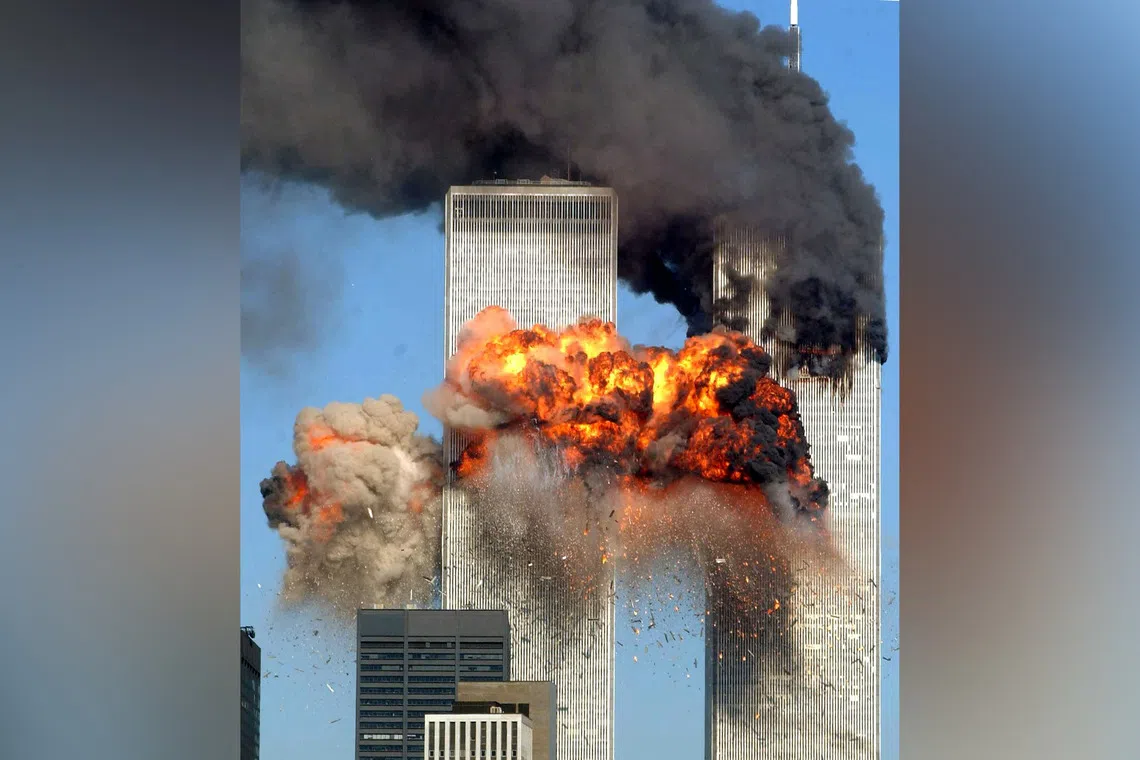
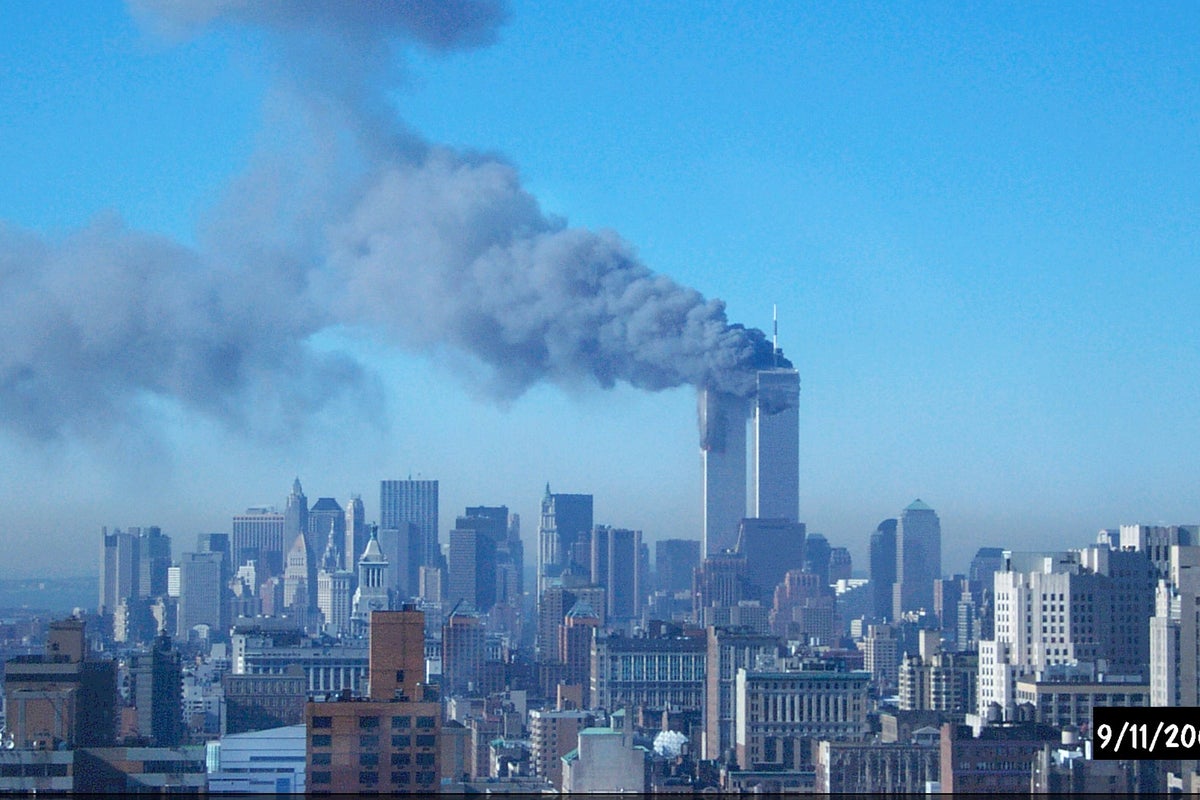
It's impossible, and probably psychologically unwise, to try to recapture the nightmare feelings unleashed by the September 11 attacks 25 years ago—that deeply sickening moment when the second plane hit the South Tower of the World Trade Center at 9:03 a.m., making it clear that a terrorist attack, rather than a freak accident, was underway.
asserted
attack → try → 9:03
The Pentagon was hit just 34 minutes later.
asserted
Pentagon → hit → ?
The South Tower collapsed, and then Flight 93 smashed into the ground in rural Pennsylvania, rather than Washington, D.C., thanks to a heroic passenger revolt.
asserted
Flight → collapse → revolt
It was less than two hours after initially being struck that the World Trade Center's North Tower collapsed, taking with it not just thousands of lives but the collective breath of a country that had presided over what Time's Henry Luce had dubbed "the American Century" back in 1941, urging the United States to act unapologetically like the global hegemon it was about to become.
asserted
it → strike → hegemon
In real time, that morning took forever to unfold, and it is stunning to think about how compressed the timeline was.
asserted
timeline → take → forever
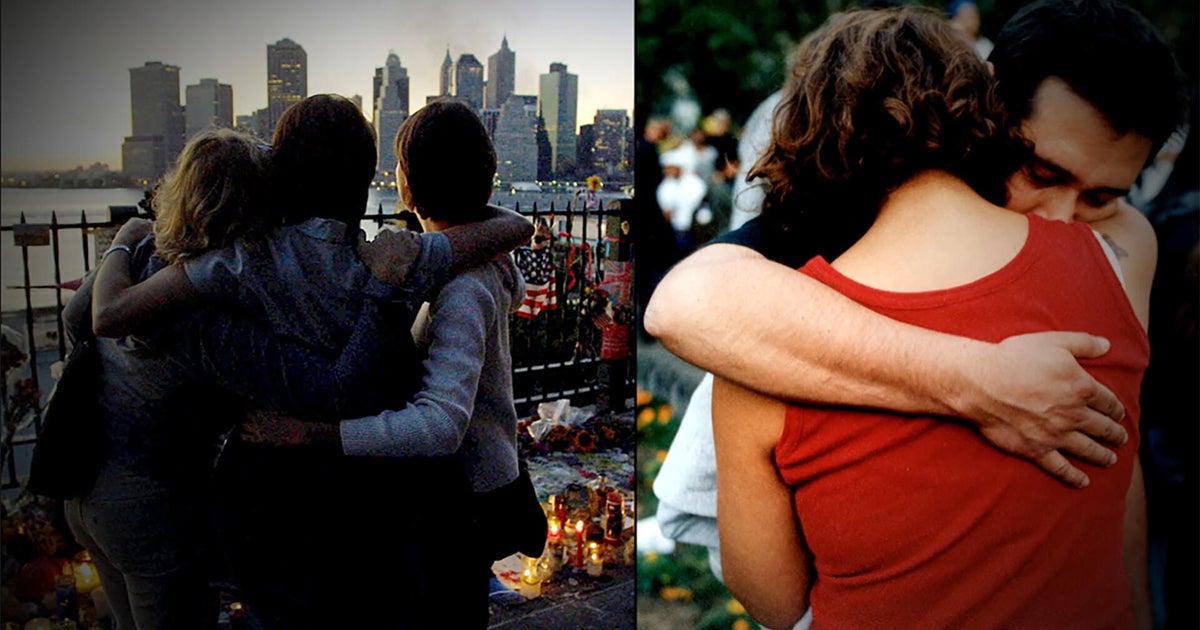
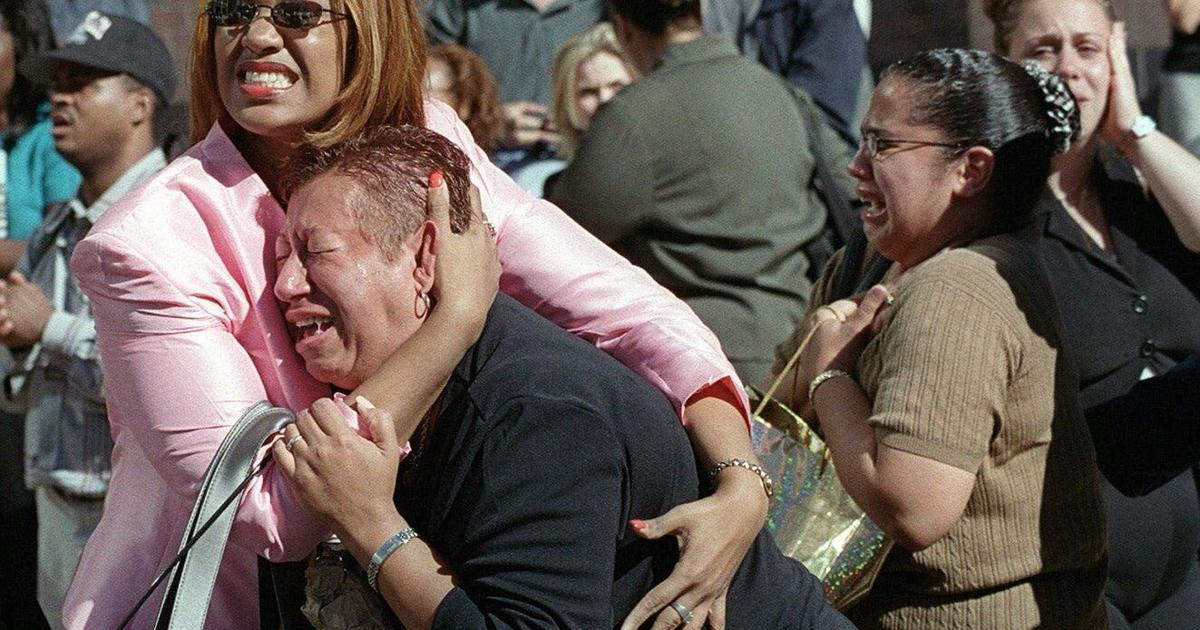
Thinking about 9/11 now, a quarter of a century later, is to feel a kick to the solar plexus, an unmanageable and volatile mix of disbelief, anger, horror, and overwhelming sadness at the spectacle of people jumping to certain death, of survivors staggering out from impossible clouds of ash, of reading "portraits of grief"—brief, evocative, and utterly devastating obituaries of the nearly 3,000 killed that day—for months to come.
asserted
survivors → think → months
Of outrage at the tin-eared dismissal on September 12 of "the little Eichmanns inhabiting the sterile sanctuary of the twin towers" by an academic who would later be unmasked as a liar about Native American heritage.
asserted
who → inhabit → heritage
To remember that day is to recall things mostly, and thankfully, forgotten.
asserted
remember → remember → things
If grief flows and ebbs over years, even decades, the political response to 9/11 was nearly instantaneous and unidirectional, always pointing to more power and money for the state, at whatever level deemed necessary.
asserted
level → flow → state
(For example, in the tsunami of funding tied to homeland security, tiny Colchester, Vermont, netted a search-and-rescue vehicle that could bore through concrete.)
uncertain
that → tie → concrete
In a few short weeks, Congress overwhelmingly passed the USA PATRIOT Act, a ludicrous acronym for "the Uniting and Strengthening America by Providing Appropriate Tools Required to Intercept and Obstruct Terrorism Act."
asserted
Congress → pass → Act
Only one senator, Russ Feingold (D–Wis.), voted against it, and just 66 House members (including just three Republicans and independent Bernie Sanders of Vermont) said no.
asserted
members → vote → Vermont
Then-Defense Secretary Donald Rumsfeld (we forget his calculated cynicism, aw-shucks wordplay about "known unknowns," and absolute failure at our own peril) declared that what would come to be known as the "global war on terror" (GWOT) was a variation on the Cold War that had ended only a decade earlier, in 1991, with a seemingly decisive victory for the United States.
asserted
that → forget → States
GWOT, pronounced Rumsfeld back in the day when the press eagerly ate up every morsel he offered like docile goats in a petting zoo,"undoubtedly will prove to be a lot more like a cold war than a hot war.
asserted
he → pronounce → war
If you think about it…the Cold War took 50 years, plus or minus….It
asserted
War → think → years
.It involved the willingness of populations in many countries to invest in it and to sustain it."
asserted
.It → involve → it
When then-Attorney General John Ashcroft, a comically failed and prudish figure who lost a Senate race to a dead man and whose staff rented curtains to cover up nude statues at the Department of Justice, attacked "those who scare peace-loving people with phantoms of lost liberty," he could at least say he was channeling the will of the people.
uncertain
he → fail → people
In the aftermath of the 9/11 attacks, Americans overwhelmingly supported trading in all sorts of civil liberties and freedoms for safety.
asserted
Americans → support → safety
In 2002, for instance, polls routinely showed nearly 8 in 10 Americans favoring giving up civil liberties in the name of greater safety and 7 in 10 calling for a national ID card.
asserted
7 → show → card
(In 2005, Congress would pass the REAL ID Act, which would take 20 years to be implemented.)
asserted
which → pass → years
As Ohio State political scientist John Mueller reminded people in the years following the 9/11 attacks, catastrophic events and social panics routinely give rise to laws and policies that long outlive the specific moments that inspire them.
asserted
that → remind → them
He noted that the Red Scare of the postwar era gave rise to loyalty oaths, incursions on civil liberties, and other policies that persisted for years or even decades after anyone seriously feared communist subversion.
asserted
anyone → note → subversion
After 9/11, he wrote, the issue wasn't simply about government surveillance, but spending patterns on things like the new Department of Homeland Security that could be locked in.
uncertain
that → write → Security
Osama bin Laden had declared in 2004 that his goal was "bleeding America to the point of bankruptcy" by spending large amounts on all manner of activities and services dubiously related to safety.
asserted
goal → declare → safety
In 2011's Terror, Security, and Money: Balancing the Risks, Benefits, and Costs of Homeland Security, Mueller and Mark G. Stewart argued persuasively that quick and relatively inexpensive policies such as hardening cockpit doors and training crews effectively ended the threat of another 9/11-style attack in which a commercial airliner is used as a missile; as important, the attack was an outlier event that almost certainly could not be repeated.
uncertain
that → balance → missile
Overreaction in both domestic and foreign policy, runs their argument, is a far bigger threat to the American way of life than anything terrorists can do.
asserted
terrorists → run → anything
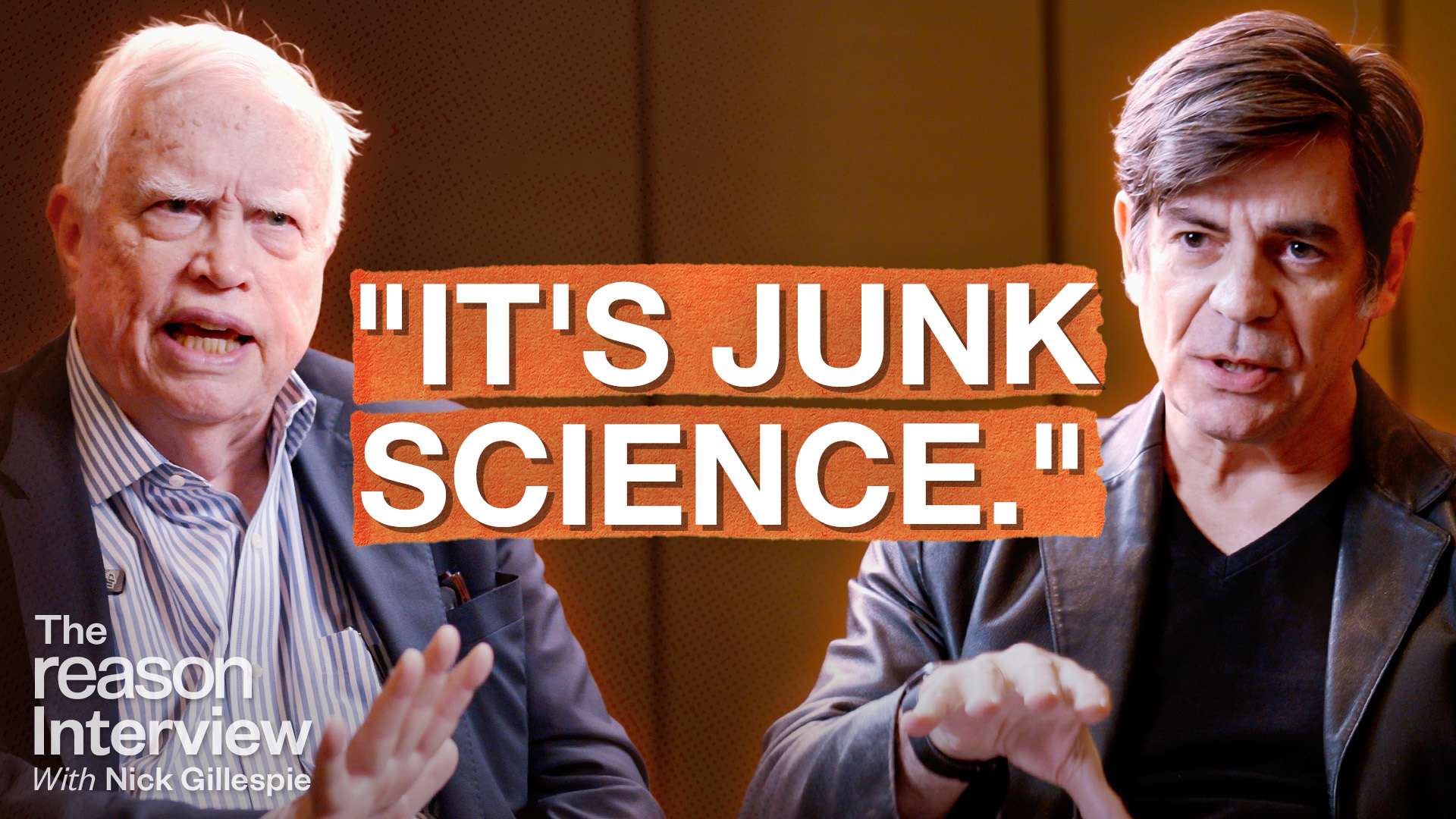
"Your chance of dying in a bathtub is about one in a million, and from terrorism is about one in 3.5 million," Mueller told me in 2011, and it's far from clear that we were any safer despite large outlays (see interview below).
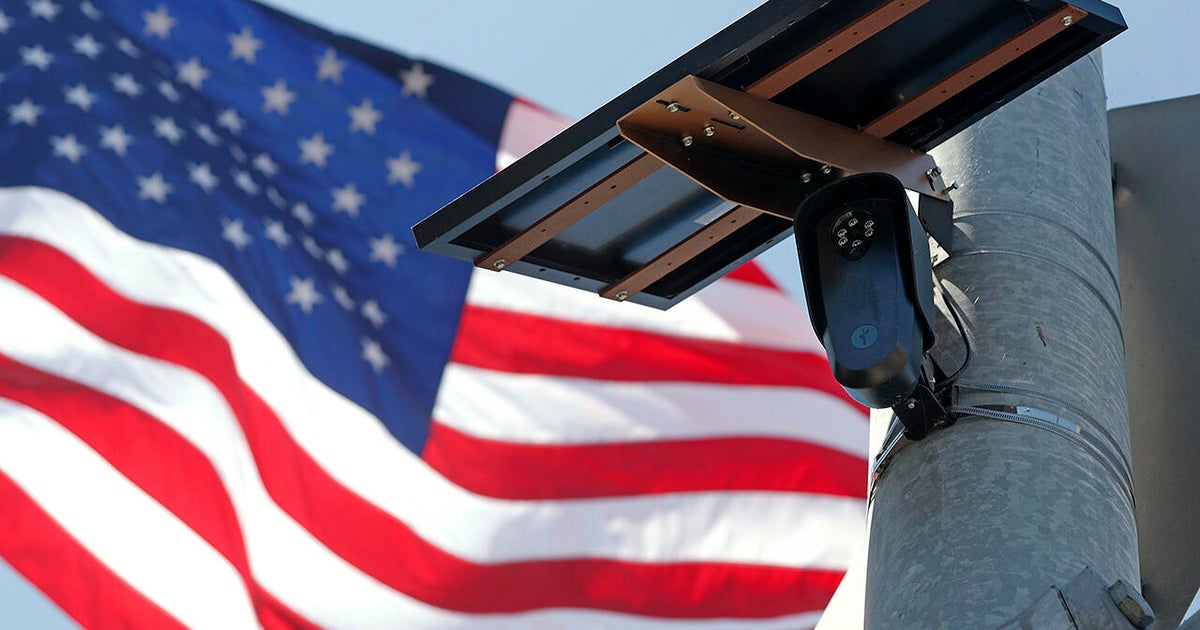
But if eternal funding for, say, the Transportation Security Administration (TSA) seems locked in despite no clear evidence of its efficacy, it's also true that both politicians and voters remain happy to keep on believing that trading freedom for safety is a good idea.
asserted
trading → die → safety
A recent Reuters/Ipsos poll found that, compared to 2013, more Americans fear domestic terrorism (33 percent) than foreign terrorism (20 percent).
asserted
Americans → find → terrorism
When it comes to wars fought in the name of ending or suppressing terrorism, just 21 percent agree Afghanistan and Iraq were worth it, and just 25 percent think that Iran is worth it.
asserted
Iran → come → terrorism
Yet two-thirds of respondents agree that "airport security disruptions are worth it because they make flying safer" and prefer government agencies to private providers.
asserted
they → agree → providers
The one bright spot is that 65 percent of Americans believe that the government should not be allowed "to monitor electronic communications of citizens without a warrant," including majorities of Democrats (77 percent), independents (63 percent), and Republicans (55 percent).
asserted
government → believe → Democrats
Given that the law permitting such practices, Section 702 of the Foreign Intelligence Surveillance Act (FISA), lapsed in June without reauthorization, that counts as progress.
asserted
that → give → progress
 The Aporia