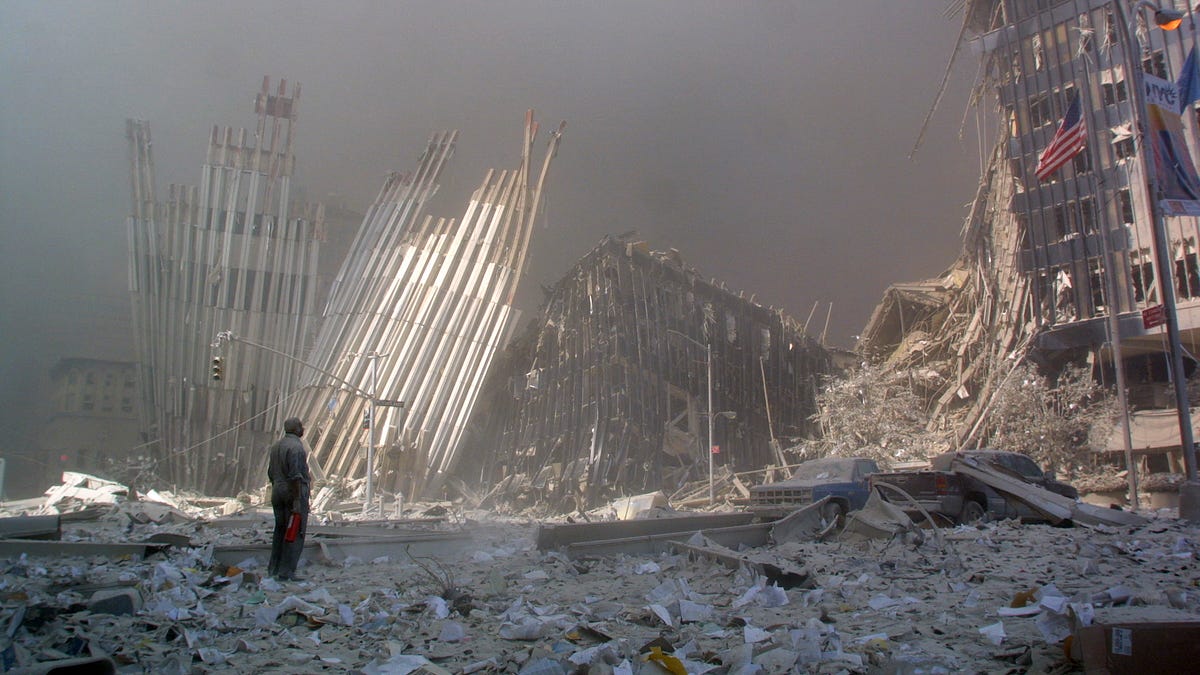
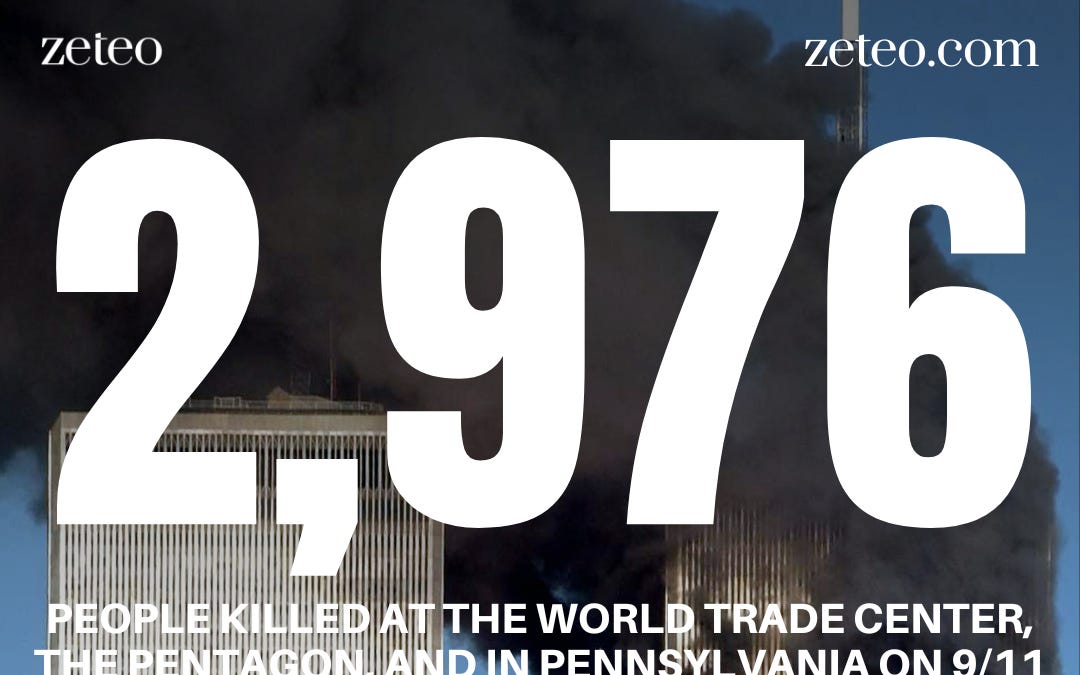
I taught Saudi royalty in 1979. I saw the seeds of 9/11 decades before the planes hit

Washington Examiner · collected 2026-09-11 · by Ken Strange
Content note This article describes suicide or self-harm and explicit sexual content.
Read the original at Washington Examiner ↗

Summary

A writer who taught Saudi royalty in 1979 reflects on how they witnessed the early seeds of extremism that eventually led to the 9/11 attacks. The article suggests that Osama bin Laden's radicalization was fueled by his rejection by the Saudi royal family after offering them his al Qaeda militants as a vanguard, and later intensified during the Gulf War when the monarchy hosted American forces on Muslim soil. Key events mentioned include the Taliban's support of bin Laden in Afghanistan, the 1998 embassy bombings, and Prince Turki al Faisal's failed diplomatic mission to secure bin Laden's surrender. The author attributes the 9/11 attacks not just as an assault on America but also as a result of Saudi Arabia's internal domestic crises being exported globally.
Written by the local model on 2026-09-11, using this article's own text rather than the other coverage of the same event (that is the story summary below).

Signals How these are calculated →

Claims extracted
28
claim-shaped sentences
Uncertain
0%
0 of 28 hedged
Leaning
Leans strongly left
of the writing, not the subject
Correction & hedging signals
96.2
corrections and hedging in what we collected; not a measure of accuracy
Outlets on this story
168
Politics
Narrative spread
1
articles carrying this framing
Analyzed 2026-09-11 · how these are computed

AI analysis (generated at analysis time, not now)

Story summary

On October 8, 2024, Turning Point USA founder Charlie Kirk was killed, an event that has become a significant marker for young conservatives in America, akin to September 11, 2001 and the Hamas attack on Israel in October 2023. The day of his death is now referred to by some as 9/10, symbolizing its impact on political activism among students. Meanwhile, the small Canadian town of Gander played a pivotal role during the September 11 attacks when U.S. airspace was closed, leading to 38 international flights landing there, doubling the population overnight and necessitating an impromptu humanitarian effort by locals to aid around 7,000 stranded passengers and crew members for several days. This act of kindness inspired the Broadway musical "Come From Away," which highlights Gander's generosity and humanity in times of crisis.

Written for “9/11 Anniversary Reflections” on 2026-09-12, grounded in this article and the 167 other(s) covering the same event.
Why this leaning score
The article's own words the score was based on. Each is quoted verbatim and was checked against the article text before being stored, so you can find it in the original.
Score -0.75 Confidence high
Leaning score -0.75 for article 7975 (high confidence, 3 verified quotes) · logged 2026-09-11

Story

📰 9/11 Anniversary Reflections
Politics · 168 article(s) covering the same event.

How this is being covered How these are calculated →

Article leaning vs. publisher reliability
Source leaning vs. consistency

Compared with similar articles

This article reads leans strongly left and hedges 0% of its claims. Each row says how that neighbour differs.
BBC News
⚖️ Leans left further right than this 🔴 6% hedged 5 of 82 📰 publisher trust 96
“Both articles describe the exact same occurrence: the 9/11 attacks on the US in 2001”
9/11 Changed Our Politics same event · 100%
Persuasion
⚖️ Leans strongly right further right than this 🔴 7% hedged 7 of 98
“Both articles are discussing the 9/11 attacks, which occurred on September 11, 2001.”
Zeteo
⚖️ leaning not scored 🔴 15% hedged 2 of 13
“Both articles mention the September 11, 2001 attacks and its context, implying they are discussing the same specific incident.”
National Post
⚖️ Leans strongly right further right than this 🔴 15% hedged 7 of 47 📰 publisher trust 96
“Both articles mention and describe the September 11, 2001 attacks as a singular historical event.”
Zeteo
⚖️ Leans left further right than this 🔴 0% hedged 0 of 7
“Article A is reflecting on the 25th anniversary of the 9/11 attacks, while Article B describes events that occurred decades before the actual attack”
Zeteo
⚖️ leaning not scored 🔴 0% hedged 0 of 9
“The articles cover different time periods and describe separate incidents, with Article A referring to the 9/11 attacks themselves, while Article B describes events leading up to the attacks in 1979”
Did the Terrorists Win? different event · 80%
The Dispatch
⚖️ leaning not scored 🔴 0% hedged 0 of 5 📰 publisher trust 96
“Article B discusses the causes and seeds of the 9/11 attacks, while Article A describes the aftermath of the event, but neither article specifically mentions the exact circumstances or details of the event itself.”
ProPublica
⚖️ Leans left further right than this 🔴 9% hedged 11 of 121 📰 publisher trust 95
“Article A focuses on a specific investigation into a Saudi suspect's involvement in the 9/11 case, while Article B discusses the general seeds of extremism in Saudi Arabia and its potential connection to 9/11, but does not mention a specific event or person from that time.”
Zeteo
⚖️ Leans strongly left 🔴 50% hedged 1 of 2
“Article A mentions the 9/11 attacks as a historical event being commemorated, while Article B describes events leading up to the attacks in 1979”

Publisher

Washington Examiner · 159 article(s) · 0 correction(s) detected
No corrections detected for this publisher. That may mean careful reporting, or simply that nothing has been checked.

Who wrote this

Ken Strange
1 article(s) here · 1 carrying a prediction
🔮 This open defiance would eventually result in bin Laden’s revoked citizenship and expulsion from the Kingdom, setting him on a definitive path of global terrorism.
The only article under this byline in the corpus.

Topics

Afghanistan Riyadh Saudi Taliban al Qaeda

Subjects

Saudi NORP · 11× bin Laden PERSON · 6× Afghanistan GPE · 3× Taliban ORG · 3× bin Laden’s PERSON · 3× American NORP · 2× Mecca GPE · 2× Riyadh GPE · 2× al Qaeda ORG · 2× the House of Saud ORG · 2×

Narrative

By the late 1990s, al Qaeda graduated from regional incitement to direct terrorist attacks, including the simultaneous deadly 1998 bombings of the U.S. embassies in Kenya and Tanzania, followed by the 2000 suicide attack on the USS Cole in Yemen.
framing: assertive · carried by 1 article(s) · first seen 2026-09-11
🔮 This open defiance would eventually result in bin Laden’s revoked citizenship and expulsion from the Kingdom, setting him on a definitive path of global terrorism.
2026-09-11 · Washington Examiner
I taught Saudi royalty in 1979. I saw the seeds of 9/11 decades before the planes hit · assertive framing

Claims (28 extracted, 0 hedged)

In 1979, as smoke rose from the Grand Mosque in Mecca during a bloody zealot siege, I felt the first tremors of Saudi Arabian extremism firsthand. asserted
I → rise → extremism
A quarter-century before 9/11, the seeds of the hijackers’ radicalization were already being sown inside the kingdom. asserted
seeds → sow → kingdom
Working in Riyadh at a private school for the Saudi royal family, I know firsthand that a cumulative series of internal crises led to that tragic day. asserted
series → work → day
The state’s compromises with extremist elements allowed an ecosystem of terror to flourish and eventually converge with global conflicts. asserted
ecosystem → allow → conflicts
In the 1980s, the war in Afghanistan drew tens of thousands of Saudi and other foreign fighters who rallied to aid the mujahideen against the Soviet occupation. asserted
who → draw → occupation
Osama bin Laden, a wealthy Saudi national, was central to this movement, providing both financial and logistical support as well as foot soldiers. asserted
Laden → provide → support
When bin Laden returned home in triumph in 1989, he boldly approached the Saudi royal family, offering his al Qaeda militants as a vanguard for the Saudi military. asserted
he → return → military
When the Saudi monarchy rejected his proposal, bin Laden took the rebuff as a deep personal affront. asserted
Laden → reject → affront
This rejection ignited a slow-burning animosity toward the House of Saud, a hostility that intensified dramatically during the 1990 Gulf War. asserted
that → ignite → War
When the monarchy chose to host American forces (including female and Jewish soldiers) on sacred Muslim soil to defend against Iraq, bin Laden vehemently denounced the decision. asserted
Laden → choose → decision
This open defiance would eventually result in bin Laden’s revoked citizenship and expulsion from the Kingdom, setting him on a definitive path of global terrorism. asserted
defiance → result → terrorism
Bin Laden had no choice but to relocate to Afghanistan, where the Taliban regime embraced the Saudi jihadist and his disciples. asserted
regime → have → jihadist
Al-Qaeda training camps quickly metastasized across the Afghan landscape. asserted
camps → metastasize → landscape
By the late 1990s, al Qaeda graduated from regional incitement to direct terrorist attacks, including the simultaneous deadly 1998 bombings of the U.S. embassies in Kenya and Tanzania, followed by the 2000 suicide attack on the USS Cole in Yemen. asserted
Qaeda → graduate → Yemen
These operations forced a diplomatic crisis upon Riyadh. asserted
operations → force → Riyadh
Prince Turki al Faisal, head of Saudi intelligence, launched a final diplomatic mission to Afghanistan to demand the Taliban surrender the wayward Saudi dissident. asserted
Taliban → launch → dissident
For the Saudi royal family, bin Laden had transformed from a theological insurgent into an acute geopolitical embarrassment and threat. asserted
Laden → transform → embarrassment
However, that mission failed, cementing the Taliban-al Qaeda nexus and clearing the logistical path for bin Laden’s ultimate operation: deploying 15 radicalized Saudi nationals to weaponize commercial aircraft within the American homeland. asserted
mission → fail → homeland
Bin Laden’s broader objective extended far beyond mass casualties. asserted
objective → extend → casualties
By striking the U.S. homeland, he demonstrated a terrifying operational reach while successfully exposing geopolitical fissures between the United States and Saudi Arabia. asserted
he → strike → States
The aftermath left the House of Saud compromised and Washington scrambling to reassure anxious citizens, altering the fragile alliance between the two dissimilar nations at the worst possible time. asserted
Washington → leave → time
Today, however, the Kingdom is undergoing a profound transformation that my 1979 self would have found unimaginable. asserted
self → undergo → transformation
Gone are the once-feared mutawa (religious police) who patrolled the souks and city centers, harassing both foreigners and Saudi citizens alike. asserted
who → go → foreigners
Under Vision 2030, Saudi Arabia has systematically dismantled the power of the religious police, integrated women into the workforce, and actively promoted a moderate, tolerant version of Islam. asserted
Arabia → dismantle → Islam
As Washington evaluates its strategic ties in the Middle East, policymakers must recognize that the ideological ecosystem that gave birth to bin Laden is being actively dismantled from within. asserted
that → evaluate → within
Supporting this internal reformation is not just good diplomacy — it is essential for global security. asserted
it → support → security
Kenneth R. Strange Jr. is a foreign policy analyst and law enforcement commentator who lived in Saudi Arabia from 1979 to 1985. asserted
who → live → 1985
He is also a former FBI Special Agent of the Joint Terrorism Task Force, DOJ Special Agent in Charge, and author of the award-winning true crime memoir A Cop’s Son: One G-Man’s Fight Against Jihad, Global Fraud and the Cartels. asserted
He → win → Jihad

💬 Give feedback
🕘 History 🎫 Support