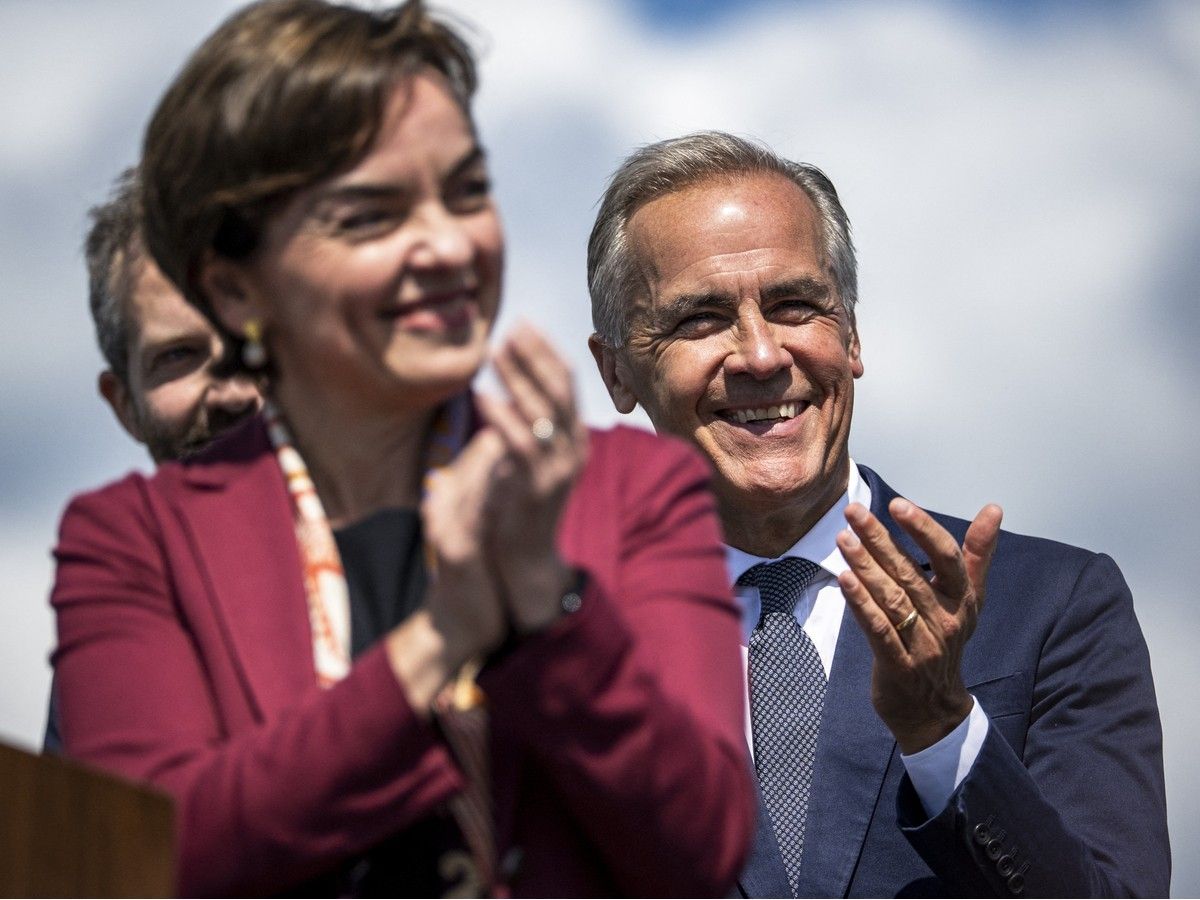
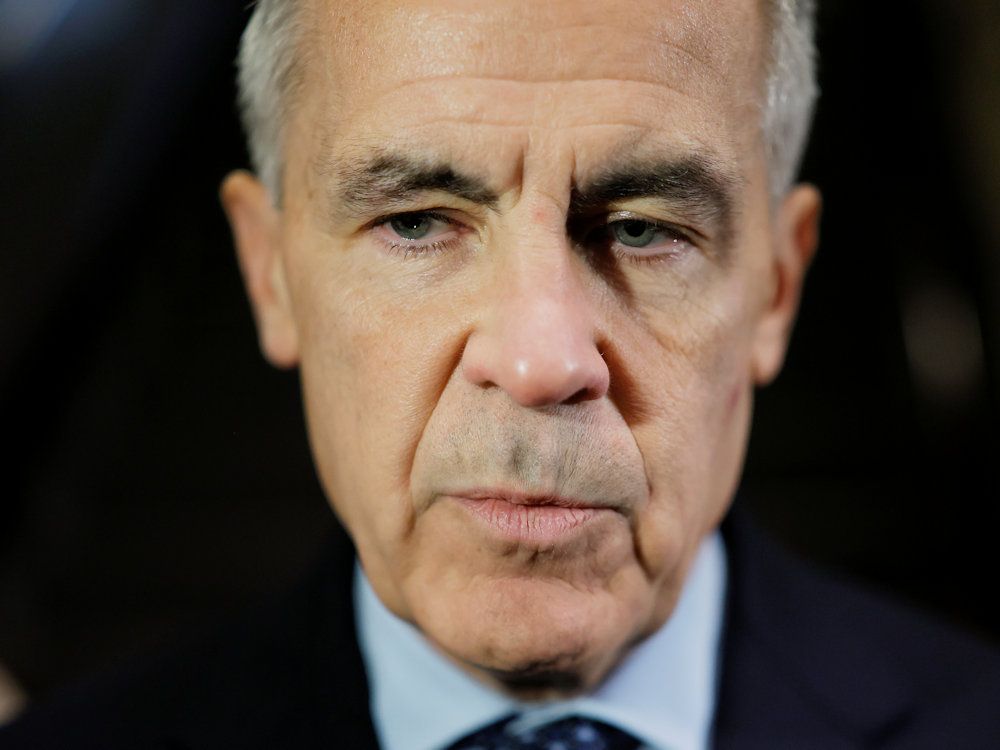
Prime Minister Mark Carney’s sustained surge in the polls is coming predominantly from former Conservatives, according to new figures published by the Angus Reid Institute.
uncertain
surge → come → Institute
According to a new poll published on Thursday, 13 per cent of respondents who voted Conservative in 2025 would now vote for a Carney-led Liberal party if given the chance.
uncertain
who → accord → chance
That may not sound like a lot, but given that a record 8.1 million Canadians voted Conservative in the last federal election, that works out to an exodus equivalent to one million votes – more than enough to flip dozens of Conservative ridings across Ontario and Atlantic Canada.
uncertain
that → sound → Ontario
And in a feat with few precedents in Canadian political history, the Liberals are luring over Tories while simultaneously siphoning off support from both the NDP and the Bloc Québécois – accelerating a trend that already saw both parties lose catastrophically to the Liberals in 2025.
asserted
parties → lure → 2025
The New Democrats scored their worst-ever result in 2025, winning just seven seats and 6.29 per cent of the vote.
asserted
Democrats → score → vote
And of those voters, nearly a third have since decamped to the Liberals.
asserted
third → decamp → Liberals
The Angus Reid Institute found that 31 per cent of respondents who voted NDP in 2025 now intended to vote for Carney.
asserted
who → find → Carney
Although, notably, this NDP exodus was cancelled out by a tide of disaffected Liberal voters heading in the other direction; 15 per cent of 2025 Liberal voters are now expressing an intention to vote NDP.
asserted
cent → cancel → NDP
This is predominantly why the NDP is back to polling at 12 per cent.
asserted
NDP → poll → cent
Still catastrophic for a party that has spent much of the past 20 years polling at around 20 per cent.
asserted
that → spend → cent
No such exchange was evident among Bloc Quebecois supporters; 21 per cent of those who voted Bloc in 2025 are now in the Liberal camp.
asserted
who → vote → camp
Among Liberal voters, meanwhile, the poll couldn’t identify a single respondent who had since switched their allegiance to the Bloc.
asserted
who → identify → Bloc
All of these trends is why every available pollster now projects a commanding Liberal majority were an election to be called.
asserted
majority → project → trends
The new Angus Reid Institute poll puts the Liberals at 46 per cent to the Conservatives’ 32 per cent.
asserted
poll → put → cent
Two weeks ago, a Liaison Strategies poll found much the same; Liberals at 46 per cent against 29 per cent for the Conservatives.
asserted
Liberals → find → Conservatives
A seat projection of the Liaison results by election modeller Raymond Liu showed it translating to a Liberal caucus of 239 seats; 69.8 per cent of the House of Commons (as compared to the slim 50.5 per cent of seats they enjoy now).
asserted
they → show → seats
Were such an election to occur, it would represent the largest Liberal landslide since 1949, when Prime Minister Louis St. Laurent secured enough seats to equal 72.9 per cent of the House of Commons.
asserted
Laurent → occur → Commons
In other words, were an election to be called, Carney would stand to win a mandate stronger than almost any other Liberal prime minister.
asserted
Carney → call → minister
Pierre Trudeau’s career high was when he won 58.3 per cent of House of Commons seats in the 1968 federal election.
asserted
he → win → election
Jean Chrétien won three consecutive majorities, but none of them brought in more than 57 per cent of the House of Commons.
asserted
none → win → Commons
As to why this is happening, it’s due almost entirely to what the Angus Reid Institute calls the “Trump Bump.”
asserted
Institute → happen → what
Carney was swept into office by anxieties related to the trade war launched by U.S. President Donald Trump.
asserted
Carney → sweep → Trump
And in every subsequent breakdown of relations with the U.S., his poll numbers have climbed.
asserted
numbers → climb → U.S.
Before the deal tanked, Carney was sitting at 51 per cent approval.
asserted
Carney → tank → approval
Immediately afterwards, it surged to 62 per cent.
asserted
it → surge → cent
“Carney enjoys majority approval in every province in the country except Saskatchewan,” the poll concluded.
asserted
poll → enjoy → Saskatchewan
The Angus Reid Institute found despite all of this, Conservatives remain satisfied with leader Pierre Poilievre and the party’s agenda generally – but remain hamstrung so long as the trade war stays in the headlines.
asserted
war → find → headlines
Of Tory voters, 67 per cent expressed satisfaction with Poilievre as leader.
asserted
cent → express → leader
And when asked if the party should shift its platform, Conservative voters were much more likely to say the party should become more right-wing, not less.
asserted
party → ask → platform
While 58 per cent said the party should “stay the course ideologically,” 21 per cent prescribed a move to the “right of the political spectrum,” against just eight per cent who advocated a “move to the left of the political spectrum.”
asserted
who → say → spectrum
The phenomenon of conservative political support being steamrolled by voter ire at Trump is not unique to Canada.
asserted
phenomenon → steamroll → Canada
In Australia, the country’s main conservative option, the Liberal-National Coalition, had been poised for an easy victory in a 2025 general election until a series of punitive tariffs levied by the Trump administration swung support back to the incumbent Labor government.
asserted
series → poise → government
Thursday’s poll was based on an online survey conducted from Sept. 2-7, among a randomized sample of 1,811 Canadian adults.
asserted
poll → base → adults
For comparison
purposes, a probability sample of this size would carry a margin of error of plus or minus two percentage points, 19 times out of 20
asserted
sample → carry → 20
 The Aporia