These Michigan swing voters are bracing for higher prices from trade war with Canada
President Trump's tariff standoff with Canada is rankling some key voters ahead of this year's midterm elections.
asserted
standoff → brace → elections
NPR observed two online focus groups Wednesday night with 13 people in Michigan who voted for Joe Biden in 2020 and then Trump in 2024.
asserted
who → observe → 2024
Eleven of these swing voters said the trade war with Canada, which borders Michigan, would be bad for the state.
asserted
which → say → state
Not a single person said they felt there was something positive to gain from this tension with their northern neighbor.
asserted
they → say → neighbor
A majority of the participants said they are most worried higher tariffs could worsen an affordability crisis — a central issue in this year's midterms.
uncertain
tariffs → say → midterms
Nine said they were concerned Trump's tariffs would affect what they personally pay for some products.
asserted
they → say → products
"Prices are going to go up," said P.J., a 45-year-old self-described Democrat.
asserted
P.J. → go → ?
(Participants took part in these sessions under the condition their last names would not be used.)
asserted
names → take → condition
"The more we put tariffs on stuff, the more they put tariffs on stuff.
asserted
they → put → stuff
I mean, prices are just ultimately going to go up for all of us."
asserted
prices → mean → us
While focus groups are not scientifically significant like polls, these sessions do provide insight into what this politically powerful sliver of the electorate is thinking and feeling.
asserted
sliver → provide → electorate
This year, Michigan voters will weigh in on a closely watched Senate race that could be key in deciding whether Democrats regain control of the chamber.
uncertain
Democrats → weigh → chamber
These focus groups with swing voters in battleground states are held by messaging firm Engagious and market research recruiting firm Nelson Recruiting.
asserted
groups → hold → Engagious
NPR partners with them each month as part of the Swing Voter Project.
asserted
NPR → partner → Project
Rich Thau, the president of Engagious, moderates these discussions.
asserted
Thau → moderate → discussions
He said because Michigan borders Canada, voters there are particularly nervous about financial blowback from Trump's tariff policies.
asserted
voters → say → policies
"It's real for them," Thau told NPR.
asserted
Thau → tell → NPR
"It's proximate and they're concerned that this is going to be damaging to them personally and to the state overall."
asserted
this → concern → state
Some of these voters said they personally witness a lot of commerce between the two countries.
asserted
they → say → countries
Tanya, a 61-year-old independent, said she often sees trucks coming back and forth over the border.
asserted
trucks → say → border
"It's going to decrease the border crossings because we have two bridges now," she said.
asserted
she → go → bridges
"We just opened the Gordie Howe Bridge.
asserted
We → open → Bridge
It's going to affect the amount of traffic and the business that those bridges are going to see in the future."
asserted
bridges → go → future
High prices aren't coming down
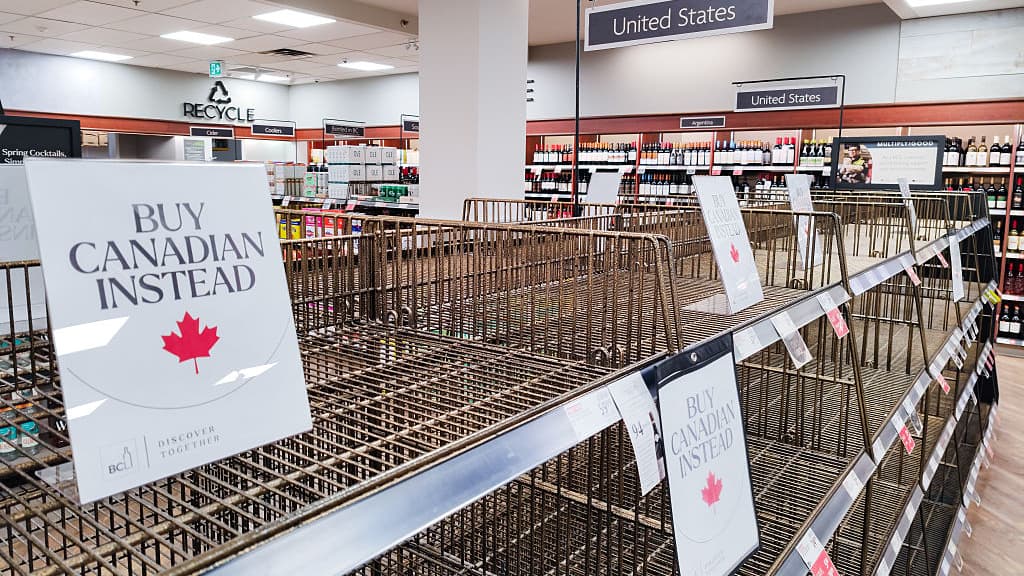
Barbara, a 77-year-old independent voter, said she's worried items that do make it across the border are going to get significantly more expensive.
asserted
that → come → border
"I just went into the store and I looked at my shampoo and I said, 'OK, this is going to go up 50%,'" she said.
asserted
she → go → shampoo
"I mean, because my shampoo is made in Canada."
asserted
shampoo → mean → Canada
Sylvia, a 62-year-old Democrat, said she might put off buying some products from Canada.
uncertain
she → say → Canada
"I like to buy certain alcohol and other types of products [from Canada]," she said.
asserted
she → like → Canada
"And if it's going to go up, it's going to cost me more.
asserted
it → go → more
So I probably wouldn't be able to pick it up right away or would have to wait a little while and hope that maybe this will slow down and quiet down and they could get a better resolution from all of this."
uncertain
they → pick → this
Month after month, frustration over high prices has remained a sticking point for swing voters who have participated in these focus groups.
asserted
who → remain → groups
In Michigan, eight of the 13 said they feel more economically anxious now than they did before Trump took office again.
asserted
Trump → say → office
"They complained bitterly about the high prices of an endless number of goods, groceries, gasoline … go down the list," Thau said.
asserted
Thau → complain → list
"So they are not in a happy mood when it comes to the cost of everyday goods.
asserted
it → come → goods
So the tariffs just add more fuel to the fire."
asserted
tariffs → add → fire
Samantha, a 31-year-old independent voter, said she finds the whole situation angering because she voted for Trump because of his promises to bring down prices.
asserted
she → say → prices
"I feel like my only reason for voting for him was in the hopes of fixing the economy," she told Thau.
asserted
she → feel → Thau
"And right now from where I am — I would consider myself middle class — things are more expensive such as food, gas."
asserted
things → consider → food
Many of these voters said they also thought Trump's ego motivated his decision to rename Lake Ontario as Lake America, in response to Canada's retaliatory tariffs.
asserted
ego → say → tariffs
"It is a little bit of his ego," Sylvia said.
asserted
Sylvia → say → ego
…and 5 more, not listed.
 The Aporia