Claims extracted
19
sentences that state something as happening or true
Uncertain
0%
0 of 19 hedged
("reportedly", "may", "according to")
Leaning
Leans left
of the writing, not the subject · beta estimate
Publisher signals
96/100
The Free Press's corrections and
hedging, across everything collected from it. Not a measure of accuracy.
Outlets on this story
170
Politics
Same framing elsewhere
1
articles that frame the event the way this one does
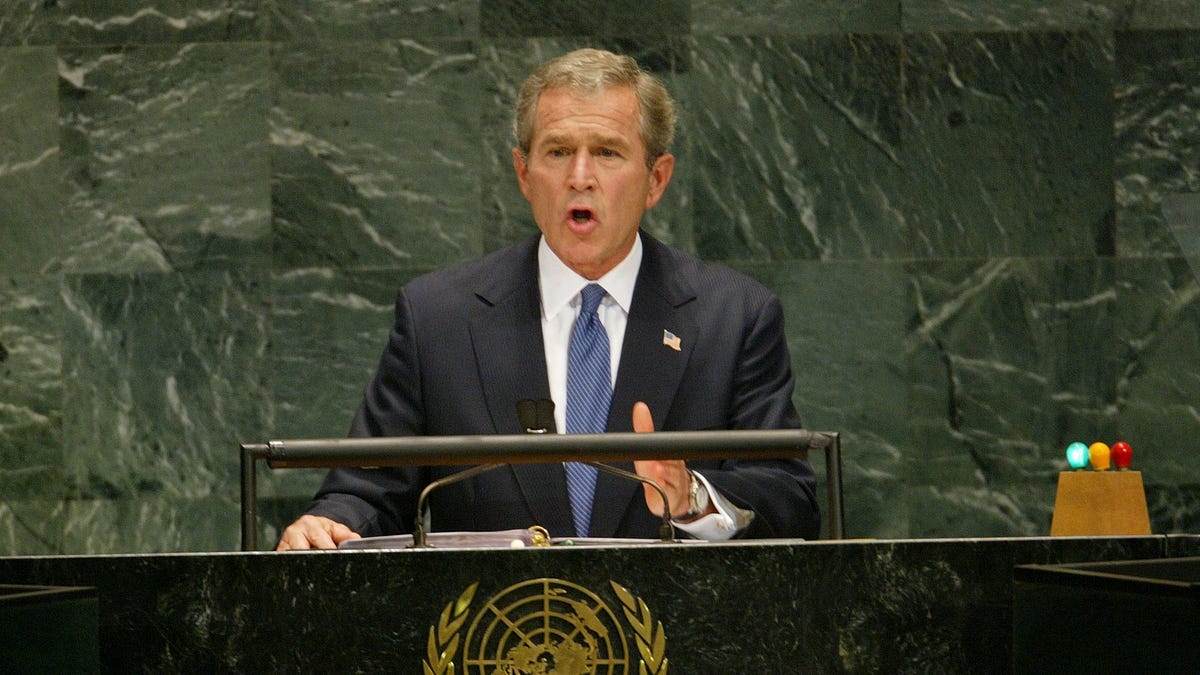
In the wake of the September 11 attacks, President George W. Bush launched what he called the War on Terror.
asserted
he → launch → Terror
It began with the invasion of Afghanistan in late 2001, which quickly toppled the Taliban and expelled al-Qaeda from its most crucial sanctuary.
asserted
which → begin → sanctuary
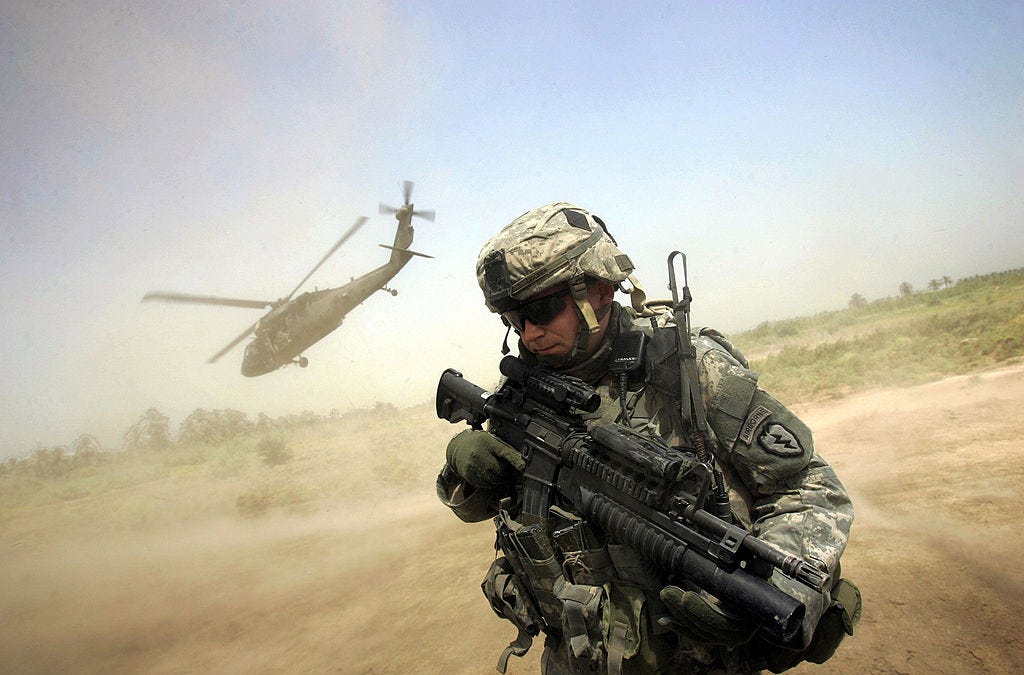
Then, in early 2003, American forces—with the support of foreign allies like the United Kingdom, Australia, and Poland—attacked Iraq, toppling Saddam Hussein’s regime and installing an occupation force in hopes of quickly transforming the country into a free and democratic state.
asserted
forces → attack → state
Instead, the post-regime coalition authority made significant missteps, and a devastating insurgency erupted.
asserted
insurgency → make → missteps
And despite President Bush’s 2004 reelection, the war quickly lost popular support among the American public.
asserted
war → lose → public
In early 2007, Bush appointed General David Petraeus, who had already served in Iraq as a two- and three-star general, to lead allied forces in Iraq, which heralded a sea change in American strategy known as “the surge.”
asserted
which → appoint → surge
As part of our coverage looking back on 9/11 and the world it created, General Petraeus tells the inside story of one of the most consequential moments in the War on Terror.
asserted
Petraeus → look → Terror
It demands reflection as we take stock of the last 25 years.
asserted
we → demand → years
By the end of 2006, the war in Iraq was failing.
asserted
war → fail → Iraq
The bombing of the al-Askari mosque in Samarra by terrorists that February had accelerated sectarian violence and pulled Iraq into an increasingly vicious Sunni-Shia civil war.
asserted
bombing → accelerate → war
Al-Qaeda in Iraq and Sunni insurgent groups controlled substantial areas, Shi’ite militias operated with growing impunity in other parts of the country, and the Iraqi security forces were no longer capable of arresting the downward spiral.
asserted
forces → control → spiral
The strategy of transitioning security responsibilities to Iraqi forces, consolidating American troops on large bases, and progressively reducing the U.S. presence had clearly been invalidated by the escalating violence.
asserted
strategy → transition → violence
The numbers conveyed the horror imperfectly but unmistakably.
asserted
numbers → convey → horror
In December 2006, an average of 53 Iraqi civilians were killed by violence every 24 hours in Baghdad alone.
asserted
average → kill → Baghdad
Washington, meanwhile, was approaching its own breaking point.
asserted
Washington → approach → point
Public support for the war had fallen dramatically, President George W. Bush’s Republican Party had just lost control of both houses of Congress, and the bipartisan Iraq Study Group—of which future defense secretary Robert Gates was a member—had recommended a course that anticipated a substantially reduced American combat role.
asserted
that → fall → role
Many senior military leaders were deeply skeptical of sending substantial additional forces, advocating instead for an accelerated transition to Iraqi forces, the deployment of additional trainers and advisers, or other more modest measures with an eye to withdrawing U.S. forces.
asserted
leaders → send → forces
Virtually every political incentive pointed toward reducing America’s commitment.
asserted
incentive → point → commitment
President Bush chose instead to increase it, a decision that remains, in my view, one of the most courageous presidential decisions of the 21st century.
asserted
that → choose → century
 The Aporia