An idea proposed by an Australian park ranger more than five decades ago has finally become a wildlife crossing.
asserted
idea → propose → ranger
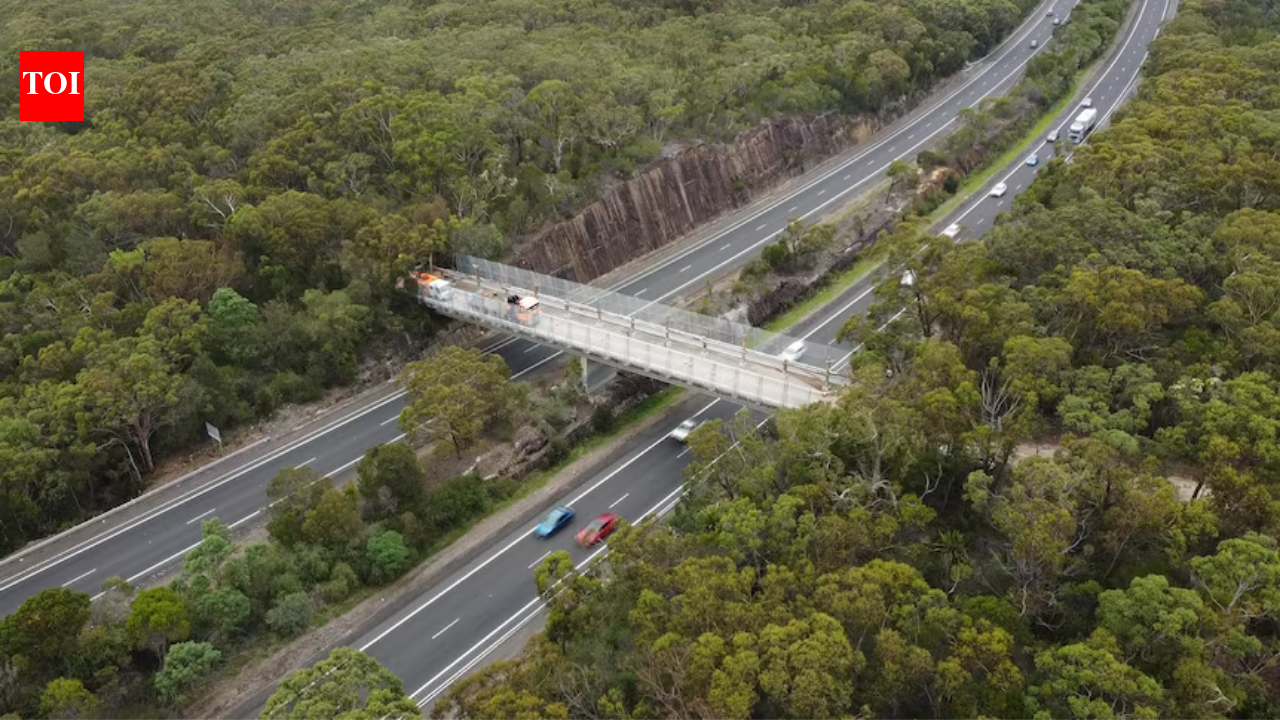
In 1974, Royal National Park ranger Bob Crombie suggested using Cawleys Bridge to help animals safely move between areas of bushland separated by a major road.
uncertain
animals → suggest → road
In 2026, the bridge was transformed into a dedicated wildlife corridor above the Princes Motorway in southern Sydney.
asserted
bridge → transform → Sydney
According to the NSW Government’s Environment and Heritage department, the upgraded bridge reconnects habitat between Heathcote National Park, Garrawarra State Conservation Area and Royal National Park, creating a safer route for koalas, wombats, quolls and other native animals.
uncertain
bridge → accord → koalas
Cawleys Bridge was not originally built as a wildlife crossing.
asserted
Bridge → build → crossing
The structure was designed as a service bridge, providing access for utilities and road-management activities above the motorway.
asserted
structure → design → motorway
But shortly after the motorway was built, Crombie recognised that it was creating a significant barrier for wildlife.
asserted
it → build → wildlife
He proposed using the existing bridge to allow animals to move between habitats on either side of the road.
asserted
animals → propose → road
The idea came at a time when wildlife connectivity was receiving far less attention in road and infrastructure planning than it does today.
asserted
it → come → planning
As a result, Crombie's proposal remained unrealised for decades.
asserted
proposal → remain → decades
The concept eventually gained renewed attention as concerns grew about habitat fragmentation and the dangers wildlife faced attempting to cross busy roads.
asserted
wildlife → gain → roads
A dangerous divide
The Princes Motorway has become a major transport route through the region, carrying around 40,000 vehicles a day.
asserted
Motorway → become → vehicles
For wildlife, the busy road represents a major physical and safety barrier.
asserted
road → represent → barrier
The motorway separates areas of habitat associated with Heathcote National Park, Garrawarra State Conservation Area and Royal National Park.
asserted
motorway → separate → Park
Animals moving between these areas risk being struck by vehicles when attempting to cross the road.
asserted
Animals → move → road
Hundreds of animals have been killed on roads in the wider area, highlighting the need for safer connections between fragmented habitats.
asserted
Hundreds → kill → habitats
The Cawleys Bridge project provides an opportunity to reconnect these landscapes without requiring animals to cross the motorway itself.
asserted
project → provide → motorway
Turning a bridge into habitat
Instead of building an entirely new wildlife overpass, authorities chose to retrofit the existing Cawleys Bridge.
asserted
authorities → turn → Bridge
Part of the structure continues to be available for emergency and management access, while another section has been adapted specifically for wildlife.
asserted
section → continue → wildlife
The transformation includes vegetation, soil, logs and other natural features intended to make the crossing resemble the surrounding environment.
asserted
crossing → include → environment
The design also recognises that different animals move in different ways.
asserted
animals → recognise → ways
Ground-dwelling species can use vegetated areas, while ropes and elevated structures provide routes for animals that travel through trees or glide between them.
asserted
that → dwell → them
Koalas get a safer route
asserted
Koalas → get → route
Koalas are among the species expected to benefit from the new connection.
asserted
Koalas → expect → connection
According to the NSW Government, the crossing can help link koala and wombat populations in Heathcote National Park with habitat extending toward Garrawarra State Conservation Area and Royal National Park.
uncertain
crossing → accord → Area
Maintaining connections between habitat areas is important because fragmentation can isolate animal populations.
asserted
fragmentation → maintain → populations
A connected landscape allows wildlife to move in search of food, mates and suitable shelter and can provide alternative areas when local conditions change.
asserted
conditions → allow → areas
For koalas, which depend heavily on suitable forest habitat, maintaining these connections can be particularly valuable.
asserted
maintaining → depend → connections
Designed for many species
The crossing is not intended only for large or well-known animals.
asserted
crossing → design → animals
Features have been incorporated for a variety of species, including wombats, quolls, gliders, possums, reptiles, amphibians and smaller ground-dwelling animals.
asserted
Features → incorporate → wombats
Vegetation provides cover and food opportunities for some species, while logs and other structures create shelter.
asserted
logs → provide → shelter
Ropes offer an alternative pathway for animals that normally move through the tree canopy.
asserted
that → offer → canopy
This multi-species approach is important because an effective wildlife crossing needs to accommodate different movement behaviours rather than simply providing a large open bridge.
Tracking wildlife use
Building the crossing is only part of the project.
asserted
Tracking → need → project
Researchers and authorities also need to determine whether animals actually use it.
asserted
animals → need → it
Monitoring has been incorporated to observe wildlife movements and understand how different species respond to the new habitat connection.
asserted
species → incorporate → connection
Cameras, infrared technology and acoustic monitoring can help identify animals using the crossing, including species that may be difficult to observe directly.
uncertain
that → identify → species
Such monitoring can show whether animals are avoiding the motorway and adopting the safer route, as well as which features of the crossing they prefer.
asserted
they → show → crossing
The information could also help inform the design of future wildlife crossings elsewhere.
uncertain
information → help → crossings
A 52-year-old idea comes alive
asserted
idea → come → ?
The Cawleys Bridge project represents an unusual example of an old infrastructure idea being adapted for modern conservation needs.
asserted
project → represent → needs
…and 5 more, not listed.
 The Aporia