Dutch scientists build light-powered robotic arm using living algae and gel layers

Read the original at Times of India ↗
Cite

TOI Science Desk. (2026, October 23). Dutch scientists build light-powered robotic arm using living algae and gel layers. Times of India. https://timesofindia.indiatimes.com/science/discovery/dutch-scientists-built-a-tiny-robotic-arm-using-living-algae-and-two-layers-of-gel-controlled-by-light-the-two-centimetre-strip-grasped-a-metal-ball-and-lifted-a-rubber-ring-underwater-without-a-conventional-motor/articleshow/135140106.cms

Dated from the outlet's own feed. Check the original for its byline.

Times of India · collected 2026-10-23 · by TOI Science Desk

Quick Summary

Dutch scientists at Delft University of Technology have developed a light-powered robotic arm using living algae and hydrogel layers, as reported in Nature Communications. The miniature actuator, about two centimeters long and one millimeter thick, bends and grasps objects underwater when exposed to light, utilizing the photosynthetic activity of microalgae to change pH levels within the gel layers. By altering lighting conditions, researchers can control the device's movements, which could have applications in handling delicate objects or creating adaptive environmental systems.
Written locally by qwen2.5:14b on 2026-10-23, using this article's own text rather than the other coverage of the same event (that is the story summary below).

AI analysis runs on qwen2.5:14b, locally

Story summary

Researchers at Delft University of Technology in the Netherlands have developed a novel robotic arm that operates using living algae and gel layers instead of traditional motors or batteries. Published in Nature Communications, this miniature actuator, about two centimeters long and one millimeter thick, can bend, grasp, and lift objects underwater. The device uses hydrogel layers that respond differently to changes in their chemical environment and microalgae growing on the surface to generate movement through photosynthesis when exposed to light. This innovation offers a potential future where living organisms could be integrated into robotic systems.

Written for “Light-Powered Robotic Arm Developed” on 2026-10-23, grounded in this article and the 0 other(s) covering the same event.

Story

📰 Light-Powered Robotic Arm Developed
Science · 1 article(s) covering the same event.

Compared with similar articles

Nothing to compare against. No article is close enough to this one for the pipeline to have linked or judged the pair.
How this article was measured signals, leaning charts, publisher record, byline, topics and claims

Signals How these are calculated →

Claims extracted
26
sentences that state something as happening or true
Uncertain
19%
5 of 26 hedged ("reportedly", "may", "according to")
Leaning
not political
takes no side on a contested political question
Publisher signals
59/100
Times of India's corrections and hedging, across everything collected from it. Not a measure of accuracy.
Outlets on this story
1
Science
Same framing elsewhere
1
articles that frame the event the way this one does
Analyzed 2026-10-23 · how these are computed

How this is being covered How these are calculated →

Article leaning vs. publisher reliability
Source leaning vs. consistency

Publisher

Times of India · 3139 article(s) · 2 correction(s) detected
Running correction rate · 2 correction(s)

Who wrote this

TOI Science Desk
287 article(s) here · 1 carrying a prediction
🔮 The work offers a glimpse of such a future, where living organisms could become an active part of the robotic systems.
🔮 A centuries-old archaeological puzzle at Westminster Abbey in London may finally be nearing a resolution, with new research suggesting that a skeleton discovered inside a Roman stone coffin belonged to a medieval abbot rather than the Roman-era man named on its inscription.
🔮 The jump may look small on paper, but it covers a huge amount of ground.
🔮 For fishing businesses, that could mean longer journeys to reach accessible waters, potentially increasing costs and reducing opportunities for affordable family fishing trips.
🔮 In May 2022, researchers measured an average of 19.3 milligrams of suspended particulate matter per litre of water.
🔮 Part of it is expected to open to guided groups by Christmas, said officials of the Archaeological Park of Pompeii.
🔮 According to the Visit Maldives Corporation’s May 14, 2026, announcement, conservation teams and international media delegates attached coral fragments to specially designed underwater frames and placed them at the Dhoonier Wreck site near Kudagiri Island.
🔮 Rather than simply feeling helpless, the California seventh grader turned her concern into a science project that examined whether an existing medication could protect the brain after injury.
🔮 Once all the sites are established, almost 65,000 hectares of national park estate will be free of feral predators.
🔮 Rather than focusing only on the number of trees, the programme also considered where planting could deliver environmental benefits.
Wire or desk byline, not an individual reporter.
Also by TOI Science Desk
Nothing else under this byline is closely related to this article, so these are simply their most recent.
All 287 articles by TOI Science Desk →

Topics

Delft University of Technology Nature Communications Netherlands Phys Org

Subjects

Nature Communications ORG · 4× Phys Org ORG · 2× Delft University of Technology ORG · 1× Netherlands GPE · 1× istock ORG · 1×

Narrative

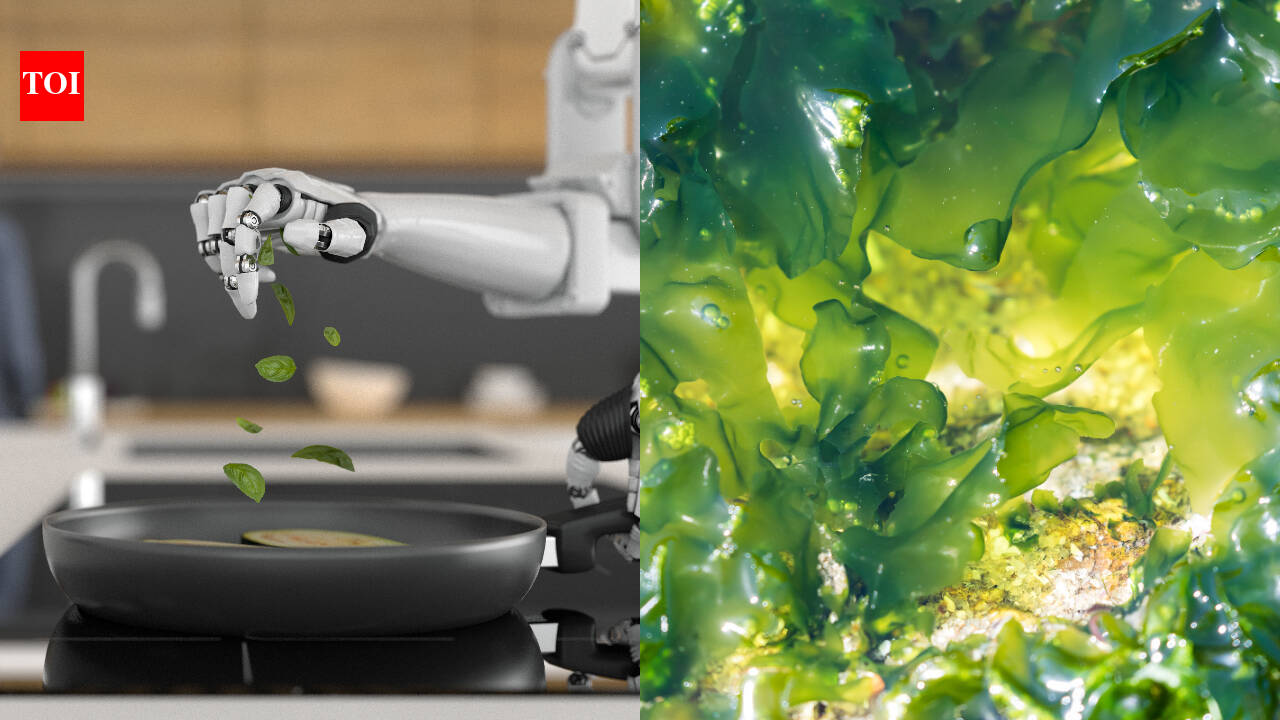
That’s the unusual premise of a new experiment by researchers at Delft University of Technology in the Netherlands, who have constructed a miniature actuator that can bend, grasp and lift objects underwater.
framing: assertive · carried by 1 article(s) · first seen 2026-10-23
🔮 The work offers a glimpse of such a future, where living organisms could become an active part of the robotic systems.

Claims (26 extracted, 5 hedged)

That’s the unusual premise of a new experiment by researchers at Delft University of Technology in the Netherlands, who have constructed a miniature actuator that can bend, grasp and lift objects underwater. asserted
that → ’ → objects
The work offers a glimpse of such a future, where living organisms could become an active part of the robotic systems. uncertain
organisms → offer → systems
Living cell robot Phys Org reports that the soft robotic strip is tiny, about two centimeters long and one millimeter thick, but its movement is surprisingly sophisticated. asserted
movement → live → robot
The actuator consists of two layers of hydrogel that respond differently when the chemical environment changes and microalgae grow over the surface of the actuator, the research report says. asserted
report → consist → actuator
The report, published by Nature Communications, states the device utilizes the biological activity of the algae to generate movement rather than a traditional motor. asserted
device → publish → motor
They photosynthesize in the presence of light, converting light and carbon dioxide into energy. asserted
They → photosynthesize → energy
They also use nitrogen to grow their cells. asserted
They → use → cells
This activity changes the chemical environment inside the hydrogel. asserted
activity → change → hydrogel
The result is a change of pH which causes different degrees of swelling of the two gel layers. asserted
which → cause → layers
That imbalance makes the strip bend and curve. asserted
strip → make → ?
The control system is lightweight By simply changing the lighting conditions, the researchers can control the movement, the study report from Phys Org and Nature Communications says. asserted
report → change → Org
When the light is turned off, the biological processes inside the algae change the pH in the opposite direction and the actuator starts bending back. asserted
actuator → turn → direction
This is quite a quick response, the strip beginning to move back in the opposite direction in about 10 seconds. asserted
strip → begin → seconds
This gives the little device a kind of biological control system. asserted
This → give → system
Instead of sending electrical signals to a motor, researchers can use light to induce a physical response generated through the metabolism of living organisms. asserted
researchers → send → organisms
From bending to taking The researchers wanted to see if this movement could do more than just demonstrate an unusual biological response, according to Nature Communications. uncertain
movement → bend → Communications
For the underwater experiments the actuator was designed for simple manipulation tasks, such as hooking and lifting a rubber ring and grasping a small metal ball. asserted
actuator → design → ball
Soft robotic structures could more flexibly interact with fragile objects and changing environment than rigid mechanical systems. uncertain
structures → interact → systems
The technology could also result in devices that imitate movements found in nature. uncertain
that → result → nature
Light responsive mechanisms could someday be used for things like blinds that can change their orientation automatically or agricultural systems that can change their position based on environmental conditions. uncertain
that → use → conditions
The researchers are investigating a wider region where living cells are incorporated directly into functional materials, enabling biological processes to yield useful mechanical behavior. asserted
cells → investigate → behavior
Microalgae are of particular interest since they can use light as an energy source by photosynthesis. asserted
they → use → photosynthesis
This opens the way to soft robotic systems that need less conventional external energy, but practical applications are a longer-term prospect. asserted
applications → open → energy
The research, published in Nature Communications, is an early proof of concept, not a ready-to-use robotic technology. asserted
research → publish → concept
But it points to an interesting direction in engineering: machines that don’t just copy biology, but actually collaborate with living things to move. asserted
that → point → things
Inside this tiny underwater arm, light does more than illuminate; it is the signal that converts biological activity into motion. asserted
that → do → motion

💬Give feedback
🕘History 🎫Support