Solar storm delayed a train by 16 minutes in 1848, not 1841: How scientists solved a 155-year-old mystery

Read the original at Times of India ↗
Cite

TOI Science Desk. (2026, October 24). Solar storm delayed a train by 16 minutes in 1848, not 1841: How scientists solved a 155-year-old mystery. Times of India. https://timesofindia.indiatimes.com/science/discovery/for-155-years-scientists-believed-a-solar-storm-delayed-a-train-in-exeter-england-in-1841-but-the-railway-did-not-exist-until-1846-researchers-now-say-the-storm-and-the-16-minute-delay-really-happened-in-1848/articleshow/135142131.cms

Dated from the outlet's own feed. Check the original for its byline.

Times of India · collected 2026-10-24 · by TOI Science Desk

Quick Summary

Scientists have resolved a 155-year-old mystery by confirming that a reported train delay in Exeter, England, due to a solar storm actually occurred on October 18, 1848, not 1841 as previously believed. The original account from 1871 cited an incident where telegraph equipment malfunctioned, delaying the scheduled 10:05 pm train for 16 minutes. Historical records revealed that the railway line in question did not exist until 1846, leading researchers to re-examine data and conclude that strong geomagnetic activity on October 18, 1848, caused the disruption.
Written locally by qwen2.5:14b on 2026-10-24, using this article's own text rather than the other coverage of the same event (that is the story summary below).

AI analysis runs on qwen2.5:14b, locally

Story summary

In 2026, researchers solved a 155-year-old mystery by confirming that a reported 16-minute train delay in Exeter, England, occurred on October 18, 1848, not 1841 as previously thought. The original account, published anonymously in the scientific journal Nature in 1871, claimed the delay was due to a solar storm disrupting railway telegraph equipment. However, historical records showed that the specific railway line involved did not exist until 1848. Scientists from the British Geological Survey and other international researchers used historical newspapers, solar observations, aurora reports, and digitized geomagnetic records to trace the incident back to its correct date.

The findings were published in Space Weather journal on October 21, 2026, resolving a longstanding confusion about early technological impacts of solar storms. This correction highlights the importance of accurate historical data for understanding past natural events and their effects on technology.

Written for “Solar Storm Mystery Solved” on 2026-10-25, grounded in this article and the 0 other(s) covering the same event.
Why this leaning score
This article does not take a side on a contested political question, so it has no leaning score. That is an answer rather than a gap: a match report or a rescue can be warmly or critically written without being left or right, and scoring it anyway is how approval of a subject gets recorded as a political position.
No political leaning scored for article 104782 · logged 2026-10-24

Story

📰 Solar Storm Mystery Solved
Science · 1 article(s) covering the same event.

Compared with similar articles

Nothing to compare against. No article is close enough to this one for the pipeline to have linked or judged the pair.
How this article was measured signals, leaning charts, publisher record, byline, topics and claims

Signals How these are calculated →

Claims extracted
35
sentences that state something as happening or true
Uncertain
20%
7 of 35 hedged ("reportedly", "may", "according to")
Leaning
not political
takes no side on a contested political question
Publisher signals
59/100
Times of India's corrections and hedging, across everything collected from it. Not a measure of accuracy.
Outlets on this story
1
Science
Same framing elsewhere
1
articles that frame the event the way this one does
Analyzed 2026-10-24 · how these are computed

How this is being covered How these are calculated →

Article leaning vs. publisher reliability
Source leaning vs. consistency

Publisher

Times of India · 3271 article(s) · 2 correction(s) detected
Running correction rate · 2 correction(s)

Who wrote this

TOI Science Desk
289 article(s) here · 1 carrying a prediction
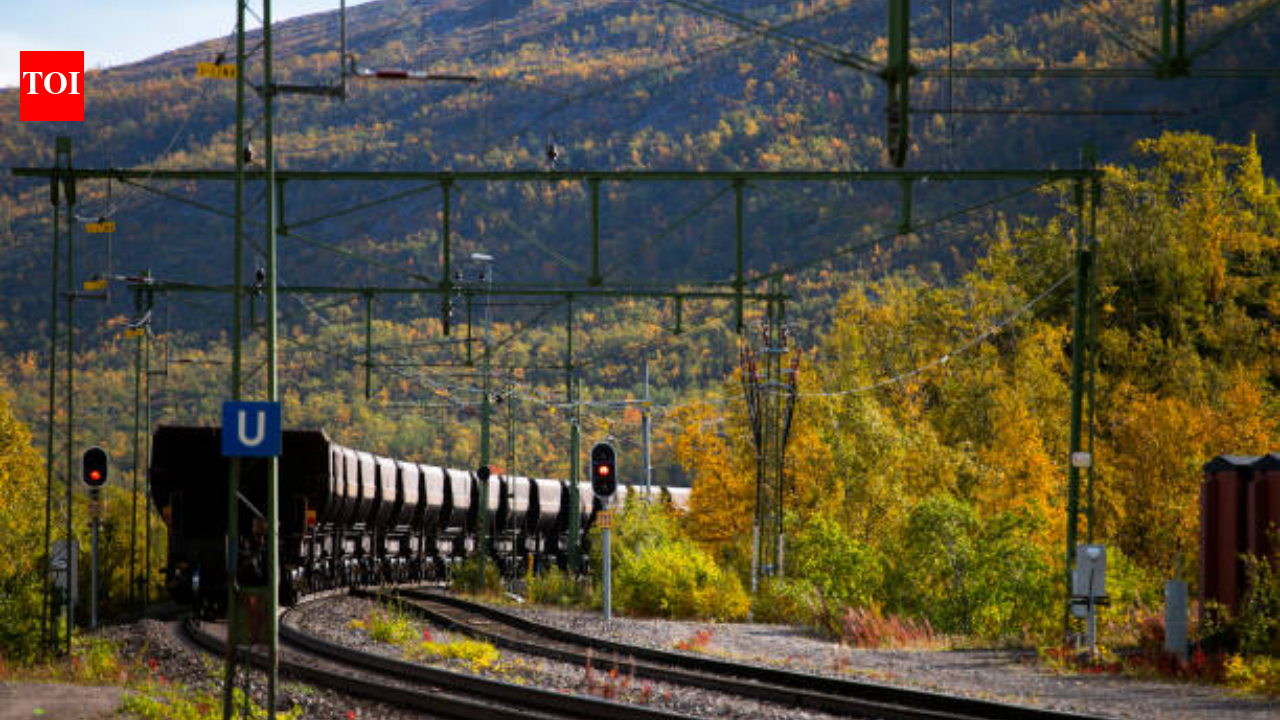
🔮 The train delay that could not have happened in 1841 The mystery originated in an account published anonymously in the scientific journal Nature on October 5, 1871.
🔮 A late-night snack may do more than add extra calories to your day.
🔮 The work offers a glimpse of such a future, where living organisms could become an active part of the robotic systems.
🔮 A centuries-old archaeological puzzle at Westminster Abbey in London may finally be nearing a resolution, with new research suggesting that a skeleton discovered inside a Roman stone coffin belonged to a medieval abbot rather than the Roman-era man named on its inscription.
🔮 The jump may look small on paper, but it covers a huge amount of ground.
🔮 For fishing businesses, that could mean longer journeys to reach accessible waters, potentially increasing costs and reducing opportunities for affordable family fishing trips.
🔮 In May 2022, researchers measured an average of 19.3 milligrams of suspended particulate matter per litre of water.
🔮 Part of it is expected to open to guided groups by Christmas, said officials of the Archaeological Park of Pompeii.
🔮 According to the Visit Maldives Corporation’s May 14, 2026, announcement, conservation teams and international media delegates attached coral fragments to specially designed underwater frames and placed them at the Dhoonier Wreck site near Kudagiri Island.
🔮 Rather than simply feeling helpless, the California seventh grader turned her concern into a science project that examined whether an existing medication could protect the brain after injury.
Wire or desk byline, not an individual reporter.
Also by TOI Science Desk
Nothing else under this byline is closely related to this article, so these are simply their most recent.
All 289 articles by TOI Science Desk →

Topics

England Exeter Newton Abbot ScienceDaily Starcross

Subjects

Exeter GPE · 5× Starcross GPE · 3× England GPE · 2× Newton Abbot GPE · 2× The British Geological Survey ORG · 2× BGS ORG · 1× Britain GPE · 1× Nature ORG · 1× ScienceDaily ORG · 1× Space Weather ORG · 1×

Narrative

The British Geological Survey (BGS), which participated in the international research effort, said the team compared railway timetables, historical newspapers, solar observations, aurora reports and digitised geomagnetic records.
framing: assertive · carried by 1 article(s) · first seen 2026-10-24
🔮 The train delay that could not have happened in 1841 The mystery originated in an account published anonymously in the scientific journal Nature on October 5, 1871.

Claims (35 extracted, 7 hedged)

For more than 150 years, a reported 16-minute train delay in Exeter, England, was cited as a possible early example of a solar storm disrupting human technology. asserted
storm → report → technology
But a railway timetable revealed a problem with the story: the railway line in question did not exist in 1841. asserted
line → reveal → 1841
According to a report published by ScienceDaily on October 21, 2026, researchers have now traced the incident to October 18, 1848, using historical railway records, newspaper accounts and measurements of Earth’s magnetic field. uncertain
researchers → accord → field
The findings were published in the journal Space Weather. asserted
findings → publish → journal
The train delay that could not have happened in 1841 The mystery originated in an account published anonymously in the scientific journal Nature on October 5, 1871. uncertain
mystery → happen → October
It described a “very intense magnetic disturbance” on October 18, 1841, which allegedly interfered with railway telegraph equipment in Exeter, a city in southwest England. uncertain
which → describe → England
According to the account, the disturbance prevented railway staff from establishing whether the track ahead, near the village of Starcross, was clear. uncertain
track → accord → Starcross
As a result, the scheduled 10.05 pm express train from Exeter towards Newton Abbot was held up for 16 minutes. asserted
train → hold → minutes
The report also described how the railway superintendent initially suspected that someone was tampering with the instruments because they would not function properly. asserted
they → describe → instruments
The incident later attracted scientific interest because it appeared to document solar activity interfering with electrical infrastructure decades before modern power grids and satellite networks existed. asserted
grids → attract → infrastructure
However, the timeline did not withstand closer scrutiny. asserted
timeline → withstand → scrutiny
Researchers found that the railway section connecting Exeter with Starcross opened only on May 30, 1846, almost five years after the supposed incident. uncertain
section → find → incident
The line reached Newton Abbot later that year. asserted
line → reach → Abbot
The discrepancy prompted scientists to investigate whether the original report contained an incorrect date. asserted
report → prompt → date
The British Geological Survey (BGS), which participated in the international research effort, said the team compared railway timetables, historical newspapers, solar observations, aurora reports and digitised geomagnetic records. asserted
team → participate → timetables
Why researchers believe the incident happened in 1848 The evidence pointed to October 18, 1848, rather than October 18, 1841. asserted
evidence → believe → October
Researchers examining historical railway timetables found that a 10.05 pm departure from Exeter towards Starcross was scheduled during a period spanning March 1848 to July 1849. asserted
departure → examine → July
That made October 1848 a plausible date for the reported delay. asserted
October → make → delay
More importantly, historical magnetic measurements showed strong geomagnetic activity on October 18, 1848. asserted
measurements → show → October
Records preserved in the Greenwich Observatory archive documented significant changes in Earth’s magnetic field around the time of the alleged incident. asserted
Records → preserve → incident
Reports of sunspots and auroras observed across Britain and Europe offered additional evidence of heightened solar activity. asserted
Reports → observe → activity
The researchers concluded that the combination of railway records and magnetic observations strongly supported the revised date. asserted
combination → conclude → date
The original account, published three decades after the event, appears to have contained a typographical error. asserted
account → publish → error
The study, titled 'Did Space Weather Delay the 10:05 p.m. Train Departure From Exeter on 18 October 1841?', was led by James A. Wild of Lancaster University. asserted
Weather → title → University
Its international team included researchers from the British Geological Survey, RMIT University, Natural Resources Canada, Baylor University and RAL Space in the UK. asserted
team → include → UK
The researchers could not recover the original source material behind the 1871 account, so the precise circumstances cannot be established with absolute certainty. uncertain
circumstances → recover → certainty
Their conclusion is that the train delay most likely occurred in 1848, not that every detail of the original story has been independently confirmed. asserted
detail → occur → story
What is a solar storm, and how can it affect a railway? asserted
it → affect → railway
Space weather refers to changes in the environment around Earth caused by solar activity. asserted
weather → refer → activity
The Sun can produce eruptions that send charged particles and magnetic fields into space. asserted
that → produce → space
When these disturbances interact with Earth’s magnetic environment, they can trigger geomagnetic storms. asserted
they → interact → storms
Such storms can generate unwanted electrical currents in long conductors, including wires used by telegraph networks. asserted
storms → generate → networks
In the 1840s, railways were beginning to rely on electric telegraphs to communicate between signal stations and establish whether sections of track were occupied or clear. asserted
sections → begin → track
These systems helped railway workers coordinate train movements across distances. asserted
workers → help → distances
If magnetic disturbances interfered with the telegraph equipment, staff could struggle to establish the status uncertain
staff → interfere → status

💬Give feedback
🕘History 🎫Support