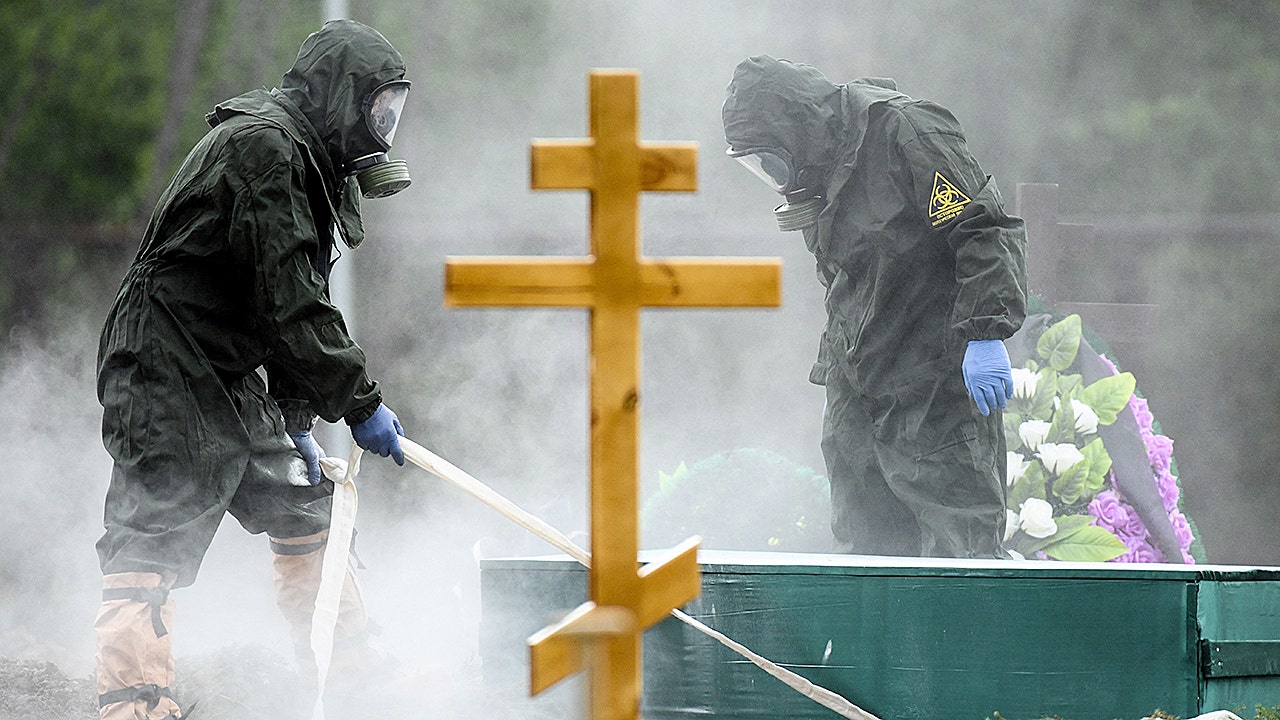
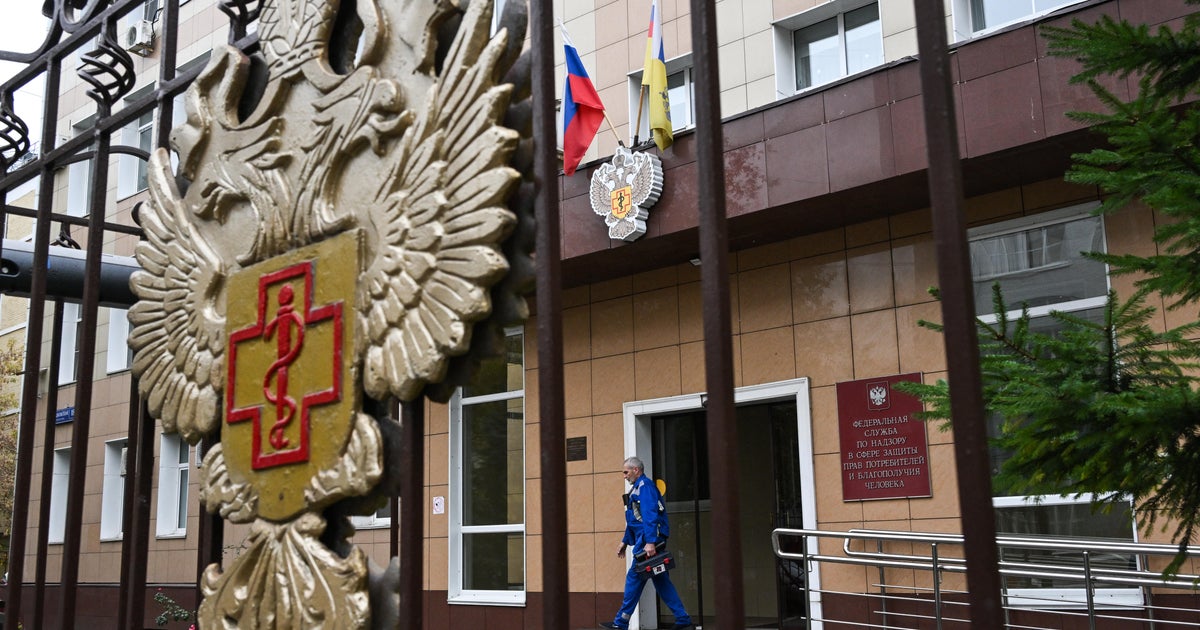
CDC Director Dr. Erica Schwartz discussed on Wednesday how the US government is coordinating with multiple agencies to monitor travelers arriving from Siberia due to concerns over a potential pneumonic plague outbreak linked to the mysterious death of a Russian lab worker. During a Wall Street Journal health forum, she emphasized that while surveillance measures are in place at JFK International Airport for flights from the affected region, the risk to Americans is very low and the disease is treatable with common antibiotics.
Written locally by qwen2.5:14b on 2026-10-11,
using this article's own text rather than the other coverage of the
same event (that is the story summary below).
Story summary
A 28-year-old female lab technician named Darya Shipilova died in Siberia after accidentally breaking a test tube containing the pneumonic plague pathogen at the Irkutsk Anti-Plague Institute. She was hospitalized on September 29 and passed away two days later, despite being placed on a ventilator. As many as 200 people who had contact with Shipilova were put under quarantine to prevent potential spread of the disease. The incident prompted Russian authorities to take strict measures, including closing hospitals in Shelekhov and implementing mask mandates in Irkutsk. While some reports suggest fears of a broader outbreak similar to the Wuhan situation, Russia's chief sanitary officer, Anna Popova, has traveled to the region to assess the situation. Meanwhile, the U.S. State Department is closely monitoring the case and urging Russian authorities for more information. The CDC and other federal agencies are also involved in assessing the situation. Although pneumonic plague can be treated with antibiotics if caught early, concerns remain due to the lack of official confirmation from Russian health officials regarding the full extent of the outbreak. Governor Igor Kobzev stated that all identified close contacts have tested negative and remain asymptomatic, but fears persist about possible misinformation given previous instances like Wuhan. The White House is reportedly 'aware' and assessing options in response to this developing situation. Former Rospotrebnadzor head Gennady Onishchenko downplayed the threat, suggesting that widespread transmission remains unlikely due to cooler seasonal temperatures. However, public health experts advise caution until more detailed information becomes available from official sources.
Written for “Plague Outbreak in Siberia” on 2026-10-11,
grounded in this article and the 111 other(s) covering the same event.
Why this leaning score
This article does not take a side on a contested political
question, so it has no leaning score. That is an
answer rather than a gap: a match report or a rescue can be warmly
or critically written without being left or right, and scoring it
anyway is how approval of a subject gets recorded as a political
position.
No political leaning scored for article 72375 · logged 2026-10-11
The Centers for Disease Control and Prevention (CDC) is coordinating with federal agencies to monitor travelers entering the United States from Siberia amid concerns about a possible pneumonic plague outbreak in Russia, the agency's director revealed Wednesday.
asserted
director → coordinate → Russia
CDC Director Dr. Erica Schwartz said the Trump administration is working across multiple agencies to identify travelers arriving from the region following the mysterious death of a Russian laboratory worker, while emphasizing that the risk to Americans remains minimal.
"We are very confident that the threat to the United States is extremely low," Schwartz said during a Wall Street Journal health forum Wednesday.
asserted
Schwartz → say → forum
The concerns stem from the Oct. 2 death of Darya Shipilova, a 28-year-old employee of the Irkutsk Anti-Plague Research Institute in Siberia, whose death has fueled speculation about a possible pneumonic plague infection.
asserted
death → stem → infection
Russian authorities have maintained that Shipilova died from pneumonia of unknown origin and have not confirmed that she was infected with Yersinia pestis, the bacteria that causes pneumonic plague.
asserted
that → maintain → plague
Schwartz said the CDC is working with the departments of Homeland Security, State and War, among other federal agencies, to track potential arrivals from the region.
asserted
CDC → say → region
"There are about 200 flights that come into the United States from Siberia, that region," Schwartz said, adding that those flights typically arrive at New York's John F. Kennedy International Airport.
asserted
flights → be → Airport
"We have a port health station set up in JFK so that we can do appropriate surveillance and screening if anyone from that area comes into the United States," she continued.
asserted
she → have → States
The CDC director stressed that while pneumonic plague is a serious bacterial infection capable of spreading between people through respiratory droplets, early detection and treatment can prevent deaths.
"The one good thing, if I could say there's a good thing, is that it's a treatable, highly treatable bacterial disease with common antibiotics that most physicians within the United States can utilize," Schwartz said.
uncertain
Schwartz → stress → States
The illness is caused by the bacterium Yersinia pestis and is considered the most serious form of plague, according to the CDC.
uncertain
illness → cause → CDC
Symptoms can include fever, chest pain, coughing and rapidly developing pneumonia.
asserted
Symptoms → include → fever
Without prompt antibiotic treatment, the infection can be fatal, the agency warns.
asserted
agency → warn → treatment
The World Health Organization (WHO) has pressed Moscow for additional information about Shipilova's death.
asserted
Organization → press → death
Russian authorities placed approximately 200 people who had contact with the deceased laboratory worker under quarantine, according to Euronews.
uncertain
who → place → Euronews
On Thursday, Irkutsk Gov. Igor Kobzev said preventive measures had been completed and roughly 5,000 laboratory tests had detected no pathogens, according to the Associated Press.
uncertain
tests → say → Press
However, Russian officials have not publicly identified the pathogen responsible for Shipilova's pneumonia or definitively ruled out pneumonic plague as the cause of her death, according to The Associated Press.
uncertain
officials → identify → Press
Asked whether Moscow was being sufficiently transparent with American authorities, Schwartz indicated that the administration was still seeking answers.
asserted
administration → ask → answers
"We are still having those conversations about what exactly happened in Siberia," she said, adding that U.S. officials were working with information about an unconfirmed case of pneumonic plague.
uncertain
officials → have → plague
 The Aporia