How the landmarks of everyday Gaza have disappeared under the rubble of war

Read the original at The Independent ↗
The Independent · collected 2026-10-10 · by Ezz Al Din Abu Eisha

Quick Summary

The article describes how the familiar landmarks of Gaza, such as buildings and streets, have been destroyed in recent warfare, particularly since October 7, 2023. The author recalls specific details like a bank on a street corner that marked the entrance to the neighborhood of Tal al-Hawa, which now lies in ruins with multiple towers collapsed. This piece focuses on the personal and communal loss represented by the disappearance of these familiar landmarks under the rubble of war, emphasizing how they defined daily life and identity for Gaza residents.
Written locally by qwen2.5:14b on 2026-10-10, using this article's own text rather than the other coverage of the same event (that is the story summary below).

AI analysis runs on qwen2.5:14b, locally

Story summary

Gaza City, a historically significant area in Palestine, has undergone severe destruction since October 2023 when Israel launched its war on the enclave. According to the Palestinian Central Bureau of Statistics, over 80% of Gaza’s buildings have been damaged or destroyed, transforming entire neighborhoods into rubble and decimating much of its infrastructure. UNESCO verified damage to 164 cultural sites, including 128 historical or artistic buildings, 14 religious sites, 9 monuments, 8 archaeological sites, 2 museums, and 3 depositories. The destruction has impacted iconic landmarks such as the Great Omari Mosque, Gaza’s oldest mosque, Qasr al-Basha, and the ancient Samaritan Bathhouse. Additionally, the war generated around 68 million tonnes of rubble, with recovery and reconstruction needs estimated at approximately $71.4 billion over a decade by the World Bank, UN, and EU. Before the conflict, Gaza's landmarks formed the backdrop to daily life; now, many familiar places have been erased or altered beyond recognition.

Written for “Gaza War Destruction” on 2026-10-10, grounded in this article and the 1 other(s) covering the same event.
Why this leaning score
The article's own words the score was based on. Each is quoted verbatim and was checked against the article text before being stored, so you can find it in the original.
Reading Leans left (beta estimate) Confidence high
Leaning: leans left for article 70165 (high confidence, 1 verified quote) · logged 2026-10-10

Signals How these are calculated →

Claims extracted
133
claim-shaped sentences
Uncertain
10%
13 of 133 hedged
Leaning
Leans left
of the writing, not the subject · beta estimate
Correction & hedging signals
58.7
corrections and hedging in what we collected; not a measure of accuracy
Outlets on this story
2
World
Narrative spread
1
articles carrying this framing
Analyzed 2026-10-10 · how these are computed

Story

📰 Gaza War Destruction
World · 2 article(s) covering the same event. See how they differ ↓

How this is being covered How these are calculated →

Article leaning vs. publisher reliability
Source leaning vs. consistency

Compared with similar articles

This article reads leans left and hedges 10% of its claims. Each row says how that neighbour differs.
BBC News
⚖️ leaning not scored 🔴 1% hedged 1 of 67 📰 publisher trust 72
“The articles describe different locations (one in Israel and one in Gaza) affected by separate events on or around October 7, 2023.”
Al Jazeera
⚖️ Leans left 🔴 0% hedged 0 of 6 📰 publisher trust 60
“The articles describe different time periods and contexts: one refers to an alleged genocide in 2026 affecting Gaza's port, while the other discusses pre-war landmarks lost before October 7, 2023.”
Al Jazeera
⚖️ Leans left 🔴 12% hedged 1 of 8 📰 publisher trust 60
“Both articles describe the destruction of landmarks and infrastructure in Gaza City due to ongoing conflict since October 2023.”
Al Jazeera
⚖️ Leans left 🔴 11% hedged 5 of 47 📰 publisher trust 60
“The articles discuss different aspects of the conflict — one focuses on the psychological impact in Israel three years after an attack, while the other describes the physical destruction and loss of landmarks in Gaza.”
NPR
⚖️ Leans strongly left further left than this 🔴 13% hedged 7 of 55 📰 publisher trust 59
“The articles describe different aspects and timespans related to life in Gaza under conflict but do not focus on the same specific incident.”
Dawn
⚖️ Leans left 🔴 0% hedged 0 of 3 📰 publisher trust 71
“While both articles describe the destruction in Gaza due to ongoing conflict and strikes, they focus on different aspects and timeframes of the situation.”
Toronto Star
⚖️ Leans strongly left further left than this 🔴 4% hedged 2 of 57 📰 publisher trust 63
“The articles describe similar themes but do not clearly refer to the exact same specific incident or time period.”
Al Jazeera
⚖️ Leans strongly left further left than this 🔴 20% hedged 6 of 30 📰 publisher trust 60
“Article A covers a summary of Israel's actions over three years in Gaza starting from October 7, 2023, while Article B focuses on the destruction and loss of landmarks in Gaza prior to and as a result of October 7, 2023.”
Al Jazeera
⚖️ Leans strongly left further left than this 🔴 13% hedged 9 of 67 📰 publisher trust 60
“While both articles discuss the impact of Israel's actions in Gaza following Hamas' attack on October 7, 2023, they describe different aspects and outcomes of the broader situation.”
South China Morning Post
⚖️ Leans strongly left further left than this 🔴 0% hedged 0 of 7 📰 publisher trust 67
“The articles discuss similar themes but cover different time periods and specific focuses. Article A describes ongoing demolitions in Gaza one year after a ceasefire, while Article B reflects on the disappearance of landmarks before and during a conflict.”

Publisher

The Independent · 2028 article(s) · 5 correction(s) detected
Running correction rate · 5 correction(s)
2026-10-08
Hurricane Isaias update: Gulf Coast braces for life-threatening storm surge
2026-10-03
Prison chief to resign after shock botched execution of Christa Pike
2026-09-22
Costa Rican man complained of lack of care for diabetes before his death in ICE custody, family says
2026-09-17
Killer who gunned down famed Elvis impersonator set to be executed tonight
2026-09-04
Pennsylvania confirms second death of child with measles after RFK Jr. told CDC director to delete numbers

Who wrote this

Ezz Al Din Abu Eisha
1 article(s) here · 1 carrying a prediction
🔮 It was a prominent building with a distinctive facade, and a large doorstep in front where we would sometimes sit.
The only article under this byline in the corpus.

Topics

Gaza Independent Independent Arabia Independent Membership Tal al-Hawa

Subjects

Gaza GPE · 3× Tal al-Hawa GPE · 3× Independent NORP · 1× Independent Arabia ORG · 1× Independent Membership ORG · 1× Israel GPE · 1× Yara Sharif PERSON · 1×

Narrative

In Gaza, a few homes remain standing, though not entirely intact; destroyed roads still carry cars; markets reopen their doors, even if only for a few hours; wells and water facilities continue to operate at limited capacity; and neighbourhoods remain inhabited, despite the fact that many of their features have changed. International assessments estimate that the war has generated around 68 million tonnes of rubble, while a joint assessment by the World Bank, the UN and the EU put Gaza’s recovery and reconstruction needs at around $71.4bn (£54bn) over 10 years.
framing: assertive · carried by 1 article(s) · first seen 2026-10-10
🔮 It was a prominent building with a distinctive facade, and a large doorstep in front where we would sometimes sit.
2026-10-10 · The Independent
How the landmarks of everyday Gaza have disappeared under the rubble of war · assertive framing

Claims (133 extracted, 13 hedged)

Log in This article first appeared on our partner site, Independent Arabia asserted
article → log → site
In Gaza, we never needed a map to find our way. asserted
we → need → way
We knew where we were by the landmarks of everyday life: an ancient tree, a neighbourhood bakery, a bank on a street corner, the distant view of a tower block that meant we had found the place we were looking for. asserted
we → know → place
It was made up of cities and refugee camps, markets that welcomed people every morning, farmland stretching along the edges of towns, factories and small workshops, universities and hospitals. asserted
that → make → towns
Its built environment was diverse too, with high-rise and low-rise buildings, historic and religious sites, refugee camps that had evolved over decades, industrial facilities and agricultural land. asserted
that → build → decades
But the place was familiar to its residents: every neighbourhood had its landmarks, and every street had its own memory. asserted
street → have → memory
I knew I had reached Tal al-Hawa when I came to the bank at the beginning of the street. asserted
I → know → street
To me, the bank was more than a building; it was a landmark marking the entrance to the neighbourhood of Tal al-Hawa. asserted
it → mark → Hawa
It was a prominent building with a distinctive facade, and a large doorstep in front where we would sometimes sit. asserted
we → sit → front
Beside it was a vegetable seller, and from there began the scene I had known for years. asserted
I → begin → years
Rows of closely packed, uniform, adjoining towers, each around seven storeys high, alongside markets, restaurants, schools and mosques, and a street I often walked. asserted
I → pack → markets
From the bank’s doorstep, I could watch the life of the place unfold: the vegetable seller calling out his wares, people leaving the bank and walking along the street, cars moving constantly, with a garden in the background and the towers forming the familiar scene I knew. uncertain
I → watch → scene
At the time, none of this seemed extraordinary. asserted
none → seem → this
This is how we remember our cities: through what we see as we move through them, and through what we know will be there when we arrive. asserted
we → remember → them
When Israel allowed people to return to Tal al-Hawa, I went back to the place I loved. asserted
I → allow → place
The first thing I saw, however, was not the neighbourhood I knew. asserted
I → see → ?
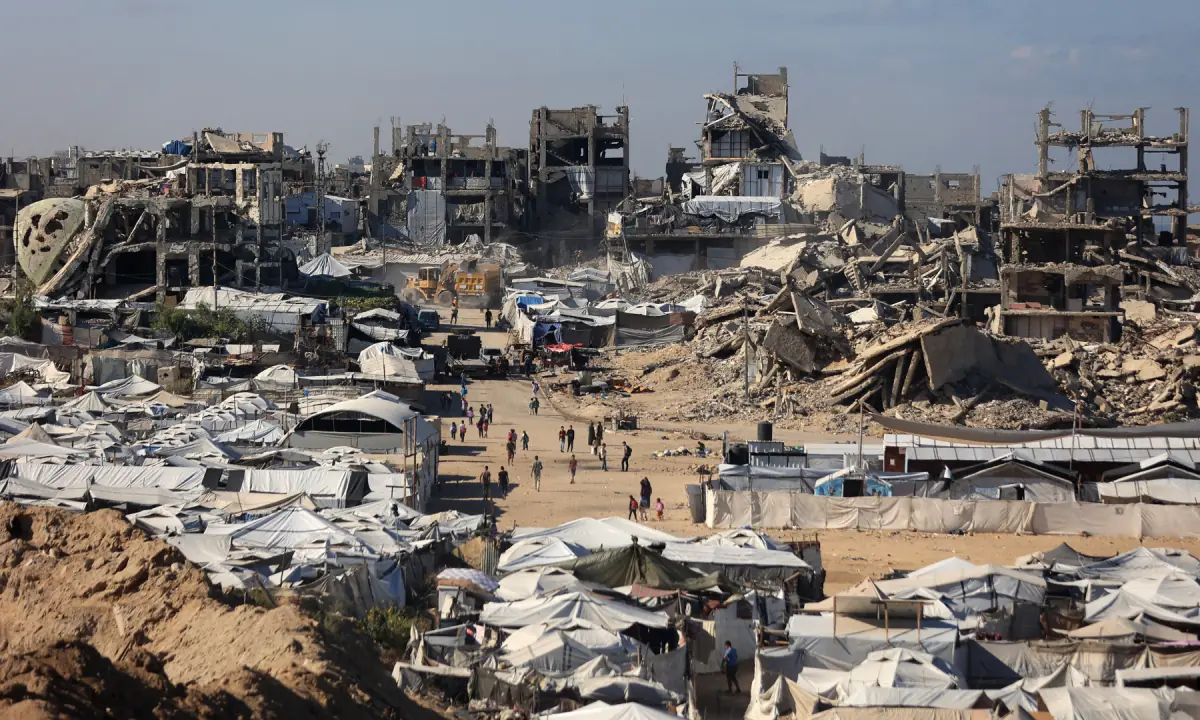
In front of me was an entire row of towers whose shapes I had known for years, but which had now fallen. asserted
which → know → years
Six or seven towers, roughly, were no longer standing as they once had been. asserted
they → stand → ?
Part of one tower remained upright, blocking the view of what had once been behind it. asserted
what → remain → it
I looked at the scene and said to myself: “This can’t possibly be Tal al-Hawa.” uncertain
This → look → myself
I was not looking only for my home. asserted
I → look → home
I was looking for the landmarks by which I had always recognised the place: the bank, the towers, the bakery, the street. asserted
I → look → place
But the scene I knew was no longer there in the same form. asserted
I → know → form
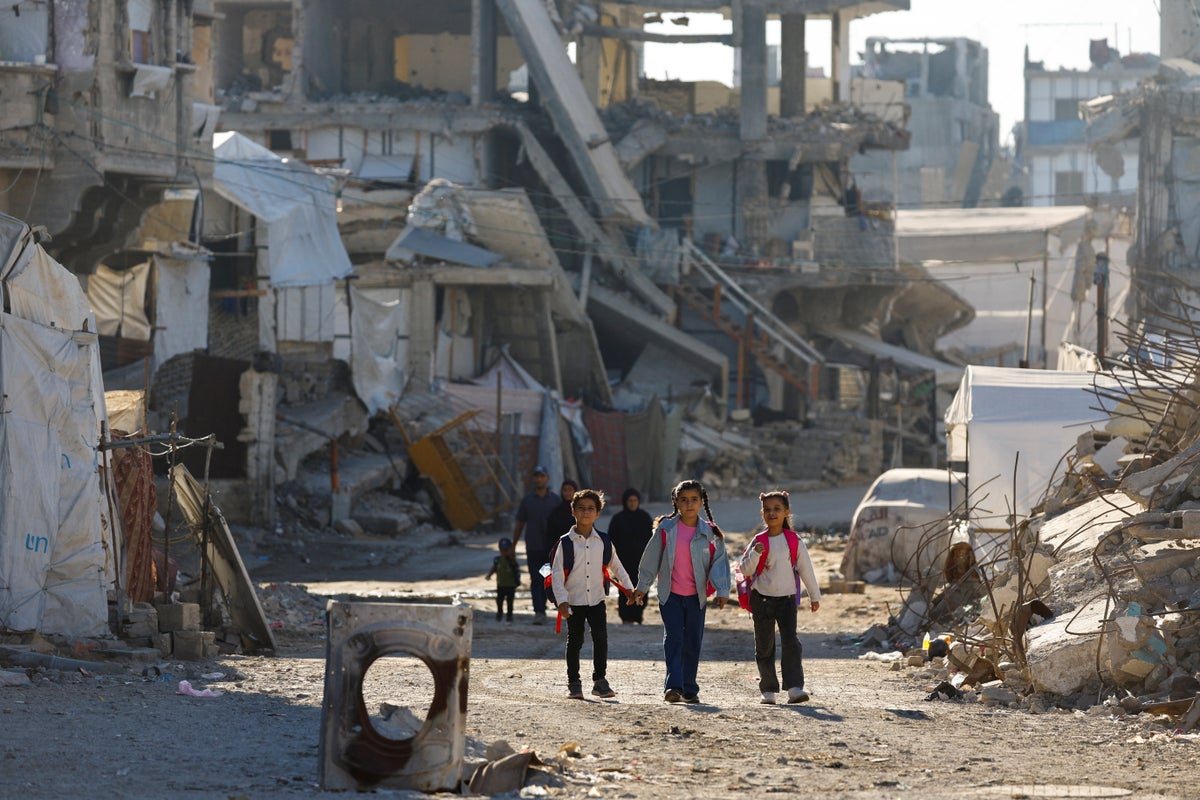
The street I remembered had been dug up and its route had changed; sand covered parts of it, the streetlights had disappeared, and the facade of the bank whose appearance I knew so well had been shattered. asserted
I → remember → appearance
The building that had once been an unmistakable marker of the beginning of Tal al-Hawa no longer looked as it once did. asserted
it → look → Hawa
Even the colour of the place had changed. asserted
colour → change → place
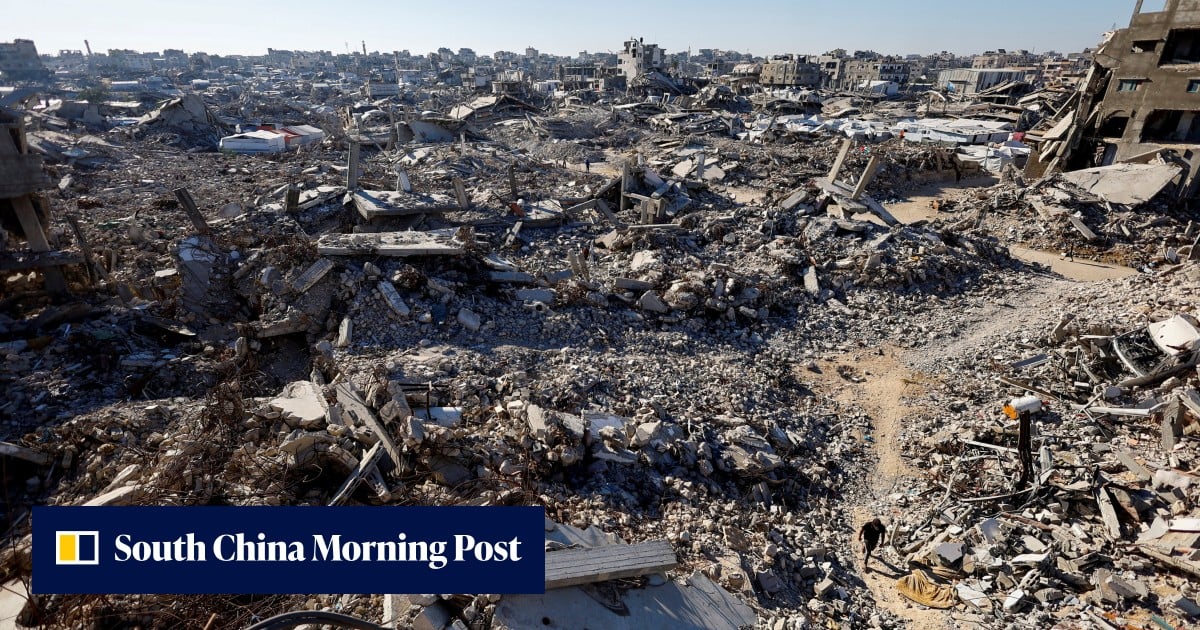
The area I used to see from the bank’s doorstep, with its stone, facades and bustle, now appeared grey, barren and open to the void. asserted
I → use → void
I walked on, asking people: “Where am I? asserted
I → walk → people
I was asking about places I had once known without ever having to ask where they were. asserted
they → ask → places
It was at that moment, precisely, that I understood that something greater than the buildings had changed. asserted
something → understand → buildings
Three years of war had erased the landmarks that helped people in Gaza recognise where they were. asserted
they → erase → Gaza
Architectural researcher Yara Sharif told Independent Arabia: “After three years of war, it became clear that Gaza had lost more than its historic buildings. asserted
Gaza → tell → buildings
The destruction had also reached the cultural and social practices that took place within neighbourhoods, as well as the small details of everyday life. asserted
that → reach → life
“The visual memory of the place had been overwhelmed by images of destruction, rubble and emptiness.” What happened in Tal al-Hawa was not something that affected me alone. asserted
that → overwhelm → me
In Zeitoun, one of Gaza City’s oldest neighbourhoods, residents returned to a place they had known for decades only to find large parts of it altered beyond recognition. asserted
parts → return → recognition
Ferial Ahmed spoke of the roof of her home collapsing on her family, and of how the features of her street had changed after most of the landmarks she remembered were destroyed. asserted
she → speak → landmarks
“The neighbourhood was known for its markets, its olive groves and the relationships that bound its families together,” she says. asserted
she → know → families
The scale of destruction Satellite images captured by the United Nations Satellite Centre offer another perspective on the scale of this transformation. asserted
images → capture → transformation
The assessment estimated that around 83 per cent of the buildings in Gaza City had been damaged, and 81 per cent of buildings across the Gaza Strip. asserted
cent → estimate → Strip
It also recorded damage to around 200,000 buildings, including around 123,000 classified as destroyed. asserted
It → record → 123,000
…and 93 more, not listed.

💬Give feedback
🕘History 🎫Support