How three years of Israel’s genocidal war have changed Gaza

Read the original at Al Jazeera ↗
Al Jazeera · collected 2026-10-07 · by Maram Humaid

Quick Summary

Three years after Israel launched military operations following Hamas's October 7, 2023 attack on Israel, Gaza has been severely impacted. The conflict has led to the destruction of homes and infrastructure, with over 74,245 Palestinians killed according to Gaza’s Ministry of Health. Despite a ceasefire announced in October 2025, violence continues, with more than 1,462 additional deaths since then. The war has also devastated essential services like education, healthcare, and the economy, leaving nearly all Gazans in urgent need of basic necessities such as shelter and water.
Written locally by qwen2.5:14b on 2026-10-07, using this article's own text rather than the other coverage of the same event (that is the story summary below).

AI analysis runs on qwen2.5:14b, locally

Story summary

On October 7, 2023, Hamas militants attacked southern Israel, killing about 1,200 civilians and taking roughly 250 hostages. This event marked a significant shift in the Israeli-Palestinian conflict, with subsequent years witnessing celebrities like John Cusack, Roger Waters, Susan Sarandon, and others using their platforms to criticize Israel or support Palestinian causes, despite lacking expertise on the issue.

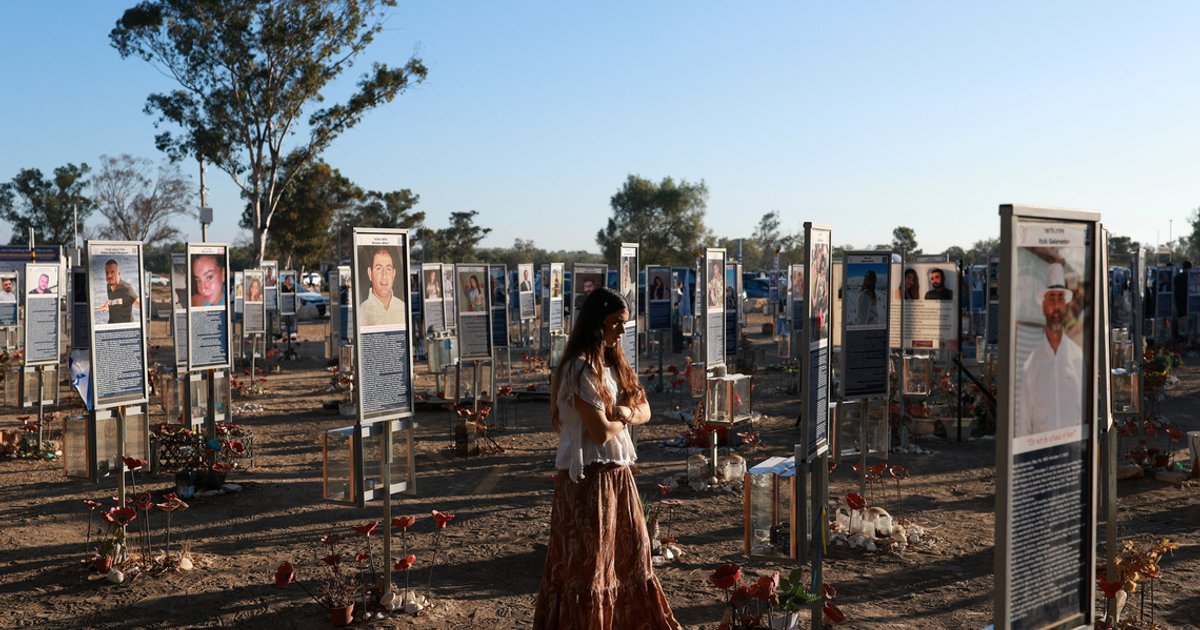
The attacks led to an intense Israeli military response, resulting in widespread destruction and loss of life in Gaza. Families across Israel are marking the third anniversary by holding memorial events at sites like Kibbutz Kfar Aza and the Nova music festival grounds where casualties were highest.

While Israelis mourn their dead, Palestinians face ongoing hardships due to the war's aftermath, including living conditions in devastated areas of Gaza. The event also highlights broader geopolitical changes, such as Iran-U.S. tensions exacerbated by regional conflicts involving Israel.

Written for “October 7 Anniversary” on 2026-10-07, grounded in this article and the 24 other(s) covering the same event.
Why this leaning score
The article's own words the score was based on. Each is quoted verbatim and was checked against the article text before being stored, so you can find it in the original.
Reading Leans strongly left (beta estimate) Confidence high
Leaning: leans strongly left for article 62053 (high confidence, 3 verified quotes) · logged 2026-10-07

Signals How these are calculated →

Claims extracted
67
claim-shaped sentences
Uncertain
13%
9 of 67 hedged
Leaning
Leans strongly left
of the writing, not the subject · beta estimate
Correction & hedging signals
60.3
corrections and hedging in what we collected; not a measure of accuracy
Outlets on this story
25
Politics
Narrative spread
1
articles carrying this framing
Analyzed 2026-10-07 · how these are computed

Story

📰 October 7 Anniversary
Politics · 25 article(s) covering the same event. See how they differ ↓

How this is being covered How these are calculated →

Article leaning vs. publisher reliability
Source leaning vs. consistency

Compared with similar articles

This article reads leans strongly left and hedges 13% of its claims. Each row says how that neighbour differs.
The Straits Times
⚖️ Leans strongly left 🔴 0% hedged 0 of 21 📰 publisher trust 59
“Both articles discuss the commemoration of three years since Hamas attacked Israel on October 7, 2023, and the subsequent Israeli military response that has affected Gaza.”
The Globe and Mail
⚖️ leaning not scored 🔴 0% hedged 0 of 2 📰 publisher trust 51
“Both articles refer to the same period of time (three years after Israel's war on Gaza) and describe the ongoing impact and destruction in Gaza.”
The Straits Times
⚖️ Leans left further right than this 🔴 12% hedged 3 of 24 📰 publisher trust 59
“The articles describe different aspects of the ongoing situation in Gaza but do not report on the same specific incident or time. Article A focuses on displaced Gazans waiting to return, while Article B discusses the impact of Israel's military actions three years after the initial conflict.”
The Free Press
⚖️ leaning not scored 🔴 0% hedged 0 of 3 📰 publisher trust 96
“Article A discusses the planning and execution of Hamas's invasion three years ago, while Article B focuses on the aftermath and impact of Israel's response over the past three years.”
Al Jazeera
⚖️ Leans strongly left 🔴 1% hedged 1 of 75 📰 publisher trust 60
“The articles describe different aspects of a prolonged conflict but do not report on the exact same incident.”
The Hindu
⚖️ leaning not scored 🔴 0% hedged 0 of 22 📰 publisher trust 60
“The articles discuss related but distinct events: one is about the current state of Gaza three years after the initial conflict, while the other focuses on how Israelis are commemorating the anniversary of the Hamas attack that initiated the war.”
Al Jazeera
⚖️ Leans strongly left 🔴 6% hedged 2 of 35 📰 publisher trust 60
“The articles describe different aspects of a broader conflict: one focuses on Gaza's transformation due to Israel's war, while the other discusses changes in Israeli society following the attacks.”
Al Jazeera
⚖️ Leans strongly left 🔴 0% hedged 0 of 2 📰 publisher trust 60
“While both articles discuss the ongoing conflict and devastation in Gaza over a three-year period, Article A focuses on Ibrahim Rabaa's personal footage and record of events, while Article B provides a broader overview of how Gaza has been transformed due to Israel’s war. They do not describe the same specific incident.”
South China Morning Post
⚖️ Leans strongly left 🔴 0% hedged 0 of 7 📰 publisher trust 67
“While both articles discuss destruction in Gaza due to Israeli actions, Article A covers the broader impact of three years of conflict, while Article B specifically reports on ongoing building demolitions a year after a ceasefire.”
New York Post
⚖️ leaning not scored 🔴 17% hedged 4 of 24 📰 publisher trust 64
“Article A discusses the broader impact of Israel's military operations on Gaza over three years, while Article B focuses specifically on a terrorist tunnel used in the initial October 7, 2023 attack.”

Publisher

Al Jazeera · 2327 article(s) · 2 correction(s) detected
Running correction rate · 2 correction(s)
2026-10-03
Tennessee prisons official resigns after Christa Pike’s failed US execution
2026-09-30
Indonesia suspends five officials over luxury apartments for inmates

Who wrote this

Maram Humaid
10 article(s) here · 1 carrying a prediction
🔮 In May 2024, Israel’s military operation in Rafah displaced more than 800,000 people, according to the UN.
🔮 “I could not speak.
🔮 “I want to leave, but who will give me an alternative?”
🔮 On October 27, Israelis will vote in a national election that will determine the next government and shape the country’s policies on Gaza.
🔮 “Sometimes there would be months when I stopped taking them altogether,” Totah said.
🔮 “If I could afford it, I would send them to private school,” 39-year-old Khadija told Al Jazeera.
🔮 “If I could, I would lower the price as much as possible,” he says.
🔮 Whenever Mervat Radwan hears the community kitchen in her displacement camp will serve lunch that day, she breathes a sigh of relief.
🔮 I struggled to cope with my condition and couldn’t find the right support or suitable medical creams,” she says, as Israeli restrictions on imports into Gaza made the lotions hard to obtain.
🔮 Messages still arriving, comments gathering beneath Eman's latest video, will all have to wait until morning.
Also by Maram Humaid
Nothing else under this byline is closely related to this article, so these are simply their most recent.
All 10 articles by Maram Humaid →

Topics

Gaza Israel Israeli Palestinian Palestinians

Subjects

Gaza GPE · 9× Israel GPE · 5× Israeli NORP · 3× Palestinians NORP · 3× Palestinian NORP · 2× Gaza City GPE · 1× Gaza Strip GPE · 1× Hamas ORG · 1× Ministry of Health ORG · 1× the Gaza Strip GPE · 1×

Narrative

Years of war have brought the collapse of education, healthcare and the economy, while access to food, water, shelter and other basic necessities has become a daily struggle. Surviving daily life For people in Gaza, the war has changed not only where they live, but how they carry out the most ordinary parts of daily life.
framing: assertive · carried by 1 article(s) · first seen 2026-10-07
🔮 In May 2024, Israel’s military operation in Rafah displaced more than 800,000 people, according to the UN.
2026-10-07 · Al Jazeera
How three years of Israel’s genocidal war have changed Gaza · assertive framing

Claims (67 extracted, 9 hedged)

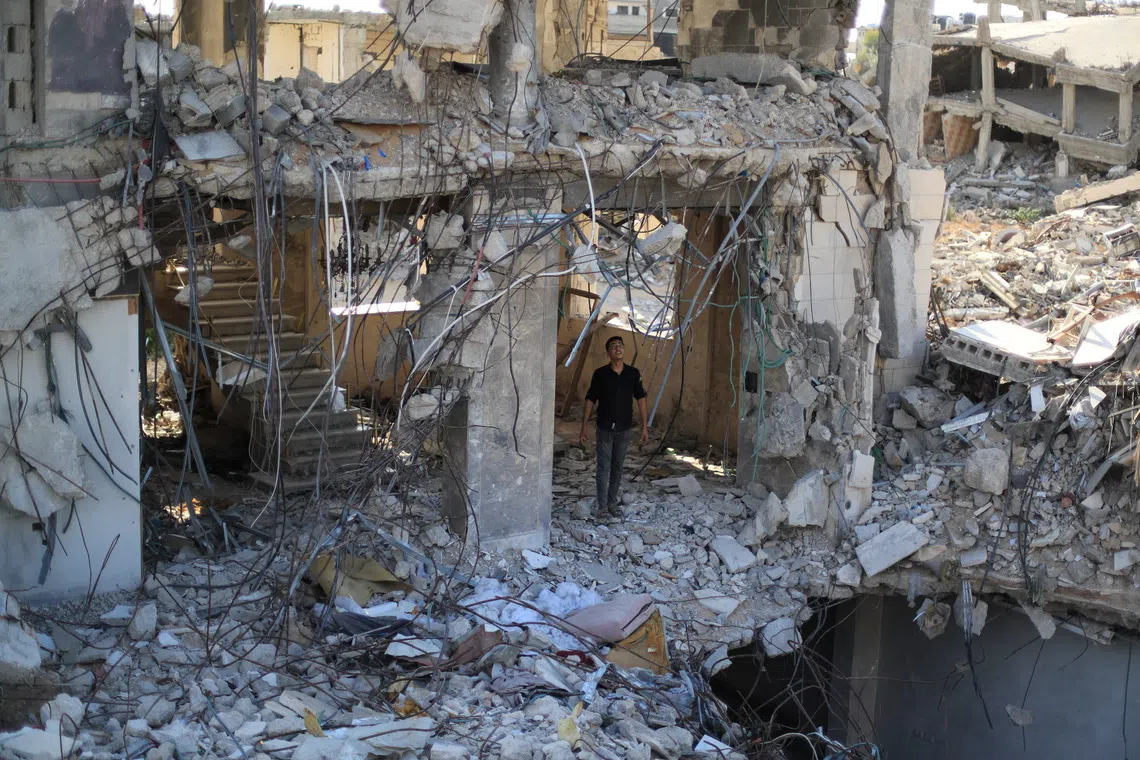
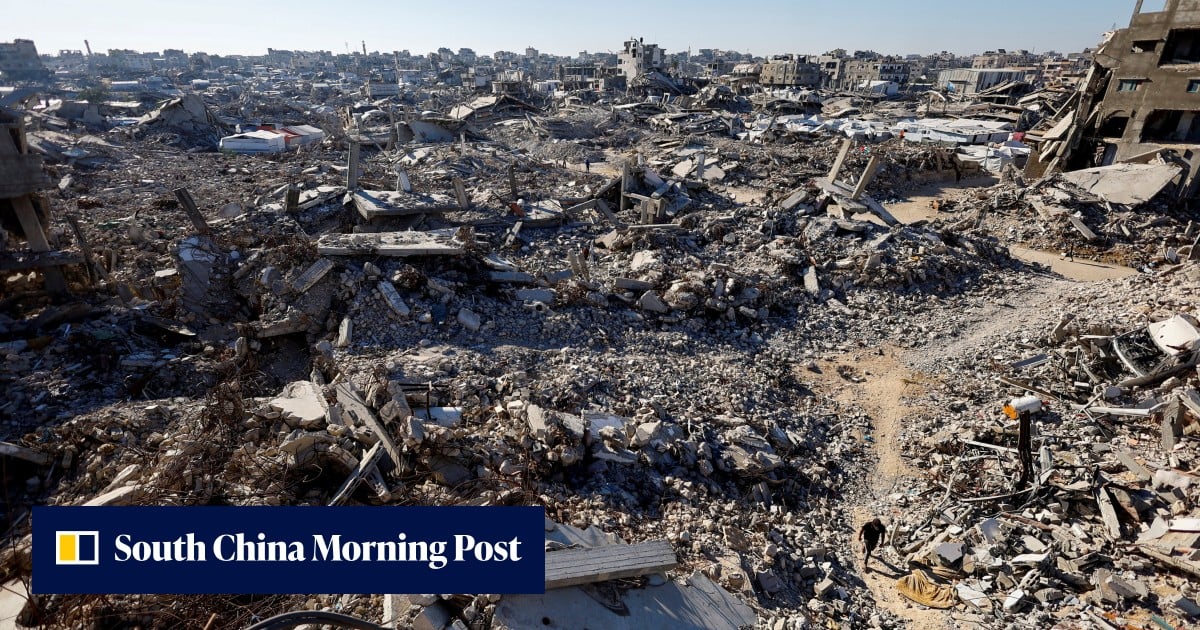
Three years after Israel launched its genocidal war on Gaza following the Hamas-led October 7, 2023 attack on Israel, the Palestinian enclave has been transformed beyond recognition. asserted
enclave → launch → recognition
Israel’s sustained aerial and ground assault has devastated vast parts of the Gaza Strip, destroying homes and neighbourhoods and severely damaging its infrastructure and essential services. asserted
assault → devastate → infrastructure
Recommended Stories list of 3 items- list 1 of 3‘Not the act of a friend’: Israel’s deadline to close UK consulate nears - list 2 of 3In Gaza, we cannot even begin to recover from trauma - list 3 of 3How asserted
we → close → trauma
Palestinian reporters defied Israel’s genocide to redefine journalism asserted
reporters → defy → journalism
The war has shattered the lives of a population of around two million people. asserted
war → shatter → people
Repeated displacement and evacuation orders have uprooted families and communities, while more than 74,245 Palestinians have been killed, according to Gaza’s Ministry of Health. uncertain
Palestinians → uproot → Health
Although a “ceasefire” was announced in October 2025, it has not brought an end to the suffering. asserted
it → announce → suffering
The Ministry of Health says 1,462 Palestinians have been killed since the “ceasefire” took effect, while Israeli attacks and other military activity have continued across the Strip. asserted
attacks → say → Strip
Years of war have brought the collapse of education, healthcare and the economy, while access to food, water, shelter and other basic necessities has become a daily struggle. Surviving daily life For people in Gaza, the war has changed not only where they live, but how they carry out the most ordinary parts of daily life. asserted
they → bring → life
A home, running water, electricity and a mode of transport – the basic infrastructure of everyday life – no longer exist for many Palestinians in Gaza. asserted
home → run → Gaza
In September, according to the UN, 94 percent of Gaza’s population remained in urgent need of shelter and basic household assistance, while 65 percent of households were living in tents or makeshift shelters offering little protection from the elements, having been forced from their homes by Israeli attacks or forced evacuation orders. uncertain
percent → accord → attacks
Many families also lacked adequate bedding, lighting, kitchen equipment and sanitation facilities, according to the United Nations. uncertain
families → lack → Nations
Water has become another daily challenge. asserted
Water → become → ?
Ninety-one percent of assessed households experienced moderate-to-high water insecurity in early August, up from 84 percent in June, according to the UN. uncertain
percent → assess → UN
Gaza has remained without a functioning electricity grid, leaving essential services and households dependent on generators and increasingly scarce fuel, engine oil and spare parts. asserted
Gaza → remain → generators
Damaged roads and communications networks have also made transport, phone and internet access and access to basic services more difficult. asserted
transport → make → services
The result is a daily life reorganised around survival: collecting water, charging a phone, cooking, washing and moving between services all require resources and planning that were once unnecessary. asserted
that → reorganise → resources
Economic grief Gaza’s economy has been devastated by the war, with the destruction of businesses and local industries leaving families with little income and sharply reduced purchasing power. asserted
destruction → devastate → income
In September, the UN Conference on Trade and Development estimated that 92 percent of Gaza’s economic establishments had been damaged or destroyed since October 2023, while unemployment had reached 78 percent. asserted
unemployment → estimate → percent
GDP per capita stood at just $212 in 2025, around 17 percent of its 2022 level. asserted
GDP → stand → level
Agriculture and industry were each operating at just 6 percent of their 2022 output, while construction had fallen to 1 percent. asserted
construction → operate → percent
The economic collapse has also made basic goods increasingly unaffordable. asserted
goods → make → ?
Restrictions on the movement of goods have deepened the damage to Gaza’s economy, where most goods traded with the outside world have historically passed through Israeli-controlled crossings. asserted
goods → deepen → crossings
The impact has been felt directly by consumers. asserted
impact → feel → consumers
In September, prices remained around 200 percent above pre-October 2023 levels, according to the UN. uncertain
prices → remain → UN
As jobs and incomes have disappeared, economic activity has increasingly centred on aid, debt and small-scale informal work. asserted
activity → disappear → aid
Economic researcher Rami al-Zaygh told Al Jazeera that the war had “pushed society back decades”, reviving old professions and creating new types of work using basic tools and whatever resources are available. asserted
resources → tell → tools
Many families in Gaza now rely on cash assistance from humanitarian groups. asserted
families → rely → groups
Physical cash itself has become increasingly scarce, with people using digital payments and e-wallets instead. asserted
people → become → payments
Struggle to study The war has drastically changed education in Gaza. asserted
war → study → Gaza
For nearly three years, hundreds of thousands of children had no regular access to in-person schooling as schools were damaged or destroyed, while many of those still standing are used as shelters. asserted
many → have → shelters
Nearly 98 percent of schools have been damaged or destroyed, according to UNICEF. uncertain
percent → damage → UNICEF
As of April 2026, around 700,000 children aged 4 to 17 had missed almost three consecutive years of in-person education. asserted
children → miss → education
Instead of returning to classrooms, many children have been learning in tents and temporary learning spaces. asserted
children → return → tents
Around 200,000 children have no access to education. asserted
children → have → education
The disruption has also widened the gap in children’s learning. asserted
disruption → widen → learning
The Palestinian Ministry of Education has warned of a serious loss of basic skills and a growing academic gap, with nearly three years of interrupted education threatening the long-term educational prospects of an entire generation. asserted
years → warn → generation
Healthcare decimated asserted
Healthcare → decimate → ?
Gaza’s health system has been pushed close to collapse. asserted
system → push → collapse
All 36 of Gaza’s hospitals have been damaged, and only 19 are currently functioning, according to the World Health Organization. uncertain
19 → damage → Organization
…and 27 more, not listed.

💬Give feedback
🕘History 🎫Support