Pakistan’s Yemen moment

Read the original at Dawn ↗
Dawn · collected 2026-10-10 · by Khurram Abbas

Quick Summary

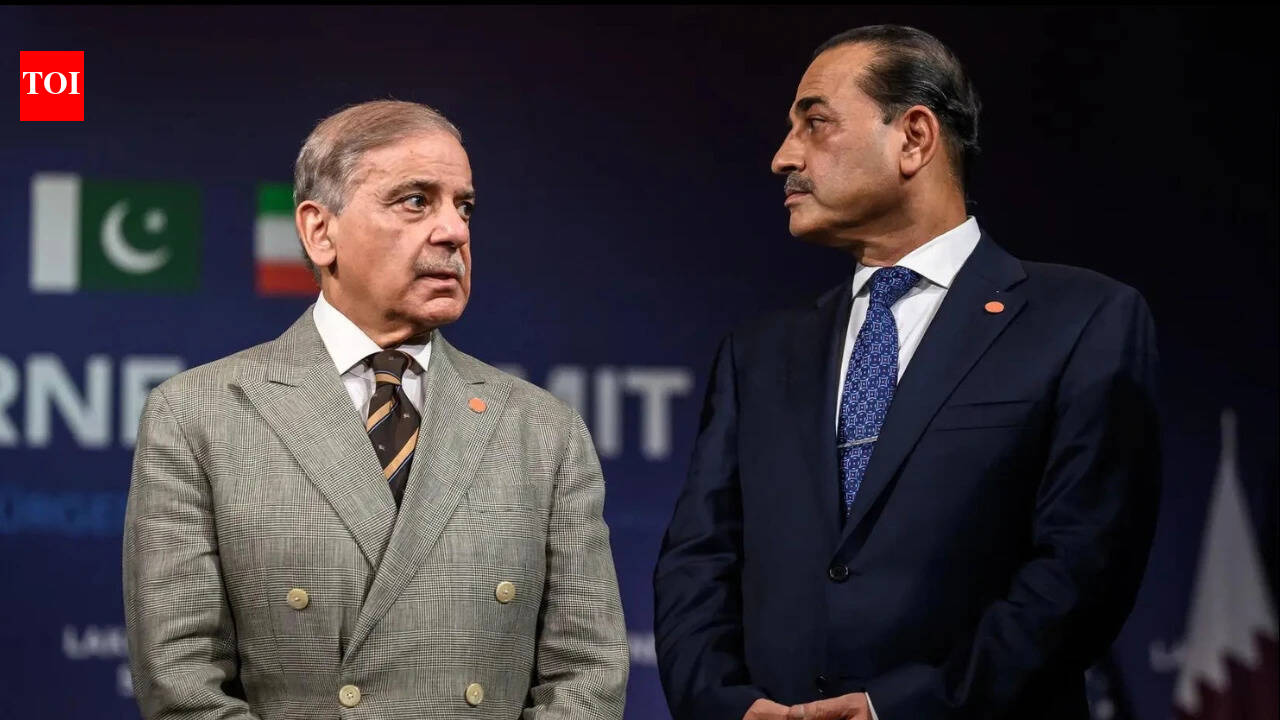
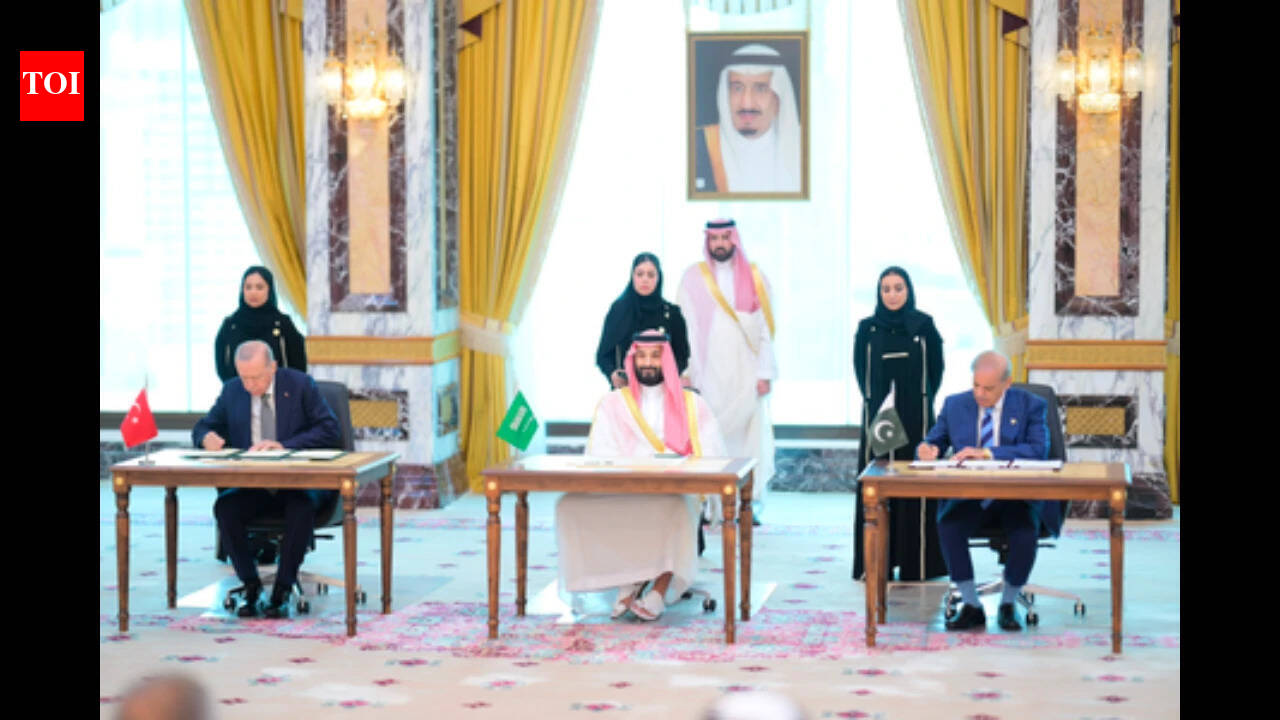
On October 5, Pakistan and Turkey were prompted to deploy forces to support Saudi Arabia’s territorial integrity under the Makkah Joint Defence Agreement (MJDA), which was signed in less than two months prior. This recent development reflects a shift from Pakistan's previous neutral stance during the 2015 Saudi-led coalition intervention in Yemen, where it avoided direct military involvement. The article highlights that this new security commitment could lead to prolonged military deployments by Pakistan and Turkey within Saudi territory until a final peace agreement is reached between Saudi Arabia and the Houthis in Yemen.
Written locally by qwen2.5:14b on 2026-10-10, using this article's own text rather than the other coverage of the same event (that is the story summary below).

AI analysis runs on qwen2.5:14b, locally

Story summary

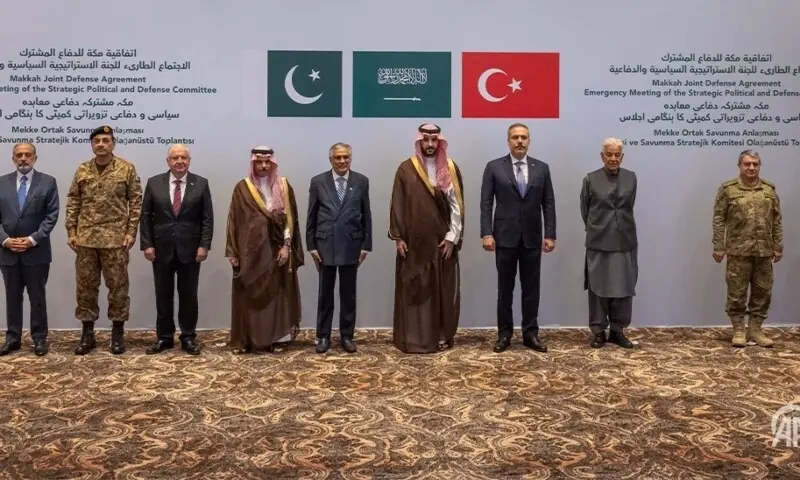
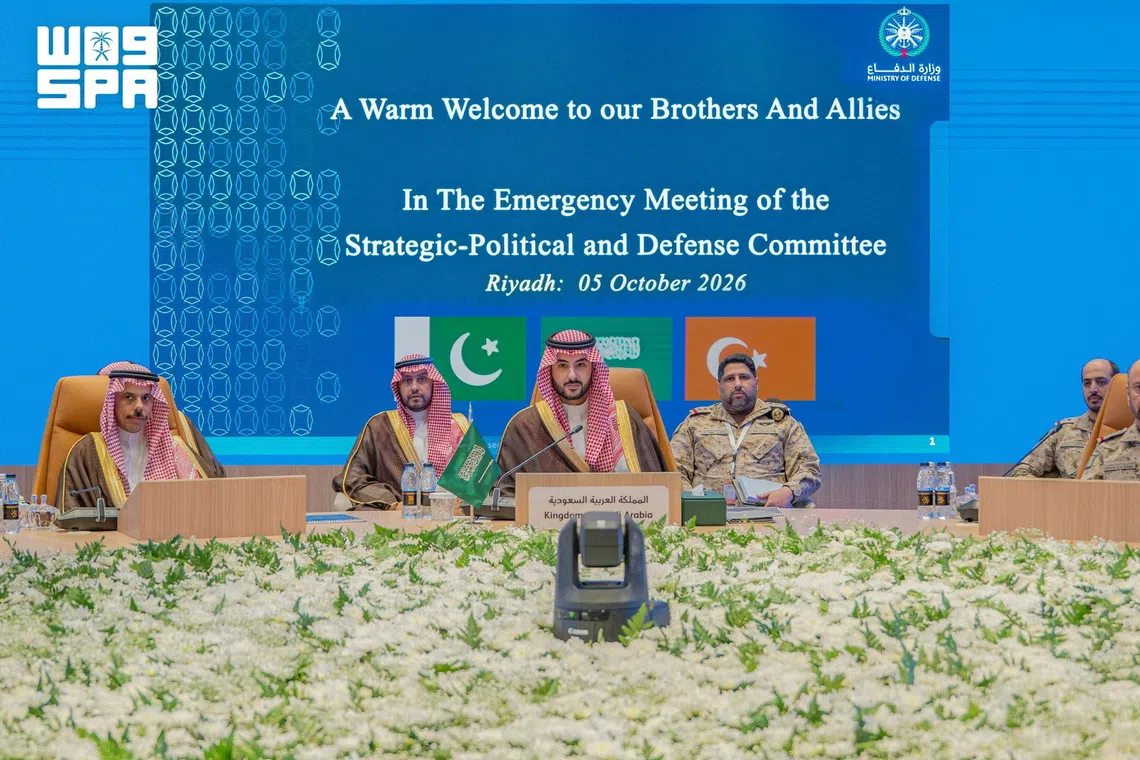
On October 5, Pakistan, Saudi Arabia, and Turkey held an emergency meeting of the Makkah Joint Defence Agreement in Riyadh, focusing on escalating Houthi attacks on Saudi territory. The SPDC, which includes foreign ministers, defence ministers, and chiefs of army staff from each country, agreed to rapidly deploy military forces within the kingdom as part of their collective defense strategy. This decision was made amid recent threats against Islam's holy sites in Mecca and Medina, with officials expressing solidarity and commitment to protecting Saudi Arabia's security and territorial integrity. Pakistan’s delegation included Deputy Prime Minister Ishaq Dar, Chief of Army Staff Field Marshal Asim Munir, and Defence Minister Khawaja Asif, reflecting the importance placed on this alliance in countering regional threats.

Written for “Makkah Pact Meetings Deployment” on 2026-10-10, grounded in this article and the 17 other(s) covering the same event.
Why this leaning score
The article's own words the score was based on. Each is quoted verbatim and was checked against the article text before being stored, so you can find it in the original.
Reading Leans strongly right (beta estimate) Confidence high
Leaning: leans strongly right for article 69949 (high confidence, 3 verified quotes) · logged 2026-10-10

Signals How these are calculated →

Claims extracted
46
claim-shaped sentences
Uncertain
4%
2 of 46 hedged
Leaning
Leans strongly right
of the writing, not the subject · beta estimate
Correction & hedging signals
71.2
corrections and hedging in what we collected; not a measure of accuracy
Outlets on this story
18
World
Narrative spread
1
articles carrying this framing
Analyzed 2026-10-10 · how these are computed

Story

📰 Makkah Pact Meetings Deployment
World · 18 article(s) covering the same event. See how they differ ↓

How this is being covered How these are calculated →

Article leaning vs. publisher reliability
Source leaning vs. consistency

Compared with similar articles

This article reads leans strongly right and hedges 4% of its claims. Each row says how that neighbour differs.
Dawn
⚖️ leaning not scored 🔴 0% hedged 0 of 20 📰 publisher trust 71
“Both articles discuss an emergency meeting on October 5, 2026, where Pakistan, Saudi Arabia, and Turkiye agreed to deploy military forces under the Makkah Joint Defence Agreement.”
The Straits Times
⚖️ leaning not scored 🔴 0% hedged 0 of 10 📰 publisher trust 59
“Both articles discuss the activation of the Mecca Joint Defence Agreement on October 5, leading to Turkey and Pakistan agreeing to deploy troops rapidly in support of Saudi Arabia.”
Al Jazeera
⚖️ leaning not scored 🔴 0% hedged 0 of 3 📰 publisher trust 60
“Both articles describe the same emergency meeting on October 5, 2026, where Turkey, Saudi Arabia, and Pakistan agreed to military deployment in response to Houthi attacks on Saudi Arabia.”
The Hindu
⚖️ leaning not scored 🔴 0% hedged 0 of 5 📰 publisher trust 60
“Both articles describe an emergency meeting on October 5, 2026, where Pakistan, Saudi Arabia, and Turkey agreed to rapidly deploy military forces under the Mecca Defence Alliance or Makkah Joint Defence Agreement.”
Al Jazeera
⚖️ leaning not scored 🔴 0% hedged 0 of 3 📰 publisher trust 60
“Both articles describe Turkiye and Pakistan agreeing to deploy forces to Saudi Arabia during emergency talks, referencing the same decision made at around the same time.”
Euronews
⚖️ leaning not scored 🔴 0% hedged 0 of 10 📰 publisher trust 60
“Both articles describe the emergency meeting where Turkey, Pakistan, and Saudi Arabia agreed to deploy troops in response to threats from Yemen's Houthis under their mutual defence pact.”
Times of India
⚖️ leaning not scored 🔴 13% hedged 2 of 15 📰 publisher trust 59
“Both articles refer to the invocation of the Mecca Joint Defence Agreement on October 5th, leading to the deployment of Pakistani troops in support of Saudi Arabia.”
Al Jazeera
⚖️ Leans right further left than this 🔴 12% hedged 5 of 40 📰 publisher trust 60
“The articles describe different aspects of related developments but do not focus on the same specific incident or occurrence.”
Saudi deployment same event · 90%
Dawn
⚖️ Leans left further left than this 🔴 0% hedged 0 of 20 📰 publisher trust 71
“Both articles describe the invocation of the Makkah Joint Defence Agreement and the decision to deploy forces to Saudi Arabia in response to potential threats from the Houthi movement, referring to the same specific meeting on October 5th.”
Times of India
⚖️ leaning not scored 🔴 19% hedged 4 of 21 📰 publisher trust 59
“Both articles describe an emergency meeting on October 5th where Pakistan, Saudi Arabia and Turkey agreed to deploy forces under the Makkah Alliance for Defence.”

Publisher

Dawn · 1415 article(s) · 3 correction(s) detected
Running correction rate · 3 correction(s)
2026-10-07
POLICY: THE ISLAMIC DEBATE OVER CRYPTO
2026-10-01
Tennessee woman in hospital after execution 'failed': lawyers
2026-09-20
An eye on Balochistan border

Who wrote this

Khurram Abbas
4 article(s) here · 1 carrying a prediction
🔮 The decision to operationalise the collective defence clause in less than two months of signing the MJDA suggests that Islamabad might remain embroiled in several layers of Middle Eastern conflicts in future under these security commitments.
2026-10-10 · assertive framing · Pakistan’s Yemen moment
🔮 However, both parties postponed their marches (although the PTI has indicated it would begin its protest over the weekend), which temporarily eased the immediate concern of large-scale agitation.
2026-10-02 · assertive framing · Politics of agitation
🔮 The emphasis on political objectives and tight deadlines risks coming at the expense of military professionalism and could undermine the combat effectiveness of India’s armed forces across the three services.
🔮 Furthermore, New Delhi’s subsequent decision to hold the 1960 Indus Waters Treaty in abeyance, coupled with the intense four-day armed hostilities of May 2025, has effectively slammed the door on any lingering hopes for normalisation in the foreseeable future.
2026-09-19 · assertive framing · The forgotten NSP
Also by Khurram Abbas
Politics of agitation
2026-10-02 · Dawn
The forgotten NSP
2026-09-19 · Dawn
Nothing else under this byline is closely related to this article, so these are simply their most recent.

Topics

Islamabad Pakistan Saudi Saudi Arabia Yemen

Subjects

Pakistan GPE · 13× Islamabad GPE · 10× Iran GPE · 6× Saudi Arabia GPE · 5× Saudi NORP · 3× Yemen GPE · 3× Ankara GPE · 2× Tehran GPE · 2× Middle Eastern NORP · 1× Saudi Arabia’s GPE · 1×

Narrative

While Pakistan possesses deep, institutionalised defence ties with Riyadh, and a shared diplomatic vocabulary with Tehran, China enjoys immense economic influence over both nations through its Belt and Road Initiative, and comprehensive strategic partnership agreement with Iran.
framing: assertive · carried by 1 article(s) · first seen 2026-10-10
🔮 The decision to operationalise the collective defence clause in less than two months of signing the MJDA suggests that Islamabad might remain embroiled in several layers of Middle Eastern conflicts in future under these security commitments.
2026-10-10 · Dawn
Pakistan’s Yemen moment · assertive framing

Claims (46 extracted, 2 hedged)

ON Oct 5, in an emergency meeting, the member states of the Makkah Joint Defence Agreement invoked the joint defence clause. asserted
states → invoke → clause
Now, Islamabad and Ankara can actively move towards rapid force deployment to protect Saudi Arabia’s territorial integrity and sovereignty. asserted
Islamabad → move → integrity
The decision to operationalise the collective defence clause in less than two months of signing the MJDA suggests that Islamabad might remain embroiled in several layers of Middle Eastern conflicts in future under these security commitments. uncertain
Islamabad → operationalise → commitments
This is a classic Pakistan-Yemen moment, which the previous PML-N government avoided in 2015. asserted
government → avoid → 2015
Saudi Arabia officially asked Pakistan in 2015 to join its coalition against Yemen’s Houthis. asserted
Arabia → ask → Houthis
However, Pakistan chose to remain neutral. asserted
Pakistan → choose → ?
More than a decade after Pakistan took one of its toughest foreign policy decisions, the Yemen moment has resurfaced. asserted
moment → take → decisions
This time, however, Pakistan has made security commitments to Saudi Arabia under the MJDA in 2026 and the Strategic Mutual Defence Agreement signed last year. asserted
Pakistan → make → 2026
Yemen is one of the most complex cases of civil unrest and conflict, illustrating how external actors can complicate regional and domestic conflict dynamics. asserted
actors → illustrate → dynamics
Following a Saudi-led coalition’s seven-year intervention from 2015 to 2022, the UN brokered a truce. asserted
UN → follow → truce
However, a final peace agreement remains pending. asserted
agreement → pende → ?
Consequently, until a formal Saudi-Houthi accord is finalised, Pakistan alongside Ankara may face prolonged military deployments lasting months or even years to bolster Saudi defence forces within their territory. uncertain
Pakistan → finalise → territory
Despite these operational challenges, Pakistan must fulfil its security commitments to Saudi Arabia. asserted
Pakistan → fulfil → Arabia
Having formally elevated its bilateral arrangements into the binding, Nato-like collective security framework of the MJDA, Islamabad cannot afford to hesitate when the pact is invoked. asserted
pact → elevate → MJDA
Therefore, Pakistan must fulfil its security obligations wholeheartedly to safeguard its strategic credibility. asserted
Pakistan → fulfil → credibility
Furthermore, the economic dimension of this relationship underpins Pakistan’s very survival. asserted
dimension → underpin → survival
Saudi Arabia has historically stood as Islamabad’s premier economic anchor during its darkest balance-of-payments and liquidity crises. asserted
Arabia → stand → crises
To survive a perilous geopolitical tightrope, Pakistan must immediately execute a sophisticated, active, and dual-front diplomatic strategy. asserted
Pakistan → survive → sophisticated
While Islamabad must deliver on its collective defence commitment to Saudi Arabia, it cannot afford a catastrophic fallout with its western neighbour, Iran. asserted
it → deliver → neighbour
Pakistan shares a volatile, 900-kilometre border with Iran, a frontier already plagued by cross-border militancy and fragile security dynamics. asserted
Pakistan → share → militancy
Direct military entanglement with the Iranian ‘Axis of Resistance’, or an operational misstep that Tehran perceives as hostile, would trigger an asymmetric blowback along the Balochistan border, destabilise Pakistan’s internal security, and ruin vital regional trade prospects. asserted
Tehran → perceive → prospects
To survive this perilous geopolitical tightrope, Pakistan must immediately execute a sophisticated, active, and dual-front diplomatic strategy. asserted
Pakistan → survive → strategy
The first pillar of this strategy requires active diplomatic engagement with Iran to negotiate a comprehensive, long-term peace treaty between Riyadh and Tehran. asserted
pillar → require → Riyadh
By signing or even negotiating a peace treaty between the two capitals, Islamabad will likely be able to reduce regional tensions and minimise concerns of direct military confrontation under the MJDA with Iran. asserted
Islamabad → sign → Iran
Islamabad is uniquely positioned for this role. asserted
Islamabad → position → role
Recently, Islamabad garnered significant diplomatic goodwill by acting as a trusted backchannel and mediator between the US and Iran. asserted
Islamabad → garner → US
Islamabad’s mediatory role brought the US and Iran directly to the negotiating table, which culminated in the Islamabad MoU. asserted
which → bring → MoU.
However, given the immense scale of the current regional mistrust, hostilities, and crisis, Pakistan cannot walk this path alone. asserted
Pakistan → give → path
To maximise the probability of success, Islamabad must integrate China into a co-mediatory process. asserted
Islamabad → maximise → process
This joint Beijing-Islamabad peace initiative can offer the perfect synergy of regional solutions for regional tensions. asserted
initiative → offer → tensions
China has been viewed as a factor of stability in South Asia and the Middle East. asserted
China → view → Asia
While Pakistan possesses deep, institutionalised defence ties with Riyadh, and a shared diplomatic vocabulary with Tehran, China enjoys immense economic influence over both nations through its Belt and Road Initiative, and comprehensive strategic partnership agreement with Iran. asserted
China → possess → Iran
Beijing has already demonstrated its diplomatic capability by successfully brokering the historic Saudi-Iran normalisation pact in 2023. asserted
Beijing → demonstrate → 2023
By combining Islamabad’s strategic clout with China’s economic heft, this collaborative framework can offer Riyadh and Tehran structural security guarantees and economic incentives, respectively. asserted
framework → combine → guarantees
These two elements can transform a fragile status quo into a durable, written peace treaty. asserted
elements → transform → treaty
The second, equally critical pillar of Pakistan’s diplomatic strategy demands the immediate establishment of robust, direct, and uninterrupted communication channels between Islamabad and Tehran. asserted
pillar → demand → Islamabad
As the MJDA moves from a paper agreement to rapid, physical deployment on the ground, the risk of miscalculation and misinterpretation of certain actions escalates exponentially. asserted
risk → move → actions
In a highly securitised environment, defensive posturing can easily be misconstrued as preparation for an offensive strike. asserted
posturing → misconstrue → strike
Pakistan must institutionalise a permanent, high-level military-to-military and intelligence-sharing hotline with Iran. asserted
Pakistan → institutionalise → Iran
This will help Islamabad and Tehran curb disinformation campaigns by adversarial third parties or non-state actors that want to drive a wedge between Pakistan and Iran. asserted
that → help → Pakistan
…and 6 more, not listed.

💬Give feedback
🕘History 🎫Support