Story summary
On October 3, Kenya confirmed its first Ebola case linked to an ongoing outbreak in the Democratic Republic of Congo (DRC), marking it as the fourth country affected by this fast-spreading epidemic. A Kenyan citizen who had lived in the DRC for seven years and recently traveled from there via Uganda tested positive upon arrival in Nairobi, where they were isolated at a hospital but ultimately died on October 4 while receiving treatment.
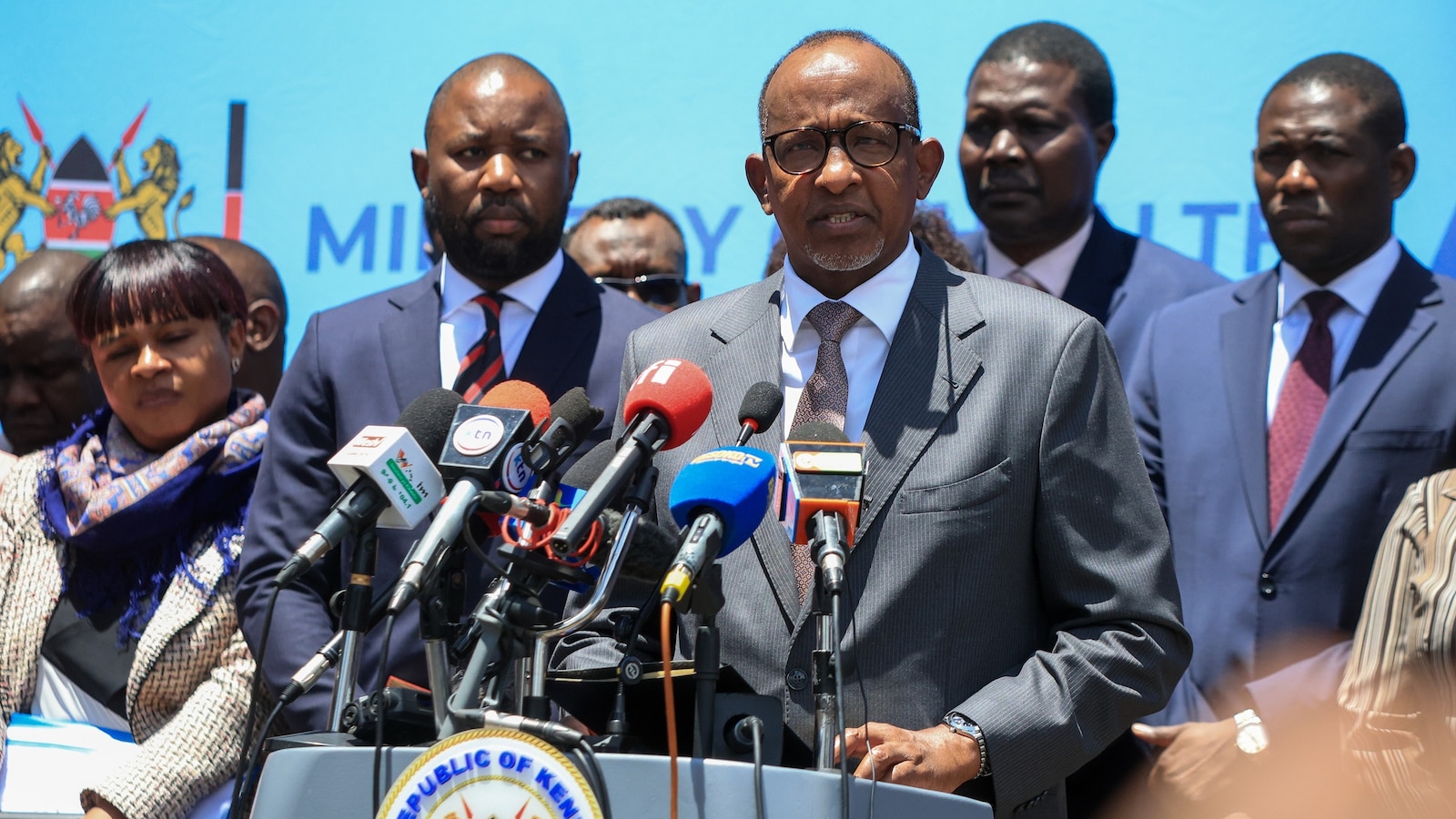
Health Minister Aden Duale reported that 28 close contacts, including family members and healthcare workers, have been identified and are under quarantine for 21 days. Another 23 passengers who shared the flight from Uganda are also being traced by authorities. Since May, when the outbreak was officially declared in the DRC, nearly 8,400 cases and over 4,000 deaths have been recorded, making this the fastest-growing Ebola epidemic in history.
The case underscores concerns about the disease's rapid international spread through air travel and highlights Kenya’s heightened alert status. The country has already screened more than 652,000 travelers, conducted extensive contact tracing, and trained nearly 5,000 health workers to manage potential outbreaks effectively.
Written for “Ebola In Kenya” on 2026-10-10,
grounded in this article and the 10 other(s) covering the same event.
- Published
A Kenyan businessman was able to spend time in one of the regions worst-affected by Ebola, then travel to two more countries before his illness was identified.
asserted
illness → publish → countries
The 40-year-old - who was only diagnosed with the deadly infectious disease after arriving seriously ill at a Nairobi hospital - became Kenya's first confirmed case.
asserted
who → diagnose → hospital
He died two days later on 5 October.
asserted
He → die → October
That his infection went undetected at multiple health facilities in the Democratic Republic of Congo and two airport health screenings in Uganda and Kenya has raised serious questions about these nations' biosecurity during a significant outbreak.
asserted
went → go → outbreak
More than 4,000 people have died from Ebola in DR Congo this year, in what is the second most deadly known outbreak to date.
asserted
what → die → date
Africa CDC, the continent's leading public health agency, has now reconstructed the Kenyan patient's movements across nearly six weeks, revealing several missed opportunities to detect his infection and potentially preventing dozens of people from coming into contact with the deadly virus.
asserted
CDC → lead → virus
The account, presented by the agency's emergency director, Dr Wessam Mankoula, provides the clearest picture yet of how the businessman travelled thousands of kilometres while growing increasingly unwell.
asserted
businessman → present → kilometres
The man, whose identity has not been made public, had lived in DR Congo for seven years and had travelled across three of its provinces on business.
asserted
identity → make → business
Exactly when or where he contracted Ebola remains unclear - but it was present in all three provinces he went through by early October, according to the World Health Organization (WHO).
uncertain
he → contract → Organization
The man had spent much of late August and early September in the province of Bas-Uélé, visiting towns including Buta, Aketi and Likati.
asserted
man → spend → Buta
The WHO confirmed an Ebola case in Buta in August, prior to his visit, though there is no evidence he contracted the virus there.
asserted
he → confirm → virus
His symptoms first emerged around 15 September.
asserted
symptoms → emerge → September
He was given antibiotics and sent home.
asserted
He → give → antibiotics
Two days later, he was admitted to the Tongo Etandi Health Centre in Bondo, where he remained until 19 September.
asserted
he → admit → September
Despite suffering from fever and a rash, he was diagnosed with a skin infection.
asserted
he → suffer → infection
Without an Ebola test being taken at any point during his travels, it is hard to say exactly when he contracted the virus.
asserted
he → take → virus
On 20 September, he flew to Kisangani, a city with a population of about 1.5 million people on the Congo River, where he spent more than 10 days seeking medical care.
asserted
he → fly → care
We do not know which hospitals or clinics treated him there, nor what medications they gave him.
asserted
they → know → him
Kisangani is the capital of Tshopo province which has only recorded 51 Ebola cases.
asserted
which → record → cases
However, on 1 October, more than two weeks after first becoming ill, the businessman boarded another domestic flight to Beni, before continuing his journey to Kasindi, a busy border town.
asserted
businessman → become → Kasindi
Both Beni and Kasindi are in North Kivu, which has recorded 1,755 Ebola infections and more than 1,000 deaths, making it one of the Congolese provinces worst-hit by the disease.
asserted
it → record → disease
But he did not stay there long, crossing into Uganda later that day.
asserted
he → stay → Uganda
Uganda imposed restrictions on movement across its border with DR Congo shortly after the outbreak began in May.
uncertain
outbreak → impose → May
The country has experience containing several Ebola outbreaks, including through surveillance, contact tracing and the isolation of suspected cases.
asserted
country → have → cases
It has had some cases this year - mostly among people travelling from DR Congo - but was declared free of the disease in August.
asserted
It → have → August
But the border between the two nations stretches for hundreds of kilometres through remote terrain, making it difficult to police.
asserted
it → stretch → police
It remains unclear whether the businessman passed through an official health checkpoint when he crossed the border.
uncertain
he → remain → border
Once he had, he travelled by road to the capital, Kampala, and then Entebbe International Airport, where he boarded a flight to Nairobi on 3 October.
asserted
he → have → October
Ugandan officials said his temperature was normal when he passed through airport screening.
asserted
he → say → screening
Health experts say his case highlights the limitations of relying on temperature checks and self-declarations.
asserted
case → say → checks
Mankoula said investigators were examining whether the man's medication could have suppressed his temperature.
uncertain
medication → say → temperature
He may have also not had a fever when he passed through the checks.
uncertain
he → have → checks
Similarly, he was not flagged as a suspected Ebola patient when he reached Nairobi's Jomo Kenyatta International Airport, where a relative collected him and drove him directly to Nairobi Hospital, a private medical facility in the Kenyan capital.
asserted
relative → flag → capital
By then, he was suffering from fever, chills, muscle pain, a sore throat and bleeding.
asserted
he → suffer → fever
Laboratory tests confirmed that he had contracted the Bundibugyo species of Ebola - the same one responsible for the outbreak in DR Congo.
asserted
he → confirm → Congo
He was placed in isolation while his condition deteriorated.
asserted
condition → place → isolation
He died on 5 October and was buried the following day under strict infection-control measures.
asserted
He → die → measures
The Kenyan government says it has now identified 66 people who may have been in contact with him after he arrived there.
uncertain
he → say → him
The WHO says the number is likely to rise as contact-tracing in Uganda and DR Congo continues.
asserted
tracing → say → Uganda
The quarantine arrangements have also raised concerns among some healthcare workers, amid questions about how the patient was handled at Nairobi Hospital.
asserted
patient → raise → Hospital
…and 7 more, not listed.
 The Aporia