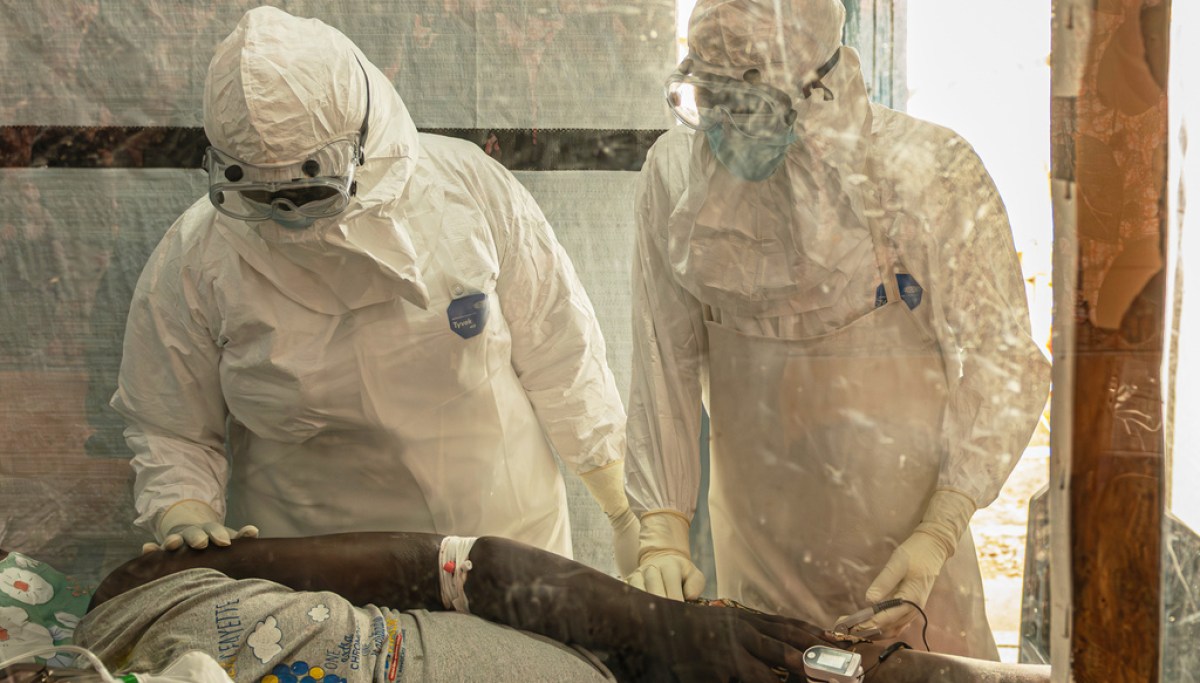
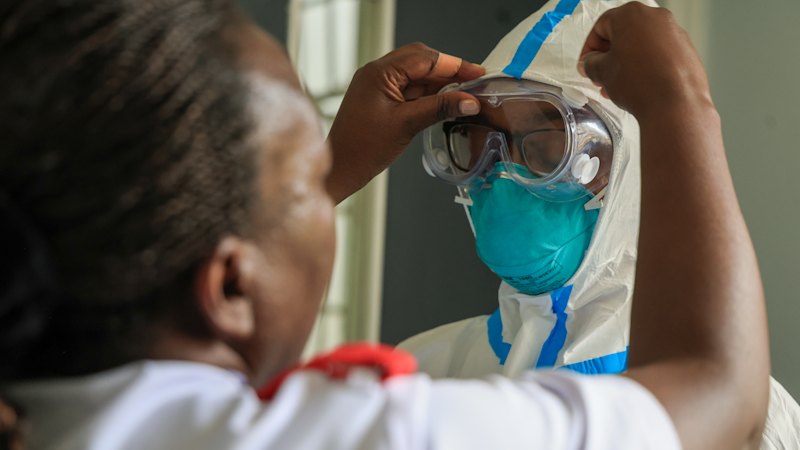
Kenya reported its first death from a deadly strain of Ebola virus which had spread widely, starting in the Democratic Republic of Congo earlier this year.
asserted
which → report → Congo
The Bundibugyo (BDBV) strain of Ebola was first detected in Uganda in 2007, according to the WHO.
uncertain
strain → detect → WHO
The ongoing outbreak in the DRC has killed at least 4,148 people out of 8,300 reported cases.
asserted
outbreak → kill → cases
It also spread across the border to Uganda, which had about 20 cases before being declared Ebola-free in July.
asserted
which → spread → July
Recommended Stories
list of 4 items- list 1 of 4DR Congo’s Ebola outbreak spreads to two new health zones, WHO says
- list 2 of 4Funeral held for DR Congo politician killed after defending Ebola response
- list 3 of 4Ebola cases surpass 8,000 as DRC struggles to control outbreak
- list 4 of 4EU unlocks humanitarian aid for crises worldwide
asserted
list → spread → crises
However, the person who died in Kenya from the disease had travelled from the DRC to Uganda over land before taking a flight to Nairobi, raising questions about Uganda’s status as “Ebola-free”, concerns about the rigidity of Kenya’s screening processes for people coming into the country and fears it may have spread further than previously thought.
On Tuesday, the World Health Organization said the Kenyan government is now enhancing its disease surveillance with more targeted screening at high-risk points of entry.
uncertain
government → die → entry
But Wolfgang Preiser, a professor and head of medical virology at Stellenbosch University in South Africa, explained that while efforts are being made to bring the outbreak under control, it has grown so much that “sheer numbers and the speed of spread are overwhelming for many systems.”
asserted
numbers → explain → systems
“I am not surprised that cases have reached other provinces in DRC and neighbouring countries.
asserted
cases → reach → DRC
I expect that this will continue to happen until such time that the trajectory has been reversed and case numbers are in decline,” he told Al Jazeera.
asserted
he → expect → Jazeera
Here’s what we know:
asserted
we → ’ → what
It is a serious, potentially deadly viral infection which can be caught when a person comes into contact with the bodily fluids of an infected person or wild animal, including fluid lingering on surfaces.
asserted
person → catch → surfaces
People have also been known to contract the disease through eating contaminated meat.
asserted
People → know → meat
A West African outbreak from 2014 to 2016 killed at least 11,300 people of a reported 28,600 cases and accelerated the push to develop a vaccine.
asserted
outbreak → kill → vaccine
That was a different strain of the Ebola virus, known as Zaire, for which there is now a vaccine.
asserted
That → know → which
The strain behind the latest outbreak is Bundibugyo virus (BDBV), which is believed to have been caused by a new transmission from animals to humans, before then spreading between humans, rather than by variants linked to earlier outbreaks.
asserted
which → believe → outbreaks
Symptoms can appear between two and 21 days after infection and can start suddenly with flu-like symptoms, including a high temperature, fatigue, and a headache.
asserted
Symptoms → appear → temperature
It can lead to internal and external bleeding, impaired liver and kidney function and organ failure.
asserted
It → lead → bleeding
How did this case of Ebola reach Kenya?
asserted
case → reach → Kenya
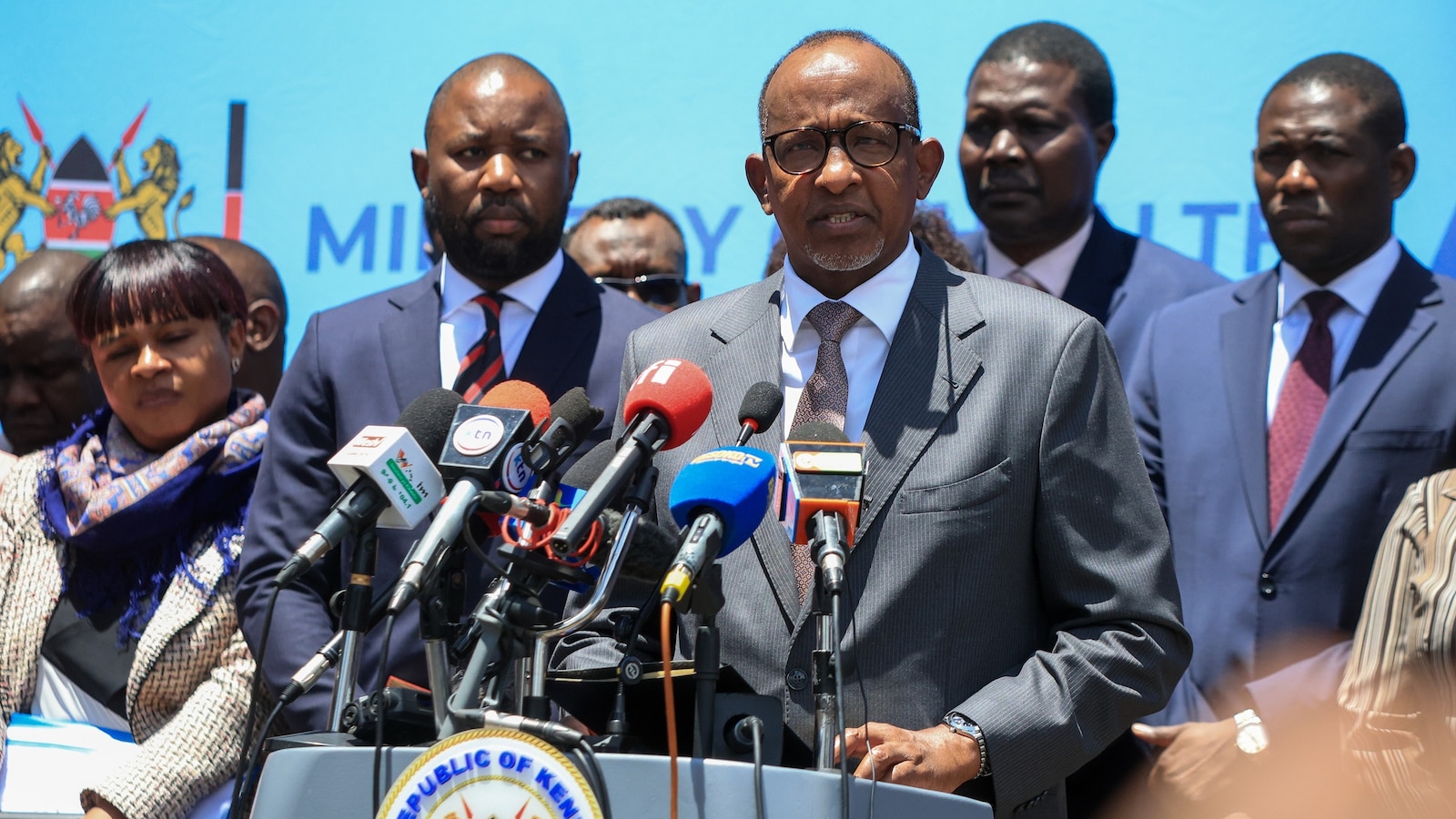
Kenyan Health Minister Aden Duale told reporters that the Kenyan patient, who has not been named, first became sick one month ago in the DRC, where they had been living for several years, and was treated there.
asserted
they → tell → years
On October 2, the patient travelled by road to the Ugandan capital, Kampala, via Beni, then flew to Nairobi, arriving the next day.
asserted
patient → travel → Nairobi
After he arrived at the airport in Kenya, a relative and a friend took him to a hospital, where he was quickly isolated, and tests showed he had the virus, Duale said.
asserted
Duale → arrive → virus
Despite receiving care, the patient died from the virus on Monday and was buried on Tuesday in line with the country’s Ebola protocol.
asserted
patient → receive → protocol
So far, health authorities in Kenya have identified 28 potential contacts, including family members and health workers who cared for the infected patient.
asserted
who → identify → patient
Authorities are also separately tracking 23 passengers and four crew members from his flight, “with arrangements underway for appropriate follow-up and quarantine of people assessed to be at risk”, the WHO reported.
asserted
WHO → track → risk
Jean Bisimwa Nachenga, a professor in infectious diseases at Stellenbosch University, emphasised that the virus does not “respect national borders.”
asserted
virus → emphasise → borders
“Population mobility, displacement, cross-border trade, and fragile healthcare systems make containment particularly challenging.
asserted
containment → make → ?
In eastern DRC, ongoing insecurity further complicates surveillance, contact tracing, and access to affected communities,” he told Al Jazeera.
asserted
he → complicate → Jazeera
How did a sick patient get past screening in both Uganda and Kenya?
asserted
patient → get → Uganda
Passengers travelling to, from or through Uganda and Kenya have to pass multiple airport temperature checks and complete at least two digital forms intended to flag any potential exposure to the virus in the DRC.
asserted
Passengers → travel → DRC
Somehow, the infected person in this case was missed by these checks.
asserted
person → miss → checks
Ugandan government spokesperson Alan Kasujja said Kampala was not to blame for the Kenyan man catching the virus and wrote on X, “Leave Uganda out of this conversation.
asserted
Kampala → say → conversation
We don’t have Ebola here.”
asserted
We → have → Ebola
In a statement issued on Tuesday, the Ugandan Ministry of Health said the man had a “normal temperature” when he was screened at the Entebbe airport before his departure.
asserted
he → issue → departure
Kenyan authorities say he may have taken medication to mask his symptoms when he was later screened at Nairobi airport.
uncertain
he → say → airport
Investigations are continuing, however.
asserted
Investigations → continue → ?
“We are trying to retrieve the digital form he would have filled out at Entebbe airport when he went through the thermal scanning process to see what he declared in that form.
asserted
he → try → form
The form includes questions about recent health problems but also whether a traveller was recently in DRC,” Richard Mugahi, a senior Ugandan health official, told the Reuters news agency.
asserted
Mugahi → include → agency
“We are also going through airport security camera footage to see if we can identify the driver who dropped him at the airport so we can trace any contacts here.”
asserted
we → go → contacts
Preiser also said the tracking system “seems to work as it did in Uganda,” with a diagnosis made rapidly as soon as the patient sought care in Kenya.
asserted
patient → say → Kenya
“It will be instructive to try and trace back what happened at the various stops during his travels, and lessons should be heeded by all countries,” he said.
asserted
he → try → countries
…and 30 more, not listed.
 The Aporia