Why South Korea and Ukraine Are Fighting Over Two Prisoners of War

Read the original at TIME ↗
TIME · collected 2026-10-09 · by Andrew Yeo
Content note This article describes suicide or self-harm.

Quick Summary

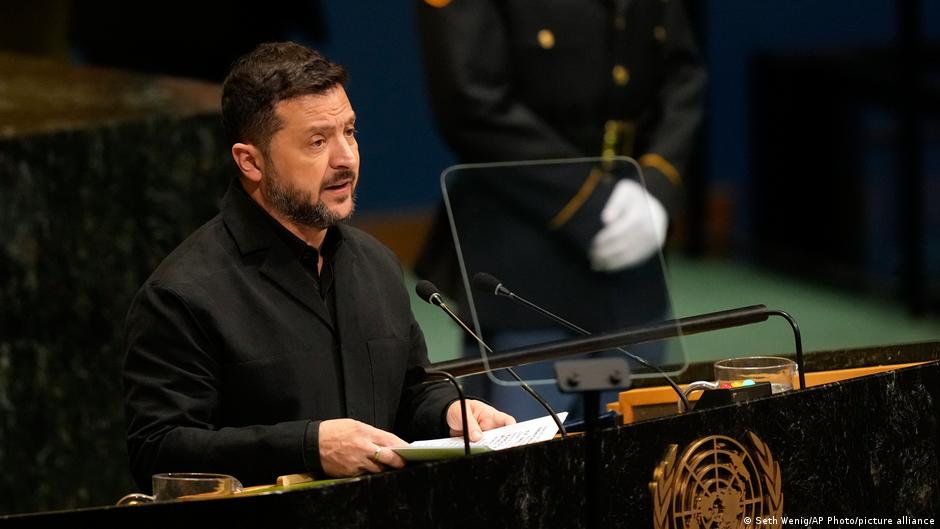
President Volodymyr Zelensky revealed during his UN speech on September 23 that two North Korean prisoners of war captured in the Kursk region in January 2025 had been transferred to South Korea. This disclosure sparked a diplomatic dispute between Ukraine and South Korea, with Seoul recalling its ambassador to Ukraine over the breach of confidentiality. The incident highlights complex geopolitical dynamics involving Russia, Ukraine, North and South Korea, and raises concerns about the human rights implications for the families of captured North Korean soldiers who may face severe punishment under their regime.
Written locally by qwen2.5:14b on 2026-10-09, using this article's own text rather than the other coverage of the same event (that is the story summary below).

AI analysis runs on qwen2.5:14b, locally

Story summary

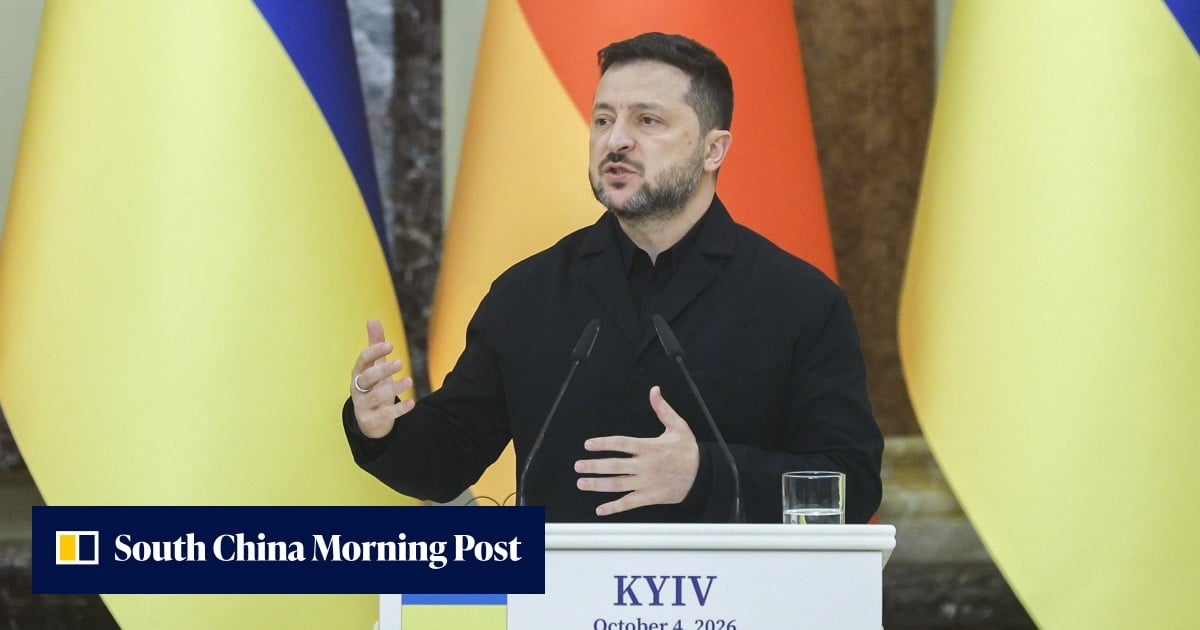
In January 2025, Ukraine captured two North Korean soldiers fighting alongside Russia against Ukraine. These soldiers later expressed a desire to relocate to South Korea, which was agreed upon and quietly arranged in September of that year. However, during his speech at the UN General Assembly, Ukrainian President Volodymyr Zelensky publicly announced this transfer, leading South Korea to accuse Ukraine of breaching a confidentiality agreement meant to protect both the soldiers and their families still in North Korea.

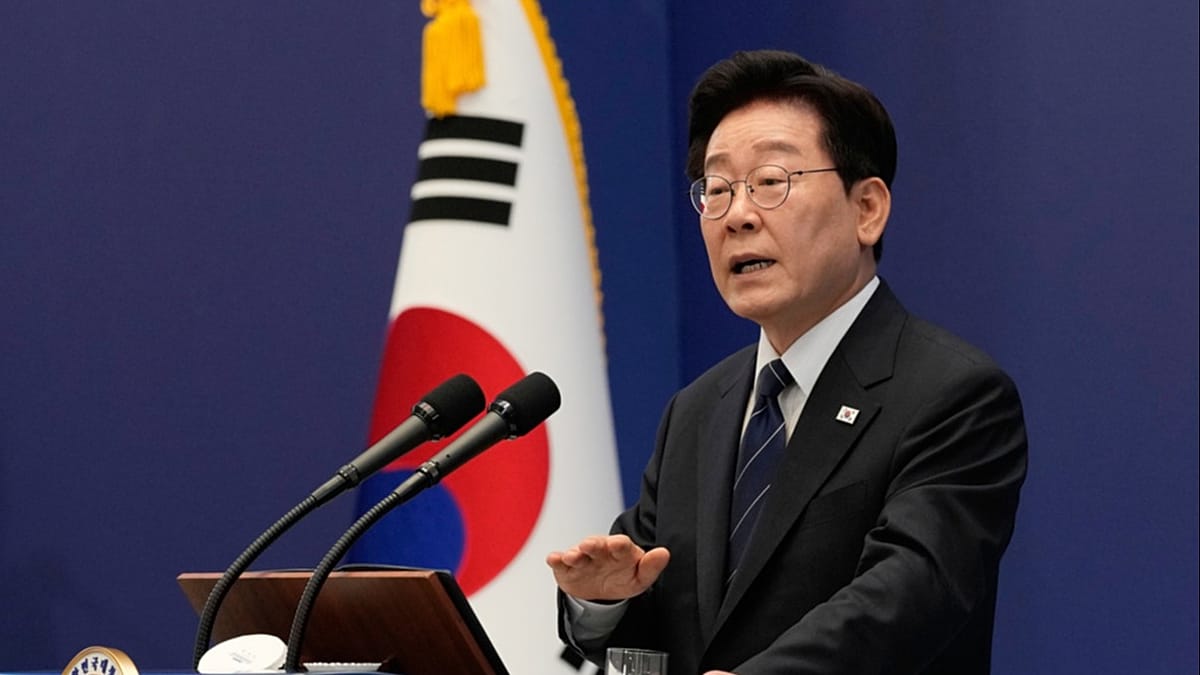
Seoul contends that revealing the soldier transfer could endanger family members in North Korea due to harsh punishments meted out to relatives of defectors. In response, South Korean President Lee Jae Myung called for an apology from Ukraine, threatening unspecified punitive measures if not received. The Ukrainian side denied ever agreeing to a non-disclosure pact and termed it a "diplomatic misunderstanding." As tensions escalated, South Korea announced on Thursday that it would recall its ambassador to Ukraine in protest of the disclosure.

Despite Seoul's decision to escalate diplomatic actions, Ukrainian Foreign Ministry spokesperson Heorhii Tykhyi stated Kyiv remains open to "constructive dialogue" with South Korea. The move highlights complex geopolitical dynamics involving North and South Korea as well as their respective international allies and adversaries in the ongoing conflict between Ukraine and Russia.

Written for “South Korea Ukraine Diplomatic Row POWs” on 2026-10-09, grounded in this article and the 7 other(s) covering the same event.
Why this leaning score
The article's own words the score was based on. Each is quoted verbatim and was checked against the article text before being stored, so you can find it in the original.
Reading Leans left (beta estimate) Confidence medium
Leaning: leans left for article 68247 (medium confidence, 2 verified quotes) · logged 2026-10-09

Signals How these are calculated →

Claims extracted
52
claim-shaped sentences
Uncertain
15%
8 of 52 hedged
Leaning
Leans left
of the writing, not the subject · beta estimate
Correction & hedging signals
59.7
corrections and hedging in what we collected; not a measure of accuracy
Outlets on this story
8
World
Narrative spread
1
articles carrying this framing
Analyzed 2026-10-09 · how these are computed

Story

📰 South Korea Ukraine Diplomatic Row POWs
World · 8 article(s) covering the same event. See how they differ ↓

How this is being covered How these are calculated →

Article leaning vs. publisher reliability
Source leaning vs. consistency

Compared with similar articles

This article reads leans left and hedges 15% of its claims. Each row says how that neighbour differs.
Washington Examiner
⚖️ Leans left 🔴 6% hedged 2 of 35 📰 publisher trust 72
“Both articles describe President Volodymyr Zelensky's announcement at the U.N. General Assembly about transferring two North Korean soldiers to South Korea, which escalated a diplomatic dispute between Ukraine and South Korea.”
South China Morning Post
⚖️ Leans right further right than this 🔴 17% hedged 1 of 6 📰 publisher trust 67
“The articles discuss different aspects of interactions involving Russia, North Korea, and Ukraine - one about technology sharing and another about prisoners of war.”
Al Jazeera
⚖️ leaning not scored 🔴 14% hedged 2 of 14 📰 publisher trust 60
“The articles discuss different aspects of relations between South Korea, Ukraine, and Russia: one about potential illegal fuel exports to Russia and legal action, while the other is about the diplomatic dispute over North Korean POWs transferred by Ukraine to South Korea.”
BBC News
⚖️ leaning not scored 🔴 11% hedged 2 of 18 📰 publisher trust 72
“Both articles describe the recall of the South Korean ambassador to Ukraine due to the disclosure of transferring two North Korean prisoners of war to South Korea, stemming from Zelensky's announcement at the UN General Assembly.”
Deutsche Welle
⚖️ leaning not scored 🔴 10% hedged 1 of 10 📰 publisher trust 95
“Both articles discuss the recall of South Korea's ambassador to Ukraine following President Zelenskyy's UN speech about transferring North Korean POWs, indicating they describe the same diplomatic incident.”
ABC News (AU)
⚖️ leaning not scored 🔴 15% hedged 3 of 20 📰 publisher trust 61
“Article A reports on the recall of South Korea's ambassador to Ukraine as tensions escalate, while Article B discusses the initial revelation by President Zelensky about transferring North Korean prisoners to South Korea, which is a different specific occurrence.”
Euronews
⚖️ leaning not scored 🔴 20% hedged 4 of 20 📰 publisher trust 60
“Both articles discuss President Volodymyr Zelenskyy's revelation of transferring two North Korean prisoners of war to South Korea, which led to diplomatic tensions between Ukraine and South Korea.”
Euronews
⚖️ leaning not scored 🔴 4% hedged 1 of 24 📰 publisher trust 60
“While both articles discuss the recall of the South Korean ambassador to Ukraine due to a prisoner repatriation issue, Article A focuses on the actions and reactions after the incident, while Article B provides context about why President Zelensky disclosed information about North Korean prisoners.”
Al Jazeera
⚖️ leaning not scored 🔴 7% hedged 1 of 14 📰 publisher trust 60
“The articles describe related events, but Article A focuses on South Korea's decision to recall its ambassador following a diplomatic row over POWs, while Article B provides context and details about the initial revelation by Zelensky at the UN General Assembly.”

Publisher

TIME · 517 article(s) · 1 correction(s) detected
Running correction rate · 1 correction(s)
2026-09-17
Kerry James Marshall

Who wrote this

Andrew Yeo
1 article(s) here · 1 carrying a prediction
🔮 He seemed to be trying to highlight the global reach of Russia’s war and also hoping that the revelation would increase popular and political support in Seoul for providing weapons and aid to Ukraine.
The only article under this byline in the corpus.

Topics

North Korea North Korean Russia Seoul Ukraine

Subjects

Ukraine GPE · 9× North Korean NORP · 8× Seoul GPE · 8× South Korea GPE · 6× Kyiv GPE · 5× North Korea GPE · 5× Russia GPE · 5× Zelensky PERSON · 3× European NORP · 2× Ukrainian NORP · 2×

Narrative

In his address to the UN General Assembly, President Lee Jae Myung of South Korea reiterated his vision of inclusive, peaceful coexistence built on “respect for each other’s systems” and the restoration of cross-border trust with North Korea.
framing: assertive · carried by 1 article(s) · first seen 2026-10-09
🔮 He seemed to be trying to highlight the global reach of Russia’s war and also hoping that the revelation would increase popular and political support in Seoul for providing weapons and aid to Ukraine.

Claims (52 extracted, 8 hedged)

On Sept. 23, President Volodymyr Zelensky of Ukraine spoke at the UN General Assembly about the military support Russia was getting from North Korea and the deaths of North Korean soldiers on the Ukrainian front. asserted
Russia → speak → front
“Recently, we sent two North Korean prisoners of war to the Republic of Korea,” he revealed. asserted
he → send → Korea
He seemed to be trying to highlight the global reach of Russia’s war and also hoping that the revelation would increase popular and political support in Seoul for providing weapons and aid to Ukraine. asserted
revelation → seem → Ukraine
Zelensky ended up igniting a diplomatic dispute between Ukraine and South Korea. asserted
Zelensky → end → Ukraine
Seoul claimed that Ukraine had agreed to keep the transfer confidential; Kyiv denied that such an agreement existed and downplayed the episode as a misunderstanding. asserted
agreement → claim → misunderstanding
Now South Korea is recalling its ambassador to Ukraine. asserted
Korea → recall → Ukraine
The quarrel over diplomatic protocol highlights the human cost paid by two soldiers caught in a geopolitical conflict linking European and Northeast Asian security. asserted
quarrel → highlight → security
Their story captures the complicated geopolitics of the two Koreas now playing out on a European battlefield. asserted
story → capture → battlefield
It also underscores South Korea’s push for inter-Korean peace, even as North Korea tests Seoul’s patience by launching hypersonic missiles and planting landmines. asserted
Korea → underscore → landmines
The men from North Korea The two soldiers at the center of the dispute were captured while fighting in the Kursk region of Russia in January 2025. asserted
soldiers → capture → January
They were part of a 10,000-strong North Korean contingent reinforcing Russian troops on the front line. asserted
They → reinforce → line
Shortly after their capture, Ukraine’s military released video footage of the two soldiers. asserted
military → release → soldiers
The images helped confirm North Korea’s direct involvement in the Russia-Ukraine war. asserted
images → help → war
Human Rights Watch raised concerns about Ukraine’s decision to release the video and expose the soldiers, given the potential repercussions for their families in North Korea, including torture, forced labor, imprisonment, or execution. asserted
Watch → raise → torture
North Korean soldiers are instructed to take their own lives rather than risk capture. asserted
soldiers → instruct → capture
One of the captured soldiers reportedly attempted suicide before a Ukrainian medic stopped him. uncertain
medic → capture → him
In North Korea’s eyes, a soldier who survives by surrendering, or worse by defecting to the South, is a traitor. asserted
who → survive → South
Under the regime’s well-documented system of collective punishment, three generations of a defector’s family can face retribution through guilt by association. asserted
generations → document → association
By revealing the prisoner of war transfer to South Korea in New York, Zelensky offered Pyongyang an incentive to make an example of these soldiers’ families to demonstrate the consequences of defection. asserted
Zelensky → reveal → defection
This stands in stark contrast to the regime’s response to the deaths of North Korean soldiers in Russia. asserted
This → stand → Russia
Kim Jong Un, the leader of North Korea, promised their surviving families a “beautiful life” and granted them new luxury apartments. asserted
Un → promise → apartments
The North Korean regime may have already tracked down the families of the prisoners of war after Ukraine confirmed their capture in January 2025. uncertain
Ukraine → track → January
But Zelensky’s disclosure at the United Nations renewed the danger facing the two soldiers now resettled in South Korea, a point Seoul highlighted in its protest to Kyiv. asserted
Seoul → renew → Kyiv
A life in South Korea offers these soldiers personal safety, but one could imagine it might come at a crushing cost: abandoning their homes and living with the guilt that their families may suffer in their place. uncertain
families → offer → place
Mending the rupture between Seoul and Kyiv If this episode were only about the two North Korean soldiers, their resettlement might have passed unnoticed. uncertain
resettlement → mend → soldiers
The diplomatic kerfuffle between Kyiv and Seoul is rooted in the different geopolitical narratives that each nation seeks to project, or in Seoul’s case, downplay. asserted
nation → root → case
For Ukraine, publicizing the presence and resettlement of North Korean prisoners of war provides a valuable opportunity to solicit support from South Korea, a major arms exporter and a vital partner to NATO. asserted
publicizing → publicize → NATO
Since 2022, Kyiv has been urging Seoul to supply it with lethal weapons, including Patriot interceptors and 155mm artillery shells. asserted
Kyiv → urge → interceptors
In light of Pyongyang’s direct military support for Moscow, Ukraine has intensified pressure on South Korea to move beyond non-lethal military, humanitarian, and economic assistance. asserted
Ukraine → intensify → assistance
For South Korea, Ukraine’s public disclosure of the resettlement of these soldiers undermines its diplomatic outreach to North Korea. asserted
disclosure → undermine → Korea
In his address to the UN General Assembly, President Lee Jae Myung of South Korea reiterated his vision of inclusive, peaceful coexistence built on “respect for each other’s systems” and the restoration of cross-border trust with North Korea. asserted
Myung → reiterate → Korea
Accepting North Korean soldiers while publicly promoting dialogue weakens Lee’s reassurances to Pyongyang that Seoul desires “stable, peaceful coexistence.” asserted
Seoul → accept → coexistence
Pyongyang has maintained silence regarding these two soldiers. asserted
Pyongyang → maintain → soldiers
But North Korea considers South Korea’s reception of defectors as part of an effort to undermine its regime and eventually bring about unification on Seoul’s terms. asserted
Korea → consider → terms
While North Korea now defines the Koreas as two separate states, article four of South Korea’s constitution commits the nation to “peaceful unification based on the basic free and democratic order.” asserted
article → define → order
As two nations dedicated to promoting freedom and democratic principles, South Korea and Ukraine must look beyond this diplomatic disagreement to protect their partnership. asserted
Korea → dedicate → partnership
Seoul provided $400 million in aid to Ukraine in 2024 and announced $2.3 billion in long-term reconstruction aid through 2027. asserted
Seoul → provide → 2027
In return, Ukraine offers critical, real-world intelligence on North Korean military tactics and the weapons technology Pyongyang receives from Russia. asserted
Pyongyang → offer → Russia
Given the complex legal situation of North Korean combatants captured by Ukrainian forces, Kyiv and Seoul must establish a protocol for handling North Korean prisoners of war and non-combatant defectors who seek asylum in South Korea. asserted
who → give → Korea
The need for such a policy will only grow. asserted
need → grow → policy
…and 12 more, not listed.

💬Give feedback
🕘History 🎫Support