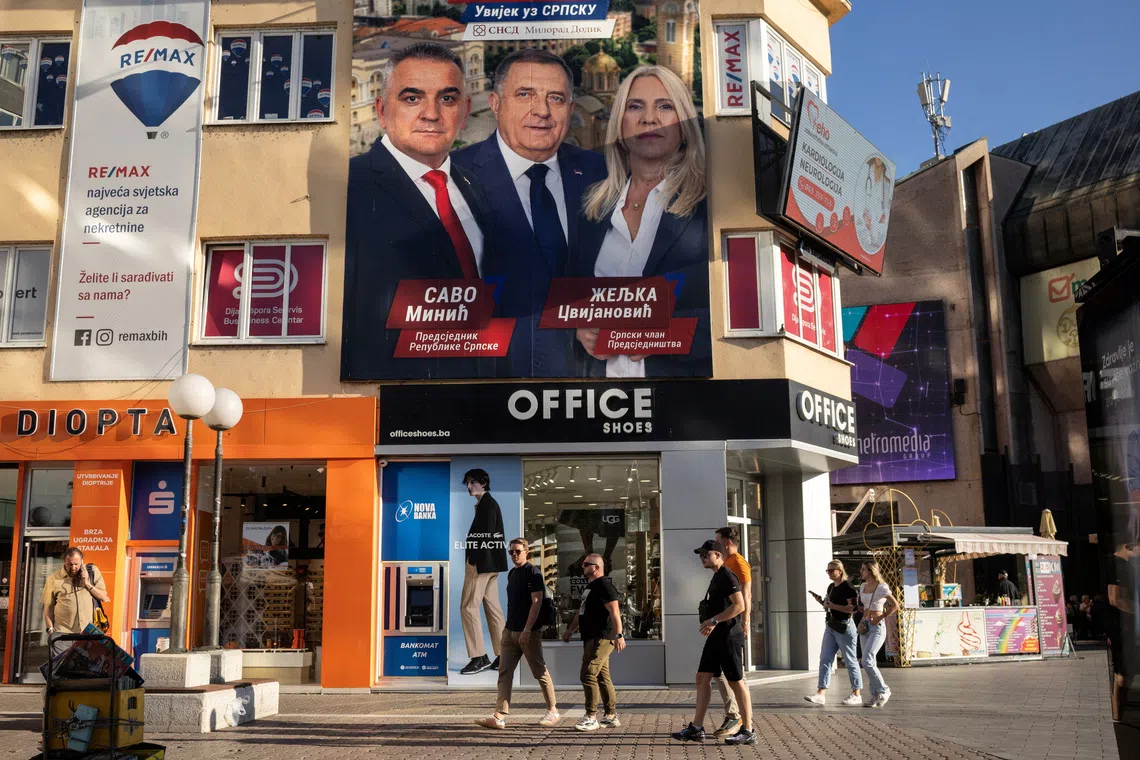
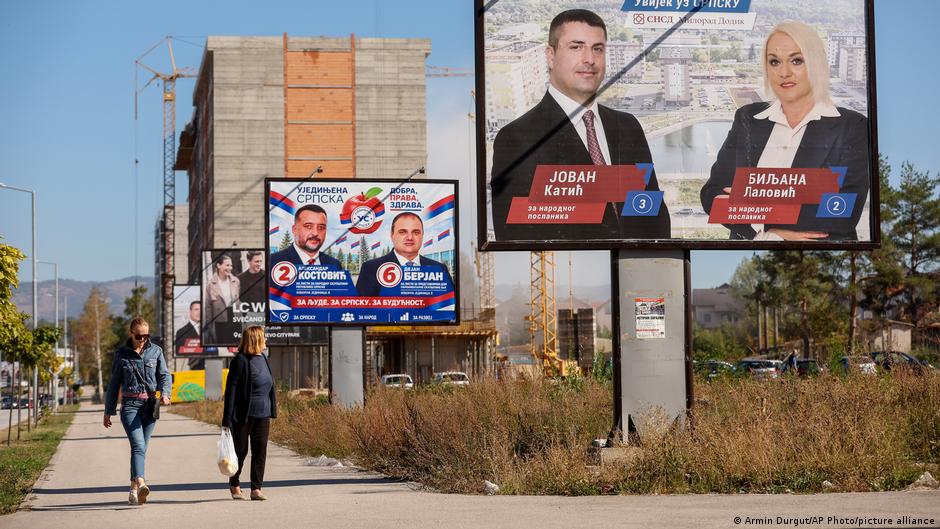
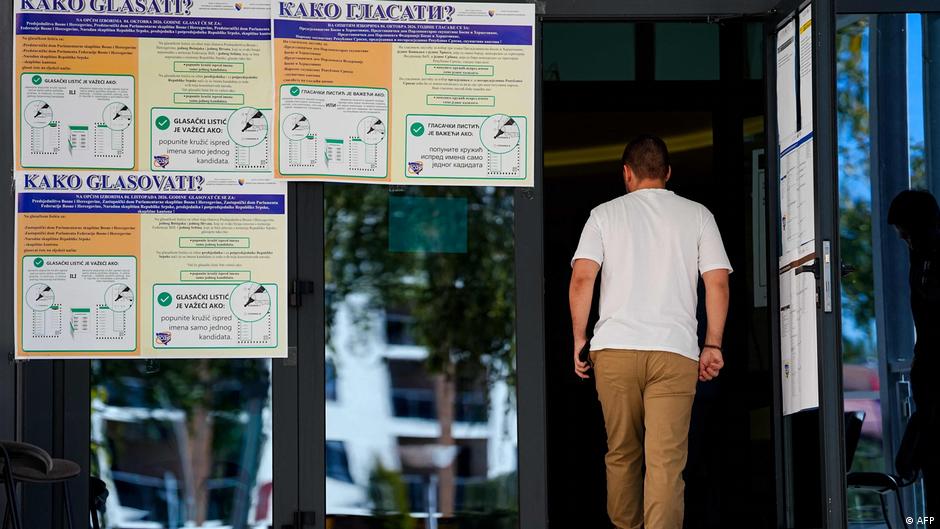
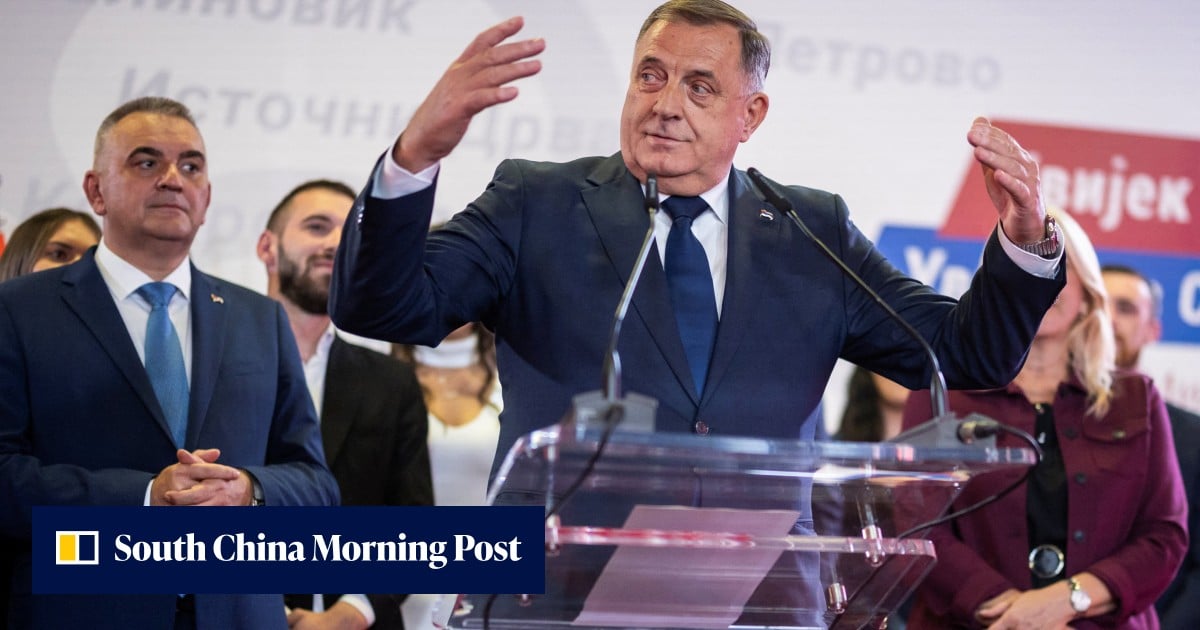
The latest general elections in Bosnia and Herzegovina, held on October 4, repeated a pattern familiar from most electoral contests over the past three decades.
asserted
elections → hold → decades
The decisive victory of parties organised largely along ethnic lines – which many would rightly describe as nationalist – came as no surprise.
asserted
many → organise → surprise
It is therefore difficult to disagree with analysts and experts who say the country has been set back 30 years and faces an even grimmer future.
asserted
country → disagree → future
The last two years have seen arguably the greatest crisis of the post-war period, and the results of Sunday’s elections offer little hope for improvement in the coming years.
asserted
results → see → years
The spectre of nationalism, division and overt assaults on the country’s sovereignty and territorial integrity reinforces the increasingly common notion that a “continuation of the war by peaceful means” is under way – meaning that while armed conflict ceased three decades ago, hostilities, objectives and the struggle for power persist through political, economic, diplomatic and information channels.
asserted
hostilities → reinforce → channels
House of Peoples still in the hands of anti-Bosnian forces
The extremely complicated Bosnian electoral system – one state, two entities, Brcko District, three constituent peoples, 10 cantons and 144 cities and municipalities – should perhaps be studied in law schools as an excellent example of how to create a dysfunctional state.
asserted
system → study → state
The only thing more difficult – pessimists would say impossible – is explaining to future lawyers, sociologists and political scientists how governments are formed after an election – from cantonal assemblies, through entity institutions to state institutions, including the omnipotent House of Peoples of the Parliamentary Assembly of Bosnia and Herzegovina – itself almost impossible to explain.
asserted
itself → say → Bosnia
This House of Peoples has been the main tool for blocking the country’s path towards the European Union and NATO over the past two years.
asserted
House → block → years
Delegates from the Croatian Democratic Union of Bosnia and Herzegovina (HDZ BiH) and the Alliance of Independent Social Democrats (SNSD) – the dominant party in Republika Srpska for the past two decades – have repeatedly worked in tandem to block the work of the chamber, leaving sessions and breaking quorum when the agenda did not suit them – often when some of the most important issues were being decided.
asserted
some → work → issues
In Sunday’s elections, these two parties once again secured a significant share of the Croat and Serb vote at both the entity and state levels; they will once again be the ones whose input is sought when the new government is formed, and they will again hold at least three delegates each in the state-level House of Peoples.
asserted
they → secure → Peoples
And – logically and predictably – they will dictate the options, rules and laws that suit their own interests.
asserted
that → dictate → interests
This can readily be interpreted as a “continuation of war by peaceful means”, or, more simply put: the EU will have a long wait before the small, impoverished, increasingly depopulated and beleaguered state known as Bosnia and Herzegovina knocks on its “open door” – an offer and promise made more in words than in deeds for the past 20 years – and steps inside.
Pro-Bosnian parties – at odds and self-absorbed
And what is the third constituent segment – pro-Bosnian or Bosniak, depending on one’s interpretation – to do in such circumstances?
asserted
segment → interpret → circumstances
How can its parties translate what is largely verbal patriotism and concern for the people and the state into actual practice?
asserted
what → translate → practice
Yet this country has endured far worse situations in the not-too-distant past – aggression, ethnic cleansing, war crimes, genocide, and the indifference and lack of empathy of a significant part of the so-called international community – and Bosnians and Herzegovinians are not about to simply give up and renounce their 1,000-year-old homeland.
asserted
country → endure → homeland
The pro-Bosnian/Bosniak parties – and there are dozens of them – are deeply divided, at odds with one another and power-hungry; many have – to put it mildly – questionable leadership and are associated with dishonourable deeds and ideas.
asserted
many → be → deeds
They now stand at a critical juncture.
asserted
They → stand → juncture
If they persist with a policy of “as long as we are doing well”, then neither internal nor external enemies – and such enemies do exist; they have neither been defeated nor diminished in number compared with the bloody 1990s – will be needed to bring about our ruin.
asserted
they → persist → ruin
The “state-building” Party of Democratic Action appears set to return to power once again – owing more to the incompetence of three parties from across the ideological spectrum, which appear set to head back into opposition, than to its own expertise, wisdom or quality – and it has the opportunity, if nothing else, to at least try to fix the very mess it is primarily responsible for creating.
asserted
it → build → mess
For those who know the party and have lived through (or rather, survived) what it has delivered so far – promising much but delivering little – there is little room for optimism; yet, it won the largest share of the vote in the Federation of Bosnia and Herzegovina (FBiH), and that electoral will must be respected.
asserted
will → know → Bosnia
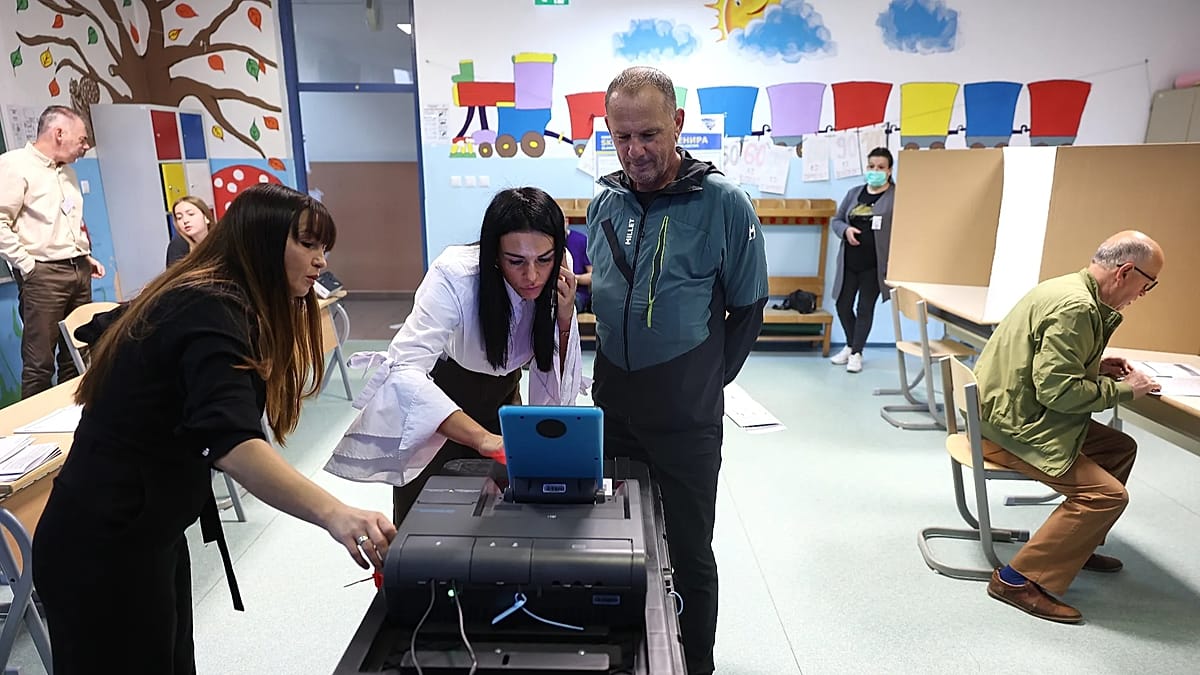
In the shadow of the traditional dirty pre-election campaign, polling stations equipped for the first time with modern technologies (for us, electronic ballot scanning and election results announced just hours after the polls close represent the height of progress), and the months of negotiations, coalition-building and intraparty agreements – read: trading – that now lie ahead, there remain the poor, the sick and the hopeless, a ruined society and a devastated economy.
asserted
that → equip → negotiations
While neighbours Serbia and Croatia are rapidly arming themselves, spending billions of dollars on fighter jets, drones, missiles and other weapons systems, Bosnia has a small army of about 10,000 professional personnel, nominally unified but divided in practice.
asserted
Bosnia → arm → practice
On the contrary, the border police and the prosecutor’s office remain politically captured by forces whose loyalties appear to lie more with neighbouring Serbia and Croatia than with Bosnia itself.
asserted
loyalties → capture → Bosnia
Meanwhile, the United States is gradually stepping back from its unwritten role as Bosnia’s protector – although it still stands by the Dayton Peace Agreement and emphasises the country’s sovereignty and territorial integrity – and increasingly favours pragmatic, particularly financial, interests.
asserted
it → step → interests
The EU, meanwhile, does not seem to know what to do with itself, let alone with little Bosnia.
asserted
EU → seem → Bosnia
It expects reforms and European laws from the domestic authorities, both old and new, while knowing they are unlikely to arrive any time soon.
asserted
they → expect → authorities
Yet there is a recipe for that too: to begin with, the EU could ask member state Croatia to tell its sister party, HDZ BiH, to stop supporting those seeking to dismantle the very state whose citizenship and passports they hold.
uncertain
they → be → citizenship
The poorest and leading in organised crime and corruption
Bosnia is one of the poorest European countries and among those worst affected by organised crime and corruption.
asserted
Bosnia → lead → crime
No one knows how many people live there, because the last census, carried out in 2013, remains disputed.
asserted
census → know → 2013
Official turnout in Sunday’s elections was just more than 40 percent, calculated against an electoral roll of 3.4 million voters, even though estimates suggest fewer than 2.5 million people actually live in the country, suggesting turnout among residents was considerably higher.
asserted
turnout → calculate → residents
Hundreds of thousands of people, many of them young and educated, have left for prosperous countries around the world in recent years.
asserted
many → educate → years
They just want a normal life and no longer bother with the painful question that has preoccupied the country for decades: Can Bosnia “survive” the return to power of three nationalist parties at a time when they have fewer and fewer friends in a fundamentally changing world?
asserted
they → want → world
The views expressed in this article are the author’s own and do not necessarily reflect Al Jazeera’s editorial stance.
asserted
views → express → stance
 The Aporia