Bosnia and Herzegovina’s general election did not bring about many surprises in voter trends, but some developments could change the country’s political atmosphere, analysts have told Al Jazeera.
uncertain
analysts → bring → Jazeera
Most voters on Sunday moved further along ethnic lines, turning away from the idea of a civic society that gained momentum in the previous election when the centre-right Bosniak Party of Democratic Action (SDA) did not participate in the state government.
asserted
Party → move → government
Recommended Stories
list of 4 items- list 1 of 4Bosnia’s elections explained
- list 2 of 4Dodik declared Bosnia ‘dead’.
asserted
Bosnia → explain → 4Dodik
Irrelevant rhetoric or serious threat?
- list 3 of 4Dodik urges Serb turnout against ‘Sarajevo crooks’ in Bosnia election
- list 4 of 4Bosnian Serb nationalist claims party victory in Bosnia elections
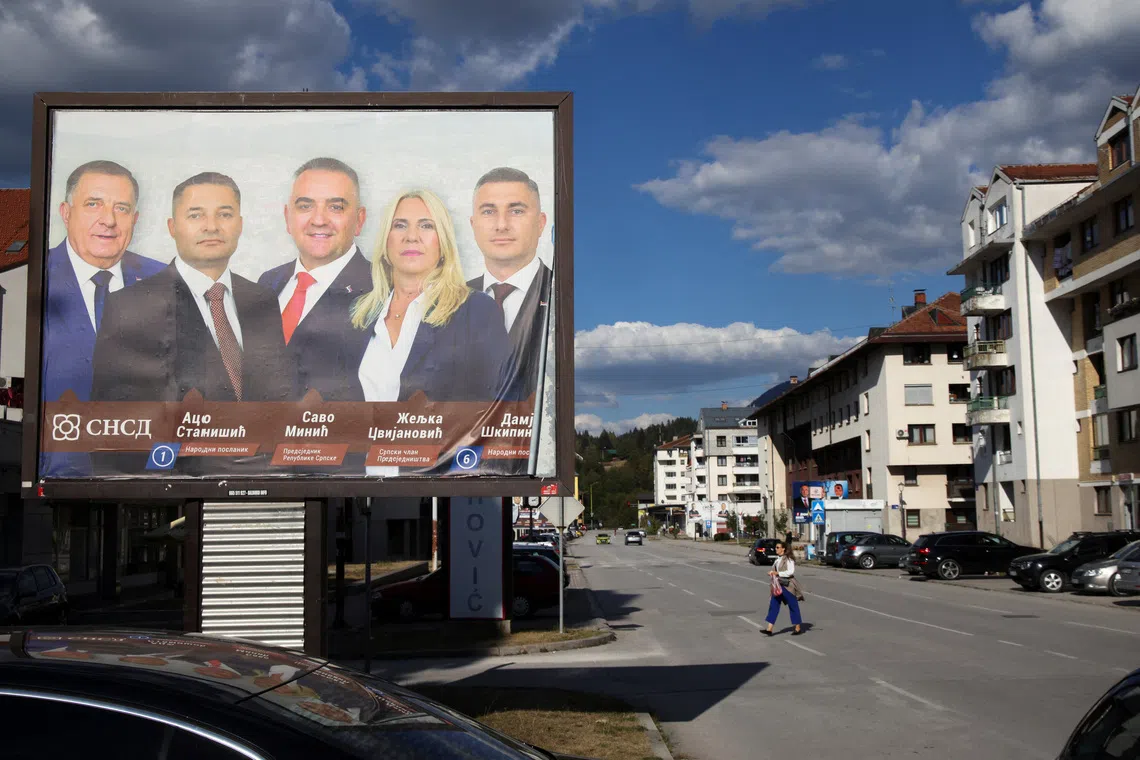
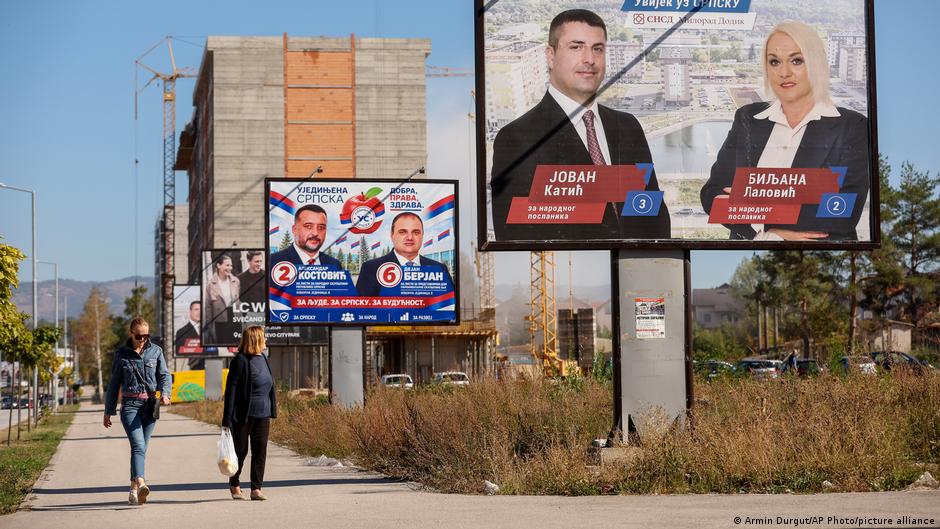
This trend has long been a fixture in the Bosnian entity of Republika Srpska, where Milorad Dodik’s Alliance of Independent Social Democrats (SNSD) once again swept aside its competition in Sunday’s elections.
Voters in the Federation of Bosnia and Herzegovina elected a candidate of the Croatian Democratic Union of Bosnia and Herzegovina (HDZ BiH), Darijana Filipovic, to the state presidency; for eight years that seat had been held by Zeljko Komsic of the Democratic Front, a civic-oriented party.
uncertain
seat → urge → Front
Sacir Filandra, a professor of political science at the University of Sarajevo, said the results were in line with a broader pattern – the strengthening of conservative forces in an uncertain European environment marked by “rising walls” and fear.
asserted
results → say → walls
“We are witnessing the strengthening of conservative views and the revival or consolidation of political right-wing forces as part of wider European trends,” Filandra told Al Jazeera.
asserted
Filandra → witness → Jazeera
“In these times of crisis and transition, that trend has also reached us, which is why nationalist and conservative parties have gained greater prominence.
asserted
parties → reach → prominence
The clearer picture of what comes next will emerge only after parties negotiate coalitions and form governments.
asserted
parties → come → governments
“In our society, political parties reflect longstanding divisions within society,” Filandra said.
asserted
Filandra → reflect → society
“The situation is highly conservative, status quo prevails and politics has been reduced to a redistribution of power.
asserted
politics → prevail → power
It was not realistic to expect encouraging breakthroughs in terms of political reconciliation”, he added.
asserted
he → expect → reconciliation
Changes in the presidency
During the years Komsic held the seat, the nationalist Croat leadership headed by Dragan Covic complained that Croats were being outvoted by Bosniaks, who helped Komsic to win the seat twice in a row.
asserted
Komsic → hold → row
Under Bosnia’s electoral system, Croat and Bosniak members of the state presidency are elected in the Federation of Bosnia and Herzegovina, with every citizen, regardless of nationality, entitled to vote for any of the candidates.
asserted
citizen → elect → candidates
Over the past eight years, many Bosniaks have cast their ballots for Komsic, who was running for the Croat seat.
asserted
who → cast → seat
It could be argued that Filipovic’s victory is the most significant shift.
uncertain
victory → argue → ?
The results mean that the only member of Bosnia and Herzegovina’s tripartite presidency representing a declared multi-ethnic political orientation will be Bosniak Denis Becirovic, of the Social Democratic Party (SDP) and its partners, who won a second term in the state presidency.
However, with Filipovic and Zeljka Cvijanovic, the candidate of Dodik’s hardline Serb nationalist SNSD, on the presidency, the national interests of Bosnia and Herzegovina’s constituent peoples are likely to play a much greater role than they have over the past eight years.
asserted
they → mean → years
The elections for the state and entity parliaments, as well as cantonal assemblies, also saw the SDA perform – it was the leading party in the Federation of Bosnia and Herzegovina in terms of the number of votes won, alongside traditionally strong performances by HDZ and SNSD.
asserted
it → see → HDZ
HDZ secured a convincing victory among Croat voters, while Dodik’s party won the largest number of votes in both the entity and state parliamentary elections.
asserted
party → secure → elections
Over the past eight years, HDZ BiH leader Dragan Covic has warned of the “endangerment of Croats”, fuelled by Komsic’s victories over HDZ candidates in elections for the state presidency.
asserted
Covic → warn → presidency
These votes could usher in an end to the pattern that Covic described, with the election of the Croat member of the Presidency.
uncertain
Covic → usher → Presidency
Filipovic defeated Komsic’s preferred candidate, Slaven Kovacevic.
asserted
Filipovic → defeat → candidate
Covic publicly “thanked Bosniaks” for the outcome.
asserted
Covic → thank → outcome
The question now is how this change will affect the political environment in Bosnia.
asserted
change → affect → Bosnia
“Part of the public in Bosnia and Herzegovina is not unhappy with the outcome and sees the change as an opportunity to ease Croat-Bosniak relations,” historian and columnist Dragan Markovina told Al Jazeera.
asserted
Markovina → see → Jazeera
“I do not believe anything fundamental will change, but at least the atmosphere between political parties … could become less tense.”
uncertain
atmosphere → believe → parties
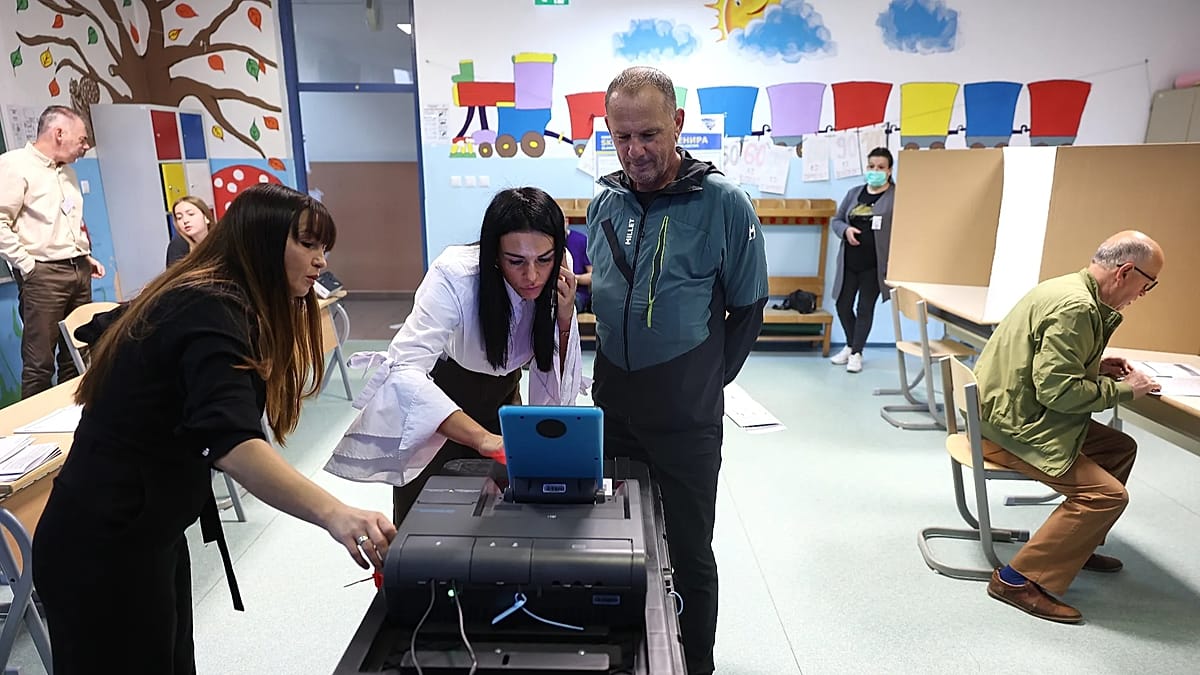
About 40 percent took to the polls, some 10 percent fewer than four years ago.
asserted
percent → take → polls
Some interpret that as growing apathy.
asserted
Some → interpret → apathy
Srecko Latal, an independent analyst, believes new technologies have also played a role, eliminating allegedly fraudulent ballots.
uncertain
technologies → believe → ballots
‘Worries’ for Bosnia’s future
Markovina believes the election results point clearly towards a possible coalition and the emergence of a new conservative axis between SDA, SNSD and HDZ, a scenario that evokes Bosnia’s political past.
asserted
that → believe → past
The dominance of the three conservative parties in post-war Bosnia has been associated with obstruction, political deadlock and ethnonationalist narratives that have hindered progressive processes.
asserted
that → associate → processes
Amid declining support for civic or multi-ethnic parties, the political balance is changing.
asserted
balance → decline → parties
“It would be fair to say that a coalition of SDA, SNSD and HDZ is likely to emerge.
asserted
coalition → say → SDA
Much of post-war Bosnia’s history has been spent with these parties in coalitions, and nothing has improved, nor has any fundamental problem been resolved,” said Markovina, expressing little optimism about the future.
asserted
Markovina → spend → future
“Bosnia is moving backwards,” Markovina believes.
asserted
Markovina → move → ?
“We are not the only ones who have nationalists.
asserted
who → have → nationalists
There are more and more of them around us (in Europe), and that is what worries me most when it comes to Bosnia’s future.”
asserted
it → be → future
 The Aporia