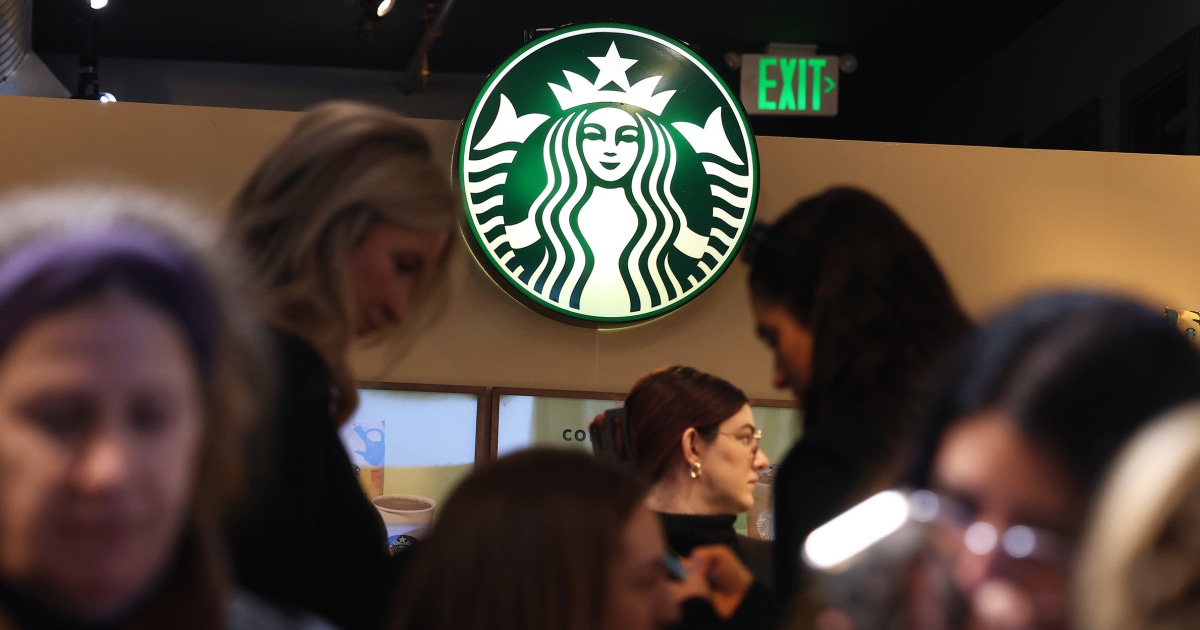
How much sugar is in these 'sugar-free' Starbucks protein drinks? As much as a candy bar, claims lawsuit

Read the original at CBC News ↗
CBC News · collected 2026-10-07 · by Natalie Stechyson

Quick Summary

A U.S. class-action lawsuit claims that Starbucks falsely advertised eight protein beverages as “sugar-free,” when each venti-size serving actually contains between 13 and 21 grams of sugar due to naturally occurring sugars in milk. The lawsuit, filed in Seattle federal court, argues that this misleading labeling capitalizes on consumer preferences for healthier options and nutritional clarity. Starbucks maintains its drinks are accurately labeled and intends to defend itself vigorously against the claims.
Written locally by qwen2.5:14b on 2026-10-07, using this article's own text rather than the other coverage of the same event (that is the story summary below).

AI analysis runs on qwen2.5:14b, locally

Story summary

A federal lawsuit filed in Seattle on Friday alleges that Starbucks mislabels eight of its protein drinks as "sugar-free" despite containing between 13 to 21 grams of sugar per serving. The plaintiffs include three consumers from California, New York, and Washington who purchased these drinks. For instance, a 20-ounce Sugar-Free Caramel Protein Matcha contains up to 21 grams of sugar, comparable to one Reese’s peanut butter cup (which has 11 grams). Hagens Berman filed the lawsuit on behalf of the consumers, arguing that Starbucks misleadingly markets these drinks. The firm contends this mislabeling is significant for consumers who avoid sugar due to health reasons or diabetes. Starbucks denies wrongdoing and states they provide clear nutritional information across their platforms.

Written for “Starbucks Sugar Free Drink Lawsuit” on 2026-10-08, grounded in this article and the 5 other(s) covering the same event.
Why this leaning score
This article does not take a side on a contested political question, so it has no leaning score. That is an answer rather than a gap: a match report or a rescue can be warmly or critically written without being left or right, and scoring it anyway is how approval of a subject gets recorded as a political position.
No political leaning scored for article 63816 · logged 2026-10-07

Signals How these are calculated →

Claims extracted
35
claim-shaped sentences
Uncertain
23%
8 of 35 hedged
Leaning
not political
takes no side on a contested political question
Correction & hedging signals
76.8
corrections and hedging in what we collected; not a measure of accuracy
Outlets on this story
6
Other
Narrative spread
1
articles carrying this framing
Analyzed 2026-10-07 · how these are computed

Story

📰 Starbucks Sugar Free Drink Lawsuit
Other · 6 article(s) covering the same event. See how they differ ↓

How this is being covered How these are calculated →

Article leaning vs. publisher reliability
Source leaning vs. consistency

Compared with similar articles

This article reads unscored and hedges 23% of its claims. Each row says how that neighbour differs.
Global News · 0.90 cosine similarity
⚖️ leaning not scored 🔴 15% hedged 3 of 20 📰 publisher trust 64
“Both articles report on the same federal class action lawsuit filed against Starbucks, alleging mislabeling of sugar-free protein drinks with significant sugar content.”
NBC News · 0.87 cosine similarity
⚖️ leaning not scored 🔴 14% hedged 2 of 14 📰 publisher trust 95
“Both articles report on the same federal lawsuit filed against Starbucks for misleading labeling of 'sugar-free' protein drinks, citing similar details about sugar content and drink types.”
New York Post
⚖️ leaning not scored 🔴 37% hedged 10 of 27 📰 publisher trust 66
“Both articles describe a proposed class-action lawsuit filed against Starbucks for allegedly mislabeling 'sugar-free' protein drinks as containing significant amounts of sugar.”
Toronto Star · 0.90 cosine similarity
⚖️ leaning not scored 🔴 11% hedged 2 of 18 📰 publisher trust 63
“Both articles describe the same federal lawsuit filed against Starbucks over mislabeling 'sugar-free' protein drinks as containing significant amounts of sugar.”
New York Post · 0.89 cosine similarity
⚖️ leaning not scored 🔴 3% hedged 1 of 35 📰 publisher trust 66
“Both articles describe the same U.S. class-action lawsuit against Starbucks alleging false advertising of 'sugar-free' protein drinks.”

Publisher

CBC News · 1042 article(s) · 4 correction(s) detected
Running correction rate · 4 correction(s)
2026-09-28
Alleged drug trafficker denied bail again in Toronto police corruption case
2026-09-19
She pressed charges against a Mountie for sex assault, but says court delays robbed her of justice
2026-09-17
Toronto cop charged in Project South allegedly didn't care if selling information harmed people
2026-09-15
Edmonton mayor calls for province to address release protocols after detainees dropped off in Chinatown

Who wrote this

Natalie Stechyson
23 article(s) here · 1 carrying a prediction
🔮 In a news release at the time, Starbucks noted its new protein drinks will be "available unsweetened or sugar-free and are designed to support customers looking to add protein to their order.
🔮 And then there are the people who might think, "Well, maybe no one will notice..." at a global event.
🔮 It's being compared to the 2017 #MeToo movement WARNING: This article references sexual assault and may affect those who have experienced sexual violence or know someone affected by it. They're saying it in videos posted on TikTok in solidarity, in Instagram posts where they hope to protect her identity, and in comments on Threads where they share their own harrowing experiences: "I am Jane Doe."
🔮 This article references sexual assault and may affect those who have experienced sexual violence or know someone affected by it.
🔮 "Where is the evidence that she did this?" defence lawyer Kevin Reddington said in a status conference Tuesday in part to determine whether there would be a retrial.
🔮 This article may affect those who have experienced sexual violence or know someone affected by it.
🔮 "Did I just hear that guy say, 'Did you forget something?'" Kuiper asks, as the two broadcasters joke that maybe he she didn't bring any ketchup.
🔮 "When Shedd was asked to help with this rescue, we understood that these animals arrived with significant vulnerabilities and that the outcome for every individual could not be guaranteed," the aquarium said in an update on its website Monday.
🔮 This should not have happened and we will do better."
🔮 Not sure Canada will," said the Sept. 11 photo originally posted by Jane Smith, the CEO of Saginaw-based Family First Credit Union, followed by "lol lol."
Also by Natalie Stechyson
Nothing else under this byline is closely related to this article, so these are simply their most recent.
All 23 articles by Natalie Stechyson →

Topics

CBC News Caramel Protein Matcha Seattle Starbucks U.S.

Subjects

Starbucks ORG · 11× U.S. GPE · 4× CBC News ORG · 2× @Starbucks ORG · 1× Canada GPE · 1× Canadian NORP · 1× Health Canada ORG · 1× Seattle GPE · 1× Starbucks Canada ORG · 1×

Narrative

"Despite knowing that Sugar-Free products contain milk, and knowing that this milk contains lactose, and knowing that this lactose is a sugar, and despite actually classifying this lactose as a sugar, Starbucks nonetheless calls these beverages 'Sugar-Free,'" the lawsuit says. "Starbucks calls these beverages 'Fugar-Free' because it knows that consumers rely on such representations when deciding what products to purchase." What are the consumer protection laws? U.S. federal law prohibits Starbucks from using "sugar-free" to describe beverages containing more than 0.5 grams of sugar per 12-ounce serving, the complaint said.
framing: mixed · carried by 1 article(s) · first seen 2026-10-07
🔮 In a news release at the time, Starbucks noted its new protein drinks will be "available unsweetened or sugar-free and are designed to support customers looking to add protein to their order.

Claims (35 extracted, 8 hedged)

As much as a candy bar, claims lawsuit U.S. lawsuit says coffee chain falsely advertised eight protein beverages as 'sugar-free' It's fair to say you probably have some idea what you're in for, sugar-wise, when you order a pumpkin spice latte or caramel macchiato from Starbucks. uncertain
you → claim → Starbucks
But what should you expect if you're ordering a drink that's labelled "sugar-free?" asserted
that → expect → drink
That's the question behind a proposed U.S. class-action lawsuit that claims the coffee chain falsely advertised eight protein beverages as "sugar-free," when they actually contain between 13 and 21 grams of sugar per venti-size serving due to the naturally occurring sugar in milk. uncertain
they → propose → milk
The lawsuit, filed Friday in a Seattle federal court and viewed by CBC News, accuses Starbucks of trying to capitalize on "the protein craze" and nutritional preferences of customers. asserted
lawsuit → file → customers
"By naming its beverages 'Sugar-Free,' Starbucks makes a specific, quantitative and verifiable claim about the nature of these beverages. uncertain
Starbucks → name → beverages
Consumers rely upon such claims when deciding to purchase such products," the lawsuit says "The 21 grams of sugar contained in a venti Sugar-Free Caramel Protein Matcha is roughly equal to five teaspoons of sugar. uncertain
grams → rely → sugar
This is almost as much total sugar as is contained in a standard Kit Kat bar." asserted
This → contain → bar
A screen grab of an Instagram post by Starbucks from Oct. 23, 2025, that advertises some protein beverages as sugar-free. asserted
that → advertise → beverages
A spokesperson for Starbucks told CBC News Wednesday they believe the lawsuit's claims have "no merit." " uncertain
claims → tell → merit
Starbucks has consistently and clearly provided information about its protein beverages, sugar-free options, customization choices and nutritional content ... and we intend to vigorously defend ourselves," the spokesperson said. asserted
spokesperson → provide → ourselves
Let's take a closer look at the lawsuit and what we know. asserted
we → let → what
The lawsuit lists eight protein beverages that Starbucks labels as sugar-free: - Sugar-free vanilla protein latte. - Sugar-free caramel protein latte. - Sugar-free vanilla protein matcha. - Sugar-free caramel protein matcha. - Iced sugar-free vanilla protein latte. asserted
Starbucks → list → latte
And while the eight drinks are listed under a "no added sugar options" heading, each beverage currently has "sugar-free" in its title. asserted
beverage → list → title
Starbucks launched the beverages in September 2025, citing statistics claiming that "71 per cent of Canadian consumers want to eat more protein." asserted
cent → launch → protein
In a news release at the time, Starbucks noted its new protein drinks will be "available unsweetened or sugar-free and are designed to support customers looking to add protein to their order. asserted
drinks → note → order
No, each beverage contains sugar — anywhere between 13 and 21 grams per venti-size serving. asserted
beverage → contain → serving
At the higher end, that's about equivalent to the grams of sugar in a KitKat or Coffee Crisp chocolate bar, according to Health Canada. uncertain
that → accord → Canada
When you click through the individual drinks on the company website, Starbucks lists nutritional information for each "sugar-free" protein beverage, including the grams of sugar by size. asserted
Starbucks → click → size
A venti iced sugar-free vanilla protein latte, for instance, is listed as containing 13 grams of sugar, and a venti sugar-free caramel protein matcha has 21 grams of sugar. asserted
matcha → list → sugar
As the lawsuit points out, "the sugar-free products all contain milk, which contains lactose, a naturally occurring sugar. asserted
which → point → lactose
" Whey up: Protein powder prices soar as global demand grows asserted
demand → whey → ?
Is it unprofessional to bring iced coffee to a job interview? asserted
it → bring → interview
Gen Z is being dragged for it If it's natural sugar, what's the issue? asserted
issue → drag → it
The issue isn't where the sugar comes from, but the sugar-free labelling, the lawsuit argues. asserted
lawsuit → come → where
"Despite knowing that Sugar-Free products contain milk, and knowing that this milk contains lactose, and knowing that this lactose is a sugar, and despite actually classifying this lactose as a sugar, Starbucks nonetheless calls these beverages 'Sugar-Free,'" the lawsuit says. "Starbucks calls these beverages 'Fugar-Free' because it knows that consumers rely on such representations when deciding what products to purchase." What are the consumer protection laws? U.S. federal law prohibits Starbucks from using "sugar-free" to describe beverages containing more than 0.5 grams of sugar per 12-ounce serving, the complaint said. asserted
complaint → know → serving
Even if the sugar comes from milk. asserted
sugar → come → milk
Similarly, in Canada, for something to be labelled as sugar-free, the food must contain less than 0.5 grams of sugars per reference amount and serving of stated size, according to the Food and Drug Regulations. uncertain
food → label → Regulations
In both countries, there's a difference between labelling something as "sugar-free," like Starbucks has done with the protein drink names, or as having "no added sugars," which is how Starbucks also describes the drinks in the nutritional information because it uses sugar-free syrups. asserted
it → be → syrups
Lactose is listed as a sugar in both Canada and the U.S. Food producers are regularly sued for alleged false advertising, including in dozens of recent cases challenging "sugar-free" or "zero sugar" claims for products containing a sugar substitute known as allulose. uncertain
producers → list → allulose
What happens next? asserted
What → happen → ?
The complaint seeks unspecified damages for false advertising and violations of various state consumer protection laws. asserted
complaint → seek → laws
It also seeks to have the lawsuit certified as a class action and demands a trial by jury "on all issues so triable." asserted
lawsuit → seek → issues
The lawsuit was filed on behalf of three individual consumers who bought Starbucks's sugar-free protein drinks in California, New York and Washington. asserted
who → file → California
Consumers avoid sugar for various reasons, including health-related issues such as diabetes, Steve Berman, a co-founder and managing partner of the Seattle-headquartered firm that filed the lawsuit, said in a news release. "And for many, a staunch mislabeling like this is significant," Berman said. asserted
Berman → avoid → this
“Beverages with this much sugar are like drinking a candy bar.” asserted
Beverages → drink → bar

💬Give feedback
🕘History 🎫Support