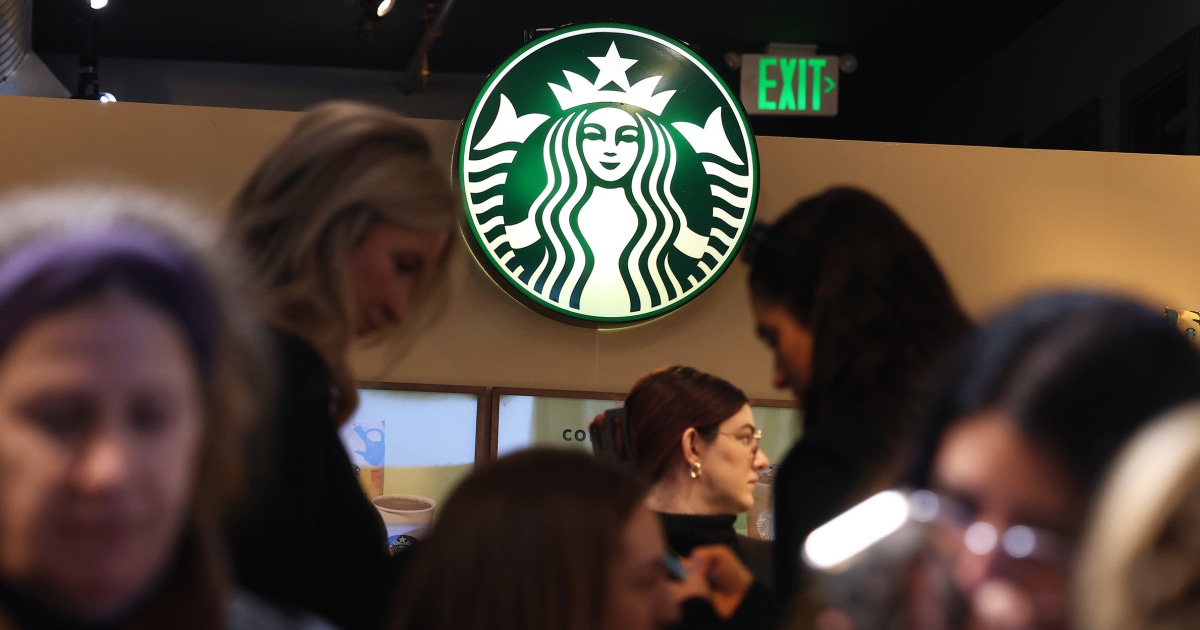
A class action lawsuit has been filed against Starbucks by consumers who claim the company mislabels several protein drinks as sugar-free when they actually contain between 13 and 21 grams of sugar per serving. The plaintiffs argue that this is misleading to health-conscious customers, especially those avoiding sugar for medical reasons. Starbucks maintains that the sugar in their products comes from natural sources like protein milk without added sugars and states it will defend itself vigorously against these claims.
Written locally by qwen2.5:14b on 2026-10-06,
using this article's own text rather than the other coverage of the
same event (that is the story summary below).
Story summary
A consumer lawsuit filed late Friday in Seattle accuses Starbucks of mislabeling eight protein drinks as "sugar-free" despite containing between 13 to 21 grams of sugar per serving. The plaintiffs claim this is misleading since consumers avoid sugar for health reasons, such as diabetes or blood glucose levels. For context, a single Reese’s peanut butter cup contains only 11 grams of sugar. Hagens Berman law firm filed the suit on behalf of three individual consumers from California, New York, and Washington who bought these drinks. Starbucks denies misleading its customers, asserting that it has consistently provided nutritional information across menus, marketing materials, and their website.
Written for “Starbucks Sugar Free Drink Lawsuit” on 2026-10-06,
grounded in this article and the 2 other(s) covering the same event.
Why this leaning score
This article does not take a side on a contested political
question, so it has no leaning score. That is an
answer rather than a gap: a match report or a rescue can be warmly
or critically written without being left or right, and scoring it
anyway is how approval of a subject gets recorded as a political
position.
No political leaning scored for article 61003 · logged 2026-10-06
Starbucks is facing a consumer class action lawsuit over claims that its sugar-free protein drinks actually contain significant amounts of sugar.
uncertain
drinks → face → sugar
The federal lawsuit filed late Friday in Seattle alleges that several protein drinks on Starbucks’ menu in the U.S. contain varying amounts of sugar even though the company labels them as not containing any.
asserted
company → file → any
“Starbucks sells eight beverages whose names begin with the words ‘Sugar-Free,’ even though they contain between 13 and 21 grams of sugar per venti-size serving,” the lawsuit states.
asserted
lawsuit → sell → serving
“No reasonable consumer would understand a beverage named ‘Sugar-Free’ to contain 13 to 21 grams of sugar per serving,” it continues.
asserted
it → understand → serving
On Monday, the menu on Starbucks’ U.S. website listed a 16-ounce (0.5-litre) Sugar-Free Caramel Protein Matcha with 16 grams of sugar and a 20-ounce (0.6-litre) version of the same drink with 21 grams of sugar.
asserted
menu → list → sugar
By comparison, one Reese’s cup contains 11 grams of sugar.
asserted
cup → contain → sugar
The class action lawsuit was filed by Hagens Berman on behalf of three individuals in California, New York and Washington who all bought Starbucks’ sugar-free protein drinks.
asserted
who → file → drinks
“Consumers avoid sugar for various reasons, whether that be general health, diabetes and blood glucose levels or other factors, and for many, a staunch mislabeling like this is significant,” Steve Berman, a co-founder and managing partner of the Seattle-headquartered firm, told the Associated Press.
asserted
Berman → avoid → Press
The plaintiffs argue that Starbucks’ naming and marketing of the sugar-free drinks is “false, deceptive and unlawful.”
asserted
naming → argue → drinks
The filing also alleges that Starbucks fails to include an FDA-required disclaimer regarding the drinks’ calorie content.
asserted
Starbucks → allege → content
The FDA requires such disclaimers because consumers believe that a beverage that is marketed as “Sugar-Free” is also likely to have reduced calories, the lawsuit says.
asserted
lawsuit → require → calories
Starbucks, which was founded and is headquartered in Seattle, said the sugar in its protein drinks is in the protein milk it uses and there is no added sugar in the beverages, including the flavouring syrups.
asserted
it → found → syrups
On the coffee chain’s website Tuesday, the drinks were marketed as “sugar-free,” but the amount of sugar in each beverage was stated.
asserted
amount → market → beverage
Its Iced Sugar-Free Vanilla Protein Latte is listed as containing nine grams of sugar and as containing 200 calories.
asserted
Latte → list → calories
“We believe these claims have no merit,” a Starbucks spokesperson said Monday.
uncertain
spokesperson → believe → merit
“Starbucks has consistently and clearly provided information about its protein beverages, sugar-free options, customization choices and nutritional content across product announcements, menus, marketing materials, Starbucks.com and the Starbucks app, and we intend to vigorously defend ourselves in this matter.”
asserted
we → provide → matter
The lawsuit comes weeks after the company announced it was closing 250 locations across North America.
asserted
it → come → America
It did not say which locations would close or how many were in Canada, but that some staff would be transferred to operational stores.
asserted
staff → say → stores
In May, Starbucks laid off 300 corporate employees and closed some underused U.S. offices.
uncertain
Starbucks → lay → offices
Last September, it closed 627 stores in North America and Europe and laid off 900 non-retail employees.
asserted
it → close → employees
 The Aporia