War was supposed to crush Iran's 'Axis of Resistance.' Instead, it's bloodied but unbroken

World & Nation · collected 2026-09-06 · by Nabih Bulos
Read the original at World & Nation ↗

Summary

The US-led war against Iran's "Axis of Resistance" was supposed to weaken or eliminate its proxies in the Middle East, but nearly six months into the conflict, these groups have shown surprising resilience. Analysts say the axis' locally based fighters and shared battlefield know-how create a durable challenge for Washington and its allies. Despite some losses, key members such as Hamas and Hezbollah remain in place, and the Islamic Republic has even gained leverage by closing the Strait of Hormuz. The axis is now considered stronger than ever, with one Iranian parliament member claiming it's "in the strongest condition they have ever been in the history of their resistance."
Written by the local model on 2026-09-07, using this article's own text rather than the other coverage of the same event (that is the story summary below).

Signals How these are calculated →

Claims extracted
45
claim-shaped sentences
Uncertain
2%
1 of 45 hedged
Leaning
withheld
no quote in the article backed the model's score
Publisher trust
95.0
red-flag proxy, not a credibility rating
Outlets on this story
316
Politics
Narrative spread
1
articles carrying this framing
Analyzed 2026-09-07 · how these are computed

AI analysis (generated at analysis time, not now)

Story summary

Here are the articles with a summary of each:

Article 1: Trump Announces "Crushing Economic Operation" on Iran

President Trump announced a "crushing economic operation" on Iran, which he said would amount to "economic warfare." The move comes as tensions between the US and Iran remain high.

Article 2: Trump Contradicts Vance, Says Nukes, Not Oil Prices, No. 1 Priority in Iran

President Trump contradicted Vice President JD Vance's statement that keeping oil prices down was a top priority for the administration. Trump said that preventing Iran from obtaining nuclear weapons is the "number one goal."

Article 3: US Businessowners Don't Want to Leave Their Canadian Suppliers, but 50% Tariffs Might Leave Them No Choice

US business owners are worried about the impact of 50% tariffs on their relationships with Canadian suppliers. They say they would have to choose between breaking away from long-standing relationships or risking significant financial losses.

Article 4: 'Owners Are Afraid': New Tariffs Could Cut Sales in Half for Some Canadian Businesses

Canadian businesses are bracing themselves for the impact of new US tariffs, which could cut sales in half. Business owners say they will have to reconsider their supply chains and potentially abandon long-standing relationships with Canadian suppliers.

Article 5: Trump Announces Economic Sanctions on Iran

President Trump announced economic sanctions on Iran, including a ban on buying Iranian oil and freezing the country's assets.

Article 6: Iran Shifts from Retaliation to Offense in War with US

Iran's military has begun signaling a shift from retaliation to offense in its war with the US. Analysts say this could reflect Tehran's belief that it holds leverage to advance its demands and break the stalemate.

Article 7: Trump Says Negotiations with Iran "Is Like Chess"

President Trump said negotiations with Iran are like chess, implying that the process is complex and requires careful strategy.

Article 8: US Imposes New Sanctions on Iran's Financial Sector

The US imposed new sanctions on Iran's financial sector, targeting key institutions and individuals involved in the country's banking system.

Note: Some of these articles may be related to each other, but I have tried to provide a summary of each one separately.

Written for “US-Iran Trade Conflict Escalation” on 2026-09-07, grounded in this article and the 315 other(s) covering the same event.
Why this leaning score
The model judged this article politically coded and scored it -0.35, but every quote it verified points right, so the score is not published.
Written under an earlier scoring contract, which gave a paragraph rather than checkable quotes. Re-analysing this article replaces it.
Leaning score withheld for article 6347: score contradicts its own evidence · logged 2026-09-07

Story

📰 US-Iran Trade Conflict Escalation
Politics · 316 article(s) covering the same event.

How this is being covered How these are calculated →

Article leaning vs. publisher reliability
Source leaning vs. consistency

Compared with similar articles

This article reads unscored and hedges 2% of its claims. Each row says how that neighbour differs.
ABC News: Top Stories
⚖️ Leans strongly right 🔴 0% hedged 0 of 4 📰 publisher trust 95
“Article A discusses recent Iranian strikes targeting US bases, while Article B describes a broader concept of Iran's 'Axis of Resistance' and its resilience after nearly six months of war”
Dawn - Home
⚖️ Leans left 🔴 5% hedged 1 of 21 📰 publisher trust 95
“Article A describes a specific military attack by Iran on US targets in Kuwait, while Article B discusses the broader war effort and the resilience of Iran's proxies in the region”
Dawn - Home
⚖️ Leans strongly right 🔴 40% hedged 12 of 30 📰 publisher trust 95
“Both articles report on the assessment by US intelligence agencies that Iran has become more confident in its ability to withstand American pressure after six months of war.”
The Straits Times World News
⚖️ Leans left 🔴 14% hedged 4 of 29 📰 publisher trust 94
“Article A refers to the conflict being at a stalemate with a pause in military action, while Article B focuses on the resilience of Iran's proxies and the ongoing challenge they pose to Washington and its allies”
World News Today: International News Headlines - The Hindu | The Hindu
⚖️ leaning not scored 🔴 0% hedged 0 of 7 📰 publisher trust 96
“Article A reports on an immediate response from Iran to U.S. attacks, while Article B discusses a broader analysis of the war's impact on Iran and its proxies over nearly six months”
Al Jazeera – Breaking News, World News and Video from Al Jazeera
⚖️ leaning not scored 🔴 13% hedged 7 of 55 📰 publisher trust 96
“Both articles report on ongoing conflict between US and Iran, specifically mentioning tit-for-tat attacks, escalation, and targeting of oil tankers and warships near the Strait of Hormuz on the same day (2026-09-06).”
The Independent World
⚖️ Leans strongly left 🔴 6% hedged 1 of 16 📰 publisher trust 58
“Both articles discuss the ongoing war between the US and Iran, specifically mentioning a stalemate after a preliminary ceasefire plan unraveled and citing the same timeframe (six months) in their discussions.”
Just In
⚖️ Leans left 🔴 9% hedged 2 of 23 📰 publisher trust 96
“The articles mention war on Iran but report different aspects of it: one discusses Iran's retaliation threat and its establishment of a 'prohibited zone', while the other focuses on the impact of the war on Iran's proxies”
Al Jazeera – Breaking News, World News and Video from Al Jazeera
⚖️ Leans strongly left 🔴 16% hedged 5 of 31 📰 publisher trust 96
“Article A describes Iranian tankers being hit by US military force, while Article B discusses the impact of war on Iran's proxies in the Middle East and their resilience”
World & Nation
⚖️ Leans left 🔴 11% hedged 5 of 47 📰 publisher trust 95
“Both articles mention the war with Iran after six months, implying they are reporting on the same ongoing conflict”

Publisher

World & Nation · 83 article(s) · 0 correction(s) detected
SignalValueWeight
Correction rate 0.000 0.4
Uncertainty density 0.099 0.25
Assertive mismatch rate 0.000 0.35
No corrections detected for this publisher. That may mean careful reporting, or simply that nothing has been checked.

Who wrote this

Nabih Bulos
2 article(s) here · 1 carrying a prediction
🔮 The thinking was that with the axis’ “tentacles” weakened, if not vanquished, all that would remain, as Israeli and U.S. officials often said, would be the “head of the octopus” — Iran. But it now appears reports of the axis’ unraveling are exaggerated.
🔮 - Click here to listen to this article - - Iranian officials downplayed the significance of the pressure campaign, and suggested it could shut down all oil exports through the Strait of Hormuz. -
Also by Nabih Bulos
Nothing else under this byline is closely related to this article, so these are simply their most recent.

Topics

Hamas Hezbollah Iran Syria U.S.

Subjects

Iran GPE · 10× Israel GPE · 6× U.S. GPE · 6× Hamas ORG · 5× Hezbollah ORG · 4× Syria GPE · 4× Gaza GPE · 2× Israeli NORP · 2× Lebanon GPE · 2× Yemen GPE · 2×

Narrative

Hamas and Hezbollah remain stubbornly in place, with the latter maintaining its lethality, even as Iraqi militias — defying Baghdad’s attempts at defanging them — have launched attacks on America’s Persian Gulf allies. And though Assad has been ousted from Syria, the Houthis in Yemen now threaten to restart their long-running feud with Saudi Arabia and seal another crucial choke point — the Bab al Mandab strait linking the Red Sea and Gulf of Aden.
framing: assertive · carried by 1 article(s) · first seen 2026-09-07
🔮 The thinking was that with the axis’ “tentacles” weakened, if not vanquished, all that would remain, as Israeli and U.S. officials often said, would be the “head of the octopus” — Iran. But it now appears reports of the axis’ unraveling are exaggerated.

Claims (45 extracted, 1 hedged)

War was supposed to crush Iran’s ‘Axis of Resistance.’ asserted
War → suppose → Resistance
Instead, it’s bloodied but unbroken - Click here to listen to this article - - One goal of the war on Iran was to weaken, if not eliminate, its proxies in the Middle East, such as Hezbollah in Lebanon and Hamas in Gaza. asserted
goal → ’ → Gaza
Iran’s proxies have definitely been weakened in nearly six months of war, but they also have proved to be surprisingly resilient. - asserted
they → weaken → war
Analysts say the axis’ locally based fighters and shared battlefield know-how create a durable, multifront challenge that Washington and its allies struggle to confront. asserted
Washington → say → that
When the U.S. launched the Iran war nearly six months ago, it was to be the coup de grace in dismantling the “Axis of Resistance,” an Iran-led alliance of armed groups and governments arrayed against the United States and Israel. asserted
it → launch → States
The axis included not just the militant groups Hamas and Hezbollah, but Yemen’s Houthi rebels, militias in Syria and Iraq and the government of Syria’s then-dictator Bashar Assad. asserted
axis → include → dictator
The thinking was that with the axis’ “tentacles” weakened, if not vanquished, all that would remain, as Israeli and U.S. officials often said, would be the “head of the octopus” — Iran. But it now appears reports of the axis’ unraveling are exaggerated. asserted
reports → weaken → unraveling
The Islamic Republic, far from capitulating under the U.S. and Israel’s withering assault, has compounded its leverage by closing the Strait of Hormuz. asserted
Republic → capitulate → Hormuz
Hamas and Hezbollah remain stubbornly in place, with the latter maintaining its lethality, even as Iraqi militias — defying Baghdad’s attempts at defanging them — have launched attacks on America’s Persian Gulf allies. And though Assad has been ousted from Syria, the Houthis in Yemen now threaten to restart their long-running feud with Saudi Arabia and seal another crucial choke point — the Bab al Mandab strait linking the Red Sea and Gulf of Aden. asserted
Houthis → remain → Aden
Such a move would further roil already skittish energy markets. asserted
move → roil → markets
A day after Trump hailed the two-week ceasefire, reversing course on his threat to escalate, the only country spared from attack appeared to be Iran itself. “Never has the Resistance Axis been as strong as it is today,” wrote Ali Khezrian, a hard-liner who is a member of the Iranian parliament’s National Security and Foreign Policy Committee, in a post on X on Saturday. asserted
who → hail → Saturday
Though Syria was a big loss “that must be compensated,” he said, the rest of the axis’ members were “in the strongest condition they have ever been in the history of their resistance.” asserted
they → compensate → resistance
Analysts say statements such as Khezrian’s overstate the case, but they nevertheless acknowledge the axis has proved more resilient than expected. asserted
axis → say → case
Although there is little doubt the axis is diminished compared with what it was a few years ago, “there’s now a period of a slow dawning realization that the way it’s built has made it able to match the moment,” said Peter Salisbury, a professor at Columbia University’s School of International and Public Affairs who recently published a report on the axis’ evolution for the Century Foundation think tank. asserted
who → be → tank
In June, the U.S. and Iran signed a memorandum of understanding that called for a 60-day end of hostilities to allow time to negotiate an end to the conflict. asserted
that → sign → conflict
The memorandum expired Monday and efforts to end the war appear to be at a standstill. asserted
efforts → expire → standstill
But when the U.S. and Israel attacked Iran on Feb. 28, it appeared to be an opportune moment to strike. asserted
it → attack → Feb.
For decades, Tehran had poured billions of dollars funding, training and arming militias across the Middle East that shared its enmity toward the U.S. and Israel, establishing what analysts called a “ring of fire” around Israel, along with a forward line of defense that would help defend Iran in case of American or Israeli attack. But after the Hamas-led attack on Oct. 7, 2023, Israel went on the offensive. asserted
Israel → pour → offensive
Even as it annihilated Hamas in Gaza, it pummeled Hezbollah in Lebanon, decimating the group’s much-vaunted arsenal and killing the upper echelons of its leadership. asserted
it → annihilate → leadership
Since an October ceasefire, Israel has shifted the Yellow Line west, boosting its control from 53% to about 64% of the Gaza Strip. asserted
Israel → shift → Strip
When the Houthis began hitting Israel and Red Sea shipping, the U.S. deployed its navy to fight back, leading the rebel group to accept a truce, and Israeli strikes forced the group’s senior leaders underground. asserted
strikes → begin → leaders
In Iraq, militias did little more than the occasional halfhearted attack on U.S. bases in the country. asserted
militias → do → country
Assad’s Syria, meanwhile, collapsed in 2024 under the weight of a rebel offensive, denying Tehran an essential land corridor to Hezbollah and the only state partner in the axis aside from Iran. “Our actions are taking apart the axis brick by brick,” said a triumphant-sounding Israeli Prime Minister Benjamin Netanyahu near the end of 2024. asserted
Minister → collapse → 2024
By June 2025, Netanyahu and President Trump had launched the 12-day war against Iran, and with only a feeble response from the axis’ other members, the decades of blood and treasure Iran invested in the axis seemed a waste. asserted
Iran → launch → axis
Then in February, Netanyahu attacked once more, Trump in tow. asserted
Trump → attack → tow
All of which is why the axis’ resurgence has come as a surprise. asserted
resurgence → come → surprise
Since the start of Epic Fury, as the war on Iran was called, the various axis members have swung into action: Iraqi militias have lobbed drones and rockets on U.S. bases in the country and have been blamed for attacks on Saudi Arabia, a claim they deny. uncertain
they → call → Arabia
The Houthis, though they mostly stayed out of the fight in the beginning, started their own blockade on Saudi shipping in July. asserted
they → stay → July
Iran says it is working to finalize a joint statement with Oman on a plan to manage shipping through the Strait of Hormuz. asserted
it → say → Hormuz
But the most unexpected turn has come from Hezbollah. asserted
turn → come → Hezbollah
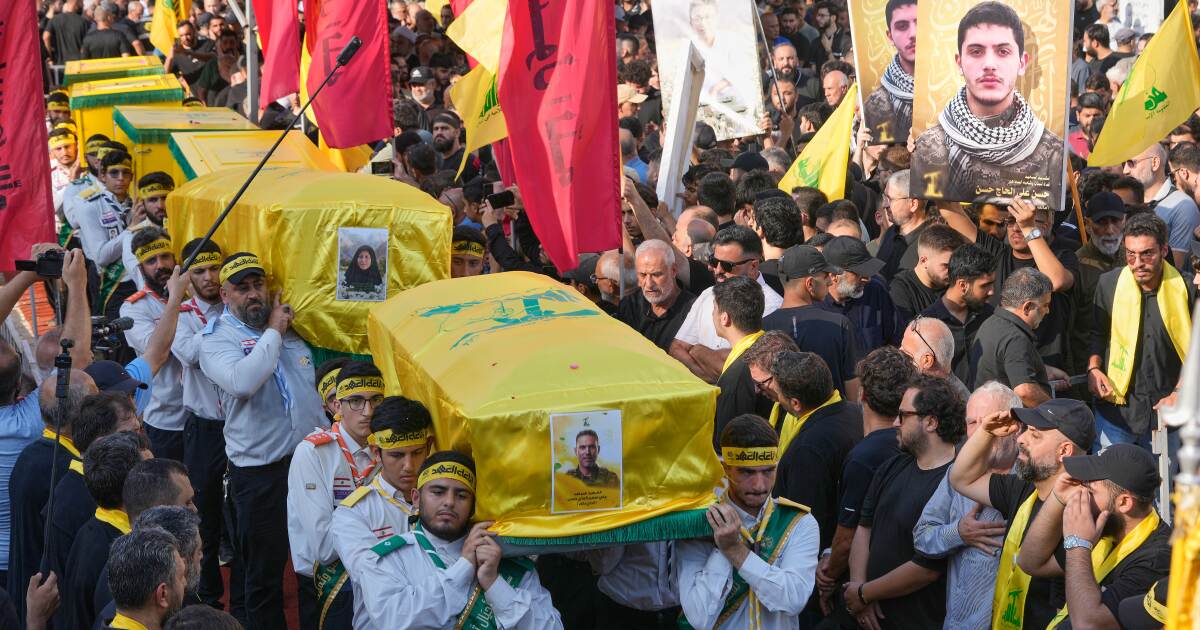
Thought to be an all but spent force only a few months ago, it has put up a vigorous defense against Israel’s ground invasion in Lebanon, incorporated new tactics and weapons — including drones — in its combat doctrine. asserted
it → think → doctrine
It also appears to have largely sidestepped the Israeli intelligence infiltration that killed its senior leadership in recent years. asserted
that → appear → years
That regeneration power, said Ramzy Mardini, the founder of Geopol Labs, a Middle East-based geopolitical risk advisory firm, is the central and most important characteristic of the axis. asserted
Mardini → say → axis
Although many dismiss the members as mere proxies of Iran, they are instead “deeply rooted groups embedded within social bases, political movements and state institutions.” asserted
they → dismiss → bases
“What looks like a resurgence is better understood as resilience. asserted
looks → look → resilience
These organizations have the capacity to absorb enormous losses, adapt, and revive their capabilities and membership, even when it appears they have been permanently degraded or destroyed,” Mardini said. asserted
Mardini → have → capabilities
“We tend to assume their resilience and capabilities are externally procured when, in fact, much of that power is locally produced,” he said. asserted
he → tend → power
Salisbury agreed, adding that axis members are also able to call on the pool of knowledge shared among them; experience fielding weapons in one theater can inform fighting in another. asserted
experience → agree → another
The collective result has been a multifront conundrum that the U.S. and Israel cannot easily solve without incurring costs their allies are unwilling to bear. asserted
allies → solve → costs
“Iran has a hybrid strategy in the current war,” wrote Mahdi Mohammadi, a senior advisor to Iran’s chief negotiator, in a post on X. “We are not fighting on one front and we are not using one tool. asserted
we → have → tool
…and 5 more, not listed.

💬 Give feedback
🕘 History 🎫 Support