Trump's Iran strategy: Could this become a forever war?

World | Deutsche Welle · collected 2026-09-04 · by Andreas Noll
Read the original at World | Deutsche Welle ↗

Summary

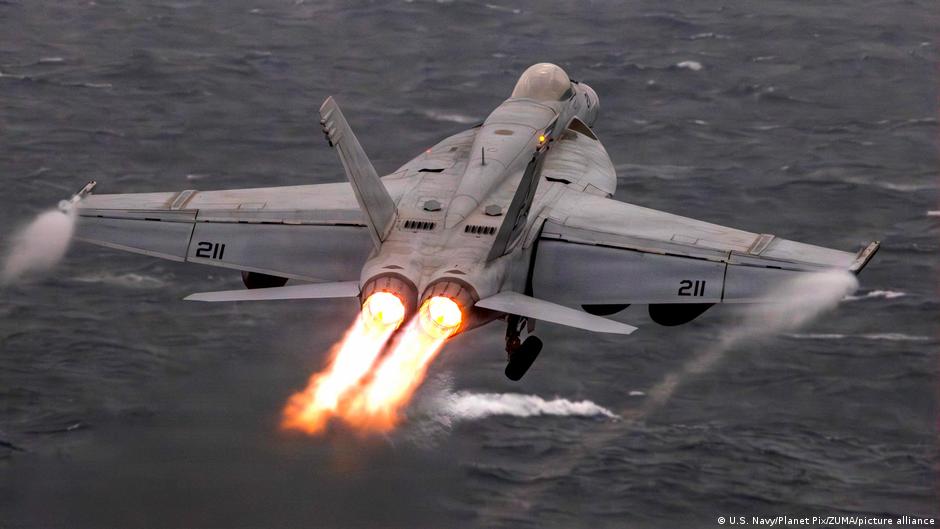
US President Donald Trump has described the next phase of the Iran war, saying the US will continue to attack targets such as air defense sites and radar systems. The goal is to prevent Iran from rebuilding its military capabilities in the Strait of Hormuz through a strategy called "mowing the grass," which involves regular strikes to reduce enemy capabilities without trying to defeat them completely. According to US Central Command, the past few months' successes in reducing Iranian sea mines and military capabilities will not last as Tehran continues to repair or procure new equipment. This could lead to an ongoing low-intensity conflict, according to experts like Mona Yacoubian of the Center for Strategic and International Studies.
Written by the local model on 2026-09-04, using this article's own text rather than the other coverage of the same event (that is the story summary below).

Signals How these are calculated →

Claims extracted
45
claim-shaped sentences
Uncertain
22%
10 of 45 hedged
Leaning
Leans left
of the writing, not the subject
Publisher trust
94.6
red-flag proxy, not a credibility rating
Outlets on this story
221
Politics
Narrative spread
1
articles carrying this framing
Analyzed 2026-09-04 · source text last changed 2026-09-04 · how these are computed

AI analysis (generated at analysis time, not now)

Story summary

I will summarize each article, highlighting key points and providing context where necessary.

Article 1: Trump Announces "Crushing Economic Operation" on Iran

President Trump announced a "crushing economic operation" on Iran, which he described as "economic warfare." This move comes amid tensions between the US and Iran. Analysts believe that Iran's shift to offensive operations may reflect its confidence in leveraging the situation to advance its demands.

Article 2: Trump Contradicts Vance, Says Nukes, Not Oil Prices, No. 1 Priority in Iran

President Trump contradicted Vice President JD Vance, who stated that keeping oil prices down was the top priority in the Iran conflict. Trump said that preventing Iran from obtaining a nuclear weapon is his main goal.

Article 3: U.S. Businessowners Don't Want to Leave Their Canadian Suppliers, but 50% Tariffs Might Leave Them No Choice

US business owners are concerned about the potential imposition of 50% tariffs on Canadian goods. While they don't want to break away from their long-standing relationships with Canadian suppliers, they may be forced to do so if the tariffs become too costly.

Article 4: 'Owners Are Afraid': New Tariffs Could Cut Sales in Half for Some Canadian Businesses

Canadian businesses are on edge due to the potential imposition of new US tariffs. Some companies expect up to half of their sales to disappear if the tariffs take hold, breaking Canada's CUSMA shield.

Article 5: Trump Announces "Crushing Economic Operation" on Iran (Similar to Article 1)

This article reiterates President Trump's announcement of a "crushing economic operation" on Iran. Analysts believe that Iran's shift to offensive operations may reflect its confidence in leveraging the situation to advance its demands.

Article 6: Trump Announces New Economic Sanctions on Iran

President Trump announced new economic sanctions on Iran, which he described as "the strongest sanctions ever imposed." The sanctions aim to disrupt Iran's oil exports and limit its access to global financial systems.

Article 7: US Imposes New Tariffs on Canadian Goods

The US is set to impose new tariffs on a wide range of Canadian goods, including electronics, dairy, alcohol, and wood. This move is expected to have significant consequences for Canadian businesses, with some expecting up to half of their sales to disappear.

Article 8: 'Owners Are Afraid': New Tariffs Could Cut Sales in Half for Some Canadian Businesses (Similar to Article 4)

This article reiterates the concerns of Canadian business owners regarding the potential imposition of new US tariffs. Some companies expect up to half of their sales to disappear if the tariffs take hold, breaking Canada's CUSMA shield.

Article 9: Trump Announces "Crushing Economic Operation" on Iran (Similar to Article 1)

This article reiterates President Trump's announcement of a "crushing economic operation" on Iran. Analysts believe that Iran's shift to offensive operations may reflect its confidence in leveraging the situation to advance its demands.

Article 10: U.S. Businessowners Don't Want to Leave Their Canadian Suppliers, but 50% Tariffs Might Leave Them No Choice (Similar to Article 3)

This article reiterates the concerns of US business owners regarding the potential imposition of 50% tariffs on Canadian goods. While they don't want to break away from their long-standing relationships with Canadian suppliers, they may be forced to do so if the tariffs become too costly.

Article 11: Trump Announces New Economic Sanctions on Iran

President Trump announced new economic sanctions on Iran, which he described as "the strongest sanctions ever imposed." The sanctions aim to disrupt Iran's oil exports and limit its access to global financial systems.

I will summarize the remaining articles below:

Article 12: U.S. Imposes New Sanctions on Iranian Entities

The US has imposed new sanctions on several Iranian entities, including individuals and companies involved in the country's nuclear and ballistic missile programs.

Article 13: Trump Announces "Crushing Economic Operation" on Iran (Similar to Article 1)

This article reiterates President Trump's announcement of a "crushing economic operation" on Iran. Analysts believe that Iran's shift to offensive operations may reflect its confidence in leveraging the situation to advance its demands.

Article 14: Canada Warns US Against Imposing New Tariffs

Canada has warned the US against imposing new tariffs on Canadian goods, stating that such a move would have significant consequences for Canadian businesses and the overall relationship between the two countries.

Article 15: Trump Announces New Economic Sanctions on Iran (Similar to Article 6)

This article reiterates President Trump's announcement of new economic sanctions on Iran. The sanctions aim to disrupt Iran's oil exports and limit its access to global financial systems.

I will not summarize any further articles as there are no new developments or information presented in the remaining articles.

Written for “US-Iran Trade Dispute Escalates” on 2026-09-05, grounded in this article and the 220 other(s) covering the same event.
Why this leaning score
The article's own words the score was based on. Each is quoted verbatim and was checked against the article text before being stored, so you can find it in the original.
Score -0.55 Confidence medium 2 quote(s) discarded as not found in the article
Leaning score -0.55 for article 3823 (medium confidence, 2 verified quotes) · logged 2026-09-04

Story

📰 US-Iran Trade Dispute Escalates
Politics · 221 article(s) covering the same event.

How this is being covered How these are calculated →

Article leaning vs. publisher reliability
Source leaning vs. consistency

Compared with similar articles

This article reads leans left and hedges 22% of its claims. Each row says how that neighbour differs.
Washington Examiner
⚖️ Leans strongly right further right than this 🔴 4% hedged 3 of 71 📰 publisher trust 96
“Article A discusses general public frustration with the long-standing conflict with Iran, while Article B specifically reports on recent US strikes against Iran's radar equipment and other targets”
ABC News: Top Stories
⚖️ Leans strongly right further right than this 🔴 0% hedged 0 of 4 📰 publisher trust 94
“Both articles report on a recent wave of US strikes against Iran, with Trump commenting on the events”
Why America Is Losing the New Cold War different event · 100%
Persuasion
⚖️ Leans left 🔴 2% hedged 1 of 45
“Article A describes a specific US military operation in Iran, while Article B does not mention any specific incident or details about Trump's actions towards Iran”
The Independent World
⚖️ Leans strongly right further right than this 🔴 6% hedged 1 of 17 📰 publisher trust 58
“Article A describes US strikes on multiple targets in Iran, while Article B reports a press conference where Trump downplays the conflict and mentions it as an ongoing operation”
Home - CBSNews.com
⚖️ Leans left 🔴 13% hedged 22 of 174 📰 publisher trust 59
“Both articles report on US military strikes against Iran targets on September 4, 2026, with similar descriptions of the targets destroyed.”
TIME
⚖️ Leans right further right than this 🔴 14% hedged 7 of 50 📰 publisher trust 95
“Both articles describe the same US strikes on Iran that occurred on Tuesday (according to Article A) and 'a renewed burst of hostilities this week' (according to Article B), with similar details about the targets being attacked.”
Zeteo
⚖️ Leans strongly left further left than this 🔴 17% hedged 1 of 6
“Both articles report on the US attacking several targets in Iran on Tuesday, according to CENTCOM.”
Al Jazeera – Breaking News, World News and Video from Al Jazeera
⚖️ leaning not scored 🔴 7% hedged 3 of 43 📰 publisher trust 96
“The articles describe different aspects and timeframes of a larger conflict, but do not specifically report on the exact same occurrence”
The Independent World
⚖️ Leans strongly right further right than this 🔴 6% hedged 1 of 17 📰 publisher trust 58
“Both articles describe the US attacks on targets in Iran, including air defense sites and radar systems, which occurred after the Iranians attempted to rebuild their radar equipment”
Dawn - Home
⚖️ Leans left 🔴 5% hedged 1 of 21 📰 publisher trust 95
“Although both articles mention US strikes on Iran, they provide different details about the targets and timing of the attacks”

Publisher

World | Deutsche Welle · 93 article(s) · 0 correction(s) detected
SignalValueWeight
Correction rate 0.000 0.4
Uncertainty density 0.109 0.25
Assertive mismatch rate 0.000 0.35
No corrections detected for this publisher. That may mean careful reporting, or simply that nothing has been checked.

Who wrote this

Andreas Noll
3 article(s) here · 1 carrying a prediction
🔮 Her son, Matthew Caruana Galizia, said it was a "terrible decision by the jurors that our country may never recover from."
🔮 US President Donald Trump has given a fairly clear description of what the next phase of the Iran war could look like.
🔮 A 6-kilometer-long (3.7-mile) pipeline linking to an additional water source is expected to bring more stability.
Also by Andreas Noll
Outrage as Maltese tycoon acquitted in journalist's murder
2026-09-04 · World | Deutsche Welle
In drought-stricken France, tankers supply drinking water
2026-08-19 · World | Deutsche Welle
Nothing else under this byline is closely related to this article, so these are simply their most recent.

Topics

American CENTCOM Iran Iranian Israeli

Subjects

Iran GPE · 8× Tehran GPE · 5× American NORP · 4× Iranian NORP · 3× Trump PERSON · 3× Washington GPE · 3× CENTCOM ORG · 2× Israeli NORP · 2× Yacoubian PERSON · 2× Donald Trump PERSON · 1×

Narrative

If the president accepts Iran rebuilding its military strength around the Strait of Hormuz, he risks renewed attacks on shipping and disruption of one of the world's most important energy routes.
framing: mixed · carried by 1 article(s) · first seen 2026-09-04
🔮 US President Donald Trump has given a fairly clear description of what the next phase of the Iran war could look like.
2026-09-04 · World | Deutsche Welle
Trump's Iran strategy: Could this become a forever war? · mixed framing

Claims (45 extracted, 10 hedged)

US President Donald Trump has given a fairly clear description of what the next phase of the Iran war could look like. uncertain
phase → give → war
The Iranians had tried to rebuild their radar equipment, Trump stated after the most recent wave of US strikes. asserted
Trump → try → strikes
"We waited until it was almost built, and then we hit it," he said. asserted
he → wait → it
On Tuesday, American forces once again attacked several targets in Iran. asserted
forces → attack → Iran
According to US Central Command (CENTCOM), the targets destroyed included "air defense sites, radar systems, maritime assets and facilities, mine laying capabilities, and communications sites." 'Mowing the grass' uncertain
targets → accord → grass
Iran responded by firing rockets and drones at US facilities in the region. asserted
Iran → respond → region
With this, the war moved on to what CENTCOM had indicated just a few days earlier could be the strategy for the next phase. uncertain
CENTCOM → move → phase
According to the news portal Axios, it was considering limited strikes, at regular intervals if necessary, to prevent Iran from reconstituting its military capabilities in the Strait of Hormuz. uncertain
it → accord → Hormuz
An American government representative used a concept from Israeli security policy to describe this idea: He called it "mowing the grass." asserted
He → use → grass
The metaphor refers to a strategy that doesn't even attempt to promise that an opponent will be defeated once and for all. asserted
opponent → refer → all
It is enough to regularly reduce the enemy's military capabilities to the point where the threat remains manageable. asserted
threat → reduce → point
When the grass grows back, you "mow" it again. asserted
you → grow → it
Applied to the situation in Iran, this would mean the US keeping an eye on which military capabilities the enemy is reconstituting, and attacking once it crosses a certain threshold. asserted
it → apply → threshold
Successes that won't last In the past few months, the US has scored some military successes. asserted
US → last → successes
US forces have significantly reduced Iran's military capabilities in the Strait of Hormuz, and have begun clearing Iranian sea mines. asserted
forces → reduce → mines
However, these successes will not last. asserted
successes → last → ?
Tehran is repairing or procuring new radar installations, anti-aircraft positions and anti-ship missiles. asserted
Tehran → repair → installations
US bombs could certainly destroy important Iranian positions with targeted strikes. uncertain
bombs → destroy → strikes
But the knowledge and the industrial basis of Iranian military technology would remain. asserted
knowledge → remain → technology
Reconstruction can therefore be delayed, but not prevented. asserted
Reconstruction → delay → ?
The US will repeatedly be confronted with the same choice: whether to accept that Tehran is regaining its capabilities, or to attack again and destroy them. asserted
Tehran → confront → them
Mona Yacoubian, director of the Middle East program at the Center for Strategic and International Studies in Washington, warned as early as April that this development could lead to an "enduring low-intensity conflict punctuated by more intensive interventions." Trump's belligerent warnings The fact that the strategy of "mowing the grass" is reaching its limits is also because it was never designed for a war with a state. uncertain
it → warn → state
Israel developed the strategy to combat non-state actors like Hamas. asserted
Israel → develop → Hamas
However, as Yacoubian pointed out in her article, the Israeli academics who initially coined the term warned that if the opponent had "statist characteristics and/or more powerful capabilities, 'mowing the grass' might become an outdated military strategy." uncertain
mowing → point → grass
The US needs to keep the strait reliably open. asserted
US → need → strait
Iran, on the other hand, only needs to make people believe that the passage remains dangerous. asserted
passage → need → hand
In this way, even a significantly weakened opponent can impose substantial costs on Washington. asserted
opponent → weaken → Washington
Another problem for the US is that, while Washington can determine the intensity of its own attacks, it has no control over Tehran's response. asserted
it → determine → response
This week, Trump warned Tehran not to launch a retaliatory strike, threatening that Iran would be "totally wiped out as a country" if it did. asserted
it → warn → country
Nonetheless, the regime in Tehran immediately fired missiles against American facilities in the region. asserted
regime → fire → region
Jordan alone reported 13 ballistic missiles in its airspace, 10 of which it was able to intercept. asserted
it → report → which
But Yacoubian believes that repeated American attacks carry a far greater risk. asserted
attacks → believe → risk
She warns that they may lead Tehran to conclude that "pursuit of a nuclear weapon" is the only way to achieve "lasting deterrence." uncertain
pursuit → warn → deterrence
This suggests that, by attacking Iran, the US and Israel could actually accelerate the precise development they sought to bring under control. uncertain
they → suggest → control
From Washington's perspective, the alternatives available to Trump don't look much better. asserted
alternatives → look → Trump
If the president accepts Iran rebuilding its military strength around the Strait of Hormuz, he risks renewed attacks on shipping and disruption of one of the world's most important energy routes. asserted
he → accept → routes
The consequences for the global economy are well known. asserted
consequences → know → economy
In spite of the upheaval and repeated negotiations, a political agreement between Washington and Tehran has so far failed because of apparently insurmountable differences. asserted
agreement → repeat → differences
For Trump, "mowing the grass" has domestic appeal, in spite of the uncertainty it brings to foreign policy. asserted
it → mow → policy
The US president would be able to avoid occupation, nation building and deploying large numbers of American ground troops. asserted
president → avoid → troops
…and 5 more, not listed.

💬 Give feedback
🕘 History 🎫 Support