In short:
The Alternative for Germany party has won more than 44 per cent of the vote in the eastern state of Saxony-Anhalt, by far the most of any party.
asserted
party → win → party
The result means a far-right party is on the cusp of forming government at the state level in Germany for the first time since World War II.
asserted
party → mean → II
Counting continues, and it is likely the AfD will need the support of other parties to form a coalition government.
asserted
AfD → continue → government
Germany's far-right party Alternative for Germany (AfD) has become the largest party in the state of Saxony-Anhalt following a regional election, representing the first far-right win in the country since World War II.
asserted
party → become → II
Exit polls from Germany's two public broadcasters, ARD and ZDF, showed the AfD had a commanding lead in the state, taking at least 44 per cent of the vote.
asserted
AfD → show → vote
That constituted a jump of 20 per cent for the AfD compared with the last Saxony-Anhalt regional election in 2021.
That result means the AfD could win as many as 39 seats in the state's 83-seat parliament, just shy of a majority, ARD projected.
uncertain
ARD → constitute → majority
The centre-right CDU, which has governed the state since 2002, saw its vote share collapse to just 18.5 per cent.
asserted
share → govern → cent
Most parties, including the CDU, have long vowed not to form a coalition government with the AfD.
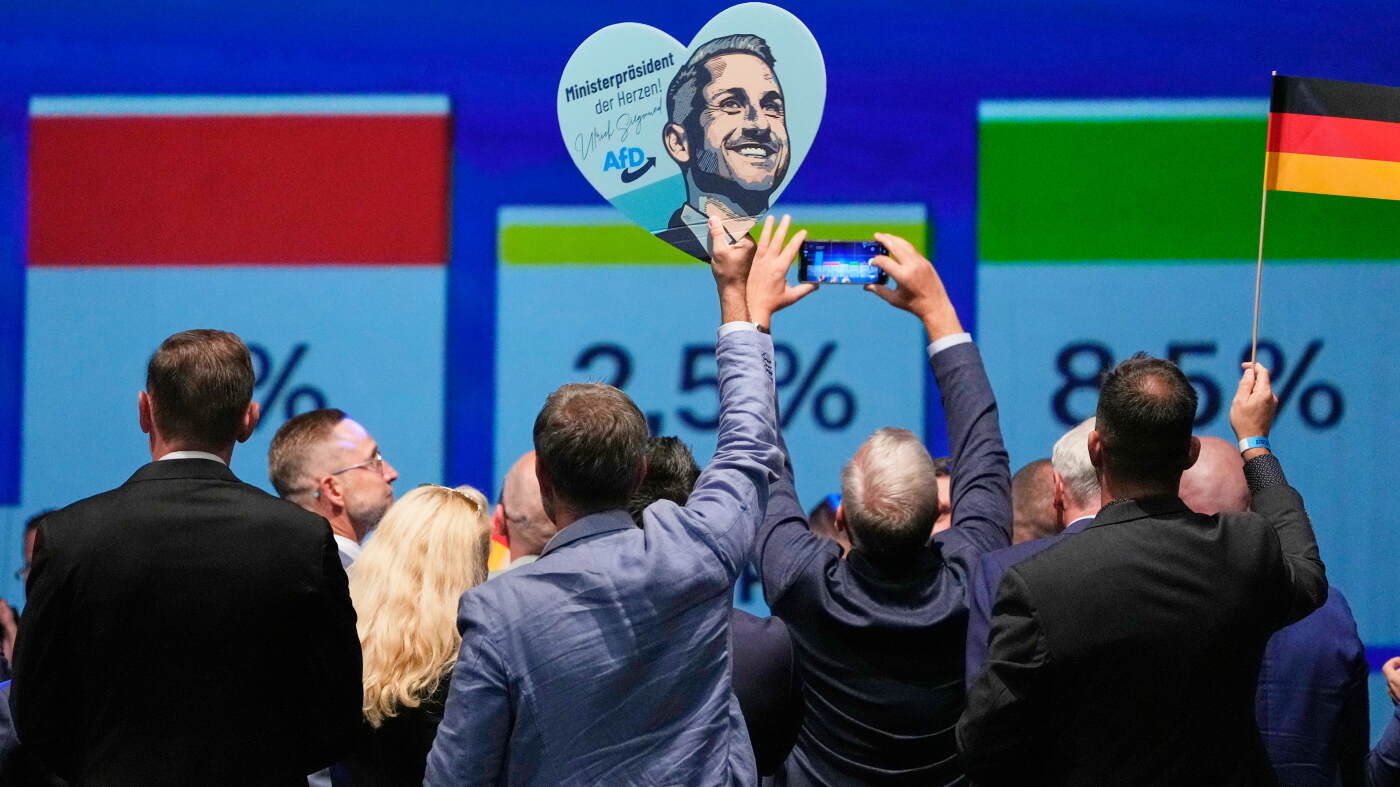
Ulrich Siegmund, the lead candidate for the AfD in Saxony-Anhalt, said his party was prepared to reach out to all parties to form government.
asserted
party → include → government
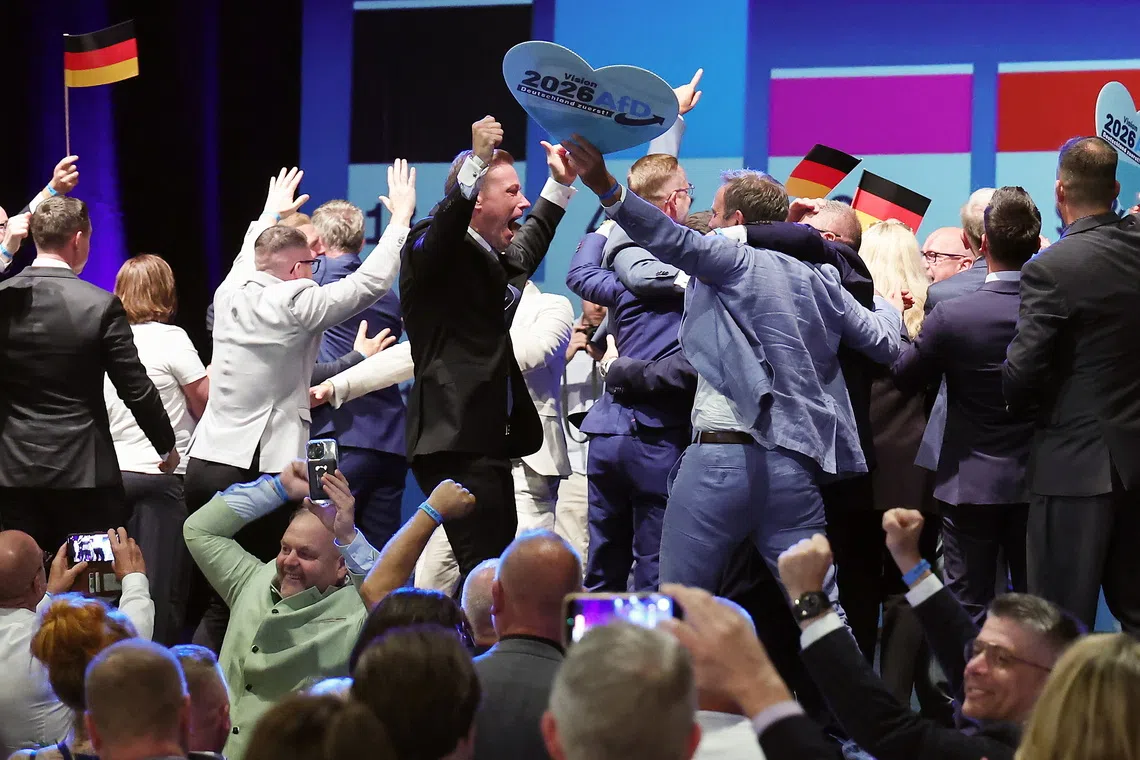
"We have made history today," he told supporters.
asserted
he → make → supporters
"We extend a hand to all democratic forces that wish to pursue better policies."
asserted
that → extend → policies
Beyond the AfD and CDU, voters appeared split on where to place their votes, with no other party earning more than 10 per cent of the total vote.
asserted
party → appear → vote
Result draws protests, shock
AfD co-leader Alice Weidel hailed an "historic" result, which had given the AfD a clear mandate to govern, but it was not immediately clear whether it would be able to form a government.
asserted
it → draw → government
State premier Sven Schulze congratulated the AfD and acknowledged the result showed it was the strongest party.
asserted
it → congratulate → AfD
Protesters were seen gathering on the streets of Saxony-Anhalt's capital city, Magdeburg.
asserted
Protesters → see → city
Following the result, the CDU pledged not to cooperate with the AfD nor with the far-left, but the vote was likely to increase pressure on Chancellor Friedrich Merz, who had struggled in recent polls.
asserted
who → follow → polls
Franziska Hoppermann, the national general secretary of Mr Merz's CDU, said that it was "a very difficult result for us".
asserted
it → say → us
Lars Klingbeil, co-leader of Germany's centre-left SPD party, said the result was "saddening" and a "turning point" for the country.
asserted
result → say → country
AfD policies include reducing teaching of Nazi Germany
Germany's domestic intelligence agency designates the AfD branch in Saxony-Anhalt, which Mr Siegmund is in charge of, as "right-wing extremist" with links to ethno-nationalist groups and think tanks.
asserted
Siegmund → include → groups
Several of Mr Siegmund's staffers and party colleagues are former members of the since-banned Neo-Nazi group Heimattreue Deutsche Jugend, or Patriotic German Youth.
asserted
Several → ban → group
But the outspoken political leader has defended his team as being full of "excellent people", adding that he is "not interested in what happened 20 or 25 years ago".
asserted
what → defend → people
A first-ever AfD state government would be a shock for many in Germany, which has been at pains to atone for its dark history of World War II and the Holocaust and so far kept extremist parties at bay.
asserted
which → atone → bay
Mr Siegmund, the AfD's top candidate, has ambitions to lead a political revolution from Saxony-Anhalt that would propel the party to national victory in 2029.
asserted
that → have → 2029
On the campaign trail, Mr Siegmund — a former entrepreneur with a sharp undercut hairstyle and a huge social media following — has been mobbed by adoring fans, many wearing T-shirts bearing his likeness.
asserted
many → mob → likeness
The party has tapped into a sense of nostalgia for communist East Germany as well as lingering resentment about an enduring wealth gap with the West decades after the 1989 fall of the Berlin Wall.
asserted
party → tap → Wall
In line with the sometimes defiant sense of local "Ossie pride", Mr Siegmund has often ridden local Simson motorcycles manufactured in the former East Germany, including to the polling booth on Sunday in his home town of Tangermünde.
asserted
Siegmund → ride → Tangermünde
While Mr Siegmund has been dubbed the friendly face of the AfD, his campaign promises have been radical, including targeting irregular migrants with a "remigration and deportation offensive" from day one.
asserted
promises → dub → day
The party's "anti-woke" agenda also includes vows to replace LGBTQ pride rainbow flags at public schools with the German standard, and to change history teaching to reduce the emphasis on the Third Reich.
asserted
agenda → include → Reich
In order to replace migrant workers, the AfD wants to lure back German expatriates, while offering "baby bonuses" for families to reverse the shrinking of the population in the small state of 2.1 million people.
asserted
AfD → replace → people
 The Aporia