The Globe and Mail
· collected 2026-10-06 · by Maura Forrest, Eric Andrew-Gee, Nicolas Van Praet
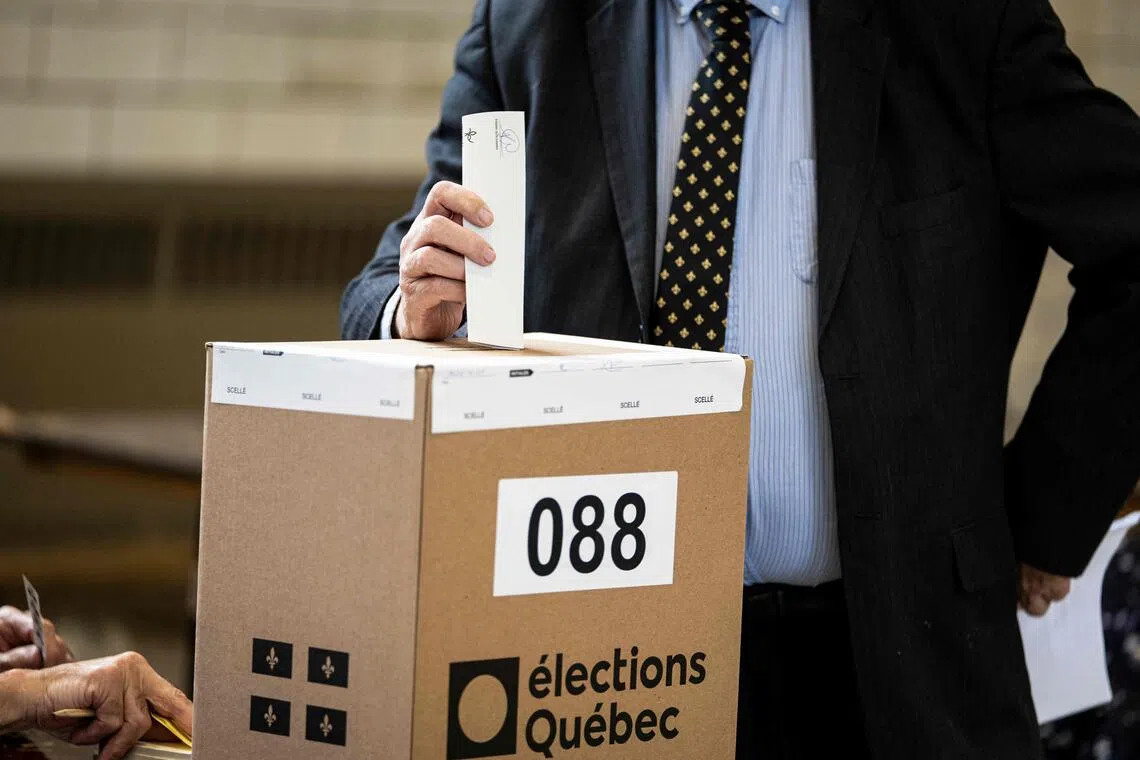
The separatist Parti Québécois is projected to form government in Quebec after promising to hold an independence referendum in the next four years, with the prospect of such a vote increasing if the PQ is able to eke out a majority.
asserted
PQ → project → majority
After a five-way race that revealed a divided province and a splintered federalist vote, PQ Leader Paul St-Pierre Plamondon’s party was leading or elected in dozens of the province’s 127 seats as of 9 p.m. on Monday, election night.
asserted
party → reveal → Monday
The numbers appear to be enough for the PQ to form a minority government, but some seats have yet to be called.
asserted
seats → appear → government
The party needs to secure 64 seats to claim a majority in the National Assembly.
uncertain
party → need → Assembly
The election comes at a delicate moment for national unity, with a referendum in Alberta two weeks away, and persistent threats to Canada’s sovereignty and economy from U.S. President Donald Trump.
asserted
election → come → Trump
Among the provinces, Quebec has been the biggest casualty of Mr. Trump’s protectionist trade agenda, which has targeted its aluminum and forest product industries in particular.
asserted
which → target → industries
The PQ Leader has promised a vote on the province’s place within Canada once Mr. Trump leaves office in 2029, at which point Mr. St-Pierre Plamondon says Quebec can have a “serene” discussion about its future.
asserted
Quebec → promise → future
With a minority in the National Assembly, the PQ would need support from members of the National Assembly in other parties to trigger a referendum, and to stay in power.
asserted
PQ → need → power
In the meantime, the PQ Leader could make relations with the federal government far more contentious.
uncertain
relations → make → government
He is vowing to eliminate the role of lieutenant-governor in Quebec and fight any increases in immigration at a time when Prime Minister Mark Carney is seeking inter-provincial peace in the face of U.S. economic aggression.
asserted
Carney → vow → aggression
Polls show only about 30 per cent of Quebeckers support independence, a historically low level in the province, where previous referendums in 1980 and 1995 tallied 40 and 49 per cent support respectively.
asserted
referendums → show → support
The new government may struggle to defend the legitimacy of holding an independence vote, while calls to reform the provincial electoral system are likely to grow louder.
uncertain
calls → struggle → system
Monday’s election marked a dramatic end to the reign of the Coalition Avenir Québec, which won consecutive majorities under former premier François Legault.
asserted
which → mark → Legault
Its brand of nationalism without independence – a vaunted “third way” between federalism and separatism – strongly resonated with voters, but the party was undone by serial episodes of financial mismanagement in recent years.
asserted
party → resonate → years
Under new Leader Christine Fréchette, the party was unable to counter an overwhelming appetite for change.
asserted
party → counter → change
An early polling bump spurred by the U.S. trade war gave the outgoing Premier a chance to portray herself as a defender of Quebeckers, but voters seemed relatively inured to the economic uncertainty of recent years and quickly turned the page.
asserted
voters → spur → page
The Quebec Liberal Party under new Leader Charles Milliard struggled to distinguish itself from other parties opposing a referendum, despite a strong end to the campaign.
asserted
Party → struggle → campaign
The most resolutely federalist party in Quebec now faces being locked out of power for a decade or more, its longest stretch in opposition since the 1950s.
asserted
party → face → 1950s
The anti-referendum vote was further splintered by a relatively new force in Quebec politics, the provincial Conservative Party, unrelated to its federal namesake, which is projected to win seats in the National Assembly for the first time.
asserted
which → splinter → time
Under the leadership of former radio host Éric Duhaime, the party captured voters in the traditionally right-leaning Quebec City and Beauce regions who felt government spending has become bloated and wasteful.
asserted
spending → capture → regions
Québec solidaire, a left-wing separatist party that focuses more on social justice than independence, was projected on election night to finish in fourth.
asserted
that → focus → fourth
It remains uncertain whether QS would support the PQ’s referendum ambitions.
asserted
QS → remain → ambitions
The two parties diverge sharply on immigration and identity issues, while Ruba Ghazal, the co-leader for QS, has promised a more wide-ranging consultation on the nature of an independent Quebec.
asserted
Ghazal → diverge → Quebec
Separating from Canada failed to become a defining issue in the campaign despite the PQ’s longstanding pledge to hold a vote on the question.
asserted
Separating → separate → question
The party’s August decision to postpone any referendum until Mr. Trump leaves office may have reassured some soft nationalists that a vote for the PQ was not a major risk.
uncertain
vote → postpone → PQ
Polls show that a significant share of voters are convinced the referendum won’t happen after all.
asserted
referendum → show → voters
A five-way race also muddied the parties’ campaign messaging and made a clear ballot-box question hard to define.
asserted
question → muddy → messaging
Mr. St-Pierre Plamondon largely avoided discussing the referendum, preferring to present himself as a candidate of change.
asserted
Plamondon → avoid → change
Late in the campaign, Ms. Fréchette said she regretted not talking about the economic harms of a referendum more.
asserted
she → say → referendum
The resurgence of independence talk comes at a peculiar time, when Mr. Carney and his message of Canadian resolve in the face of U.S. tariffs is resonating in Quebec.
asserted
Carney → come → Quebec
The federal Liberals have won two by-elections in Bloc Québécois strongholds this year, most recently in August.
asserted
Liberals → win → August
The Prime Minister’s personal popularity in the province remains high.
asserted
popularity → remain → province
The geopolitical situation largely took a back seat in this campaign to more prosaic concerns about deteriorating public services and the cost of living.
asserted
situation → take → living
A majority of parties proposed cuts to the size of the public service and immigration levels.
asserted
majority → propose → service
A small-c conservative mood prevailed, with even the historically social-democratic PQ moving to the right.
asserted
PQ → prevail → right
Despite the upsurge in pro-Canadian sentiment in recent years, Quebeckers also remain anxious about the state of the French language and Quebec culture after years of sharply rising immigration under former prime minister Justin Trudeau and the expansion of an overwhelmingly English-language digital sphere.
asserted
Quebeckers → remain → sphere
Controversial CAQ laws restricting the use of English and banning visible religious symbols for some public sector workers went largely undiscussed during the campaign.
asserted
laws → restrict → campaign
Although both policies are facing legal challenges, they are popular among francophones.
asserted
they → face → francophones
 The Aporia