What to know about pneumonic plague after woman in Russia dies from mysterious illness

Read the original at NBC News ↗
NBC News · collected 2026-10-05 · by Erika Edwards

Quick Summary

A 28-year-old woman who worked at an anti-plague laboratory in Russia died on Friday with no confirmed cause of death; however, U.S. officials are monitoring reports suggesting a case of suspected pneumonic plague in Irkutsk, southeastern Siberia. The Russian government has not linked her death to her work, but nearly 200 people who had contact with the woman are under medical observation. Details about whether she was infected naturally or through lab bacteria and how quickly her illness progressed remain unclear. Scientists emphasize that pneumonic plague is highly contagious, spreading via respiratory droplets from person-to-person within a few feet, though it's rare.
Written locally by qwen2.5:14b on 2026-10-05, using this article's own text rather than the other coverage of the same event (that is the story summary below).

AI analysis runs on qwen2.5:14b, locally

Story summary

A 28-year-old lab technician named Darya Shipilova died of pneumonic plague in Siberia after breaking a test tube at the Irkutsk Anti-Plague Institute on September 29, prompting health officials to quarantine around 200 people who had been in contact with her. The incident raised concerns about a potential wider outbreak and prompted Russia’s Chief State Sanitary Doctor Anna Popova to travel from Moscow to manage the situation personally. Hospitals and facilities were placed under quarantine measures, with Irkutsk Governor Igor Kobzev urging residents to remain calm despite widespread fears of another pandemic scenario similar to Wuhan in 2019. The U.S. government is closely monitoring developments through its embassy and federal agencies like the CDC, while calling for transparency from Russian authorities regarding the full extent of the situation. Cooler temperatures are expected to mitigate any potential spread of the disease. Despite these measures, there remain concerns about the broader implications should the outbreak escalate further.

Written for “Plague Outbreak in Siberia” on 2026-10-05, grounded in this article and the 28 other(s) covering the same event.

Signals How these are calculated →

Claims extracted
51
claim-shaped sentences
Uncertain
12%
6 of 51 hedged
Leaning
not political
takes no side on a contested political question
Correction & hedging signals
95.2
corrections and hedging in what we collected; not a measure of accuracy
Outlets on this story
29
Health
Narrative spread
1
articles carrying this framing
Analyzed 2026-10-05 · how these are computed

Story

📰 Plague Outbreak in Siberia
Health · 29 article(s) covering the same event. See how they differ ↓

How this is being covered How these are calculated →

Article leaning vs. publisher reliability
Source leaning vs. consistency

Compared with similar articles

This article reads unscored and hedges 12% of its claims. Each row says how that neighbour differs.
South China Morning Post · 0.86 cosine similarity
⚖️ leaning not scored 🔴 25% hedged 1 of 4 📰 publisher trust 67
“Both articles report on the death of Darya Shipilova, a 28-year-old woman who worked at an anti-plague institute in Irkutsk, Russia, and discuss conflicting reports about whether her death was due to pneumonic plague.”
Daily Mail
⚖️ leaning not scored 🔴 23% hedged 3 of 13 📰 publisher trust 65
“Both articles describe the death of Darya Shipilova, a 28-year-old lab technician who worked at the Irkutsk Anti-Plague Institute and died from pneumonic plague after breaking a test tube.”
New York Post
⚖️ Leans left 🔴 23% hedged 6 of 26 📰 publisher trust 64
“Both articles describe the death of a young lab worker at an anti-plague laboratory in Irkutsk, Russia, raising concerns about a possible plague outbreak.”
Euronews
⚖️ leaning not scored 🔴 8% hedged 3 of 37 📰 publisher trust 60
“Both articles discuss the death of Darya Shipilova, a female staff member at the Irkutsk Research Anti-Plague Institute, who died under suspicious circumstances related to a mysterious illness.”
Daily Mail
⚖️ Leans left 🔴 14% hedged 5 of 37 📰 publisher trust 65
“Both articles describe the death of Darya Shipilova, a 28-year-old woman who worked at the Irkutsk Anti-Plague Institute and died after being exposed to pneumonic plague. The events and timeline match closely.”
Mother Jones
⚖️ leaning not scored 🔴 31% hedged 5 of 16 📰 publisher trust 95
“Both articles describe the death of a 28-year-old lab technician named Darya Shipilovia at the Irkutsk Anti-Plague Institute after being exposed to an unknown virus that is suspected to be pneumonic plague.”
The Independent
⚖️ leaning not scored 🔴 47% hedged 7 of 15 📰 publisher trust 59
“Both articles describe the death of a 28-year-old laboratory worker at the Anti-Plague Research Institute in Shelekhov, near Irkutsk, Russia, and subsequent quarantine measures.”
Daily Mail
⚖️ leaning not scored 🔴 23% hedged 7 of 30 📰 publisher trust 65
“Both articles describe the death of Darya Shipilova, a lab technician at the Irkutsk Anti-Plague Institute who died after being exposed to pneumonic plague.”
Fox News
⚖️ leaning not scored 🔴 40% hedged 4 of 10 📰 publisher trust 69
“Both articles discuss the monitoring of a suspected fatal pneumonic plague case involving a death in Irkutsk Oblast, Russia, on the same date.”
The Sydney Morning Herald
⚖️ leaning not scored 🔴 35% hedged 7 of 20 📰 publisher trust 61
“Both articles describe the death of a 28-year-old woman who worked at the Irkutsk Anti-Plague Institute of Siberia and Far East, with pneumonia of unknown origin suspected to be caused by a laboratory accident.”

Publisher

NBC News · 999 article(s) · 0 correction(s) detected
No corrections detected for this publisher. That may mean careful reporting, or simply that nothing has been checked.

Who wrote this

Erika Edwards
5 article(s) here · 1 carrying a prediction
🔮 “I would bet that this goes on for at least another three to six months,” said Dr. John Goldman, an infectious disease expert at the University of Pittsburgh Medical Center.
🔮 “Maybe it’s going to come out that she died from something unrelated and it was just a coincidence” that she worked in an anti-plague lab, said Lisa Morici, a microbiologist and immunologist in the Tulane University School of Medicine.
🔮 Shapiro accused Kennedy of spreading falsehoods about vaccines, while Kennedy suggested the deaths may have been “fabricated” and that Shapiro was seeking to profit from them politically.
🔮 “If I were a betting person, I would expect 5,000-plus cases this year.”
🔮 The Pan American Health Organization is expected to make a decision on that in November.
Also by Erika Edwards
Nothing else under this byline is closely related to this article, so these are simply their most recent.

Topics

Russia Russian The U.S. State Department the Irkutsk Anti-Plague Institute of Siberia and the Far East the World Health Organization

Subjects

Morici PERSON · 4× Russian NORP · 2× the World Health Organization ORG · 2× Irkutsk GPE · 1× Lisa Morici PERSON · 1× Russia GPE · 1× The U.S. State Department ORG · 1× the Centers for Disease Control and Prevention ORG · 1× the Irkutsk Anti-Plague Institute of Siberia and the Far East ORG · 1× the Tulane University School of Medicine ORG · 1×

Narrative

Dr. Ashish Jha, the White House’s former Covid response coordinator, told NBC News in an interview, “If there were weapons programs, biological weapons programs in these labs, that would be much more concerning to me.” “We need to understand that now,” he added.
framing: assertive · carried by 1 article(s) · first seen 2026-10-05
🔮 “Maybe it’s going to come out that she died from something unrelated and it was just a coincidence” that she worked in an anti-plague lab, said Lisa Morici, a microbiologist and immunologist in the Tulane University School of Medicine.

Claims (51 extracted, 6 hedged)

The death of a 28-year-old woman who worked in an anti-plague laboratory in Russia is raising concerns about what caused her illness. asserted
what → work → illness
The woman died Friday, according to the World Health Organization, with no cause of death confirmed. uncertain
cause → die → death
A Russian official said the woman died of pneumonia of “undetermined” origin and did not link her death to her work at the Irkutsk Anti-Plague Institute of Siberia and the Far East. asserted
woman → say → Siberia
The U.S. State Department said, however, that it’s monitoring reports of a fatal case of suspected pneumonic plague in the Irkutsk region, in southeastern Siberia, in coordination with the Centers for Disease Control and Prevention. asserted
it → say → Control
Key details remain unknown, including whether the woman was infected with plague at all and, if so, whether it was naturally occurring plague or bacteria studied in the lab. asserted
it → remain → lab
Scientists also don’t know how quickly her illness progressed and what treatment she received. asserted
she → know → treatment
Nearly 200 people that came into contact with the woman are under precautionary medical observation, according to Russian media. uncertain
that → come → media
“Maybe it’s going to come out that she died from something unrelated and it was just a coincidence” that she worked in an anti-plague lab, said Lisa Morici, a microbiologist and immunologist in the Tulane University School of Medicine. asserted
Morici → go → Medicine
Dr. Ashish Jha, the White House’s former Covid response coordinator, told NBC News in an interview, “If there were weapons programs, biological weapons programs in these labs, that would be much more concerning to me.” “We need to understand that now,” he added. asserted
he → tell → that
The situation is still rapidly unfolding. asserted
situation → unfold → ?
But here’s what we know about the pneumonic plague, how it spreads and how dangerous it is. asserted
it → ’ → plague
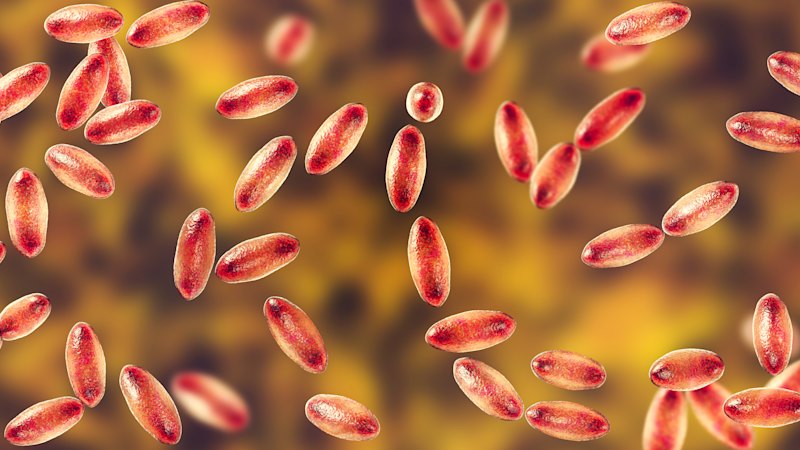
Plague is an infection caused by Yersinia pestis bacteria. asserted
Plague → cause → bacteria
Known as the “Black Death” during the 14th century, the plague triggered several global pandemics over centuries before the discovery of antibiotics. asserted
plague → know → antibiotics
It presents in three main forms: bubonic, pneumonic and septicemic, according to the World Health Organization. uncertain
It → present → Organization
All three are caused by Yersinia pestis, but they occur in different parts of the body. asserted
they → cause → body
Bubonic is the most common form, Morici said. asserted
Morici → say → ?
It is primarily transmitted through bites of infected fleas or direct contact with infected rodents, which can cause painful, swollen lumps in the lymph nodes. asserted
which → transmit → nodes
Left untreated, however, it can spread to the lungs and become pneumonic plague, which can pass from person to person through respiratory droplets, Morici said. Septicemic plague occurs when the bacteria grow and spread in the blood. asserted
bacteria → leave → blood
How does pneumonic plague spread? asserted
plague → spread → ?
Pneumonic plague can spread through the air when an infected person or animal coughs or sneezes. asserted
person → spread → air
The respiratory droplets don’t travel very far, maybe three to six feet, said Dr. Dave Wagner, director of the Pathogen and Microbiome Institute at Northern Arizona University. asserted
Wagner → travel → University
“They drop to the ground pretty quickly.” asserted
They → drop → ground
It’s the rarest form of the disease, according to WHO. uncertain
It → ’ → WHO
Dr. William Schaffer, an infectious diseases expert at Vanderbilt University Medical Center, said close contacts are most at risk. asserted
contacts → say → risk
Pneumonic plague isn’t something that spreads “distantly across a room, but to face-to-face contacts,” he said. asserted
he → spread → contacts
“It’s highly unlikely for most people to get the pneumonic form of the disease,” Morici said. asserted
Morici → ’ → disease
Covid, for example, spreads like wildfire through the air, traveling beyond six feet. “It’s nothing like the Covid-19 pandemic,” she said. asserted
she → spread → pandemic
While pneumonic plague is the rarest form of the disease, it’s also the deadliest. asserted
it → ’ → disease
“It’s the one that’s so frightening because it can kill so quickly,” Morici said. asserted
Morici → ’ → ?
It progresses remarkably fast, Wagner said. asserted
Wagner → progress → ?
Symptoms typically appear within one to two days of exposure, and patients require treatment within 48 hours of showing symptoms to prevent fatal complications. asserted
patients → appear → complications
Symptoms can include shortness of breath and coughing or blood in the phlegm. asserted
Symptoms → include → phlegm
Because of how rapidly it attacks the respiratory system, public health experts consider this strain the most likely candidate for a biological attack, according to Morici. uncertain
strain → attack → Morici
People with pneumonic plague are often quarantined, she said. asserted
she → quarantine → plague
Health care workers will often wear personal protective equipment, such as an N95 mask, or even a full body suit in case of accidental exposure. asserted
workers → wear → exposure
“We’re using the strictest levels of biocontainment,” she said. asserted
she → use → biocontainment
How is it treated? Antibiotics are highly effective against plague, including pneumonic plague. asserted
Antibiotics → treat → plague
“This is why we don’t have big plague outbreaks anymore,” Wagner said. asserted
Wagner → have → outbreaks
Schaffner said there’s no evidence to suggest that the plague bacteria are evolving in a way to become resistant to antibiotics. asserted
bacteria → say → antibiotics
“We will not turn 2026 into the Middle Ages, where the Black Death caused vast amounts of death throughout Europe. asserted
Death → turn → Europe
…and 11 more, not listed.

💬Give feedback
🕘History 🎫Support