Story summary
Dr Roselyn Campbell, a bioarchaeologist from Purdue University, has published research in the journal Frontiers in Environmental Archaeology suggesting that servants of early Egyptian kings may have been sacrificed upon their death. The study re-examined 46 skulls first excavated by British archaeologist Flinders Petrie at the royal cemetery of Umm el-Qa’ab near Abydos, which dates back to around 3,000 BC.
Campbell found significant cranial trauma in 18 out of the 46 skulls, indicating that these individuals may have died due to blunt force injuries shortly before or during burial. The graves surrounding the tombs of First Dynasty rulers were believed to belong to court officials and artisans who served the kings, supporting the theory of retainer sacrifice proposed by Petrie.
The new evidence provides a clearer picture of the violent end that some of these servants may have faced when their royal masters died, offering support for the practice of human sacrifice in ancient Egypt. The study concludes that at least 39% of the individuals represented in the examined skulls might have been deliberately killed as part of this sacrificial tradition.
Written for “Ancient Egyptian King Servant Sacrifice” on 2026-10-05,
grounded in this article and the 2 other(s) covering the same event.
Researchers have found new evidence that some people buried around the tombs of Egypt’s First Dynasty kings may have been deliberately killed after the rulers died.
uncertain
rulers → find → kings
The finding published in journal Frontiers in Environmental Archaeology, comes from a fresh examination of 46 skulls excavated from a royal cemetery at Abydos in the 1920s.
asserted
finding → publish → 1920s
The remains were originally excavated by British archaeologist Flinders Petrie.
asserted
remains → excavate → Petrie
He had suspected that the large number of people buried around the royal tombs could be evidence of retainer sacrifice.
uncertain
number → suspect → sacrifice
In this practice, people close to a ruler were killed after the ruler’s death so they could continue serving the ruler in the afterlife.
uncertain
they → kill → afterlife
However, Petrie had not found clear evidence of fatal injuries on the bones.
asserted
Petrie → find → bones
That left the cause of death uncertain for decades.
asserted
That → leave → decades
The new examination of preserved skulls uses modern forensic knowledge and identified significant cranial trauma in 18 of the 46 skulls studied.
asserted
examination → preserve → skulls
According to the research, at least 39% of the people represented by the examined skulls may have been deliberately killed by blows to the head.
uncertain
% → accord → head
The findings provide new forensic evidence supporting the possibility that retainer sacrifice took place at Abydos about 5,000 years ago.
asserted
sacrifice → provide → Abydos
The burials around royal tombs
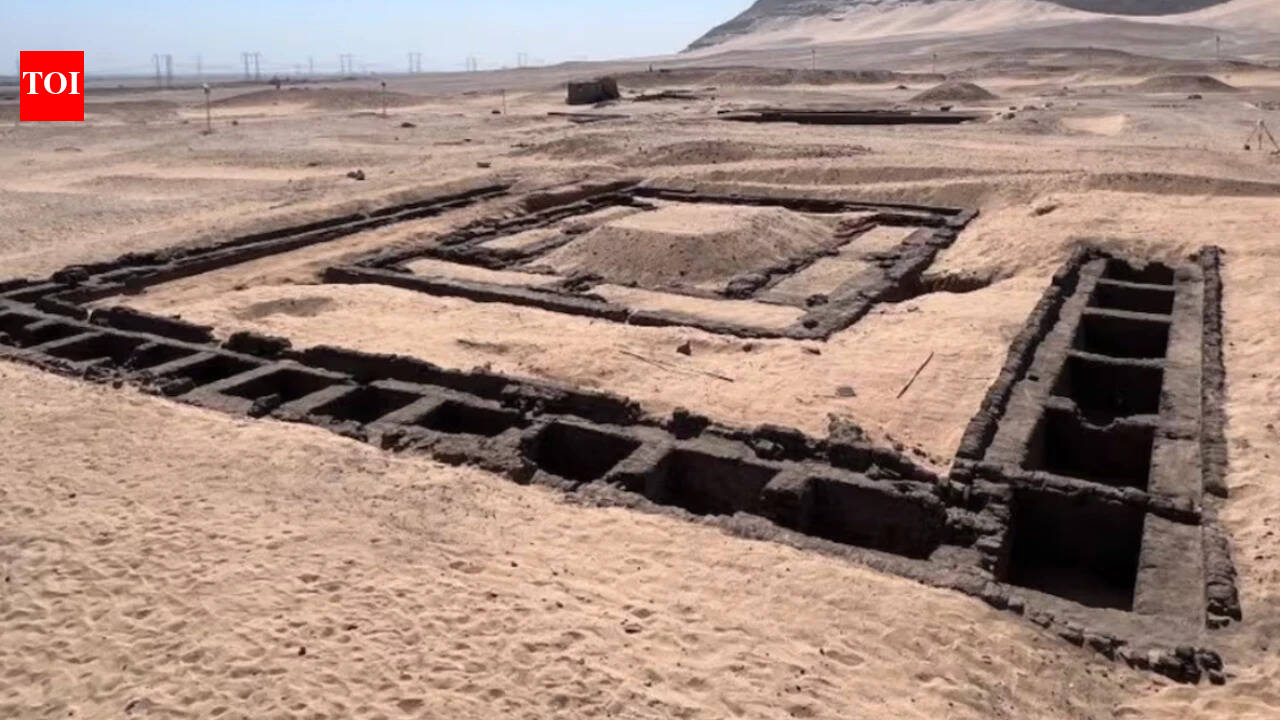
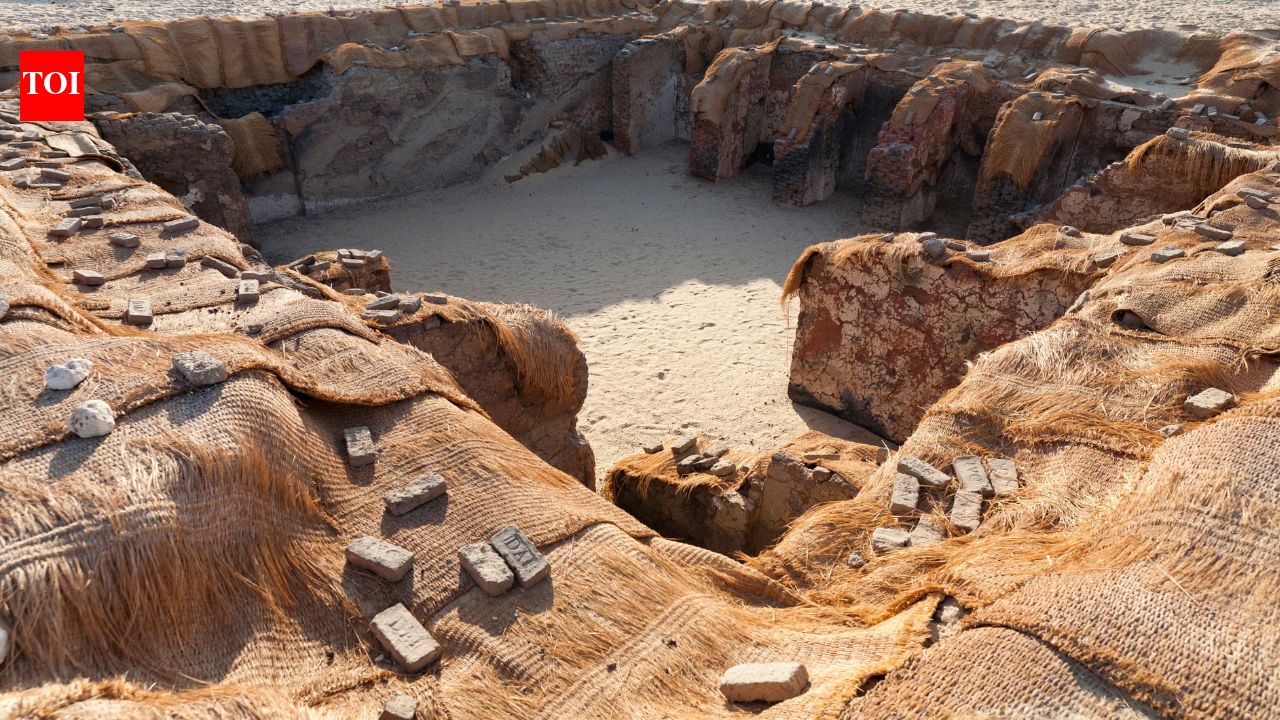
The funerary complexes at Abydos were built around 3000 BCE by the first kings of a unified Egypt.
asserted
complexes → build → Egypt
Along with the royal tombs, the complexes included chamber tombs and enclosures that were probably used for funerary rituals.
asserted
that → include → rituals
The subsidiary graves were arranged in rows, with some royal tombs surrounded by hundreds of burials.
asserted
tombs → arrange → burials
According to Dr Roselyn Campbell, a bioarchaeologist and Egyptologist at Purdue University, each burial was a simple chamber, and some people were buried with a basic coffin.
uncertain
people → accord → coffin
Many graves contained a small number of grave goods, including ceramic vessels, copper tools, projectile points and small ivory figurines.
asserted
graves → contain → vessels
Some of the graves also had markers carrying names or official titles.
asserted
Some → have → names
Campbell says these titles mostly referred to lower- or mid-level officials and artisans.
asserted
titles → say → officials
The large number of burials led Petrie to question whether all the deaths could have happened naturally.
uncertain
deaths → lead → Petrie
The clustering of the graves around royal tombs also raised the possibility that these people had died at the same time as the rulers they were associated with.
asserted
they → raise → rulers
Why Petrie suspected mass sacrifice
Retainer sacrifice refers to the killing of people close to a ruler when the ruler dies.
asserted
ruler → suspect → ruler
The belief behind the practice in some cultures was that those people would continue serving the ruler after death.
asserted
people → continue → death
But the practice could also serve as a display of the ruler’s power.
uncertain
practice → serve → power
Campbell said some retainers may have volunteered to die because they believed it could bring them eternal life or honour, while others could have been selected or forced.
uncertain
others → say → life
The re-examination identified significant cranial trauma in 18 of the 46 skulls (Representational AI photo)
The Abydos burials had features that made Petrie suspect such a practice.
asserted
Petrie → identify → practice
However, the absence of obvious lethal injuries meant that there was no direct physical evidence to prove that the people had been killed.
asserted
people → mean → injuries
Campbell, from Purdue University, decided to revisit the surviving remains using modern forensic knowledge.
asserted
Campbell → decide → knowledge
She searched for material from Petrie’s excavations and found 46 skulls in the Duckworth Collection at the University of Cambridge.
asserted
She → search → Cambridge
Modern forensics find injuries
The re-examination identified significant cranial trauma in 18 of the 46 skulls.
asserted
examination → find → skulls
The injuries included linear fractures, which appear as lines or breaks in the skull.
asserted
which → include → skull
Campbell said Petrie appears to have interpreted some of these injuries as damage caused naturally after death.
asserted
Petrie → say → death
Modern forensic methods, however, allow researchers to recognise them as perimortem injuries, meaning injuries that occurred around the time of death.
asserted
that → allow → death
“The injuries on the preserved crania are generally linear fractures, which would likely cause rapid unconsciousness, internal bleeding, and death,” Campbell said.
asserted
Campbell → preserve → unconsciousness
Some of the 18 skulls also showed evidence of sharp-force trauma.
asserted
Some → show → trauma
One individual had a chopping injury around the eye.
asserted
individual → have → eye
The researchers cannot determine exactly how the injuries were inflicted.
asserted
injuries → determine → ?
Egyptian kings are often shown using a mace to strike enemies, but the people buried around these royal tombs were not enemies.
asserted
people → show → tombs
A mace would also be expected to cause depressed fractures, rather than the linear fractures found on these skulls.
asserted
mace → expect → skulls
Linear fractures can be caused by a flat, wide weapon or by a fall.
asserted
fractures → cause → fall
However, a fall powerful enough to cause such a fracture would probably also have broken other bones.
asserted
fall → cause → bones
Such injuries should have been visible in Petrie’s photographs or mentioned in his notes, according to the research.
uncertain
injuries → mention → research
…and 9 more, not listed.
 The Aporia