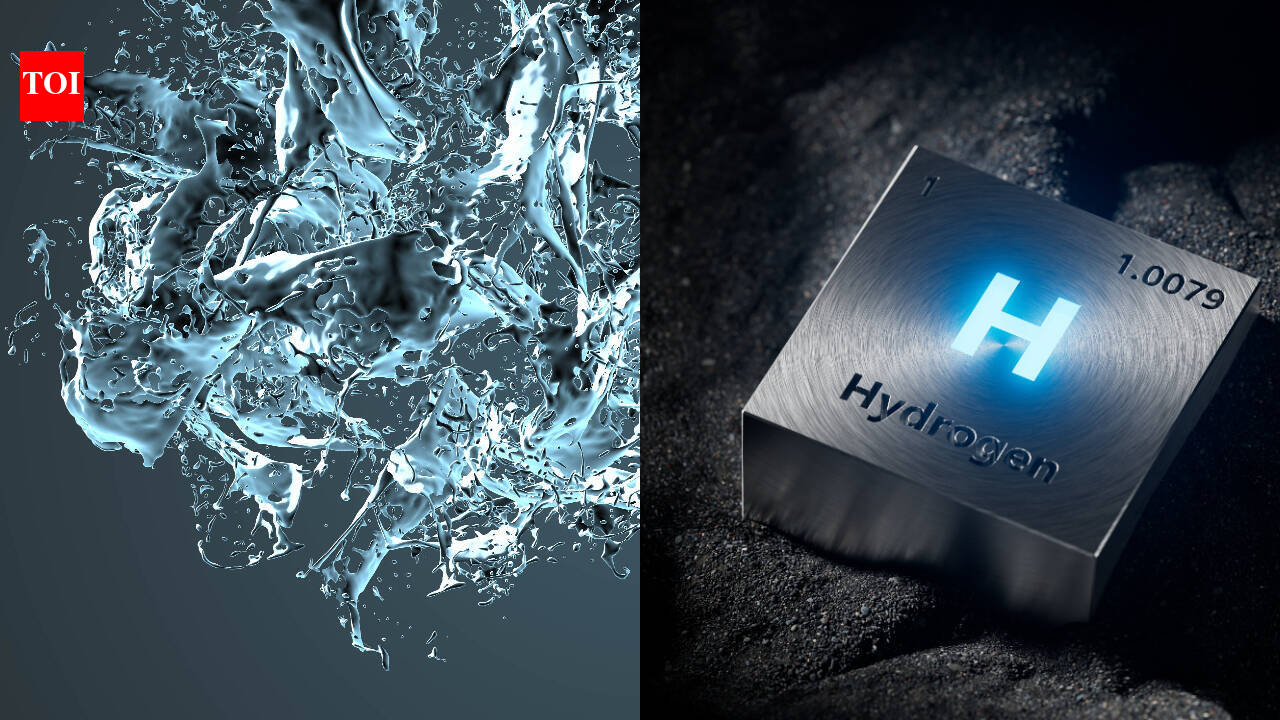
New light-powered material could make clean hydrogen cheaper to produce

Read the original at Times of India ↗
Times of India · collected 2026-10-05 · by TOI Science Desk

Quick Summary

Researchers at Oregon State University have developed a new material that uses light to split water and produce hydrogen, potentially making clean hydrogen cheaper to manufacture. Led by Kyriakos Stylianou, the team created a photocatalyst from metal-organic frameworks (MOFs) that can convert light energy into chemical reactions without requiring expensive metal catalysts. The MOF named BVR-19 is notable for its sulfur bonds which break and react when exposed to light, facilitating hydrogen production efficiently and sustainably.
Written locally by qwen2.5:14b on 2026-10-05, using this article's own text rather than the other coverage of the same event (that is the story summary below).

AI analysis runs on qwen2.5:14b, locally

Story summary

Researchers at Oregon State University led by Kyriakos Stylianou have developed a new material that uses light to split water and produce hydrogen, potentially making clean hydrogen fuel more accessible. This breakthrough involves using metal-organic frameworks (MOFs), which are crystalline porous materials made of metal ions and organic linkers, capable of harnessing light energy to accelerate chemical reactions needed for hydrogen generation. Published by Science Daily, the study highlights that MOFs can be modified at a molecular level, offering significant design flexibility. With over 100,000 different structures already synthesized and hundreds of thousands more predicted computationally, this technology could revolutionize sustainable hydrogen production methods by reducing reliance on expensive metal catalysts.

Written for “Clean Hydrogen Production Advances” on 2026-10-05, grounded in this article and the 0 other(s) covering the same event.

Signals How these are calculated →

Claims extracted
29
claim-shaped sentences
Uncertain
10%
3 of 29 hedged
Leaning
not political
takes no side on a contested political question
Correction & hedging signals
59.0
corrections and hedging in what we collected; not a measure of accuracy
Outlets on this story
1
Science
Narrative spread
1
articles carrying this framing
Analyzed 2026-10-05 · how these are computed

Story

📰 Clean Hydrogen Production Advances
Science · 1 article(s) covering the same event.

How this is being covered How these are calculated →

Article leaning vs. publisher reliability
Source leaning vs. consistency

Compared with similar articles

Nothing to compare against. No article is close enough to this one for the pipeline to have linked or judged the pair.

Publisher

Times of India · 1764 article(s) · 2 correction(s) detected
Running correction rate · 2 correction(s)
2026-10-05
NASA spacecraft gains 3.5 km/s speed from Earth’s gravity assist without major engine burn
2026-10-04
Tennessee prison chief Frank Strada resigns after Christa Pike's botched execution

Who wrote this

TOI Science Desk
179 article(s) here · 1 carrying a prediction
🔮 The problem was that the feature the sign appeared to identify could not be found there.
🔮 For sharks, however, sound may offer an early warning system, carrying information about prey, predators and movement through the water long before anything comes into view.
🔮 Researchers have found new evidence that some people buried around the tombs of Egypt’s First Dynasty kings may have been deliberately killed after the rulers died.
🔮 The sheer design potential of MOFs is enormous and while scientists have already synthesised nearly 100,000 different structures, hundreds of thousands more have been predicted computationally.
🔮 By dating zircon from impact-melted granite, researchers may have found a distinct group of grains with an age of nearly 370 million years, suggesting the crater formed during the Late Devonian.
🔮 He wanted to know whether sound could change how much water the machine collected.
🔮 The Seattle District’s Navigation Section removes objects and debris that could damage vessels or create risks to public health, recreation or the environment in publicly maintained commercial boat harbours.
🔮 In Florida, researchers tested whether ash left over from burning everyday waste could safely sit beneath a working road.
🔮 It also found that some programmes had unintended consequences, including the removal of non-target species and effects that may inadvertently benefit target species, though these are not universal.
🔮 The work is expected to continue through 2027, according to the US Environmental Protection Agency.
Wire or desk byline, not an individual reporter.
Also by TOI Science Desk
Nothing else under this byline is closely related to this article, so these are simply their most recent.
All 179 articles by TOI Science Desk →

Topics

OSU Oregon State University Science Daily the OSU College of Science

Subjects

Kyriakos Stylianou PERSON · 1× OSU ORG · 1× Oregon State ORG · 1× Oregon State University ORG · 1× Science Daily ORG · 1× the OSU College of Science ORG · 1×

Narrative

Led by Kyriakos Stylianou of the OSU College of Science, the research centres on a specially designed photocatalyst that can harness light energy to accelerate the chemical reactions needed to generate hydrogen, states the research study published by Science Daily.
framing: assertive · carried by 1 article(s) · first seen 2026-10-05
🔮 The sheer design potential of MOFs is enormous and while scientists have already synthesised nearly 100,000 different structures, hundreds of thousands more have been predicted computationally.
2026-10-05 · Times of India
New light-powered material could make clean hydrogen cheaper to produce · assertive framing

Claims (29 extracted, 3 hedged)

Hydrogen has long carried the promise of becoming a cleaner fuel, but making it sustainably remains one of the biggest challenges. asserted
making → carry → challenges
Now, researchers at Oregon State University have developed a new material that uses light to split water and produce hydrogen, opening another possible route to solar-powered fuel production without relying on an expensive metal catalyst. asserted
that → develop → catalyst
Led by Kyriakos Stylianou of the OSU College of Science, the research centres on a specially designed photocatalyst that can harness light energy to accelerate the chemical reactions needed to generate hydrogen, states the research study published by Science Daily. asserted
study → lead → Daily
Turning light into chemical energy asserted
Turning → turn → energy
According to the research, a photocatalyst works much like an ordinary catalyst, speeding up a chemical reaction without being consumed by it. uncertain
photocatalyst → accord → it
The difference is that light activates the material, pushing it into a higher-energy state and allowing it to drive reactions more efficiently. asserted
it → activate → reactions
To do that, the OSU team looked to metal-organic frameworks, or MOFs. asserted
team → do → frameworks
They are crystalline porous materials made of metal ions and organic molecules called the linkers. asserted
They → make → ions
Their structures can be modified at the molecular level, giving researchers considerable control over their chemical and physical properties. asserted
structures → modify → properties
The sheer design potential of MOFs is enormous and while scientists have already synthesised nearly 100,000 different structures, hundreds of thousands more have been predicted computationally. asserted
thousands → synthesise → structures
For the new study, researchers focused on a MOF known as BVR-19. asserted
researchers → focus → BVR-19
When exposed to light, that bond can temporarily break, generating highly reactive sulfur species. asserted
bond → expose → species
These then help capture light energy and move electrons through the material, ultimately supporting the production of hydrogen from water, states the study. asserted
study → help → water
This mechanism is significant because the organic component, rather than the metal centre, plays the leading role in the light-driven chemistry. asserted
component → play → chemistry
That gives BVR-19 a fundamentally different operating principle from many conventional photocatalytic systems. asserted
That → give → systems
It also eliminates the need for an additional costly metal catalyst, potentially simplifying the design of future systems aimed at producing hydrogen using sunlight. asserted
It → eliminate → sunlight
Made in water, at room temperature BVR-19 has another feature that could prove valuable for practical applications. uncertain
that → make → applications
The material forms spontaneously in an aqueous solution at room temperature, meaning its production does not require large amounts of energy, the study mentions. asserted
study → form → energy
That could become important as researchers look beyond laboratory performance and consider the overall energy and environmental cost of producing photocatalytic materials themselves. uncertain
researchers → become → materials
The green hydrogen challenge Hydrogen is already essential to industries ranging from ammonia production and metal refining to plastics manufacturing, and it is increasingly being explored for fuel-cell vehicles and other energy applications. asserted
it → range → vehicles
Much of today's hydrogen, however, is produced through methane-steam reforming, a process that releases carbon dioxide. asserted
that → produce → dioxide
Splitting water using renewable electricity or sunlight offers a cleaner alternative, but the economics remain difficult. asserted
economics → split → alternative
Conventional hydrogen production through methane-steam reforming costs roughly $1.50 per kilogram, while green hydrogen can cost around $5 per kilogram. asserted
hydrogen → cost → kilogram
Lowering that gap will require cheaper materials, efficient reactions and less energy-intensive production methods, the study also highlights. asserted
study → lower → materials
A new blueprint for solar fuel The Oregon State research offers more than a new photocatalyst. asserted
research → offer → photocatalyst
By examining how changes to the metal component influence the performance of closely related MOFs, the researchers identified structural clues that can help guide the development of more effective materials. asserted
that → examine → materials
The larger goal is to make solar-powered hydrogen production more efficient and less expensive. asserted
production → make → ?
BVR-19 remains a research-stage material, and more work will be needed to assess its performance at larger scales and in real-world conditions. asserted
work → remain → conditions
But its unusual chemistry offers a promising new direction: using light, water and carefully engineered materials to turn a basic chemical reaction into a potential source of cleaner fuel. asserted
chemistry → offer → fuel

💬Give feedback
🕘History 🎫Support