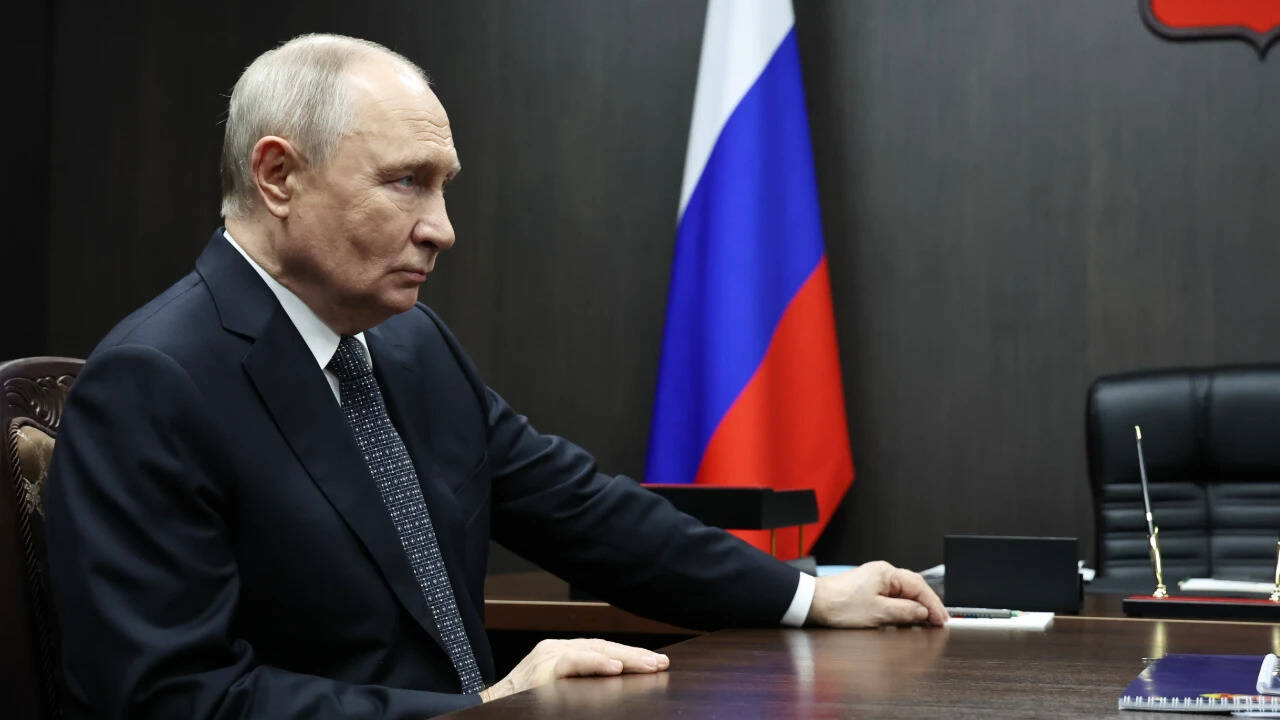
Photo via Times of India

Russia cuts education and healthcare budget as war spending hits new high

Read the original at Times of India ↗
Cite

Singh, R. (2026, October 4). Russia cuts education and healthcare budget as war spending hits new high. Times of India. https://timesofindia.indiatimes.com/world/europe/russia-cuts-welfare-education-and-healthcare-budget-as-war-spending-hits-new-high/articleshow/134670322.cms

Dated when The Aporia collected the article, usually within hours of publication. Check the original for its exact date and byline.

Times of India · collected 2026-10-04 · by Rajeev Singh

Quick Summary

Russia plans to increase military spending by 27% in its 2027 federal budget to 17.1 trillion roubles ($202.58 billion) for the war in Ukraine, as reported by Reuters. This significant boost in defence funds comes at the expense of welfare, education, and healthcare, which face cuts ranging from 6% to 7%. The government also proposes raising taxes and utility costs amid growing financial strain due to sustained military operations.
Written by AI on 2026-10-04, from this article's own text only (the story summary below draws on all the coverage).
See how they differ ↓

AI analysis

Story summary

In 2027, Russia will cut funding for welfare, education, and healthcare by significant percentages as it increases military spending to unprecedented levels. The country plans to spend 17.1 trillion roubles ($202.58 billion) on defense in 2027 alone, a 27% increase from the original budget of 13.5 trillion roubles, making it the highest military spending since Russia's invasion of Ukraine began in 2022. Welfare funding will shrink by 7%, education by 6%, and healthcare by 6.8%. Additionally, Russia's federal cancer program budget is being slashed from 44.9 billion roubles to just 3.87 billion roubles, a nearly 12-fold reduction. These cuts reflect the strain of war on Russian finances, forcing Moscow to tap into fiscal reserves, increase borrowing, and raise taxes to fund its expanding military expenditure while prioritizing defense over social programs.

Written for “Russia War Spending” on 2026-11-18, grounded in this article and the 5 other(s) covering the same event.

How they differ

6 outlets covered “Russia War Spending”.

What each outlet says

One AI summary per outlet of its latest article on this story, written from that article alone and checked against it. Open the article for the outlet's own words.

Times of IndiaThis outlet4 Oct

Russia plans to increase military spending by 27% in its 2027 federal budget to 17.1 trillion roubles ($202.58 billion) for the war in Ukraine, as reported by Reuters. This significant boost in defence funds comes at the expense of welfare, education, and healthcare, which face cuts ranging from 6% to 7%. The government also proposes raising taxes and utility costs amid growing financial strain due to sustained…

Russia cuts education and healthcare budget as war spending hits new high (this article)
The Straits Times29 Sep

Russia plans to reduce funding for welfare, education, and healthcare by significant percentages in its 2027 budget to support a massive increase in military spending, which will rise to 17.1 trillion roubles ($202.58 billion), up from the previously planned 13.5 trillion roubles. The article highlights that these cuts are part of Russia's ongoing efforts to manage its deteriorating fiscal situation since the start…

Russia to cut welfare, education funding in 2027 as war spending soars →
The Independent30 Sep

Russia plans to increase its defense spending by £150 billion next year to support its ongoing war with Ukraine, according to a draft budget submitted to parliament. German Chancellor Friedrich Merz identified Ukraine's lack of air defense missiles as its "weakest point," urging allies to secure additional supplies before winter. Merz warned that Russia would continue to target civilian infrastructure but stressed…

Ukraine-Russia war latest: Putin to inject £150bn into war effort as Germany identifies Kyiv’s ‘weakest point’ →
Daily Mail30 Sep

Vladimir Putin is increasing Russian defense spending to a record 35% of the state budget next year, allocating around £154 billion for military expenses. This move contrasts with the UK government's hesitation under Prime Minister Andy Burnham to boost its own defense spending to meet NATO targets. While Putin prepares to spend heavily on military, potentially destabilizing Russia’s economy by 2028, the UK debates…

Are you watching Streeting? Putin's war chest to rise to record 35% of state budget by next year as he slashes welfare, education and healthcare to fund 17.1trillion ruble (£154bn) military →
Washington Examiner2 Oct

Russia plans to increase its defense spending by 27% to 17.1 trillion rubles ($205 billion) for the year 2027, part of a larger commitment over three years totaling 50 trillion rubles ($600 billion). This surge includes cutting funding from welfare, education, and healthcare while raising taxes and borrowing more. In contrast, Europe and the United States are criticized for not adequately organizing their resources…

Russia surges defense spending as the West dithers →
Euronews9 Oct

Russia is cutting its federal cancer programme budget from 44.9 billion to 3.87 billion roubles for 2027, a nearly forty-fold reduction compared to 2025 levels, as defence spending reaches an all-time high of 35% since the Soviet Union's collapse. This drastic reduction in health funding is coupled with a growing trend of Russian cancer patients bearing more out-of-pocket costs; a study found that between 2019 and…

Russia slashes cancer care as defence spending hits post-Soviet record →

Where they agree and split

Framing

How the first headlines put it

Stated as fact2
The headlines (2)

Russia to cut welfare, education funding in 2027 as war spending soars The Straits Times · stated as fact

Ukraine-Russia war latest: Putin to inject £150bn into war effort as Germany identifies Kyiv’s ‘weakest point’ The Independent · stated as fact

The full story: what happened, how it changed, and all 6 articles →

Compared with similar articles

This article reads leans left and hedges 9% of its claims. Each row says how that neighbour differs.
The Straits Times
Leans strongly right further right than this Hedges 0 of 11 claims Outlet record 64/100
Washington Examiner
Leans right further right than this Hedges 2 of 32 claims Outlet record 67/100
Euronews
Leans strongly left further left than this Hedges 3 of 16 claims Outlet record 60/100
The Independent
Hedges 6 of 56 claims Outlet record 59/100
“While both articles discuss increased military spending by Russia related to the war with Ukraine, they describe different budget proposals at distinct points in time.”

Story

Russia War Spending
Politics · 6 article(s) covering the same event. Compare every outlet's account →
How this article was measured signals, leaning charts, publisher record, byline, topics and claims

Signals How these are calculated →

Claims extracted
23
sentences that state something as happening or true
Uncertain
9%
2 of 23 hedged ("reportedly", "may", "according to")
Leaning
Leans left
of the writing, not the subject · beta estimate
Publisher signals
59/100
Times of India's corrections and hedging, across everything collected from it. Not a measure of accuracy.
Outlets on this story
6
Politics
Same framing elsewhere
1
articles that frame the event the way this one does
Analyzed 2026-10-04 · how these are computed

How this is being covered How these are calculated →

Article leaning vs. publisher reliability
Source leaning vs. consistency

Publisher

Times of India · 5272 article(s) · 6 correction(s) detected
Running correction rate · 6 correction(s)

Who wrote this

Rajeev Singh
37 article(s) here · 1 carrying a prediction
President Bassirou Diomaye Faye expressed condolences to the families of those who died and appealed to Senegalese citizens not to risk their lives on dangerous sea journeys.
US President Donald Trump has said Brazilian politician Flavio Bolsonaro can remain in the United States for as long as he wishes, signalling that tensions between Washington and Brasilia could continue despite recent diplomatic contact between the two countries.
Senior aides, including deputy chief of staff Stephen Miller and budget director Russell Vought, have been working with the White House Counsel's Office since April to identify measures Trump could pursue without congressional approval, reported news agency Reuters.
Their demand comes amid a recent government announcement of a new pay scale for public sector employees, which is expected to nearly double their salaries and benefits.
British prime minister Andy Burnham has indicated that he is willing to consider calls for a formal apology for Britain's involvement in the transatlantic slave trade, but has ruled out paying financial reparations for historical injustices.
He also confirmed thats the legacy of slavery would be discussed by Commonwealth leaders at their upcoming summit.
Reuters could not establish how far the US investigation had progressed or whether investigators had identified the cause of the malfunctions or those responsible.
In May, they struck the basement of a former hotel where two Russian assault units were staying, killing 20 soldiers, including a captain.
Pope Leo XIV is set to undergo surgery in the coming days to remove a small nodule from his lung, which doctors discovered during a recent medical examination.
The diplomatic relationship between Britain and Israel has suffered a fresh setback after Israel said the British Consulate in east Jerusalem would no longer function as a consulate, with 20 British diplomats, including the consul general, set to leave the country.
Also by Rajeev Singh
Nothing else under this byline is closely related to this article, so these are simply their most recent.
All 37 articles by Rajeev Singh →

Topics

Kremlin Moscow Reuters Russia Ukraine

Subjects

Russia GPE · 6× Ukraine GPE · 3× Moscow GPE · 2× Kremlin ORG · 1× Reuters ORG · 1× Russian NORP · 1× State Duma ORG · 1× United Russia ORG · 1×

Narrative

That is about 27% higher than the 13.5 trillion roubles originally allocated for defence and would be the highest military spending level since Russia launched its full-scale invasion of Ukraine in 2022.
framing: assertive · carried by 1 article(s) · first seen 2026-10-04
That is about 27% higher than the 13.5 trillion roubles originally allocated for defence and would be the highest military spending level since Russia launched its full-scale invasion of Ukraine in 2022.
2026-10-04 · Times of India
Russia cuts education and healthcare budget as war spending hits new high · assertive framing

Claims (23 extracted, 2 hedged)

Russia is preparing to cut spending on welfare, education and healthcare in its 2027 federal budget while raising taxes, as the government struggles to meet the rising cost of its war in Ukraine, according to fiscal documents reviewed by Reuters. uncertain
government → prepare → Reuters
The draft budget proposes 17.1 trillion roubles ($202.58 billion) for defence in 2027. asserted
budget → propose → 2027
That is about 27% higher than the 13.5 trillion roubles originally allocated for defence and would be the highest military spending level since Russia launched its full-scale invasion of Ukraine in 2022. asserted
Russia → allocate → 2022
Military spending takes priority asserted
spending → take → priority
The increase in defence spending comes as Russia's finances have come under growing pressure during the four-and-a-half-year war. asserted
finances → come → war
Moscow has used its fiscal reserves, borrowed more money and raised taxes to help finance its expanding military expenditure. asserted
Moscow → use → expenditure
The new budget would reduce spending on social policy by 7% from the initial plan. asserted
budget → reduce → plan
This area covers state pensions, payments to war veterans and maternity benefits. asserted
area → cover → veterans
Education spending would fall by 6%, while healthcare funding would be cut by 6.8%. asserted
funding → fall → %
Spending under the "national economy" category, which includes road building, infrastructure projects and subsidies for agriculture and other industries, would also fall by 7.4%. asserted
which → include → %
Russia is preparing a three-year budget to improve long-term financial planning, but its budget projections have repeatedly been revised as the war has continued. asserted
war → prepare → planning
The government has also missed its annual deficit targets several times. asserted
government → miss → targets
Higher taxes and rising household costs The pressure on public finances is also being felt through higher taxes and other costs. asserted
pressure → rise → taxes
The 2027 draft budget includes new tax increases, while utility tariffs are also expected to rise by more than previously planned. asserted
tariffs → include → more
Those measures have angered some supporters of the Kremlin, particularly after they were announced following this month's parliamentary election. asserted
they → anger → election
The new State Duma is expected to approve the budget. asserted
Duma → expect → budget
The pro-Kremlin United Russia party is set to retain a constitutional majority, while Russian authorities have repeatedly said that winning the war in Ukraine takes priority over other spending needs. asserted
winning → set → needs
Debt costs add to the pressure Russia's financial burden is not limited to military spending. asserted
burden → add → spending
The government is also spending more on servicing its debt as high interest rates increase borrowing costs. asserted
rates → spend → costs
Debt-servicing costs in 2027 are expected to be 21.6% higher than originally planned. asserted
costs → service → 2027
They are projected to account for 9.4% of total government spending next year and could rise further to 10.6% by 2029. uncertain
They → project → 2029
The federal budget does not include regional and municipal spending, which also accounts for a significant portion of Russia's social expenditure. asserted
which → include → expenditure
Even so, the latest figures show how the prolonged war is forcing Moscow to devote more of its finances to defence while putting pressure on other areas of government spending. asserted
war → show → spending
Give feedback · no sign-in needed

No sign-in needed for now. Your note is sent without a name, so it cannot be answered.

History Support