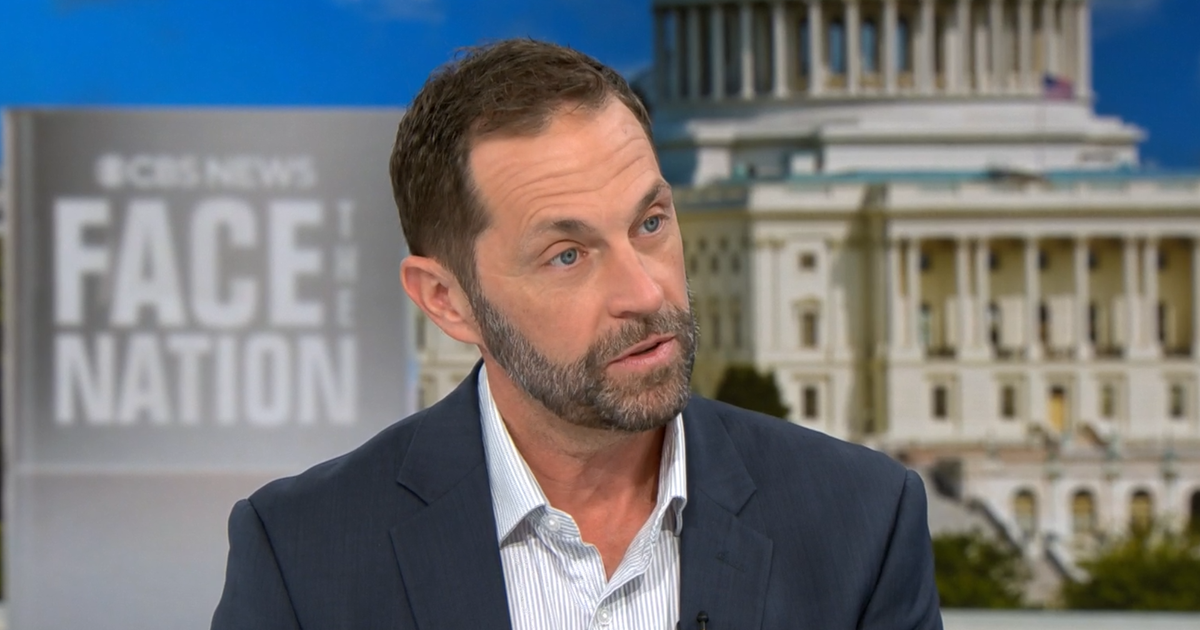
Top US military officials face lie detectors in leak hunt

Dawn - Home · collected 2026-09-06 · by Agencies
Read the original at Dawn - Home ↗

Summary

The Pentagon is conducting polygraph tests on around 50 members of its Joint Staff, including senior military officers and civilian employees, as part of an investigation into leaks about US munitions stockpiles. The testing aims to identify who revealed classified information about depleted ammunition supplies following months of fighting in Iran. The wide-scale use of lie detectors is rare for a leak investigation, according to analysts cited by unnamed officials. Pentagon chief spokesman Sean Parnell said the department takes all leaks of classified national security information "extremely seriously" and investigates accordingly.
Written by the local model on 2026-09-06, using this article's own text rather than the other coverage of the same event (that is the story summary below).

Signals How these are calculated →

Claims extracted
14
claim-shaped sentences
Uncertain
7%
1 of 14 hedged
Leaning
withheld
no quote in the article backed the model's score
Publisher trust
95.4
red-flag proxy, not a credibility rating
Outlets on this story
22
Politics
Narrative spread
1
articles carrying this framing
Analyzed 2026-09-06 · how these are computed

AI analysis (generated at analysis time, not now)

Story summary

President Donald Trump was furious about leaked information about the US military's munitions stockpiles, and as a result, the Pentagon subjected approximately 50 members of the Joint Staff to polygraph tests in August. The tests were conducted after news reports detailed how the conflict with Iran had strained US supplies of critical munitions, including long-range missiles and Patriot air-defense interceptors.

The investigation was part of a broader effort by the Defense Secretary Pete Hegseth and the Justice Department to identify and prosecute people suspected of leaking sensitive government information to the press. No one failed the polygraph test questions intended to pinpoint the leaker, according to multiple sources, including CBS News.

This move has been seen as a show of force aimed at not just ferreting out anyone who may have shared information but also intimidating others who might do so in the future. The Joint Staff is responsible for coordinating operations, policy, and war plans with combatant commanders around the world, with between 1500 to 2000 officers and officials working there.

It's worth noting that polygraph tests are not uncommon in the US government, especially for high-level security clearance holders who could be subject to testing every five to seven years. However, the scale of this investigation is unusual, with multiple sources suggesting it was a response to Trump's personal frustration over the leaked information.

Written for “Pentagon Polygraph Crackdown” on 2026-09-07, grounded in this article and the 21 other(s) covering the same event.
Why this leaning score
The model judged this article politically coded and scored it +0.35, but none of the 1 quote(s) it offered could be found in the article text, so the score is not published.
Written under an earlier scoring contract, which gave a paragraph rather than checkable quotes. Re-analysing this article replaces it.
Leaning score withheld for article 5428: no verified evidence · logged 2026-09-06

Story

📰 Pentagon Polygraph Crackdown
Politics · 22 article(s) covering the same event.

How this is being covered How these are calculated →

Article leaning vs. publisher reliability
Source leaning vs. consistency

Compared with similar articles

This article reads unscored and hedges 7% of its claims. Each row says how that neighbour differs.
The Straits Times World News · 0.94 cosine similarity
⚖️ Centre 🔴 9% hedged 1 of 11 📰 publisher trust 94
“Both articles report on the exact same incident: the Pentagon's use of lie-detectors to investigate a leak about US munitions stockpiles, with identical details and quotes from President Trump.”
The Straits Times World News · 0.87 cosine similarity
⚖️ Centre 🔴 33% hedged 1 of 3 📰 publisher trust 94
“Both articles report on the same incident: the Pentagon subjecting 50 members of the Joint Staff to polygraph tests as part of a leak investigation, specifically related to information about US munitions stockpiles in the context of the Iran war.”
Sydney Morning Herald - Latest News · 0.87 cosine similarity
⚖️ leaning not scored 🔴 12% hedged 3 of 24 📰 publisher trust 97
“Both articles report on the same Pentagon investigation, using polygraph tests to identify leakers about US munitions stockpiles and the Iran war, with identical details such as dates and events.”
The Dispatch
⚖️ Leans left 🔴 8% hedged 4 of 50 📰 publisher trust 96
“Article A discusses Army Secretary Dan Driscoll's resignation and its implications, while Article B refers to a separate investigation into leaks at the Pentagon.”
Washington Examiner
⚖️ leaning not scored 🔴 42% hedged 5 of 12 📰 publisher trust 96
“Both articles describe the same incident: the Pentagon's use of polygraph tests to investigate suspected leaks about U.S. munitions stockpiles, with both mentioning the war with Iran and depleted supplies.”
TIME
⚖️ Leans strongly right 🔴 14% hedged 10 of 69 📰 publisher trust 95
“Both articles describe the same investigation and polygraph tests administered by the Pentagon in August, as part of an effort to identify who leaked information about US munitions stockpiles.”
The Independent World
⚖️ Leans strongly left 🔴 7% hedged 2 of 29 📰 publisher trust 58
“Article A discusses a lie-detector investigation to identify leaks about US munitions stockpiles, while Article B describes an accusation by Frank Kendall III against Defense Secretary Pete Hegseth regarding a 'culture of fear' in the Pentagon”
The Department of Defensiveness different event · 90%
The Dispatch
⚖️ Leans left 🔴 0% hedged 0 of 2 📰 publisher trust 96
“Article A describes a general statement from the Pentagon about transparency, whereas Article B reports on a specific investigation into leaks about US munitions stockpiles”
US news | The Guardian
⚖️ Leans strongly left 🔴 9% hedged 6 of 68 📰 publisher trust 96
“Article A discusses Pete Hegseth's leadership and a potential response to Iran, while Article B is about an investigation into a leak of information about US munitions stockpiles”
Home - CBSNews.com
⚖️ Leans strongly left 🔴 6% hedged 1 of 18 📰 publisher trust 60
“Article A mentions a leak hunt for rationing munitions, while Article B refers to an investigation led by Defense Secretary Pete Hegseth into a leak about stockpiles of sophisticated weapons”

Publisher

Dawn - Home · 137 article(s) · 0 correction(s) detected
SignalValueWeight
Correction rate 0.000 0.4
Uncertainty density 0.093 0.25
Assertive mismatch rate 0.000 0.35
No corrections detected for this publisher. That may mean careful reporting, or simply that nothing has been checked.

Who wrote this

No reporter is named on this article, beyond the feed's “Agencies”.

Topics

Defence Iran Pentagon WASHINGTON the United States

Subjects

Pentagon ORG · 5× Defence ORG · 2× Iran GPE · 2× Pete Hegseth PERSON · 2× the United States GPE · 2× CBS News ORG · 1× Donald Trump PERSON · 1× Joint Staff ORG · 1× The New York Times ORG · 1× WASHINGTON GPE · 1×

Narrative

Asked about the reports, the Pentagon’s chief spokesman, Sean Parnell, refused to comment on “internal personnel or investigative matters,” but said that it “takes all leaks of classified national security information extremely seriously and investigates accordingly.” “Securing classified information is critical to ensuring the security of the United States and of our troops deployed around the world,” Parnell added.
framing: assertive · carried by 1 article(s) · first seen 2026-09-06
2026-09-06 · Dawn - Home
Top US military officials face lie detectors in leak hunt · assertive framing

Claims (14 extracted, 1 hedged)

The Pentagon has launched a lie-detector dragnet to comb through high-ranking military officials and identify who leaked information about US munitions stockpiles, according to US press reports. uncertain
who → launch → reports
In July, reports emerged that the United States was rationing munitions — its missile interceptors, in particular — over supply concerns after several months of fighting Iran. asserted
rationing → emerge → Iran
Administration officials vehemently denied those reports, with President Donald Trump saying “we have a lot of ammunition, different types,” while acknowledging that “for some of the more sophisticated stuff, we’d certainly like to have more.” asserted
we → deny → more
Late on Friday, The New York Times reported that some 50 members of the military’s Joint Staff — the Pentagon’s planning and advisory staff — were being required to take polygraph tests as part of an investigation into how classified stockpile information made its way into journalists’ hands. asserted
information → report → hands
The polygraph tests aim to find out who leaked information about munition depletion to the media CBS News later also reported the wide-scale use of lie detectors, while adding that the chairman of the Joint Chiefs of Staff, General Dan Caine, had not been tested. asserted
chairman → aim → Staff
Both outlets cited unnamed officials. asserted
outlets → cite → officials
Asked about the reports, the Pentagon’s chief spokesman, Sean Parnell, refused to comment on “internal personnel or investigative matters,” but said that it “takes all leaks of classified national security information extremely seriously and investigates accordingly.” “Securing classified information is critical to ensuring the security of the United States and of our troops deployed around the world,” Parnell added. asserted
Parnell → ask → world
Both the Times and CBS noted the scale of the polygraph testing. asserted
Times → note → testing
But the wide-scale deployment of the detectors as part of a leak investigation was rare, if unprecedented, the outlets reported, citing analysts and unnamed officials. asserted
outlets → report → analysts
Ammunition stockpiles leaks The Pentagon launched an unprecedented investigation subjecting roughly 50 senior military officers and civilian employees to polygraph tests following media leaks regarding depleted US ammunition stockpiles from military conflict with Iran. asserted
Pentagon → launch → Iran
The inquiry, which critics characterise as an intimidation tactic engineered by Defence Secretary Pete Hegseth, aligns with broader Department of Defence initiatives to enforce stricter informational controls. asserted
critics → characterise → controls
The Department of Defence launched an extensive internal investigation, subjecting senior military officers and civilian personnel on the Joint Staff to polygraph examinations following unauthorised disclosures regarding dwindling US munition stockpiles. asserted
Department → launch → stockpiles
Rather than relying on the Federal Bureau of Investigation, Defence Secretary Pete Hegseth utilised the military’s internal investigative assets to execute the sweep, reflecting an institutional shift toward a more aggressive counterintelligence posture. asserted
Hegseth → rely → posture
This probe followed the establishment of a joint task force between the Pentagon and the Justice Department designed to aggressively identify and prosecute suspected leakers. asserted
probe → follow → leakers
💬 Give feedback
🕘 History 🎫 Support