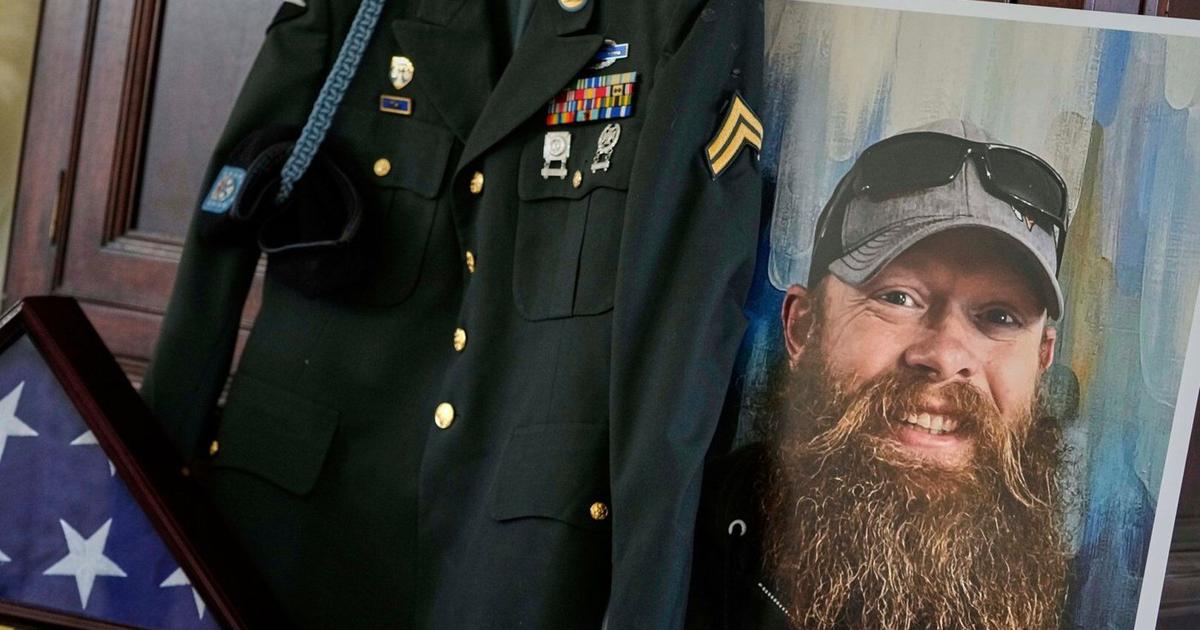
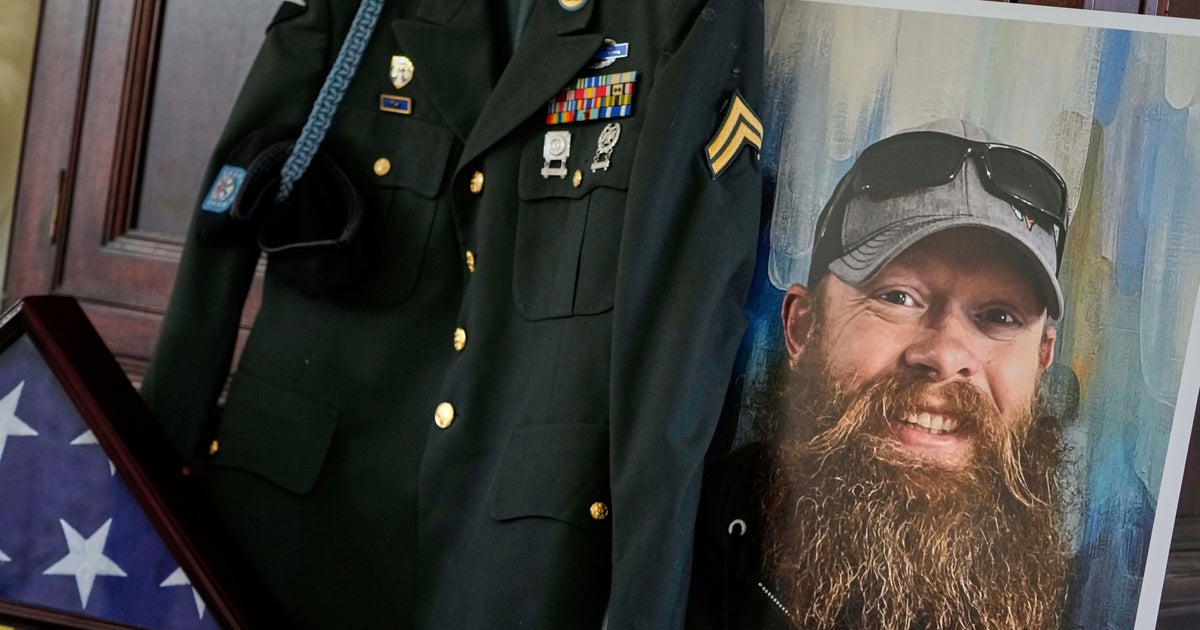
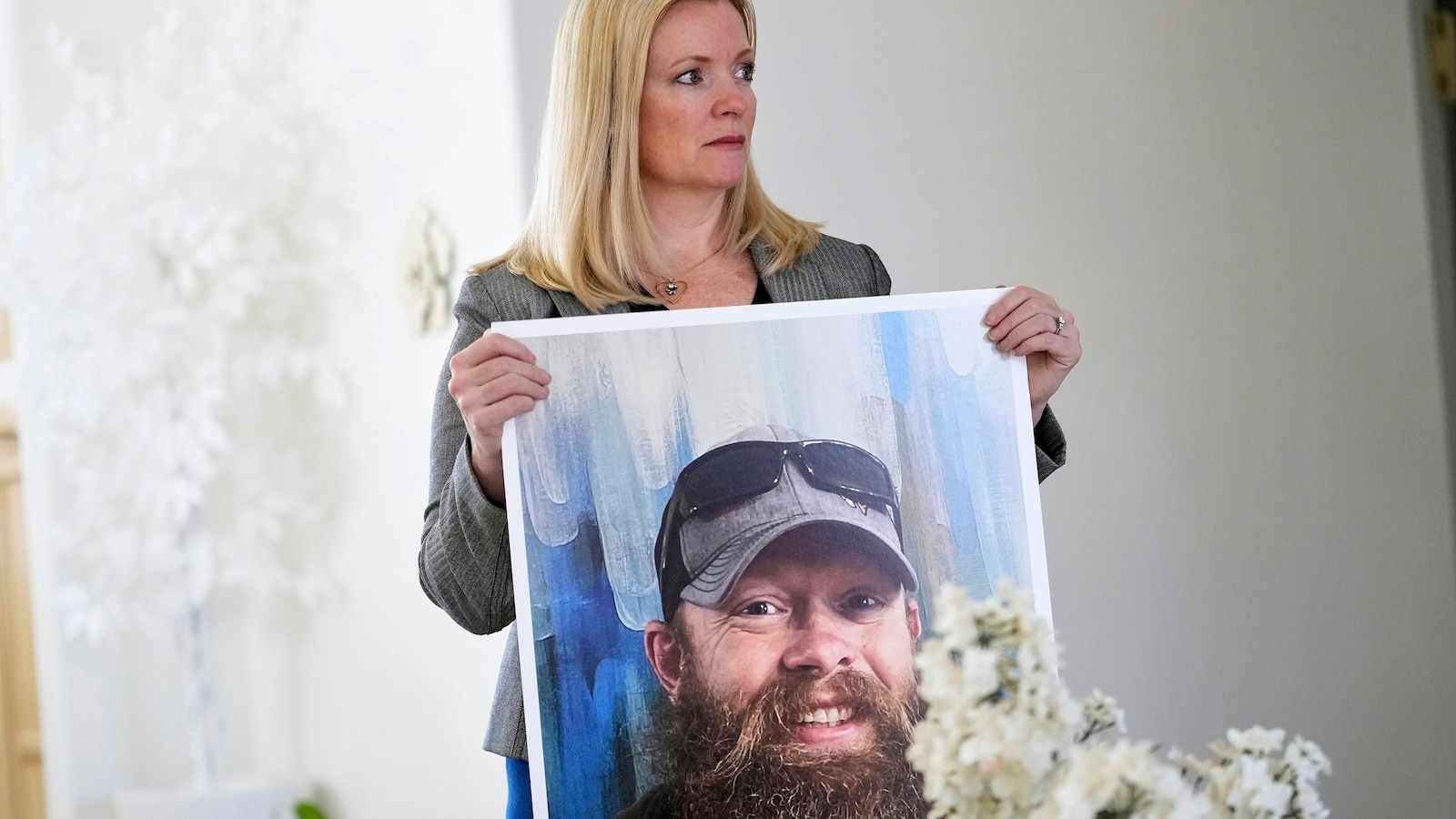
Photo via New York Post

Arizona man’s sentence tossed after AI video of dead road rage victim used in court to deliver message to killer

Read the original at New York Post ↗
Cite

Pollina, R. (2026, October 2). Arizona man’s sentence tossed after AI video of dead road rage victim used in court to deliver message to killer. New York Post. https://nypost.com/2026/10/02/us-news/arizona-appeals-court-tosses-gabriel-horcasitas-road-rage-sentence-over-ai-generated-victim-impact-video-of-christopher-pelkey/

Dated when The Aporia collected the article, usually within hours of publication. Check the original for its exact date and byline.

New York Post · collected 2026-10-02 · by Richard Pollina

Quick Summary

The Arizona Court of Appeals has overturned an Arizona man’s 10½-year prison sentence for manslaughter and endangerment, citing the improper use of an AI-generated video during his sentencing hearing. The video, created by the victim Christopher Pelkey’s family, featured a digitally recreated version of Pelkey forgiving his killer from beyond the grave. The court ruled that this digital representation was unreliable and prejudiced against Horcasitas, making the original sentence fundamentally unfair. This decision highlights the unprecedented nature of using AI-generated content in legal proceedings as a form of victim impact statement.
Written by AI on 2026-10-02, from this article's own text only (the story summary below draws on all the coverage).
See how they differ ↓

AI analysis

Story summary

In Phoenix, Arizona in May 2025, Maricopa County Superior Court Judge Todd Lang sentenced Gabriel Paul Horcasitas to 10 and a half years for the manslaughter conviction related to the fatal shooting of Christopher Pelkey during a road rage incident in November 2021. The sentencing hearing included an AI-generated video created by Pelkey's family, depicting a digital version of Pelkey forgiving his killer. However, on September 30, 2025, the Arizona Court of Appeals overturned Horcasitas' sentence, ruling that allowing the AI video prejudiced the judge and made the sentencing fundamentally unfair due to its unreliable nature.

The court found the video crossed ethical boundaries by presenting thoughts and statements not directly from Pelkey but imagined by his sister, Stacey Wales. This decision highlights a legal precedent regarding the admissibility of artificial intelligence-generated evidence in victim impact statements. Despite this ruling, Horcasitas' conviction remains intact; he will face resentencing due to the improper inclusion of the AI video during the original sentencing proceedings.

Written for “AI Victim Video Court Case” on 2026-11-18, grounded in this article and the 11 other(s) covering the same event.

How they differ

12 outlets covered “AI Victim Video Court Case”.

What each outlet says

One AI summary per outlet of its latest article on this story, written from that article alone and checked against it. Open the article for the outlet's own words.

New York PostThis outlet2 Oct

The Arizona Court of Appeals has overturned an Arizona man’s 10½-year prison sentence for manslaughter and endangerment, citing the improper use of an AI-generated video during his sentencing hearing. The video, created by the victim Christopher Pelkey’s family, featured a digitally recreated version of Pelkey forgiving his killer from beyond the grave. The court ruled that this digital representation was unreliable…

Arizona man’s sentence tossed after AI video of dead road rage victim used in court to deliver message to killer (this article)
Toronto Star2 Oct

The Arizona Court of Appeals has overturned the 10-year manslaughter sentence given to Gabriel Paul Horcasitas due to the use of an AI-generated video during his sentencing hearing in 2025. This video, created by Pelkey’s sister Stacey Wales, depicted the deceased victim Christopher Pelkey addressing the court, leading the appeals judges to conclude that it was unreliable and not reflective of actual events. The…

Sentence tossed in Arizona case where deceased victim was depicted speaking in AI-generated video →
Global News2 Oct

An Arizona Court of Appeals has overturned a 10-year manslaughter sentence for Gabriel Paul Horcasitas due to the use of an AI-generated video at his sentencing hearing. The video featured a digitally recreated version of the victim, Christopher Pelkey, expressing forgiveness towards Horcasitas during a May 2025 hearing. The court ruled that the AI video was not reliable and impacted the judge's sentencing decision…

Arizona court tosses sentence in road rage case over AI victim video →
BBC3 Oct

An Arizona appeals court has overturned a road rage killer’s sentence because an AI-generated video of the victim was shown in court during sentencing proceedings. Gabriel Paul Horcasitas was initially sentenced to 10 years for shooting and killing Christopher Pelkey in 2021. The court ruled that allowing an AI video message, created by Pelkey's family from his voice recordings and images, violated judicial protocol…

US road rage killer's sentence quashed because AI video of victim was shown in court →
Times of India4 Oct

Gabriel Paul Horcasitas, convicted of killing Christopher Pelkey during a road-rage incident in Arizona in 2021, will face resentencing after an appeals court ruled that an AI-generated video of Pelkey forgiving him should not have been admitted as evidence. The video, created by Pelkey’s family using his images and recordings, depicted an imagined scenario where Pelkey forgave Horcasitas, which the appeals court…

US man convicted of killing motorist to be resentenced after court rejects AI video of victim forgiving him →
Daily Mail4 Oct

A convicted killer named Gabriel Horcasitas had his 10-and-a-half-year sentence overturned after an AI-generated video of his victim, Christopher Pelkey, was played during sentencing in May 2025. The Arizona Court of Appeals ruled that the AI clip was unreliable and affected the judge's decision, leading to the vacating of Horcasitas’s original sentence. Judge Todd Lang had become emotionally moved by the AI video…

Killer's sentence is thrown out after AI clip of victim speaking beyond the grave made judge so emotional that he gave 'unfair' punishment →
Show 6 more outlets
NBC News4 Oct

An Arizona appeals court has overturned Gabriel Paul Horcasitas’s 10 1/2-year sentence for manslaughter in the fatal shooting of Christopher Pelkey. Last year, during sentencing, an AI-generated video featuring a likeness of Pelkey expressing forgiveness was shown; Judge Todd Lang remarked he “loved” it and felt it was genuine. The appeals court ruled this violated Horcasitas’s due process rights because it was…

Court throws out killer’s sentence after judge said he ‘loved’ AI video of slain man →
The Straits Times5 Oct

An Arizona appeals court overturned a manslaughter sentence on September 30 after an AI-generated video showing the victim forgiving his killer was presented during the trial. The three-judge panel upheld Gabriel Horcasitas's conviction but ordered a resentencing hearing for the 2021 road-rage shooting that resulted in Christopher Pelkey’s death, despite Horcasitas originally receiving a 10½-year prison sentence.

Sentence tossed after AI video of victim ‘forgiving’ his killer is played in US court →
CBS News5 Oct

In Arizona, Gabriel Paul Horcasitas's 10-year manslaughter sentence for killing Christopher Pelkey has been overturned because a court relied on an AI-generated video that the appeals court deemed unreliable. The AI video, created by Pelkey’s sister using his voice recordings and images to simulate him speaking in court, was intended to humanize the victim but was cited as the reason for the resentencing due to its…

Manslaughter sentence tossed after AI video of victim shown in court →
ABC News (US)7 Oct

An Arizona appellate court overturned a man's 10-and-a-half-year manslaughter sentence because an AI-generated video depicting his victim was shown during sentencing in May 2025. The video, created by the slain victim’s sister and featuring her brother Christopher Pelkey’s likeness and voice, addressed forgiveness to the convicted murderer Gabriel Paul Horcasitas. Despite Judge Todd Lang’s appreciation for the video…

Manslaughter sentence tossed over AI-generated video of slain victim used at trial →
404 Media7 Oct

In an Arizona court case, a judge sentenced Gabriel Horcasitas to 10 and a half years for manslaughter after watching an AI-generated video of Christopher Pelkey forgiving his killer. The appellate court later ruled that this video had undue emotional influence on the sentencing decision and ordered a resentencing hearing. Matthew Gault at 404 Media spoke with Pelkey’s sister, Stacey Wales, who created the video to…

'Undue emotional weight' →
CBC8 Oct

An Arizona court has overturned a 10-year manslaughter sentence because it was influenced by an artificial intelligence-generated victim impact statement that depicted the deceased speaking to the judge. The video, which showed fabricated testimony from Christopher Pelkey regarding the fatal shooting in 2021, misled the sentencing process according to the Arizona Court of Appeals, necessitating a new sentencing…

Arizona court tosses sentence due to AI victim impact statement →

Where they agree and split

Agreed

Reported by outlets on both sides of the middle

"To Gabriel Horcasitas, the man who shot me, it is a shame we encountered each other that day in those circumstances," said the AI version of Pelkey in court in 2025.

4 outlets

Framing

How the first headlines put it

  • The Toronto Star focuses on the AI video's depiction of the deceased speaking to the judge, while the Times of India emphasizes the emotional impact and forgiveness aspect.14
  • The Daily Mail highlights the emotional influence of the AI clip on the judge, whereas CBC focuses solely on the legal ruling regarding the AI video's use in court.56
Stated as fact3
The headlines (3)

Sentence tossed in Arizona case where deceased victim was depicted speaking in AI-generated video Toronto Star · stated as fact

Arizona man’s sentence tossed after AI video of dead road rage victim used in court to deliver message to killer New York Post · stated as fact

Arizona court tosses sentence in road rage case over AI victim video Global News · stated as fact

The full story: what happened, how it changed, and all 12 articles →

Compared with similar articles

This article reads unscored and hedges 6% of its claims. Each row says how that neighbour differs.
BBC News
Hedges 0 of 15 claims Outlet record 65/100
Toronto Star
Hedges 3 of 35 claims Outlet record 64/100
CBS News
Hedges 4 of 41 claims Outlet record 67/100
Global News
Hedges 4 of 24 claims Outlet record 63/100
The Straits Times
Hedges 0 of 3 claims Outlet record 64/100
NBC News
Hedges 3 of 22 claims Outlet record 78/100
ABC News (US)
Hedges 3 of 20 claims Outlet record 67/100

Story

AI Victim Video Court Case
Crime & Law · 12 article(s) covering the same event. Compare every outlet's account →
How this article was measured signals, leaning charts, publisher record, byline, topics and claims

Signals How these are calculated →

Claims extracted
18
sentences that state something as happening or true
Uncertain
6%
1 of 18 hedged ("reportedly", "may", "according to")
Leaning
not political
takes no side on a contested political question
Publisher signals
66/100
New York Post's corrections and hedging, across everything collected from it. Not a measure of accuracy.
Outlets on this story
12
Crime & Law
Same framing elsewhere
1
articles that frame the event the way this one does
Analyzed 2026-10-02 · how these are computed

How this is being covered How these are calculated →

Article leaning vs. publisher reliability
Source leaning vs. consistency

Publisher

New York Post · 21098 article(s) · 41 correction(s) detected
Running correction rate · 41 correction(s)

Who wrote this

Richard Pollina
32 article(s) here · 0 carrying a prediction
You are my brother and you will be missed,” Roeser concluded.
“Love on your loved ones while you can, because you never know what tomorrow may bring,” he wrote, closing his tribute.
The man could be heard telling an off-camera campus officer that she had smacked him, which she vehemently denied, even as the crowd around her insisted they had it all on camera.
“Due to the nature of the investigations, no other details will be released at this time.
However, the product liability claims will still proceed against Stew Leonard’s Holdings LLC, Stew Leonard’s Danbury LLC and Cookies United, a Long Island-based wholesaler that manufactured the cookie.
He explained that LADWP has a “responsibility” to charge customers “if water is used,” and that the utility will “work with them under terms they can afford.”
Officers combed the neighborhood but couldn’t find the man, Lewis said.
“I thought it would be a better world I would be living in, but I didn’t think I’d ever make it,” he said.
“We recognize that members of our campus community may be emotionally affected by this incident and are activating wellbeing services to support our faculty, staff and students.”
“She was truly the best aunt anyone could have asked for,” Hannah Lupton said in an August social media post.
Also by Richard Pollina
Nothing else under this byline is closely related to this article, so these are simply their most recent.
All 32 articles by Richard Pollina →

Topics

AZ Family Maricopa County Superior Court Phoenix The Court of Appeals the Arizona Court of Appeals

Subjects

Pelkey PERSON · 7× Horcasitas PERSON · 5× Phoenix GPE · 2× The Court of Appeals ORG · 2× AZ Family ORG · 1× Christopher Pelkey PERSON · 1× Gabriel Horcasitas PERSON · 1× Maricopa County Superior Court ORG · 1× Stacey Wales PERSON · 1× the Arizona Court of Appeals ORG · 1×

Narrative

After the video played, Maricopa County Superior Court Judge Todd Lang said he “loved that AI,” calling it “genuine.” Lang said the stunt gave Pelkey a chance “to speak from his heart” — before hitting Horcasitas with more than 10 years behind bars, going beyond what prosecutors asked for.
framing: assertive · carried by 1 article(s) · first seen 2026-10-02

Claims (18 extracted, 1 hedged)

Gabriel Horcasitas, 54, was ordered Wednesday to face resentencing as the Arizona Court of Appeals tossed his 10½-year sentence for his conviction for manslaughter and endangerment in the 2021 shooting of Christopher Pelkey, court records show. asserted
records → order → Pelkey
The Court of Appeals found the AI video was “not reliable” and a “fundamental error” that prejudiced the judge and left the sentencing “fundamentally unfair.” asserted
that → find → sentencing
Pelkey appeared to forgive his killer from beyond the grave in the AI-generated video, which was presented before Horcasitas’ sentencing. asserted
which → appear → sentencing
Pelkey’s digital resurrection, created by his family, showed him in a logo-less gray ball cap, an olive green zip-up hoodie and a full, ruddy beard — his mouth not always keeping up with his words as he addressed the man who killed him. asserted
who → create → him
“I believe in forgiveness and God who forgives. asserted
who → believe → forgiveness
I always have, and still do,” the AI version of the 37-year-old said. asserted
version → have → old
The video showed a real photo of Pelkey run through an “old age” filter. asserted
photo → show → filter
Pelkey’s sister, Stacey Wales, wrote the script the AI version of her late brother delivered, telling AZ Family she wanted to give him a voice in the case over his death. asserted
she → write → death
After the video played, Maricopa County Superior Court Judge Todd Lang said he “loved that AI,” calling it “genuine.” Lang said the stunt gave Pelkey a chance “to speak from his heart” — before hitting Horcasitas with more than 10 years behind bars, going beyond what prosecutors asked for. asserted
prosecutors → play → what
The court noted that “no Arizona case has addressed the admissibility of an AI-generated depiction of a victim offered as a victim impact statement.” asserted
case → note → statement
The Court of Appeals said it was “guided by” the Arizona Supreme Court’s analysis in State v. Rose, according to court documents. uncertain
it → say → documents
Edward James Rose, sentenced to death for the 2007 killing of a Phoenix police officer, challenged photos of the officer’s sons at his grave as too prejudicial — but the Arizona Supreme Court ruled they came “uncomfortably close” to crossing the line without going over it. asserted
they → sentence → it
“By contrast, the AI video crossed that line. asserted
video → cross → line
Unlike the photographs in Rose, which captured a particularly poignant moment for the young surviving victims, the AI video here (excluding the embedded ‘real’ videos of the victim) does not reflect actual events,” the court wrote Wednesday. asserted
court → capture → events
“Indeed, rather than documenting an event or recording a particular moment, the AI video presents a depiction of the victim and his thoughts created from the imaginings of the victim’s sister. asserted
video → document → sister
Horcasitas shot and killed Pelkey in 2021 after Pelkey walked up to his car during a road rage confrontation in Chandler, about 25 miles outside Phoenix. asserted
Pelkey → shoot → Phoenix
While the court upheld Horcasitas’ manslaughter conviction, it vacated his prison sentence and ordered that he be resentenced. asserted
he → uphold → sentence
Horcasitas was first convicted of manslaughter and endangerment in 2023 and was granted a new trial over a prosecution evidence-disclosure failure — only to be found guilty of both charges again in the 2025 retrial. asserted
Horcasitas → convict → retrial
Give feedback · no sign-in needed

No sign-in needed for now. Your note is sent without a name, so it cannot be answered.

History Support