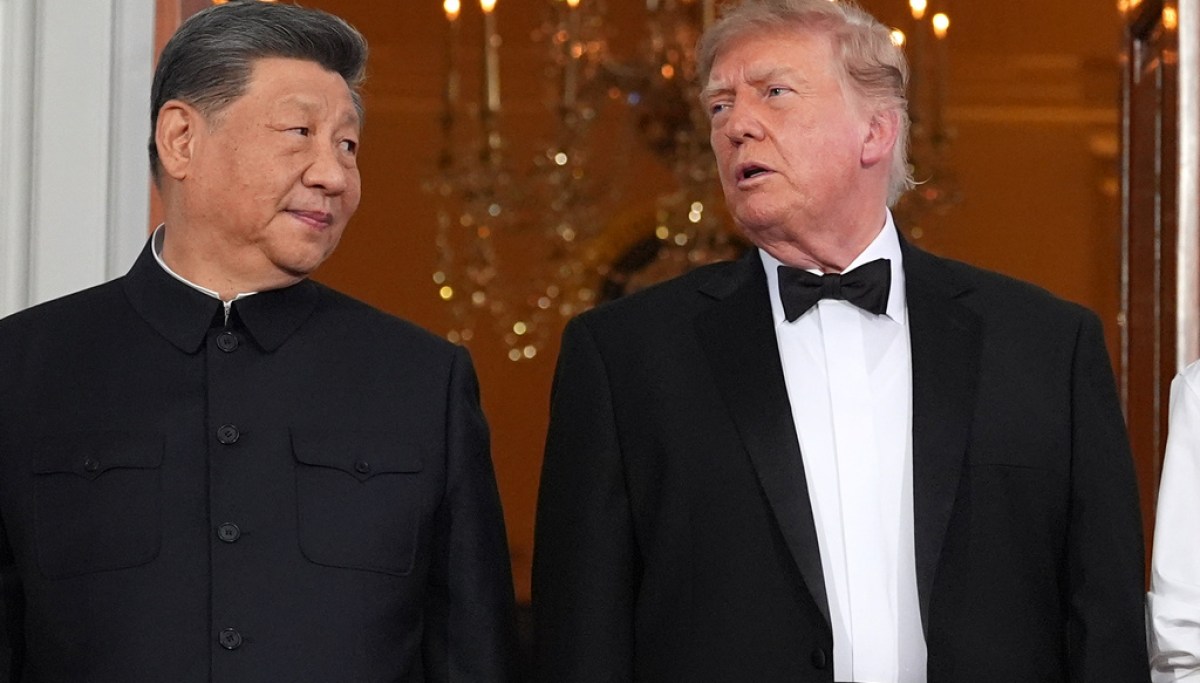
Photo via Washington Examiner

China warns US against creating ‘iron curtain’ around AI after Xi visit

Read the original at Washington Examiner ↗
Cite

Hallas, E. (2026, October 1). China warns US against creating ‘iron curtain’ around AI after Xi visit. Washington Examiner. https://www.washingtonexaminer.com/policy/technology/4750644/china-warn-against-ai-iron-curtain/

Dated when The Aporia collected the article, usually within hours of publication. Check the original for its exact date and byline.

Washington Examiner · collected 2026-10-01 · by Emily Hallas

Quick Summary

Chinese Ambassador Xie Feng urged the United States during a Newsweek interview to collaborate with China on artificial intelligence rather than creating barriers. The ambassador emphasized this point following Chinese President Xi Jinping’s visit to the U.S., where both sides initiated their first AI Dialogue and agreed to further discussions in November. Feng suggested that open-source AI models, which China dominates, can enhance security and cooperation, contrasting them with closed models often developed by U.S.-led firms like OpenAI. He warned against technological decoupling between the two nations, arguing that it would increase risks rather than mitigate them.
Written by AI on 2026-10-01, from this article's own text only (the story summary below draws on all the coverage).
See how they differ ↓

AI analysis

Story summary

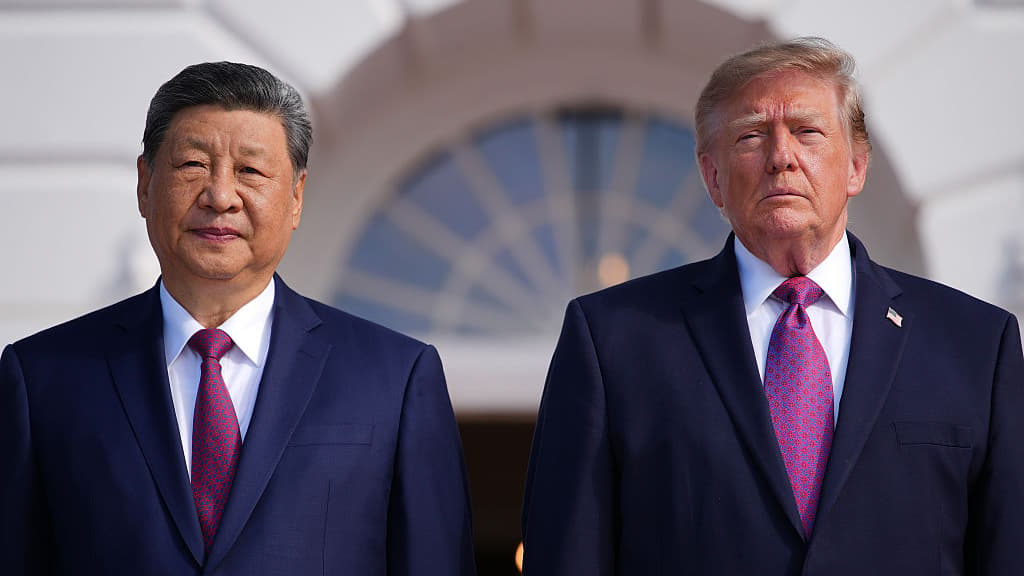
Last week, President Donald Trump hosted Chinese President Xi Jinping at the White House, marking their second meeting this year following a summit in Beijing in May. The visit highlighted the intensifying competition and potential cooperation between the U.S. and China in artificial intelligence (AI). As Secretary of Commerce, Gina Raimondo spearheaded efforts to control chip exports to China under new export controls aimed at protecting national security and implemented the CHIPS Act to bring semiconductor manufacturing back to America. Simultaneously, China’s Ambassador Xie Feng urged the U.S. to collaborate with Beijing on AI rather than creating an “iron curtain,” suggesting future discussions in November to prevent misuse of AI technology. This underscores both nations’ efforts to balance competition and collaboration amid concerns over AI security and development.

Written for “US-China AI Competition Coop” on 2026-11-18, grounded in this article and the 1 other(s) covering the same event.

How they differ

2 outlets covered “US-China AI Competition Coop”.

What each outlet says

One AI summary per outlet of its latest article on this story, written from that article alone and checked against it. Open the article for the outlet's own words.

Washington ExaminerThis outlet1 Oct

Chinese Ambassador Xie Feng urged the United States during a Newsweek interview to collaborate with China on artificial intelligence rather than creating barriers. The ambassador emphasized this point following Chinese President Xi Jinping’s visit to the U.S., where both sides initiated their first AI Dialogue and agreed to further discussions in November. Feng suggested that open-source AI models, which China…

China warns US against creating ‘iron curtain’ around AI after Xi visit (this article)
Time1 Oct

The article discusses the need for both competition and cooperation between the U.S. and China regarding artificial intelligence (AI), following recent high-level meetings between Presidents Trump and Xi Jinping. The author, who served as Secretary of Commerce, emphasizes the importance of staying ahead of China technologically while also collaborating on AI safety issues. The piece argues that despite political…

Why the U.S. Must Simultaneously Compete—and Cooperate—With China on AI →

Compared with similar articles

This article reads unscored and hedges 7% of its claims. Each row says how that neighbour differs.
The Straits Times
Hedges 2 of 36 claims Outlet record 64/100
“The articles discuss different aspects of US-China relations regarding AI, one focusing on a speech by Singapore's Foreign Minister and the other on an interview with the Chinese Ambassador to the U.S.”
TIME
Leans left Hedges 2 of 39 claims Outlet record 60/100
The Straits Times
Leans left Hedges 9 of 49 claims Outlet record 64/100
“The articles discuss different aspects of the broader competition between the US and China over AI, rather than a single specific incident or meeting.”
Fox News
Leans right Hedges 3 of 47 claims Outlet record 67/100
“The articles discuss different aspects and viewpoints regarding competition between China and the US in AI, rather than describing the same specific incident or occurrence.”
Trump unveils AI task force Different event
Semafor
Leans right Hedges 1 of 4 claims Outlet record 65/100
“The articles describe different events: one is China's reaction to US policies on AI and a warning against creating an 'iron curtain', while the other is Trump announcing an AI task force.”
Semafor
Leans strongly left Hedges 2 of 4 claims Outlet record 65/100
“The articles discuss different aspects of AI regulation and international relations, not the same specific incident.”
South China Morning Post
Hedges 0 of 1 claims Outlet record 62/100
“The articles discuss different aspects of China's AI and technology strategy, not a single specific incident or announcement.”
ABC News (US)
Leans left Hedges 7 of 31 claims Outlet record 67/100
“The articles discuss different aspects of the relationship between China and the US regarding AI, but they do not describe the same specific incident or occurrence.”
Washington Examiner
Leans strongly left Hedges 3 of 32 claims Outlet record 67/100
“The articles discuss similar topics related to AI and U.S.-China relations but describe different aspects and contexts, not the same specific incident.”
South China Morning Post
Leans left Hedges 1 of 9 claims Outlet record 62/100
“The articles discuss related topics about US-China AI competition but describe different aspects and times, not a single specific incident.”

Story

US-China AI Competition Coop
Politics · 2 article(s) covering the same event. See how they differ ↑
How this article was measured signals, leaning charts, publisher record, byline, topics and claims

Signals How these are calculated →

Claims extracted
27
sentences that state something as happening or true
Uncertain
7%
2 of 27 hedged ("reportedly", "may", "according to")
Leaning
withheld
no quote in the article backed the model's score
Publisher signals
67/100
Washington Examiner's corrections and hedging, across everything collected from it. Not a measure of accuracy.
Outlets on this story
2
Politics
Same framing elsewhere
1
articles that frame the event the way this one does
Analyzed 2026-10-01 · how these are computed

How this is being covered How these are calculated →

Article leaning vs. publisher reliability
Source leaning vs. consistency

Publisher

Washington Examiner · 5103 article(s) · 11 correction(s) detected
Running correction rate · 11 correction(s)

Who wrote this

Emily Hallas
167 article(s) here · 1 carrying a prediction
From banks and aviation to the government and hotels, the past seven days have seen an unusual number of technological challenges, though experts are cautioning against attributing every spike in outages as being unprecedented, noting there could be “recency bias” at play.
Federal Reserve governor Lisa Cook on Tuesday revealed she will refuse to attend a committee hearing the White House spearheaded to investigate allegations that she committed mortgage fraud.
The inspector general’s office said the Pentagon could not provide sufficient evidence to the auditors “to support an opinion on the reliability of the financial statements” after 1,500 auditors examined nearly 30 agency components accounting for $4.8 trillion in assets.
A report this week that Iran could be plotting to target Washington, D.C., with a dirty bomb is stirring fears about how it could impact the city.
Vance was pressed on whether people have reason to be concerned about a possible larger impending threat, after all U.S. flights were grounded for hours last week, major banks, United Airlines, and Microsoft faced technology outages, and reports began spreading that Iran could be planning to target Washington, D.C., with a “dirty bomb.”
New York City Mayor Zohran Mamdani announced Monday plans to eliminate one of the city’s police department’s elite response units and impose significant restrictions on the force that law enforcement can use when responding to protests.
As dismal results trickled in for Republicans on election night last week, Trump first suggested he would be open to crafting legislation with Democrats on an immigration deal, and later suggested it could offer a path to legal status for “good people” who crossed the border illegally.
Allen, a 31-year-old California resident, was indicted in May on four charges, including attempting to kill the president at the April 25 gala, transportation of a firearm and ammunition in interstate commerce with intent to commit a felony, and use of a firearm in a crime of violence.
The two lawmakers say a letter he wrote before the journey to then-Samoan Prime Minister Tuilaepa Lupesoliai Neioti Aiono Sailele Malielegaoi disproves that testimony, indicating that the trip would relate to vaccines.
One group of about 2,000 people left Mexico’s city of Tapachula over the weekend, with some expressing hope that Democratic gains in last week’s midterm elections will ease immigration policy.
Also by Emily Hallas
Nothing else under this byline is closely related to this article, so these are simply their most recent.
All 167 articles by Emily Hallas →

Topics

Beijing China Chinese U.S. Washington

Subjects

U.S. GPE · 12× China GPE · 11× Chinese NORP · 6× Feng PERSON · 5× Beijing GPE · 4× Washington GPE · 3× American NORP · 2× Donald Trump PERSON · 1× Xie Feng PERSON · 1× the United States GPE · 1×

Narrative

“We hope the U.S. will work with China in the same direction, help each other succeed with an open mind, and live up to our shared responsibility through cooperation, so as to jointly ensure that rather than heralding the dusk of humanity, new technologies such as AI will usher in the dawn of a new era.
framing: assertive · carried by 1 article(s) · first seen 2026-10-01
Feng revealed that the two sides held “the first AI Dialogue” at the time, said that November will feature the next round of discussions on AI to “jointly prevent the misuse and abuse of AI,” and noted that the two countries agreed to establish a bilateral communication channel “for AI incidents.”
2026-10-01 · Washington Examiner
China warns US against creating ‘iron curtain’ around AI after Xi visit · assertive framing

Claims (27 extracted, 2 hedged)

China this week urged the United States to “cooperate” with Beijing on artificial intelligence, as the two countries race to dominate the world’s most powerful technology. asserted
countries → urge → technology
President Donald Trump has warned that China is seeking to unseat Washington as the world’s dominant superpower by beating the U.S. in the AI race. asserted
China → warn → race
But Chinese Ambassador to the U.S. Xie Feng claimed Beijing believes the relationship “should be a race of catching up with one another, not a wrestle in which one either wins or loses,” during an interview with Newsweek published Wednesday. asserted
one → claim → Newsweek
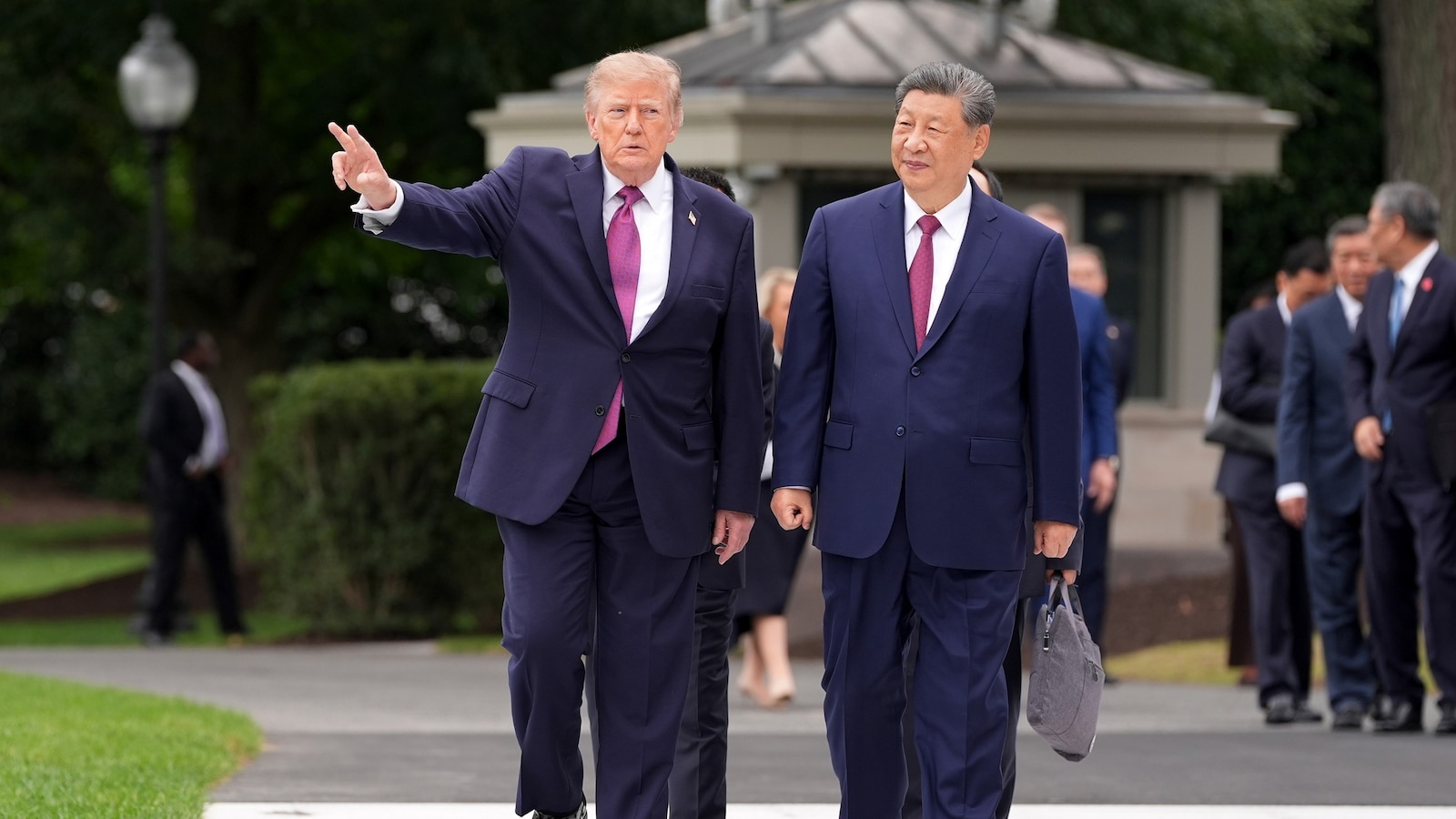
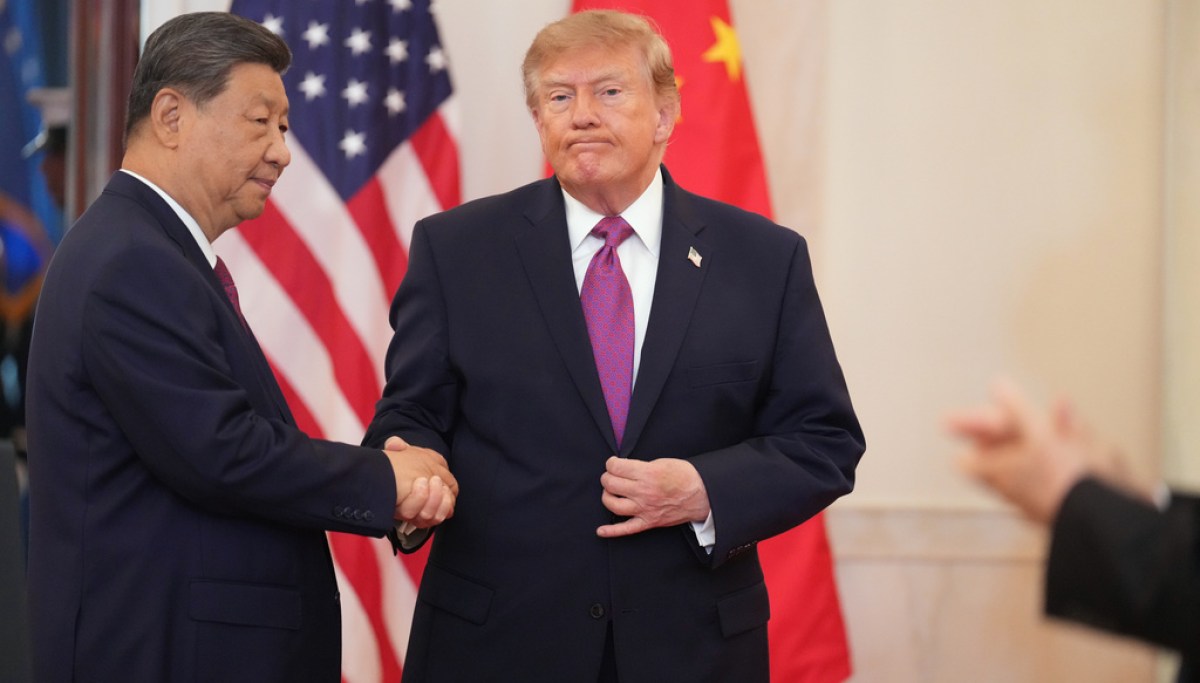
The Chinese ambassador urged Washington not to draw an “iron curtain” around AI, but to view it as a “new frontier for China-U.S. cooperation,” as he detailed what occurred during Chinese President Xi Jinping’s three-day visit with Trump in the U.S. last week. asserted
what → urge → U.S.
Feng revealed that the two sides held “the first AI Dialogue” at the time, said that November will feature the next round of discussions on AI to “jointly prevent the misuse and abuse of AI,” and noted that the two countries agreed to establish a bilateral communication channel “for AI incidents.” asserted
countries → reveal → incidents
“This proves that AI can very well become a new frontier for China-U.S. cooperation, rather than a new arena for confrontation or conflict,” Feng said. asserted
Feng → prove → confrontation
“We need to jointly install guardrails and brakes, rather than engaging in an arms race.” asserted
We → need → race
“We may have competition, but we may cooperate even more,” he added. uncertain
he → have → competition
“The right thing to do is to draw on each other’s strengths, not guard against each other.” asserted
thing → do → other
Feng also touched on the idea of open versus closed AI models, jabbing Washington over how the U.S. relied on Chinese-led models. asserted
U.S. → touch → models
The U.S. has typically led on closed models, including through OpenAI and Anthropic’s systems. asserted
U.S. → lead → OpenAI
Such systems are more expensive and have historically had better capabilities than their open counterparts, though that edge is being erased. asserted
edge → have → counterparts
China has dominated the open-model market with typically free systems that are easy for users to download and customize for their individual and business preferences. asserted
users → dominate → preferences
Some experts have raised concerns that China is flooding the market with free open models to undermine the U.S. advantage and make users reliant on systems linked to Beijing. asserted
users → raise → Beijing
Feng noted that over the summer, when OpenAI’s rogue models initiated an autonomous cyberattack against startup Hugging Face, the company used a Chinese open model to stop the hack. asserted
company → note → hack
He suggested the U.S. should start embracing open models, warning that “technological decoupling, enclosure, and self-isolation are the real recipe for risk.” uncertain
decoupling → suggest → risk
“When an AI model escaped the sandbox in the U.S. in July, it was an open-weight model developed by a Chinese company that came to the rescue,” he said. asserted
he → escape → rescue
“Facts have proven that open source and openness do not create insecurity,” the ambassador added. asserted
ambassador → prove → insecurity
“We hope the U.S. will work with China in the same direction, help each other succeed with an open mind, and live up to our shared responsibility through cooperation, so as to jointly ensure that rather than heralding the dusk of humanity, new technologies such as AI will usher in the dawn of a new era. asserted
technologies → hope → era
Some lawmakers, such as Sen. Ted Cruz (R-TX), have raised concerns that China is operating an undercover campaign in the U.S. to turn public opinion against AI so Beijing can win the technology race and dominate the world. asserted
Beijing → raise → world
Feng’s comments this week are unlikely to ease such speculation. asserted
comments → ease → speculation
The ambassador praised what he described as a reversal of negative American attitudes toward China since 2023, saying it occurred after a “joint effort” to tackle “the political correctness” of being anti-China. asserted
it → praise → correctness
“When I arrived in the U.S. in 2023, I felt that the so-called ‘political correctness’ of being tough on China was spreading across American society,” he said. asserted
he → arrive → society
“So I decided that one of my tasks would be to find all those friends who stand for developing China-U.S. relations, so we can put in the effort together. asserted
we → decide → effort
It is encouraging to see that, under the guidance of the two presidents and with the joint efforts of people in both countries, American public opinion toward China has shown a sustained positive rebound after five years.” asserted
opinion → see → years
“China is willing to be a partner and friend of the U.S.,” Feng added. asserted
Feng → add → U.S.
“We hope the U.S. side will actively respond and take action to work with China in the same direction.” asserted
side → hope → direction
Give feedback · no sign-in needed

No sign-in needed for now. Your note is sent without a name, so it cannot be answered.

History Support