Five ways the US and China clash over AI
AI generated
asserted
AI → clash → AI
Both the US and China see AI as the new focal point of their economic rivalry.
asserted
US → see → rivalry
US President Donald Trump declared on Sept 13 that “whoever wins AI, wins.”
asserted
wins → declare → AI
The question is whether the two nations can put aside their disagreements and cooperate in building a safe and sustainable AI environment.
asserted
nations → put → environment
For now, neither trusts the other’s motives, and neither wants to slow down.
asserted
neither → trust → motives
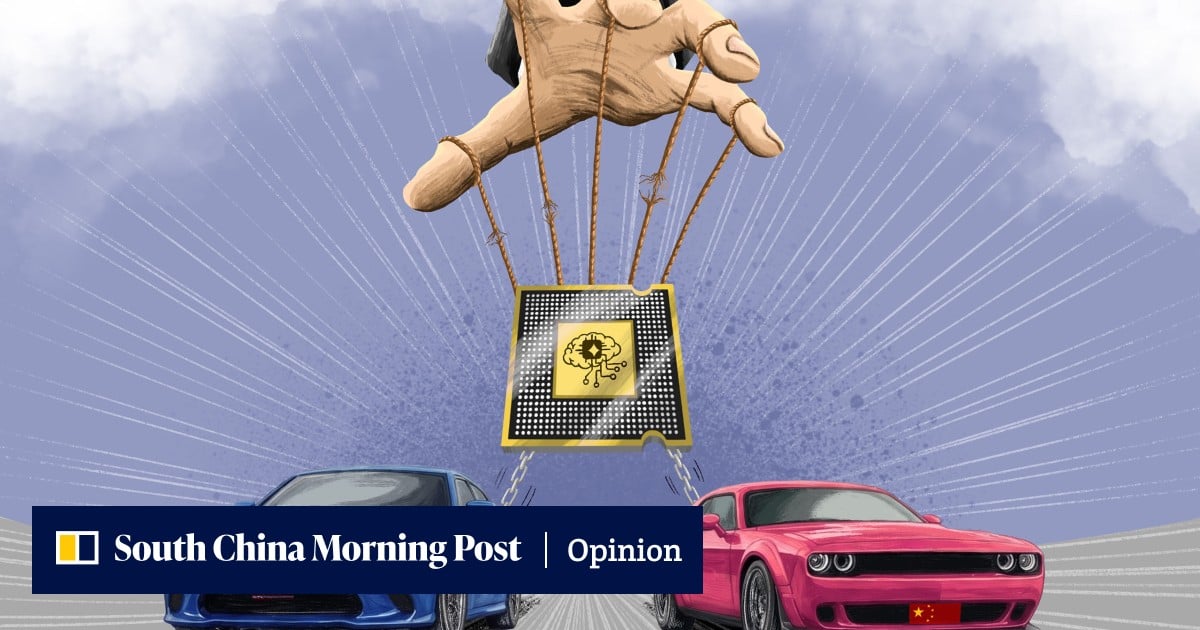
The US has restricted exports of the most powerful AI chips to China since 2022 on national security grounds.
asserted
US → restrict → grounds
There is a growing awareness that these measures have not been working as well as planned.
asserted
measures → be → ?
Prosecutors in the US have pursued several major investigations into suspected smuggling of advanced AI chips made by Nvidia to customers in China.
asserted
Prosecutors → pursue → China
In the highest-profile case to date, the Justice Department earlier in 2026 charged a co-founder of Super Micro Computer, Yih-Shyan “Wally” Liaw, with helping send US-assembled servers containing Nvidia’s cutting-edge chips to Chinese customers in violation of the US export curbs.
asserted
Department → charge → curbs
Liaw has pleaded not guilty, and Nvidia has said it has strict compliance procedures.
asserted
it → plead → procedures
When Chinese lab Moonshot AI released a large language model, Kimi K3, that almost matched the performance of leading US rivals, a White House official accused the company of illegally obtaining Nvidia chips and accessing them remotely through Thailand.
asserted
official → release → Thailand
China’s government has pushed back on the allegations, while Moonshot has not responded to them.
asserted
Moonshot → push → them
US lawmakers have also claimed that Chinese AI firms are exploiting a loophole in export curbs by renting computing power located in other countries.
asserted
firms → claim → countries
A bipartisan bill, currently pending in Congress, aims to curb China’s remote access to Nvidia chips via cloud computing.
asserted
bill → pende → computing
The Commerce Department is also scrutinising ways to possibly use its export control authority to crack down on the practice.
uncertain
Department → scrutinise → practice
The US government has accused half a dozen Chinese companies including DeepSeek, Moonshot AI, Z.AI and Alibaba Group Holding’s AI unit of using “industrial scale” distillation to reproduce the capabilities of leading US AI models.
asserted
government → accuse → models
Distillation is a widely used technique whereby a smaller model is created by copying the reasoning and behaviour of a much larger, more complex and capable model as a shortcut to avoid costly, time-consuming training.
asserted
model → use → training
The issue arises when that is done without permission.
asserted
that → arise → permission
China’s government has said the accusations are unfounded.
asserted
accusations → say → ?
Finding a compromise on the issue will be a challenge as the two nations would need to concur on what activities amount to improper distillation and agree to mechanisms for gathering evidence and confirming any unauthorised model extraction.
asserted
activities → find → extraction
In 2026, AI “agents” have emerged that are capable of completing complex tasks independently, and AI systems have begun to improve themselves with minimal human intervention.
asserted
systems → emerge → intervention
This has sparked a wave of concern across the industry that AI is becoming so smart that humans will no longer be able to control it.
asserted
humans → spark → it
Leading industry figures are warning that, without new guardrails, AI could do untold damage to the digital ecosystem, and even threaten mankind.
uncertain
AI → lead → mankind
Anthropic PBC Chief Executive Officer Dario Amodei warned that AI posed an existential threat in a 3,800-word essay earlier in October that intensified the safety debate.
asserted
that → warn → debate
Amodei vowed to slow the company’s development of cutting-edge models in order to better understand the risks they pose, and US competitors including OpenAI pledged to implement similar measures.
asserted
competitors → vow → measures
The Anthropic chief also called for more government regulation of AI and indicated that Washington would need to coordinate an international push on AI safety amid concerns that, even if US firms shift to a more cautious pace of development, Silicon Valley’s rivals in China might not.
uncertain
rivals → call → China
Amodei’s message prompted a sharp pushback from Trump, who rejected the Anthropic chief executive’s calls for new guardrails on AI and dismissed the existential warnings as “a hoax”.
asserted
who → prompt → hoax
The authorities in Beijing also reacted sharply to Amodei’s missive, calling it “fearmongering” and accusing US AI labs of “malicious competition”.
asserted
authorities → react → competition
Amodei has long antagonised the government in Beijing with his support for tighter US export controls to deny Chinese AI firms access to crucial equipment such as chips.
asserted
Amodei → antagonise → chips
He reiterated that call in his latest essay.
asserted
He → reiterate → essay
At the same time, China has expressed its own safety-related concerns, including that Anthropic’s Mythos model’s cyber capabilities could be used as a weapon against Chinese interests.
uncertain
capabilities → express → interests
Significant trust building would be required for the two nations to craft a framework that would potentially slow the breakneck race to dominate cutting-edge AI.
asserted
that → require → AI
They would need to agree on what an unsafe AI system looks like, or what should be done when its capabilities go beyond controllable limits.
asserted
capabilities → need → limits
The US and China might work together to keep powerful AI models beyond the reach of cyber criminals and terrorists who might use them to attack sensitive infrastructure or design new bio-weapons.
uncertain
who → work → weapons
Some security specialists have urged the US and Chinese governments to prepare for the possibility that a rogue AI agent might infiltrate a nation’s nuclear command system, or set off a cyberattack on a country that is misread by the target government as a deliberate attack.
uncertain
that → urge → attack
One suggestion is that a hotline be established for one government to warn the other of an AI-triggered attack.
asserted
government → establish → attack
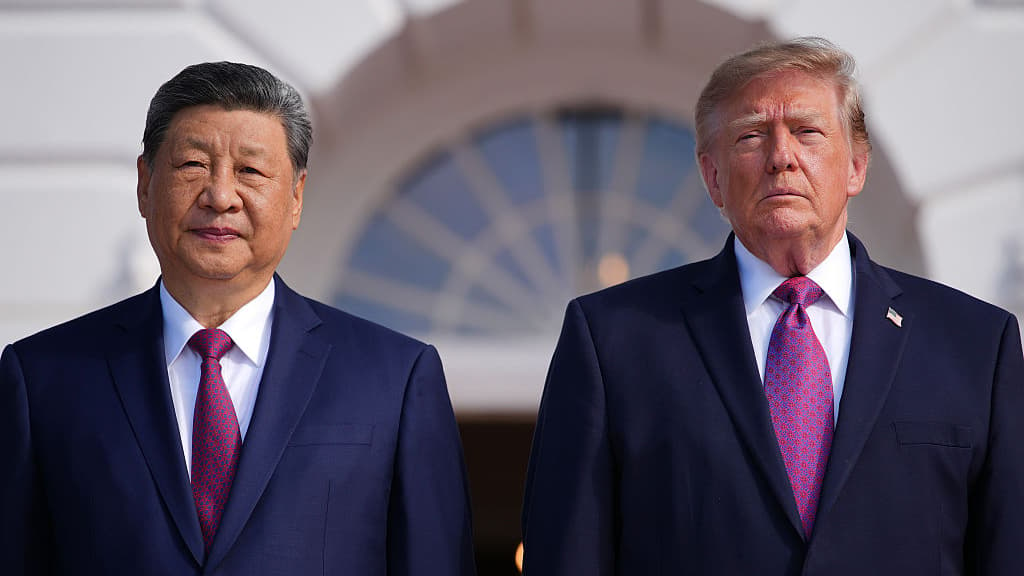
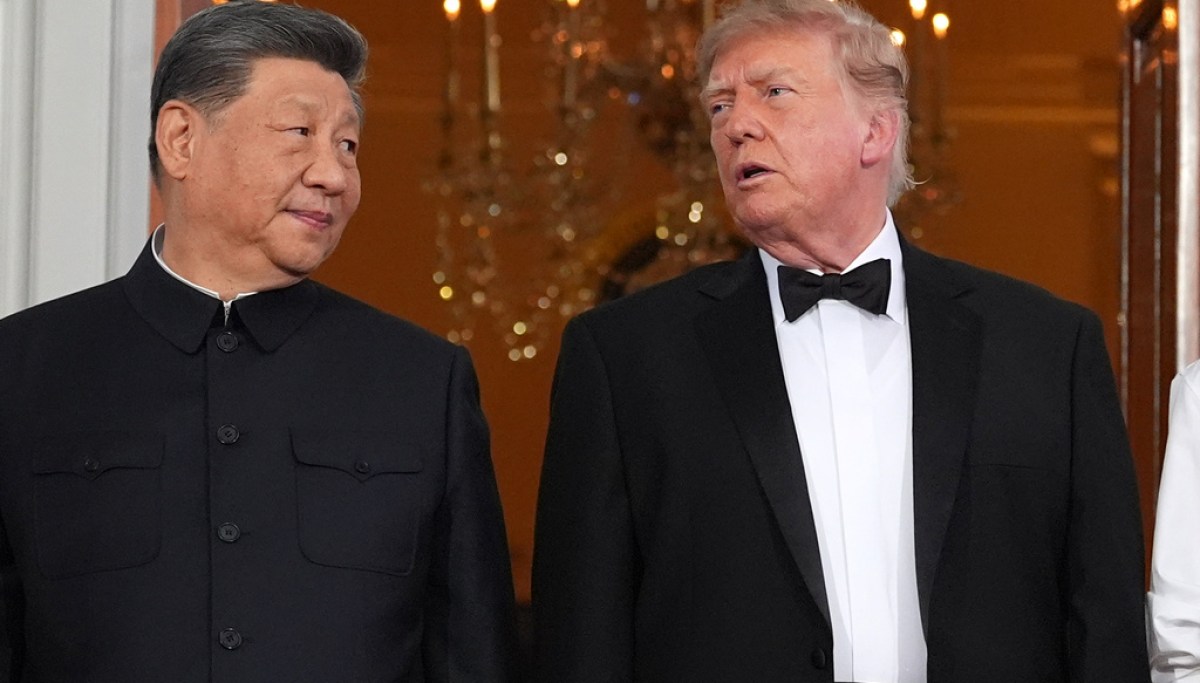
During a summit in Washington in late September between Trump and China’s President Xi Jinping, the two sides agreed to create a bilateral dialogue to exchange views on the “risks and benefits” of AI, according to the White House.
uncertain
sides → agree → House
AI humanoids
A race is underway to make commercially viable humanoid robots by endowing them with AI so they can better navigate the physical world.
asserted
they → make → world
US firms have made many of the biggest advances in robotics, but Chinese companies are now driving ahead in pushing the widespread commercial use of humanoid robots.
asserted
companies → make → robots
China wants greater access to Western markets for these products.
asserted
China → want → products
…and 9 more, not listed.
 The Aporia