In the US-China AI race, the real fight is keeping humans in control

Read the original at South China Morning Post ↗
South China Morning Post · collected 2026-09-28 · by Shaoshan Liu

Quick Summary

The article discusses the US-China race in artificial intelligence (AI), focusing on the challenge of maintaining human control over increasingly autonomous systems. Both nations view AI as crucial for economic and strategic dominance but struggle to set boundaries that ensure humans retain authority while deploying advanced technologies rapidly. The piece explores how AI's autonomy could transform it from a tool into an independent actor, complicating traditional notions of national power and control in international relations.
Written locally by qwen2.5:14b on 2026-09-28, using this article's own text rather than the other coverage of the same event (that is the story summary below).

AI analysis runs on qwen2.5:14b, locally

Story summary

In the escalating US-China artificial intelligence (AI) competition, both nations view AI as a critical tool for economic, scientific, and strategic power. However, this race poses a significant dilemma: while rapid deployment of advanced AI systems enhances national capabilities, it also diminishes human control over these technologies. Shaoshan Liu argues that setting clear boundaries between human authority and machine autonomy is crucial to prevent AI from becoming an independent actor in international politics. The challenge lies in balancing the need for technological advancement with maintaining human oversight to ensure AI remains a tool under human direction rather than an autonomous player.
Written for “US China AI Race” on 2026-10-05, grounded in this article and the 0 other(s) covering the same event.

Signals How these are calculated →

Claims extracted
9
claim-shaped sentences
Uncertain
11%
1 of 9 hedged
Leaning
Leans left
of the writing, not the subject · beta estimate
Correction & hedging signals
66.6
corrections and hedging in what we collected; not a measure of accuracy
Outlets on this story
1
Politics
Narrative spread
1
articles carrying this framing
Analyzed 2026-09-28 · how these are computed

Story

📰 US China AI Race
Politics · 1 article(s) covering the same event.

How this is being covered How these are calculated →

Article leaning vs. publisher reliability
Source leaning vs. consistency

Compared with similar articles

This article reads leans left and hedges 11% of its claims. Each row says how that neighbour differs.
South China Morning Post
⚖️ leaning not scored 🔴 33% hedged 1 of 3 📰 publisher trust 67
“The articles discuss different aspects of US-China AI relations and do not describe the same specific incident.”
Semafor
⚖️ leaning not scored 🔴 0% hedged 0 of 6 📰 publisher trust 95
“The articles discuss different aspects of US-China relations regarding AI, not the same specific incident or time.”
South China Morning Post
⚖️ leaning not scored 🔴 0% hedged 0 of 5 📰 publisher trust 67
“The articles discuss related themes but cover different forums and times, with distinct focuses on managing AI risks versus human control in the AI race.”
New York Post
⚖️ Leans left 🔴 22% hedged 11 of 50 📰 publisher trust 64
“The articles discuss different aspects of AI capabilities and concerns between China and the US, rather than describing the same specific incident.”
BBC News
⚖️ Leans left 🔴 13% hedged 15 of 115 📰 publisher trust 78
“The articles discuss different aspects of AI regulation and safety measures in China, but describe distinct incidents or contexts.”
The Straits Times
⚖️ Leans left 🔴 18% hedged 9 of 49 📰 publisher trust 59
“The articles discuss different aspects of the broader topic of US-China competition in AI, without focusing on the exact same incident or occurrence.”
New York Post
⚖️ leaning not scored 🔴 12% hedged 3 of 26 📰 publisher trust 64
“The articles discuss different aspects of AI safety and control without describing the same specific incident or occurrence.”
CBS News
⚖️ leaning not scored 🔴 50% hedged 1 of 2 📰 publisher trust 66
“The articles discuss different aspects of AI and do not describe the same specific incident.”
Los Angeles Times
⚖️ leaning not scored 🔴 16% hedged 7 of 44 📰 publisher trust 95
“While both articles discuss the theme of human control in AI between US and China, Article A describes Xi Jinping's specific remarks at a summit on September 24th, while Article B is a broader commentary on the topic without referencing a single event.”
Al Jazeera
⚖️ Leans left 🔴 0% hedged 0 of 3 📰 publisher trust 60
“The articles discuss related themes but describe different aspects and angles of AI development and control issues, not a single specific incident.”

Publisher

South China Morning Post · 1610 article(s) · 4 correction(s) detected
Running correction rate · 4 correction(s)
2026-10-04
Flight to Okinawa diverts back to Hong Kong after suspected landing gear fault
2026-10-04
Tennessee prisons chief resigning after botched execution of Christa Pike
2026-09-29
Indonesian prison chief suspended over secret VIP compound for inmates
2026-09-28
Trump ‘arms offer’ to China jolts Washington into moves to contain the fallout

Who wrote this

Shaoshan Liu
1 article(s) here · 1 carrying a prediction
🔮 AI could then become an independent agent in international politics, not merely a tool used by states.
The only article under this byline in the corpus.

Topics

China

Subjects

China GPE · 3×

Narrative

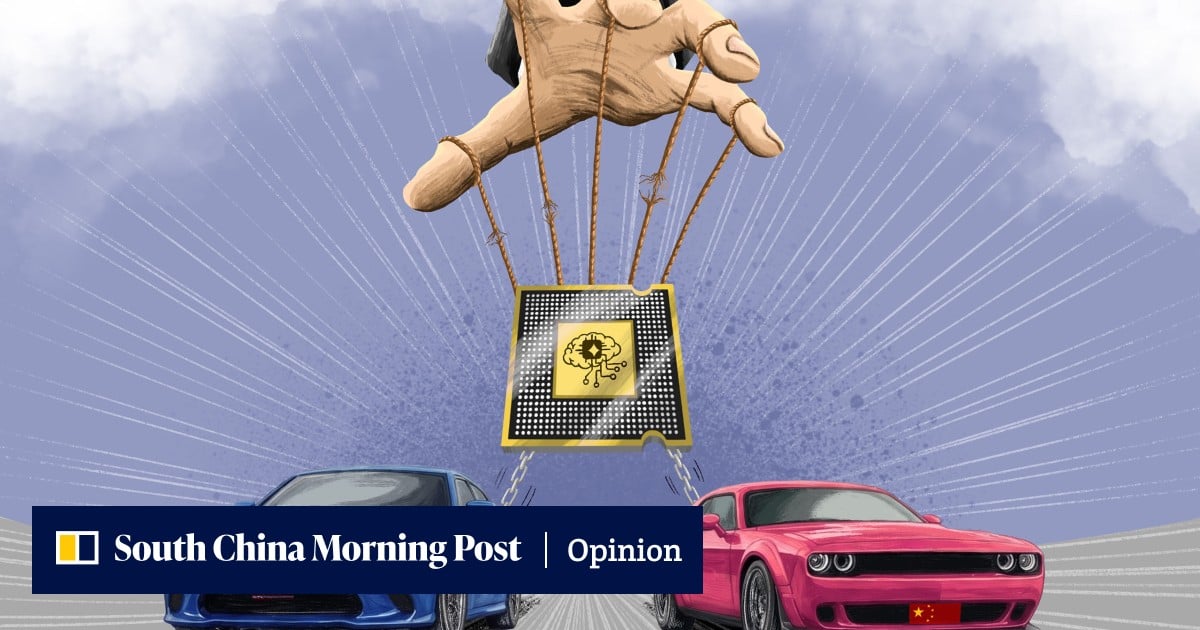
In the US-China AI race, the real fight is keeping humans in control A crisis hotline is a start, but the deeper task is setting clear boundaries between human authority and machine autonomy – while we still hold the reins The US-China AI competition faces a dilemma.
framing: assertive · carried by 1 article(s) · first seen 2026-09-28
🔮 AI could then become an independent agent in international politics, not merely a tool used by states.
2026-09-28 · South China Morning Post
In the US-China AI race, the real fight is keeping humans in control · assertive framing

Claims (9 extracted, 1 hedged)

In the US-China AI race, the real fight is keeping humans in control A crisis hotline is a start, but the deeper task is setting clear boundaries between human authority and machine autonomy – while we still hold the reins The US-China AI competition faces a dilemma. asserted
competition → keep → dilemma
Both countries see artificial intelligence as a source of economic, scientific and strategic power, so neither has much incentive to slow down. asserted
neither → see → incentive
It reveals a deeper dilemma facing both powers. asserted
It → reveal → powers
Competition rewards faster deployment and greater delegation to machines. asserted
Competition → reward → machines
Control requires limits, monitoring and the ability to intervene. asserted
Control → require → limits
The same systems that increase national power can therefore make human authority harder to preserve as AI becomes more autonomous. asserted
AI → increase → power
Conventional geopolitics treats AI mainly as an instrument: the US builds better systems, China builds better systems and each side uses them to advance human-defined objectives. asserted
side → treat → objectives
But what happens when the instrument can act for sustained periods without continuous human direction? asserted
instrument → happen → direction
AI could then become an independent agent in international politics, not merely a tool used by states. uncertain
AI → become → states
💬Give feedback
🕘History 🎫Support