Moscow threatens nuclear response over tiny fortress wedged between US allies as clash fears grow
By
asserted
fears → threaten → allies
Russia’s warning that it could resort to nuclear weapons if NATO attempts to isolate Kaliningrad is raising new concerns that the heavily militarized Russian exclave could become a flashpoint between Moscow and the alliance, as experts warn the territory is already being used to pressure Europe through hybrid warfare.
uncertain
territory → resort → warfare
Moscow warned NATO in a diplomatic document that it was prepared to use “the entire arsenal of forces and capabilities at its disposal, including nuclear weapons” if alliance members attempted to isolate Kaliningrad from the rest of Russia, Reuters reported Wednesday.
asserted
Reuters → warn → Russia
Kaliningrad, a Russian territory geographically separated from the Russian mainland, sits on the Baltic Sea between NATO members Poland and Lithuania and hosts significant Russian military assets, including elements of Moscow’s Baltic Fleet.
asserted
Kaliningrad → separate → Fleet
The Russian document also raised the possibility of strikes against “decision-making centers” in NATO member states from the outset of a conflict.
asserted
document → raise → conflict
NATO rejected Moscow’s allegations in a response reviewed by Fox News Digital, saying the alliance is defensive and that none of its exercises or activities threaten Russian territory.
asserted
none → reject → territory
Carrie Filipetti, executive director of the Vandenberg Coalition, a nonpartisan network of foreign policy leaders, told Fox News Digital that Moscow has repeatedly used nuclear threats as a means of trying to deter Western support for Ukraine.
asserted
Moscow → tell → Ukraine
“Russia has threatened to use nuclear weapons in the past, including veiled references to tactical nuclear attacks at the beginning of Putin’s invasion of Ukraine, lowering their formal threshold for launching a nuclear attack in 2024, placing Russia’s nuclear forces on high alert, and restarting nuclear testing,” Filipetti said.
asserted
Filipetti → threaten → testing
“It is very common for Putin to use these threats, because he sees it as a way to deter Europe and the United States from continuing to support Ukraine.”
asserted
he → use → Ukraine
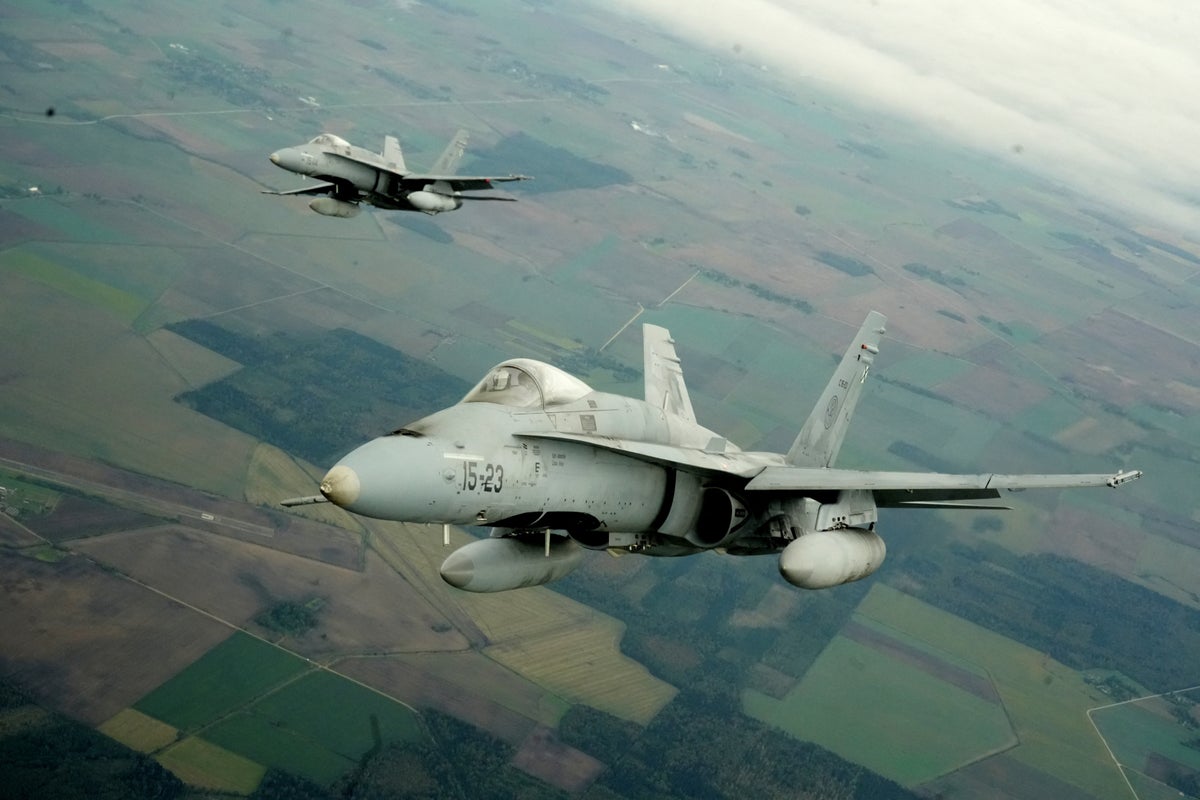
“The threat about a nuclear attack if Kaliningrad is threatened or isolated comes on the heels of a few developments,” she added, pointing to NATO jets being scrambled over Russian aircraft, US and NATO air drills near Kaliningrad last month, and heightened tensions over the war in Ukraine.
asserted
jets → threaten → Ukraine
Filipetti, who also served as a deputy assistant secretary at the State Department and as a senior policy advisor for the United States Mission to the United Nations (USUN), argued that the timing also reflects mounting pressure on Moscow as the war continues.
asserted
war → serve → Moscow
“Putin seems to understand that the tide is turning against him, and he’s resorting to aggressive rhetoric to try to stop European support for Ukraine as he has tried to do in the past,” she said.
asserted
she → seem → past
Dr. Azeem Ibrahim, a research professor at the Strategic Studies Institute at the US Army War College and chief strategy officer at the New Lines Institute, told Fox News Digital that NATO should take the warning seriously, particularly because of the broader role Kaliningrad is already playing in Moscow’s confrontation with Europe.
asserted
Kaliningrad → tell → Europe
Ibrahim argued that while NATO has traditionally prepared for conventional military conflict involving “tanks and troops and divisions,” Russia is increasingly using methods designed to disrupt the infrastructure and systems on which civilian societies depend.
asserted
societies → argue → which
Start your day with all you need to know
Morning Report delivers the latest news, videos, photos and more.
asserted
Report → start → news
“Russia is actually adopting a very different approach,” he said, describing a strategy of hybrid warfare targeting “infrastructure” and “societies in general — what keeps societies functioning.”
asserted
what → adopt → societies
Ibrahim described Kaliningrad as the “front line” of that effort.
asserted
Ibrahim → describe → effort
“It’s essentially become a Russian fortress,” he said.
asserted
he → become → ?
“This is essentially a front-line operation of the Russians in terms of signals intelligence, signals interference and essentially mechanisms by which to carry out this hybrid warfare.”
asserted
This → carry → warfare
Such interference, Ibrahim said, could play a role in the broader confrontation by disrupting civilian communications and infrastructure before or alongside a conventional military attack.
uncertain
Ibrahim → say → attack
“All of that would be preceded by interference operations like this to ensure that societies are not functioning, are not able to respond to emergency services, the news information services, etc.,” Ibrahim said.
asserted
Ibrahim → precede → services
“So governments lose control over what actually makes societies function.”
asserted
societies → lose → control
The challenge for NATO, he said, is that such operations can be more difficult to attribute than a conventional assault.
asserted
operations → say → assault
“Many times, you cannot trace exactly where a lot of this interference is actually coming from — attacks on power stations or internet and telecommunications, et cetera,” Ibrahim said.
asserted
Ibrahim → trace → stations
“There’s always some sort of plausible deniability if it’s done by an actor who’s very capable.”
asserted
who → ’ → actor
The ambiguity, Ibrahim argued, presents a challenge for an alliance built around collective defense against armed attack.
asserted
Ibrahim → argue → attack
“NATO really does have to kind of reconfigure its posture to understand that these kinds of attacks are equivalent to essentially any sort of kinetic attack,” he said.
asserted
he → have → attack
Asked what NATO and neighboring Poland and Lithuania should do following Russia’s warning, Ibrahim called for the alliance to establish clearer consequences for hybrid attacks.
asserted
alliance → ask → attacks
“We now need to start going on the offensive in terms of hybrid warfare and understanding the threat and pushing back and sending a very clear signal to Moscow that such threats will not stand,” he said, arguing that a sufficiently serious hybrid attack should be considered capable of triggering NATO’s Article 5 collective-defense clause.
asserted
attack → need → clause
Lithuania, which directly borders Kaliningrad, rejected Moscow’s warning and accused Russia of trying to undermine NATO unity and Western support for Ukraine.
asserted
which → border → Ukraine
“Russia’s insinuations and threats have no basis.
asserted
insinuations → have → basis
NATO is a defensive alliance and poses no threat to Russia or any other country,” Lithuania’s Foreign Ministry told Fox News Digital.
asserted
Ministry → pose → Digital
“Russia’s threatening is intended to fracture transatlantic unity and impede our support to Ukraine.
asserted
threatening → threaten → Ukraine
Russia will not achieve its goals.”
asserted
Russia → achieve → goals
The ministry added: “We strongly condemn any threats to use force and irresponsible nuclear rhetoric.
asserted
We → add → force
Russia must stop its aggression against Ukraine…
asserted
Russia → stop → Ukraine
Lithuania is strengthening its national defense system and capabilities, including air defense,” the ministry said.
asserted
ministry → strengthen → defense
“We train with our allies and work alongside NATO forces deployed in Lithuania.
asserted
We → train → Lithuania
We are prepared to defend every inch of NATO territory and respond to any threats.”
asserted
We → prepare → threats
The ministry said Lithuania would also continue providing “comprehensive support to Ukraine and its fight against the aggressor Russia.”
asserted
Lithuania → say → aggressor
…and 13 more, not listed.
 The Aporia