The lower price and high impact of drone warfare is pushing down the financial costs of aerial bombardment, forcing a rethink from militaries and governments.
asserted
price → push → militaries
At the same time, the blistering pace of drone innovation is also disrupting traditional defence manufacturing by lowering the barriers and opening the door to favour smaller, more nimble companies.
asserted
pace → blister → companies
Drones have come to define the Ukraine-Russia conflict and their effects are playing out daily in the Middle East.
asserted
effects → come → East
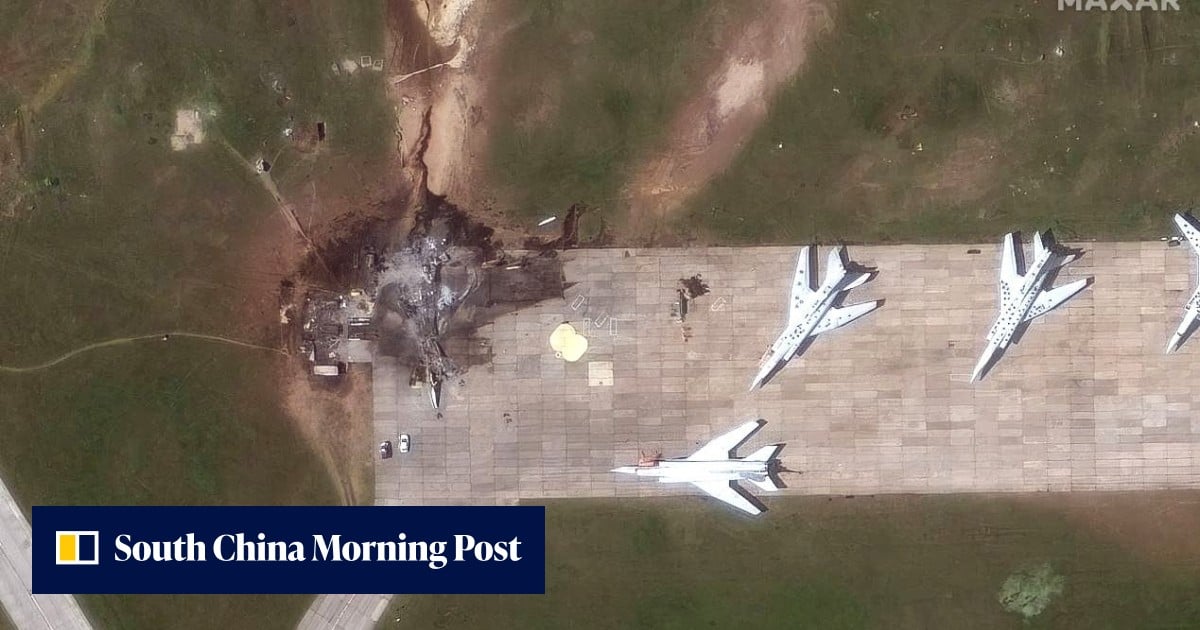
Salvos of drones are overwhelming conventional air defence systems; swarms of cheap drones are being shot down with expensive Western-made missiles; and inexpensive small drones are taking on tanks.
asserted
drones → overwhelm → tanks
In the process, long-standing practices of how defence gear is designed, built, and sold are being repriced at a lower cost, much in the way computers, once the province of university labs in the 1960s, became ubiquitous PCs in the 1990s, then laptops, and iPhones.
asserted
computers → stand → 1990s
In the defence world, this has created a gap in capabilities between drone-savvy militaries and ones relying on high-tech, expensive weapons of the past.
asserted
this → create → past
Nations quickly building stocks of drones to meet government-directed goals are practicing what Ukrainian analyst Lesia Bidochko describes as “drone Keynesianism”.
asserted
Bidochko → build → Keynesianism
Economist John Maynard Keynes believed governments could solve economic problems through massive, sustained spending on production.
uncertain
governments → believe → production
For companies, the goal shifts from marketing complex and elegant systems to fielding drone units that can deliver on a battlefield.
asserted
that → shift → battlefield
Today, for example, Ukraine incentivises 500 small suppliers to work fast and respond to near-daily changes on the battlefield.
asserted
Ukraine → incentivise → battlefield
The government creates the market, allowing small companies to focus on rapid innovation while literally “under fire”.
asserted
companies → create → fire
The US is looking to emulate this model through its “Drone Dominance” program.
asserted
US → look → program
Jay Guthrie, a British ex-service member who has spent time in Ukraine, said drones can be simultaneously “low cost” to build and deploy and “high impact” in what they destroy.
asserted
they → spend → what
At the same time, large legacy defence companies can’t produce drones at the speed or cost needed to be effective on a modern battlefield, he said.
asserted
he → produce → battlefield
Major Western defence companies are “all looking at the 100 per cent solution” made up of “a really shiny drone that looks really pretty when it takes off”.
asserted
it → look → drone
“But in reality, at the end of the day, it’s going to end up a big lump of plastic anyway, so it doesn’t need to be shiny.
asserted
it → go → plastic
Just robust enough to get to the target,” he said.
asserted
he → get → target
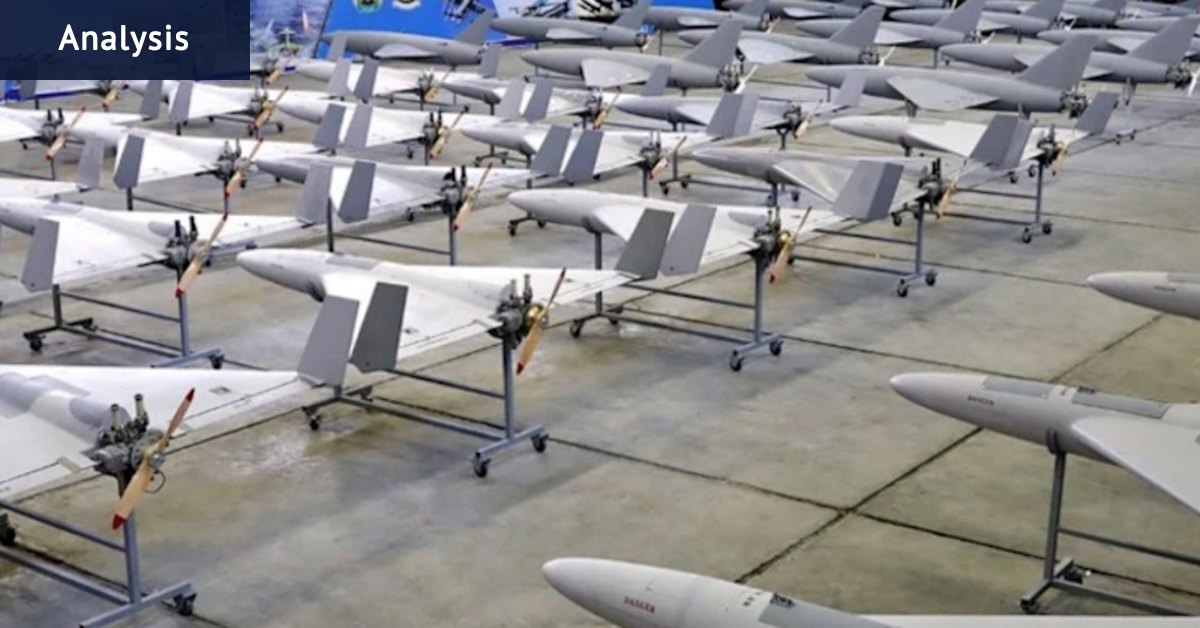
Iran pioneered the strategy of building cheaper drones that could seek to overwhelm Israeli and US defences.
uncertain
that → pioneer → defences
Iran built thousands of Shahed drones, costing a fraction of the price of US interceptor missiles.
asserted
Iran → build → missiles
The Ukrainians played catch-up after Russia expanded its war against Kyiv in 2022.
asserted
Russia → play → 2022
The rise of drones is also changing the big business of defence procurement because drones can be produced quickly and at low cost by smaller companies rather than the traditional corporate giants, which rely on long-lead times, that supply militaries.
asserted
that → change → militaries
While there some large-scale makers of civilian drones, smaller nimble drone players have been driving much of the disruption in the defence sector.
asserted
players → drive → sector
Guthrie notes that it takes Western-based defence companies 18 months to two years to incorporate major innovations
The technology of drones – cheap electronics, 3D-printed parts, rapidly updated designs – is transforming part of the defence industry dominated for decades by major companies known as “prime subcontractors”.
asserted
technology → note → subcontractors
Companies such as Boeing, Lockheed Martin, Airbus, and Thales act as systems integrators, which manage “complex supply chains and manage risk around delivery of major projects”, he said.
asserted
he → act → projects
The prime contractors can see the shift.
asserted
contractors → see → shift
Some are learning from it.
asserted
Some → learn → it
Boeing, for instance, is trialling an ultra-low cost guidance system, which could be used on drones and missiles, “to dramatically reduce per-unit costs and enable precision munition employment at scale across programs”.
uncertain
which → trialle → programs
Guthrie, who works for UK-based Merlin Power Defence, said that at issue is the scale of the companies doing the production.
asserted
scale → work → production
“What you need is a load of mini primes, where you build that framework agreement (with the defence departments), but there’s still the man-in-the-shed mentality,” where new features can be tried quickly.
The learning curve around drone economics is steep, and Guthrie said that, typically, nations’ defence departments stick with the primes “because it’s easy” and the framework for contracts is already in place.
asserted
framework → need → place
But the prime contractors have “many investors and the need to return an investment”.
asserted
contractors → have → investment
So what is a $10 drone becomes about $200 because everyone has a “piece of the pie”, said Guthrie.
asserted
Guthrie → become → pie
Small and medium enterprises, he says, are more agile.
asserted
he → say → ?
They can build.
asserted
They → build → ?
They can innovate.
asserted
They → innovate → ?
They’ve got fewer people on their shoulders saying: “You need to make a big profit out of it”.
asserted
You → get → it
Melbourne start-up Freespace Operations uses ArduPilot, an open-source autopilot system to guide its drones, says co-founder chief technology officer Leonard Hall.
“This whole industry is based on that simple factor,” Hall said.
asserted
Hall → use → factor
Freespace Operations doesn’t build combat drones, but drones designed to lift equipment, some used for defence, to “last for years”.
asserted
Operations → build → years
Hall said that if not for open-source autopilot code, it would cost $100 million to code the autopilot before his company’s drone could be tested.
uncertain
drone → say → autopilot
Instead, “open source allows small companies to share the developmental burden of the impossible task”.
asserted
companies → allow → task
To take advantage of the rapid development once it’s done.
asserted
it → take → development
…and 19 more, not listed.
 The Aporia