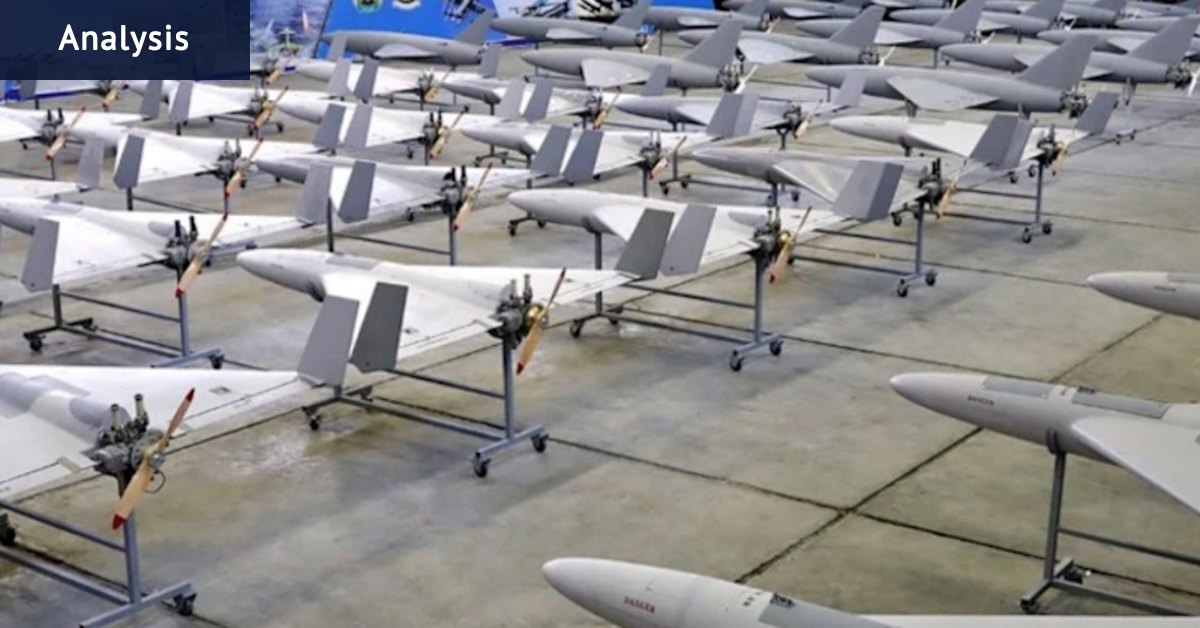
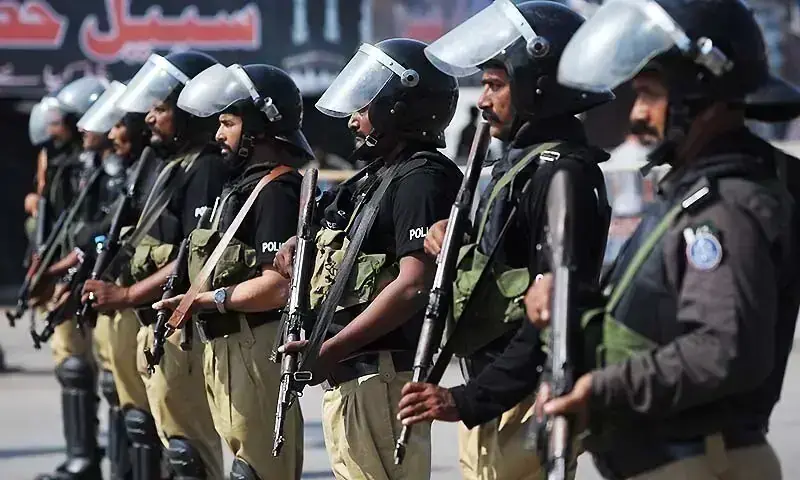
FROM handheld jammers to anti-drone systems, and now a specialised human division trained for Unmanned Aerial Vehicle (UAV) combat, the Khyber Pakhtunkhwa (KP) police department is waging a high-tech war against terrorists as their threat evolves from quadcopter surveillance and ammunition drops to swarm attacks.
asserted
threat → train → attacks
The UAV division, initially floated as an idea, was established following technological advancements in terrorist capabilities and their shifting preference from conventional street fighting to aerial warfare.
asserted
division → float → warfare
Trained in modern drone flying, aerial surveillance, intelligence gathering, counterterrorism, protection of sensitive installations, and the effective use of UAV technology in high-risk operations, the division is the first of its kind established by a police department in the country.
asserted
division → train → country
Ambushes and attacks on police installations are still reported from across the province, but terrorists are also using quadcopters for surveillance before moving towards their targets, enabling them to avoid ambushes by law enforcement agencies.
asserted
terrorists → report → agencies
“This is a fact that they fly surveillance drones before targeting any installation of the law enforcement agencies,” a senior official said.
asserted
official → fly → agencies
Changing tactics, external backing
Senior officials also believe that the situation has completely changed from what it was two years ago, as terrorists’ tactics have evolved, compelling the police force to devise a fresh strategy to stay one step ahead.
asserted
tactics → change → strategy
They said that with drones being deployed and law enforcement facilities being targeted, the war had expanded to the skies, forcing them into a technological arms race, particularly in high-risk zones.
asserted
war → say → zones
“It is a fact that the terrorists are more equipped than police since they got hold of the leftover [modern gadgets left behind by the US and its allies in Afghanistan],” a senior security official said while talking to Dawn.
asserted
official → get → Dawn
He said the local threat was previously underdeveloped and pointed to continued ‘external’ support — in the form of manpower, finances and technology.
asserted
threat → say → manpower
He added that the use of quadcopters for surveillance followed by explosive delivery required financial resources, training and, above all, technology.
asserted
use → add → all
The department responded immediately, but the handheld anti-drone guns could neutralise only one drone at a time.
uncertain
guns → respond → time
This gave the police an edge, but it was soon the terrorists’ turn to adapt.
asserted
it → give → edge
After realising the weakness, they turned to swarm tactics, deploying multiple drones simultaneously.
asserted
they → realise → drones
Again, the department took another step by upgrading its defensive capabilities and investing in anti-drone systems capable of detecting and jamming multiple quadcopters at the same time.
asserted
department → take → time
With anti-drone systems deployed in multiple areas across the province, quadcopter attacks dropped sharply.
asserted
attacks → deploy → province
The department did not give militants the opportunity to gain another advantage and moved to establish an entire division specialising in aerial warfare.
asserted
department → give → warfare
Data centre, skills training
Officials said the KP police realised that technology alone could not help and took a crucial step by establishing a specialised division of personnel trained for UAV operations.
uncertain
technology → say → operations
These personnel are not only trained to operate drones for surveillance but are also capable of conducting electronic warfare against hostile UAVs.
asserted
personnel → train → UAVs
They said a data centre based in Peshawar would receive real-time information on quadcopters and, at the same time, coordinate the response of law enforcement agencies.
asserted
centre → say → agencies
“The war is escalating and the threat has changed.
asserted
threat → escalate → ?
What we see today is completely different from what we saw two years ago,” KP police chief Zulfiqar Hameed told Dawn, explaining why, beyond technological development, trained human operators were equally critical.
asserted
operators → see → development
Mr Hameed said the specialised unit was the need of the hour and that, besides deploying it in the provincial capital, the department had approved similar units at the district level, initially in high-risk districts.
asserted
department → say → districts
He said the department had deployed drones across the province and that not only the regular police but also the Counter Terrorism Department (CTD) would be equipped with more advanced drones — long-range models capable of flying at higher altitudes than the existing ones.
asserted
police → say → ones
These would be used against terrorists.
asserted
These → use → terrorists
“There is no other option for the future but technological advancement,” the KP police chief said.
asserted
chief → be → future
Other security officials claimed that the threat level had dropped sharply, particularly in the southern districts, including Dera Ismail Khan, Lakki Marwat, Tank and Bannu, as militant tashkeels [groups] were being targeted before they could reach their targets.
“I assure you that there would be no militants had there not been external support, as 70pc of them are outsiders, being supported morally, financially and technically by hostile countries,” a senior police officer said while talking to Dawn.
uncertain
officer → claim → Dawn
He said the department’s analysis had indicated that beyond modern war gadgets, drone technology was being provided to terror groups by “external sources”.
asserted
technology → say → sources
 The Aporia